




Campus Security Responsibilities
Campus security officers help protect college campuses.
They enforce rules, respond to emergencies, and help prevent criminal activity.
These responsibilities support a secure environment for learning and academic pursuits.
Day-to-Day Duties
During daily operations, officers patrol campus grounds for suspicious behavior.
They also monitor surveillance cameras to identify potential security threats.
In addition, officers respond to emergencies and investigate security incidents.
- Officers patrol campus grounds to deter and detect suspicious behavior or criminal activity.
- They monitor surveillance cameras to observe campus activities and identify potential security threats.
- Officers respond to emergency calls and assist students, faculty, and staff in distress.
- They investigate security incidents and report their findings to appropriate authorities.
Maintaining Safety and Order
Officers help preserve safety and order across campus.
They coordinate with local law enforcement when incidents require additional support.
Meanwhile, officers control access and provide escorts during late hours.
- Officers collaborate with local law enforcement agencies during incidents requiring additional support.
- They monitor entrances and exits to ensure authorized individuals access campus grounds.
- Officers escort individuals between campus buildings during late hours or in isolated areas.
Community Engagement
Through regular interaction, officers build positive relationships across the campus community.
They educate community members about safety protocols and emergency procedures.
Additionally, officers provide security coverage during campus events.
- Officers interact with students, faculty, and staff to build positive relationships.
- They gather information about potential security risks through community interaction.
- Officers conduct security awareness training about safety protocols and emergency procedures.
- They participate in campus events and provide coverage for attendees.
Monitoring Campus Grounds
Campus security officers monitor the grounds to support safety for students, staff, and visitors.
They use regular patrols, perimeter checks, and surveillance systems to identify potential concerns.
This active approach helps officers notice suspicious activity and respond promptly when necessary.
Regular Patrols
Officers conduct regular patrols on foot or in vehicles across campus.
During these patrols, they observe activity and look for suspicious behavior.
They can then address concerns or report them through appropriate security procedures.
Checking Perimeters
Officers inspect fences, gates, and other entry points around campus.
These checks help them identify damage, weaknesses, or signs of unauthorized access.
As a result, officers can report compromised areas and support perimeter security.
Surveillance Systems
Officers use surveillance cameras to monitor important areas across campus.
Camera coverage helps them observe activity that patrols may not immediately reach.
Consequently, officers can respond quickly when surveillance reveals a potential threat.
Patrolling Buildings and Parking Lots
Security officers also patrol buildings and parking lots to maintain secure campus spaces.
They inspect access points, monitor vehicles, and assist people moving around campus.
These activities extend security coverage beyond outdoor grounds and perimeter areas.
Building Inspections
Officers check doors, windows, and access points during building inspections.
They look for unsecured entrances or other conditions that could allow unauthorized entry.
Afterward, officers can report concerns and help ensure buildings remain secure.
Parking Lot Monitoring
Officers monitor parked vehicles throughout campus parking lots.
They watch for tampering and observe whether vehicles follow parking regulations.
This oversight helps officers identify unusual activity involving vehicles or parking areas.
Escort Services
Officers may escort students or staff walking to vehicles or buildings late at night.
Such assistance provides a security presence during nighttime travel across campus.
Furthermore, escorts help individuals feel more secure while moving between campus locations.
Responding to Security Incidents and Emergencies
Security officers prepare to respond quickly when incidents or emergencies occur.
They follow established procedures for medical emergencies, threats, alarms, and other security concerns.
Officers also coordinate with emergency services during serious campus incidents.
Emergency Procedures
Officers receive training in emergency response procedures and protocols.
Transform Your Career Today
Unlock a personalized career strategy that drives real results. Get tailored advice and a roadmap designed just for you.
Start NowThis preparation helps them handle medical emergencies and potential threats.
They use established procedures to guide their actions during urgent situations.
Alarm Systems
Officers respond to alarms involving fire, intrusion, or other security concerns.
They assess the alarm and follow the applicable response procedures.
Prompt action allows officers to address alarms and support campus safety.
Coordination with Emergency Services
Officers work closely with local emergency services during campus incidents.
They share relevant information to help emergency responders understand the situation.
This coordination supports a more organized response to urgent events.
Collaborating with Local Law Enforcement
Campus security officers collaborate with local law enforcement agencies to strengthen campus security.
They exchange information, participate in training, and assist with relevant investigations.
Through these partnerships, officers support coordinated responses to campus security concerns.
Information Sharing
Officers share information about security incidents and suspicious activities with local police departments.
This communication helps law enforcement understand concerns affecting the campus.
It also supports efforts to deter criminal behavior around campus.
Joint Training Exercises
Officers participate in joint training exercises with local law enforcement.
These exercises help participants practice coordinated emergency responses.
As a result, agencies can improve their cooperation during actual incidents.
Assistance in Investigations
Security officers assist police with investigations involving campus crimes or security breaches.
They can provide relevant information about incidents observed on campus.
Their assistance supports efforts to maintain a secure campus environment.
By monitoring grounds and buildings, officers maintain visible security coverage across campus.
They also respond to emergencies and coordinate with local law enforcement when needed.
Together, these responsibilities support a safer learning environment for students, faculty, staff, and visitors.
Checking IDs and Monitoring Building Access
Campus security officers check IDs before allowing access to campus buildings.
They verify that only authorized individuals enter these facilities.
This access control supports safety and security for the campus community.
Enforcing Campus Policies and Regulations
Campus security officers enforce institutional policies and regulations.
They require students, faculty, and staff to follow established campus rules.
These efforts help maintain a safe and orderly environment.
Managing Crowds During Campus Events
During campus events, security officers help control crowds.
They manage pedestrian flow and reduce overcrowding.
Additionally, they encourage attendees to follow safety protocols and help prevent incidents.
Providing Escorts Across Campus
Campus security officers provide escorts for students, faculty, and staff who feel unsafe walking alone.
They especially support people seeking assistance at night.
This service strengthens feelings of security and peace of mind across the campus community.
Learn More: How School Resource Officers Improve School Security
Conducting Investigations
Campus security officers investigate theft, vandalism, and other security issues.
They gather evidence and interview witnesses to obtain relevant information.
This process helps officers understand incidents and support appropriate security responses.
Collaborating with Campus Administration
Security officers work closely with campus administration on security concerns.
Transform Your Career Today
Unlock a personalized career strategy that drives real results. Get tailored advice and a roadmap designed just for you.
Start NowThey share information to support coordinated decisions and effective communication.
This collaboration strengthens efforts to maintain a safe campus environment.
Documenting Incidents
Campus security officers document incidents and prepare detailed reports.
These records preserve accurate information about security-related events.
Furthermore, documentation supports accountability and helps maintain organized incident records.
Responding to Emergency Situations
Security officers prepare to respond quickly during campus emergencies.
They may address medical emergencies, fires, or security threats.
Their timely actions help protect students and staff during urgent situations.
Monitoring Surveillance Systems
Campus security officers monitor surveillance systems to observe campus activity.
This approach can help identify potential security threats.
Additionally, surveillance monitoring allows officers to respond quickly when concerns arise.
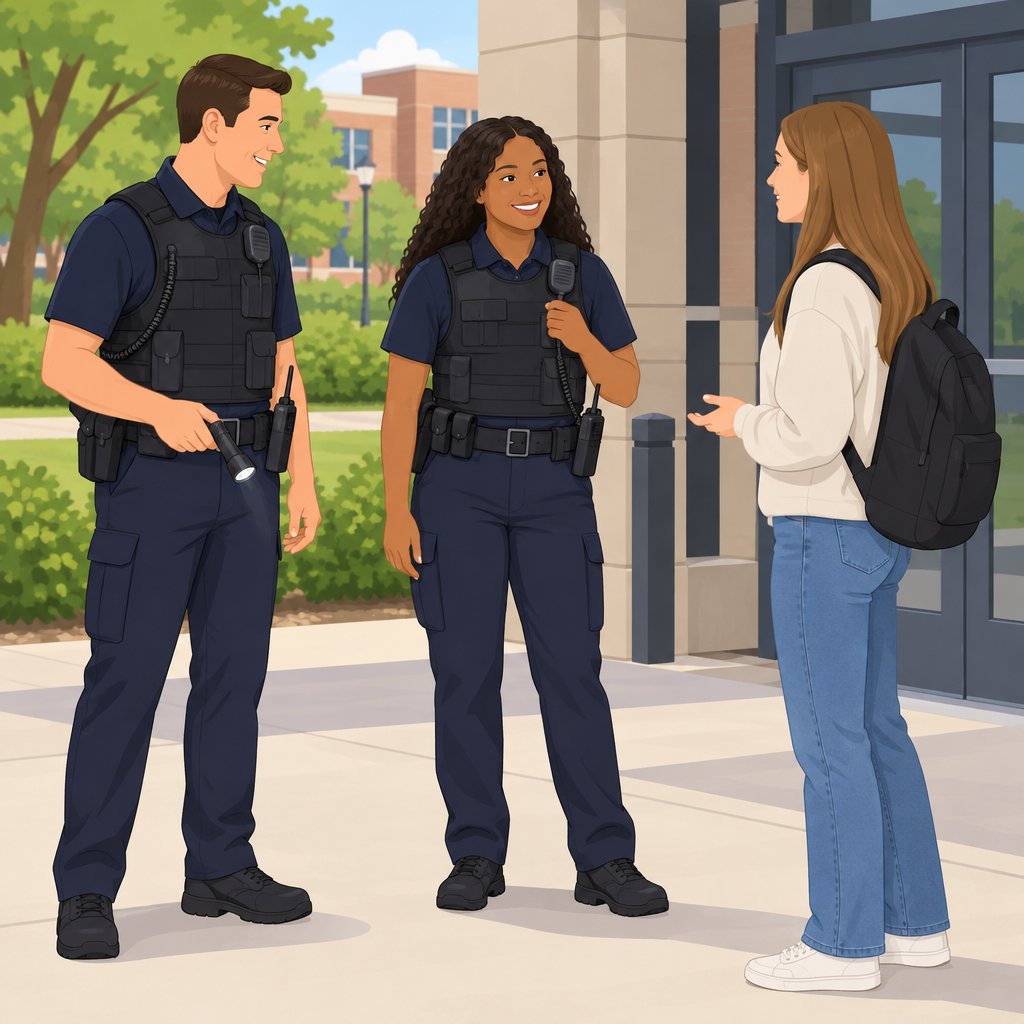
Providing Assistance to Students and Staff
Security officers assist students and staff alongside their security duties.
For example, they provide directions and safety escorts when needed.
They also offer support during stressful situations on campus.
Collaborating with Law Enforcement
Campus security officers collaborate with local law enforcement when necessary.
This partnership supports coordinated responses to serious security issues.
As a result, campus agencies can work together to protect the campus community.
Training and Professional Development
Security officers participate in ongoing training and professional development.
These opportunities help them remain current and effective in their roles.
They also prepare officers to handle evolving campus security challenges.
Community Engagement
Campus security officers engage with students, faculty, and staff.
They build positive relationships that support security awareness across campus.
Moreover, trust and rapport strengthen effective security operations.
Discover More: How to Apply for a DEA Agent Position: Step-by-Step Guide
Safety Training and Resources
Campus security officers provide safety training and resources to the campus community.
They conduct workshops, seminars, and training sessions for students, faculty, and staff.
These sessions explain safety procedures, emergency protocols, and crime prevention strategies.
- Safety training empowers individuals to take proactive measures that enhance personal safety.
- It creates a culture of awareness and preparedness within the campus community.
- Education and prevention reduce the likelihood of security incidents.
Emergency Preparedness Drills
Campus security officers also participate in emergency preparedness drills.
These drills test the effectiveness of emergency response plans.
They also assess security team readiness and familiarize the community with evacuation procedures.
- Drills ensure that everyone knows what to do during an emergency.
- They identify areas for improvement in emergency response plans.
- They build community confidence in responding to emergencies.
Security Cameras and Alarm Systems
Campus security officers monitor security cameras and alarm systems.
They watch surveillance footage and respond to suspicious activities or security breaches.
When emergencies occur, officers alert the appropriate authorities.
- Surveillance cameras deter criminal activity through their presence on campus.
- Video evidence supports the investigation and resolution of security incidents.
- Alarm systems prompt immediate responses to security threats or breaches.
Safety Protocols During Emergencies
Campus security officers implement safety protocols during threats or emergencies.
They coordinate with law enforcement agencies and activate emergency communication systems.
They may also initiate lockdown procedures and guide the community during critical incidents.
- Safety protocols minimize harm and protect individuals during emergencies.
- They support coordinated and efficient responses to security threats.
- They help maintain order and control during chaotic situations.
Uncover the Details: Frequently Asked Questions About DEA Agent Careers
Working with Mental Health Professionals
Collaborating with mental health professionals strengthens campus responses to student crises.
When students face crises, security officers often respond first.
Therefore, officers need close professional relationships to support students effectively.
Transform Your Career Today
Unlock a personalized career strategy that drives real results. Get tailored advice and a roadmap designed just for you.
Start NowProviding Support and Resources for Students
Security officers support students facing personal or academic difficulties.
They may refer students to counseling services or offer emotional support.
Additionally, they provide resources that help students navigate challenging situations.
Building Relationships with Students, Faculty, and Staff
Security officers build relationships with students, faculty, and staff.
Daily interactions help officers establish trust and rapport across campus.
By remaining approachable and visible, they strengthen supportive relationships with those they serve.
Offering Educational Programs
Security officers also educate the campus community about safety and security topics.
They may lead workshops, seminars, or training sessions about emergency response and crime prevention.
Topics may include active shooter preparedness, emergency response protocols, and crime prevention strategies.
Gain More Insights: DEA Agent Contribution to Community Safety
Emergency Response and Campus Support
Campus security officers respond to emergencies that affect students, faculty, staff, and visitors.
They enforce campus policies and address disruptive behavior to help maintain order.
Additionally, officers assist people with directions, unlocked doors, and other immediate needs.
Professional Readiness and Community Trust
Officers prepare for various situations by following established security protocols and procedures.
They use conflict resolution and first aid skills when circumstances require additional support.
Through dependable service, officers help create a welcoming environment across campus.
Their commitment allows students, faculty, and staff to focus on academic pursuits with greater confidence.
Campus communities should recognize these officers and show appreciation for their ongoing service.
Additional Resources
Google search results for Day-to-Day Duties of Campus Security Officers Protective Services
Bing search results for Day-to-Day Duties of Campus Security Officers Protective Services


