




Agency Collaboration in Wildland Firefighting
Wildland firefighters need collaboration with other agencies for successful outcomes.
State and federal agencies, local fire departments, and international organizations all serve as key partners.
Together, these partners pool resources and expertise while improving emergency coordination.
For example, state agencies like CAL FIRE support wildfire management and coordinate response efforts.
Meanwhile, federal agencies such as the US Forest Service provide manpower and specialized equipment.
Local fire departments contribute on-the-ground knowledge and support efficient firefighting.
Additionally, international organizations may assist large-scale disasters requiring a global response.
This collaboration creates a unified approach and improves resource allocation during wildfire responses.
By working with multiple agencies, wildland firefighters mitigate risks and protect communities.
Consequently, agency collaboration strengthens firefighting capabilities and improves outcomes.
Agency Roles in Wildland Firefighting
Wildland firefighting depends on agencies that contribute different responsibilities.
These partners coordinate actions to manage fires and support affected communities.
Clear communication helps agencies allocate resources and apply effective strategies.
- Local fire departments provide initial response and containment.
- State agencies coordinate resources across jurisdictions during larger incidents.
- Federal agencies, including the US Forest Service and Bureau of Land Management, provide resources and expertise.
- Non-profit organizations, including the Red Cross and Salvation Army, provide essential support services.
Local departments usually arrive first and begin containment and suppression efforts.
Meanwhile, state agencies coordinate resources from multiple jurisdictions during larger incidents.
Federal agencies add air support, heavy equipment, and incident management teams.
Additionally, non-profit organizations provide shelter, food, and medical aid.
These services support firefighters and displaced residents during wildfire responses.
Benefits of Collaboration with Other Agencies
Collaboration helps wildland firefighters allocate and use resources more effectively during wildfire incidents.
Agencies can combine expertise and equipment to strengthen firefighting operations.
Therefore, coordinated efforts help firefighters manage fires and protect threatened communities.
Improved Coordination and Communication
Agencies improve coordination and communication when they work together during wildfire incidents.
Shared communication channels help teams deploy resources effectively and efficiently.
Consequently, everyone can follow the same plan, reducing misunderstandings during firefighting operations.
Enhanced Training and Skill Development
Agency collaboration gives wildland firefighters opportunities to strengthen their training and develop new skills.
Firefighters can learn from experts who serve in other agencies.
Additionally, shared training resources can create a more capable firefighting team and support community safety.
Increased Access to Specialized Equipment
Collaboration gives firefighters access to specialized equipment their own agencies may not have.
Shared equipment helps teams address challenging wildfire incidents more effectively.
Moreover, broader resources prepare firefighters to handle varied wildfire situations and improve safety.
Improved Operational Efficiency and Effectiveness
Joint agency efforts can improve efficiency and effectiveness during wildfire operations.
Multiple agencies can combine expertise, resources, and equipment to achieve stronger results.
This coordinated approach can support faster containment, less property damage, and greater safety.
Learn More: Fish and Game Warden Job Outlook
Challenges of Collaboration in Wildland Firefighting
Collaborating with other agencies during wildfire incidents can create several challenges.
These obstacles can reduce response effectiveness and increase risks for personnel and the public.
Therefore, agencies should address these issues proactively to support coordinated and efficient operations.
Several common challenges can affect interagency collaboration.
- Jurisdictional conflicts: Agencies may follow different rules, which can delay decisions and resource allocation.
- Communication breakdowns: Poor reception, overloaded channels, and incompatible systems can disrupt emergency communications.
- Differences in protocols and procedures: Different operating procedures can confuse personnel and hinder coordinated field efforts.
- Resource allocation: Agencies may disagree about priorities or face constraints when distributing personnel, equipment, and funding.
- Decision-making hierarchy: Agencies must establish unified command to prevent competing interests from slowing response efforts.
- Training and interoperability: Inconsistent training and incompatible equipment can prevent personnel from working together effectively.
- Legal and liability concerns: Agencies must address accountability, damages, injuries, and emergency response requirements.
- Cultural differences: Different organizational cultures and work practices can create friction during collaborative operations.
Agencies can overcome these challenges through proactive planning and open communication.
They should also commit to shared goals and address potential obstacles early.
Transform Your Career Today
Unlock a personalized career strategy that drives real results. Get tailored advice and a roadmap designed just for you.
Start NowThese actions can strengthen collaboration and improve wildland firefighting operations.
Gain More Insights: Interview with an Experienced School Resource Officer
Case Studies of Successful Collaborations
Wildland firefighting depends on collaboration between different agencies.
Several past incidents illustrate how agencies coordinated operations during wildfire emergencies.
These examples also identify practices that supported effective firefighting efforts.
Yellowstone National Park Fire
- During the 1988 Yellowstone National Park wildfires, the National Park Service, US Forest Service, and local fire departments worked together.
- Agencies coordinated fire lines, shared resources, and maintained effective communication.
- A unified command structure supported seamless decisions and resource allocation.
Southern California Wildfires
- In 2003, Southern California wildfires threatened residential areas.
- CAL FIRE, local fire departments, and the National Guard collaborated during the emergency.
- Strategic planning, controlled burns, and evacuation protocols helped contain fires and protect communities.
- Regular training exercises and pre-planning strengthened collaboration among agencies.
Black Forest Fire in Colorado
- During the 2013 Black Forest Fire, local, state, and federal agencies collaborated effectively.
- Agencies used air support, ground crews, and incident command teams to contain the fire.
- Clear communication, resource sharing, and a unified mission helped protect lives and property.
Practices That Strengthen Wildfire Collaboration
These case studies reveal several practices that support successful collaboration during wildfire incidents.
Agencies can apply these practices to improve coordination during future firefighting efforts.
Coordinated planning and shared resources can help agencies protect communities during emergencies.
- A unified command structure helps agencies streamline decisions and coordinate operations.
- Clear communication helps agencies share information and coordinate firefighting efforts.
- Resource sharing combines personnel, equipment, and technology for greater effectiveness.
- Pre-planning and training help agencies prepare for emergencies and respond effectively.
- Collaborative strategies can coordinate controlled burns, evacuations, and containment tactics.
See Related Content: Building a Career as an Independent Bodyguard
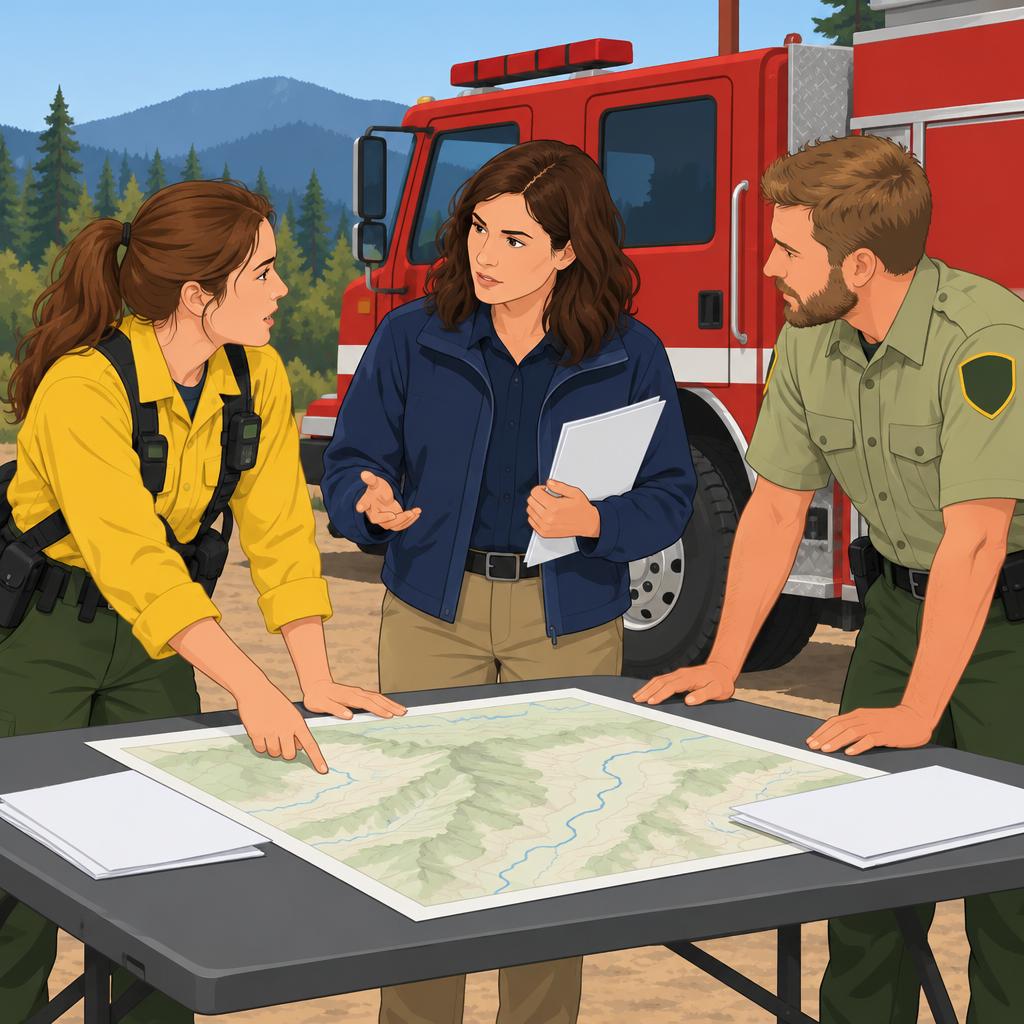
Training Programs for Interagency Collaboration
Training programs prepare wildland firefighters to collaborate effectively with other agencies.
They provide practical skills and knowledge for coordinated wildfire response.
Additionally, structured preparation helps personnel communicate clearly during demanding incidents.
Benefits of Cross-Training
Cross-training helps firefighters understand different agencies’ roles and responsibilities.
It also strengthens communication, teamwork, and flexibility during wildfire incidents.
As a result, personnel can support coordinated decisions when circumstances change.
- Enhances communication among agencies
- Improves understanding of agency roles and responsibilities
- Promotes teamwork and camaraderie
- Increases response efficiency during wildfire incidents
Value of Joint Drills
Joint drills recreate realistic scenarios that require agencies to practice coordinated responses.
They reveal improvement opportunities before agencies face actual wildfire conditions.
Furthermore, shared exercises build trust and strengthen relationships among participating agencies.
- Recreates realistic wildfire response scenarios
- Allows agencies to practice coordinated responses
- Identifies opportunities to improve collaboration
- Builds trust among different agencies
Preparing Agencies for Seamless Operations
Cross-training and joint drills help agencies develop a shared approach to wildfire response.
Participants become familiar with one another’s protocols, procedures, and communication systems.
Consequently, agencies can coordinate more effectively when wildfire conditions demand rapid action.
Joint drills also give personnel opportunities to practice clear and concise emergency communication.
Meanwhile, cross-training helps firefighters adapt when incidents require different roles or responsibilities.
Understanding other agencies’ functions enables firefighters to provide appropriate support during changing circumstances.
Strengthening Wildfire Response Through Training
Consistent training prepares agencies to communicate, coordinate, and respond as a unified team.
These activities improve operational readiness without replacing each agency’s distinct responsibilities.
By investing in preparation, agencies strengthen their ability to protect lives, property, and natural resources.
Delve into the Subject: Difference Between Private Investigator and Detective
Role of Technology in Enhancing Collaboration
Technology plays a crucial role in enhancing collaboration between wildland firefighters and other agencies.
GIS mapping, drones, and communication systems have revolutionized firefighting operations.
These tools help agencies share information and coordinate wildfire response activities.
They also support informed decisions during complex firefighting operations.
GIS Mapping for Firefighting Coordination
- GIS mapping allows agencies to visualize fire boundaries, resources, and potential hazards.
- It enables real-time tracking of firefighter locations and resource allocation.
- GIS mapping helps teams plan escape routes, identify safe zones, and optimize response strategies.
Drones for Fire Behavior Assessment
- Drones provide aerial views of fires, helping agencies assess their spread and intensity.
- Infrared cameras can detect hotspots and monitor fire behavior.
- Drones help assess structural damage, evaluate road conditions, and guide firefighters.
Communication Systems for Interagency Operations
- Communication systems enable agencies to share critical information in real time.
- They facilitate coordination, rapid decision-making, and resource deployment during firefighting operations.
- These systems enhance situational awareness and improve operational effectiveness.
Technology streamlines information flow and strengthens coordination between wildland firefighters and collaborating agencies.
It also enhances operational efficiency during wildfire response efforts.
Agencies can embrace these advancements to address wildfire challenges and safeguard communities and ecosystems.
Strategic Coordination for Wildfire Protection
Coordinated action helps agencies respond to wildfires with greater speed and strategic focus.
Shared efforts can reduce wildfire impacts on communities and natural resources.
Moreover, collaboration strengthens communication during demanding firefighting operations.
Clear coordination supports timely decisions when conditions change.
Wildland firefighters and partner agencies can combine their distinct strengths.
Transform Your Career Today
Unlock a personalized career strategy that drives real results. Get tailored advice and a roadmap designed just for you.
Start NowThis teamwork addresses the complex demands of wildfire management.
At the same time, mutual support improves protection for communities, ecosystems, and valuable resources.
These partnerships also strengthen resilience against wildfire threats.
Effective cooperation helps protect people and natural landscapes from devastating fire effects.
Additional Resources
Google search results for Wildland Firefighter Collaboration with Other Agencies Protective Services
Bing search results for Wildland Firefighter Collaboration with Other Agencies Protective Services


