




Understanding Sheriff and Deputy Sheriff Roles
Understanding sheriff and deputy sheriff roles clarifies how law enforcement responsibilities operate.
The sheriff typically serves as the county’s top law enforcement officer.
A deputy sheriff serves as a sworn officer who assists the sheriff.
Sheriff’s Responsibilities
The sheriff enforces laws, maintains order, and protects citizens throughout the county.
Additionally, the sheriff manages the department’s budget, personnel, and resources.
The sheriff also makes strategic decisions that support public safety.
Deputy Sheriff’s Role
Deputy sheriffs work under the sheriff’s authority.
They patrol neighborhoods, investigate crimes, and make arrests.
As a result, deputies help uphold peace and order within the community.
Differences Between Sheriff and Deputy Sheriff
The sheriff holds the department’s highest level of authority.
Deputies follow orders and complete assigned law enforcement tasks.
Furthermore, voters hold the sheriff accountable, while deputies serve at the sheriff’s pleasure.
Importance of Clear Responsibilities
Recognizing these distinctions supports effective law enforcement operations.
Clear responsibilities help department personnel coordinate their work.
Therefore, cooperation within the department can support better outcomes for the community.
Sheriff Role and Public Authority
A sheriff is a law enforcement officer typically elected by county residents.
This officer enforces laws, maintains order, and protects the public within the county.
Additionally, the sheriff oversees the operations of the sheriff’s office.
Definition of a Sheriff
A sheriff is a constitutional officer elected by citizens of a county.
The sheriff serves as the county’s chief law enforcement officer.
This official upholds the law, maintains peace, and protects community safety.
Responsibilities and Duties of a Sheriff
The sheriff manages daily operations within the sheriff’s office.
Officers investigate crimes, apprehend suspects, and make arrests.
Furthermore, the sheriff coordinates efforts with other law enforcement agencies.
- Enforcing local, state, and federal laws within the county.
- Managing daily operations of the sheriff’s office.
- Providing court security and serving legal documents.
- Investigating crimes and apprehending suspects.
- Making arrests when legally authorized.
- Operating county jails and detention facilities.
- Conducting search and rescue operations in rural areas.
- Serving as the community’s primary law enforcement contact.
- Coordinating with other agencies to combat crime.
Legal Authority and County Jurisdiction
A sheriff exercises legal authority within the county where the sheriff was elected.
This authority includes making arrests, enforcing laws, and investigating crimes.
The sheriff also serves warrants, subpoenas, and other legal documents.
State police and federal agencies work with sheriffs to support public safety.
Deputy Sheriff Role
A deputy sheriff is a law enforcement officer who assists the sheriff.
The deputy sheriff supports public safety and law enforcement within an assigned jurisdiction.
Additionally, the deputy sheriff performs duties assigned by the sheriff.
Difference Between a Sheriff and Deputy Sheriff
People typically elect the sheriff to serve as a law enforcement officer.
The sheriff’s office appoints or hires deputy sheriffs as assistants.
Therefore, the sheriff leads while deputy sheriffs assist with enforcement responsibilities.
Deputy Sheriff Responsibilities
Deputy sheriffs maintain law and order within their jurisdictions.
They also enforce state and local laws protecting citizens and property.
Moreover, they respond to emergencies and support people needing assistance.
- They maintain law and order within their jurisdictions.
- They serve and execute warrants, subpoenas, and other legal documents.
- They conduct criminal investigations and make arrests.
- They patrol assigned areas to prevent crime and protect the public.
- They provide security and testimony during court proceedings.
- They cooperate with other law enforcement agencies during joint operations.
- They assist the sheriff with department management.
- They respond to emergency calls and aid people needing assistance.
- They engage with communities through outreach programs and events.
- They uphold state and local laws to protect citizens and property.
Learn More: CBP Officer Participation in Public Awareness Programs
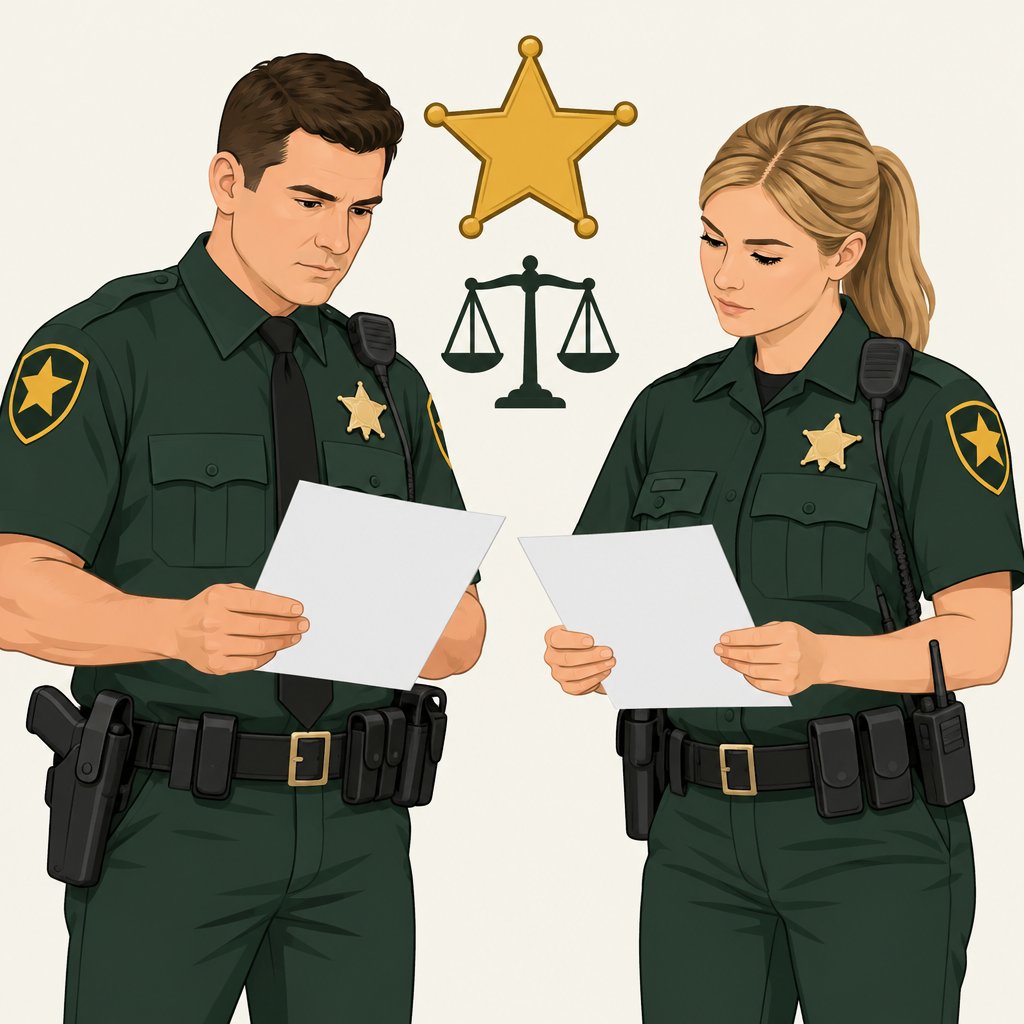
Supervision and Operational Direction
The sheriff generally supervises the law enforcement agency and directs its daily operations.
Meanwhile, a deputy sheriff carries out the sheriff’s orders and performs assigned duties.
Transform Your Career Today
Unlock a personalized career strategy that drives real results. Get tailored advice and a roadmap designed just for you.
Start NowTherefore, both positions support public safety through different levels of responsibility.
During emergencies or investigations, the sheriff assesses risks and develops a response strategy.
Next, the sheriff coordinates resources to address each situation effectively.
At the same time, the deputy sheriff implements those plans and provides support on the ground.
Consequently, the sheriff leads through strategic decisions, while the deputy sheriff handles directed fieldwork.
- The sheriff supervises agency operations and guides departmental activity.
- The deputy sheriff executes directives and completes assigned responsibilities.
- The sheriff manages strategic decisions during critical situations.
Uncover the Details: TSA Officer Physical Fitness Requirements and Tips
Training and Education for Sheriffs and Deputies
- Requirements to become a sheriff
- Training programs for aspiring sheriffs
- Education and experience differences for deputy sheriffs
Sheriff candidates must meet specific requirements before seeking the position.
Generally, sheriffs are elected officials who oversee law enforcement within a county.
Candidates typically must be at least 21 years old and maintain a clean criminal record.
They also often need several years of law enforcement experience.
Training programs prepare aspiring sheriffs to lead law enforcement agencies effectively.
These programs commonly address legal issues, personnel management, community relations, and budgeting.
Deputy sheriffs usually face different education and experience requirements.
Like sheriffs, deputies typically need a clean criminal record and an age of at least 21.
However, deputies may need less law enforcement experience than sheriff candidates.
Deputy training often emphasizes fieldwork, firearms proficiency, and situational awareness.
These differences help aspiring professionals prepare for their intended law enforcement positions.
Learn More: Top Personal Protection Gear for Bodyguards
Community Engagement in Law Enforcement
Community engagement helps sheriffs and deputy sheriffs build trust, cooperation, and understanding with residents.
The sheriff can learn about community needs and concerns through regular conversations with residents.
Therefore, strong relationships help the sheriff’s office respond more effectively to public safety concerns.
- The sheriff’s role in building relationships with the community
- Deputy sheriffs’ involvement in community outreach programs
- The importance of community policing for both positions
The sheriff can organize town hall meetings, neighborhood watch programs, and other community events.
These activities create open communication between law enforcement officers and the public.
As a result, residents can collaborate with and support the sheriff’s office more effectively.
Deputy sheriffs also participate in community outreach programs.
For example, they may give school presentations, mentor young people, and lead crime prevention workshops.
These activities teach residents about safety measures and law enforcement practices.
Moreover, deputies can build positive relationships with people from different ages and backgrounds.
Community policing emphasizes collaboration between law enforcement agencies and the communities they serve.
Both sheriffs and deputy sheriffs use community policing to improve public safety and address local concerns.
This approach combines proactive problem-solving, teamwork, and community empowerment.
Sheriffs can develop partnerships with local organizations, businesses, and residents.
Through these partnerships, sheriffs can identify public safety concerns and prioritize community needs.
They can then create targeted responses and assess how those efforts affect community well-being.
Deputy sheriffs support community policing by engaging with specific neighborhoods and community groups.
They build trust, prevent criminal activity, and help improve residents’ quality of life.
Furthermore, deputies collaborate with community leaders, schools, and social service agencies.
These partnerships help communities address underlying issues and promote lasting safety and stability.
Community policing encourages mutual respect, transparency, and accountability in law enforcement.
By working with residents, sheriffs and deputies can help create safer and more inclusive neighborhoods.
Transform Your Career Today
Unlock a personalized career strategy that drives real results. Get tailored advice and a roadmap designed just for you.
Start NowThis engagement allows officers to serve and protect with integrity and compassion.
Learn More: K-9 Officer Salary: What to Expect in the U.S.
Career Progression in Law Enforcement
Career progression gives sheriffs and deputy sheriffs opportunities to advance within law enforcement.
Experience, skills, training, and leadership qualities influence advancement for both positions.
Professionals can strengthen their careers by developing abilities and pursuing new growth opportunities.
Advancement Opportunities for Sheriffs
Sheriffs can advance by demonstrating leadership, management, and problem-solving skills.
They can also pursue senior roles, including chief deputy sheriff or elected sheriff.
Advanced education, specialized training, certifications, experience, and networking can support their career development.
- Sheriffs can progress through the ranks by demonstrating leadership, management, and problem-solving skills.
- They can pursue higher positions, such as chief deputy sheriff or elected sheriff.
- Advanced degrees, specialized training, and certifications can enhance their career prospects.
- Networking within law enforcement can create additional opportunities for sheriffs.
- Strong relationships can help sheriffs discover professional opportunities.
- Years of experience and successful leadership can contribute to career advancement.
Promotional Pathways for Deputy Sheriffs
Deputy sheriffs can advance by performing consistently and accepting additional responsibilities.
Promotional exams can help them pursue positions such as sergeant, lieutenant, or captain.
Specialized assignments can develop expertise and create further opportunities for professional advancement.
- Deputy sheriffs can advance by performing well and accepting additional responsibilities.
- They can take promotional exams for sergeant, lieutenant, or captain positions.
- Specialized units, including SWAT, K-9, and narcotics, can strengthen professional skills.
- Strong departmental reputations can support future promotional opportunities.
- Continued professional development demonstrates commitment to career growth.
- Expertise in investigations, community policing, or crisis negotiation can improve career progression.
Experience and Skills That Shape Career Growth
Experience across different law enforcement areas can broaden professional skill sets.
Hands-on work in diverse roles can provide insight and perspective that support career growth.
Training programs, workshops, and seminars can help professionals develop skills and follow emerging trends.
- Both roles benefit from experience in different areas of law enforcement.
- Diverse assignments can provide valuable insight and perspective.
- Advanced training can help professionals develop new skills.
- Workshops and seminars can help professionals stay current with emerging trends.
- Communication, problem-solving, and conflict resolution support advancement.
- Leadership, strategic thinking, and adaptability can influence career growth.
Ultimately, sheriffs and deputy sheriffs can advance by combining experience, training, skills, and leadership.
Continuous improvement can help law enforcement professionals pursue new opportunities.
Career growth also enables professionals to make positive contributions within their communities.
Sheriff and Deputy Sheriff Collaboration
Sheriffs and deputy sheriffs collaborate to maintain law and order within their jurisdiction.
They share information and resources to carry out their responsibilities effectively.
Deputy sheriffs follow the sheriff’s direction while enforcing the law.
Clear communication keeps the entire law enforcement agency aligned.
Additionally, teamwork helps personnel manage complex cases and protect public safety.
- Deputy sheriffs provide backup during high-risk operations and emergencies.
- Sheriffs oversee agency operations, while deputies complete assigned tasks.
- Trust and mutual respect support a productive working relationship.
- Regular exercises help both roles remain prepared for various situations.
This support system enables law enforcement agencies to operate efficiently.
Through partnership, sheriffs and deputy sheriffs strengthen communication, coordination, and public safety.
Distinct Responsibilities in Law Enforcement
Sheriffs are elected officials who manage the law enforcement agency.
Deputy sheriffs are sworn officers who perform enforcement duties.
Recognizing these distinct responsibilities supports effective collaboration within law enforcement agencies.
Respecting each role helps maintain a harmonious working relationship and supports safer communities.
Additional Resources
Google search results for Sheriff vs. Deputy Sheriff: Roles and Differences Protective Services
Bing search results for Sheriff vs. Deputy Sheriff: Roles and Differences Protective Services


