




Introduction
An Emergency Management Director coordinates disaster response and recovery efforts.
During emergencies, effective media relations help disseminate vital information to the public.
Clear communication supports public awareness throughout emergency situations.
The Role of an Emergency Management Director
An Emergency Management Director develops emergency response plans.
The director also coordinates response efforts during emergencies.
This role requires organized communication among response participants.
Importance of Media Relations During Emergencies
Media relations shape public perception during emergency situations.
They also help provide vital information to affected communities.
Furthermore, effective communication supports an organized emergency response.
Challenges in Media Relations for Emergency Management Directors
Emergency Management Directors manage information and inquiries from various media outlets.
They must balance transparency with the sensitivity of ongoing emergencies.
Additionally, they address misinformation and rumors spreading through social media.
- Directors manage the influx of information and inquiries from various media outlets.
- They balance transparency with the sensitivity of ongoing emergency situations.
- They address misinformation and rumors that can spread quickly through social media.
Strategies for Effective Media Relations
Directors establish media relationships before emergencies occur.
They provide timely, accurate information that keeps the public informed.
Regular briefings and trained spokespersons strengthen communication during emergencies.
- Directors establish relationships with key media contacts before emergencies occur.
- They provide timely and accurate information to keep the public informed.
- They use social media platforms to disseminate updates and answer inquiries.
- They conduct regular press briefings addressing media and public concerns.
- They train spokespersons to communicate key messages effectively.
Collaboration with Public Information Officers
Emergency Management Directors often collaborate with Public Information Officers.
This collaboration helps teams manage media relations effectively.
Moreover, coordinated communication supports consistent public updates.
Key Responsibilities in Media Relations
Directors approve official statements and press releases before dissemination.
They coordinate media interviews and press conferences about response efforts.
They also ensure consistent messaging across communication channels.
- Directors approve official statements and press releases before dissemination.
- They coordinate media interviews and press conferences about emergency response efforts.
- They ensure consistency in messaging across all communication channels.
Media Relations During a Hurricane Response
During a recent hurricane, an Emergency Management Director used social media for real-time updates.
The director also addressed public concerns through various platforms.
As a result, the communication helped dispel rumors and build trust with residents.
Building Public Trust Through Accurate Updates
Proactive media relations help directors communicate accurate emergency information.
Collaboration with Public Information Officers supports coordinated messaging.
These practices help mitigate misinformation and strengthen public trust.
Importance of Media Relations During Emergencies
Accurate information helps people make safer decisions during emergencies.
Timely media updates also clarify changing conditions and available safety guidance.
Furthermore, transparent communication can reduce panic and strengthen public trust.
Consistent messages help the public understand emergency response efforts.
Establishing Effective Media Relations
A designated spokesperson should communicate with journalists throughout the emergency.
This trained representative can deliver consistent messages to the public.
Meanwhile, a communication plan should define key messages and media protocols.
The plan should also identify suitable communication channels for urgent updates.
Regular updates keep journalists informed about conditions and response progress.
They should also explain safety instructions clearly and promptly.
Accessible officials can answer media questions and correct misunderstandings.
By sharing accurate information, officials can protect their credibility.
Social media can distribute updates quickly across a wider audience.
Transform Your Career Today
Unlock a personalized career strategy that drives real results. Get tailored advice and a roadmap designed just for you.
Start NowOfficials can also use those platforms to address public concerns in real time.
Effective Practices for Media Interactions
Spokespersons should remain calm and composed during media interviews.
That approach conveys control and confidence during uncertain conditions.
They should reinforce key messages without speculating about unknown details.
Verified information prevents confusion and limits misinformation.
Officials should anticipate common public questions before speaking with journalists.
Prepared responses can provide reassurance and clarify important concerns.
Emergency officials must coordinate closely with response teams.
This coordination keeps public messages aligned with response actions.
Regular evaluation can reveal weaknesses in the media relations approach.
Officials can then adapt their strategies according to feedback and outcomes.
Strengthening Public Trust Through Communication
Open communication supports transparency during emergency response efforts.
Clear explanations can help people understand decisions and changing conditions.
Consistent media engagement also supports a coordinated public response.
Ultimately, effective media relations can help reduce panic during disasters.
They also help officials maintain credibility while sharing vital updates.
Explore Further: How to Prepare for CBP Officer Written Tests
Developing a Media Relations Strategy
During emergencies, effective communication helps organizations manage public perception and share accurate information.
Therefore, a media relations strategy guides responses to inquiries and supports transparent communication.
Organizations can prepare protocols, designate a spokesperson, and coordinate updates before communication demands intensify.
These measures help emergency management directors provide timely and accurate information to the public.
Communication Protocols with Media Outlets
Organizations should build media relationships before emergencies occur.
They also need clear contact procedures for urgent situations.
Prepared templates and secure information-sharing tools can support consistent updates.
- Organizations should create a list of primary media contacts before emergencies occur.
- They should establish relationships with those media contacts in advance.
- Organizations should provide media outlets with designated emergency contact information.
- They should develop pre-approved messaging templates for different emergencies.
- These templates help organizations maintain consistent communication.
- Organizations should conduct regular training sessions with media representatives.
- Training familiarizes representatives with the organization’s communication protocols.
- Organizations should establish a secure platform for sharing information and updates in real-time.
Consistent Messaging Through a Designated Spokesperson
A trained spokesperson can deliver clear information during emergency communications.
The spokesperson should understand the organization’s emergency response protocols.
Additionally, coordinated messaging helps key stakeholders maintain aligned communication strategies.
- Organizations should assign a trained spokesperson for emergency communications.
- The spokesperson should understand the organization’s emergency response protocols.
- They should communicate clearly and concisely with media outlets and the public.
- The spokesperson should convey information accurately during interviews and public appearances.
- Key stakeholders should coordinate messaging to maintain aligned communication strategies.
- Organizations should provide media training for interviews, press conferences, and public appearances.
- Teams should monitor media coverage and feedback to evaluate messaging.
- Organizations should adjust messages when needed and address misperceptions promptly.
A robust media relations strategy helps emergency management directors manage media interactions effectively.
It also supports timely and accurate information dissemination to the public.
Learn More: Ethics and Accountability for ICE Agents
Managing Media Inquiries During Emergencies
During emergencies, directors must manage media inquiries carefully.
Media outlets help distribute official information to the public.
Therefore, organized responses support accurate and timely public awareness.
- Handling media requests for information.
- Providing updates and addressing rumors or false information.
Handling Requests for Emergency Information
Directors should prioritize media requests and answer them promptly.
A designated spokesperson can streamline communication during a crisis.
Consistent messages help media outlets report verified information accurately.
Providing Updates and Correcting Misinformation
Officials should provide regular updates as emergency conditions change.
Staff should correct rumors quickly before misinformation spreads widely.
Additionally, social media channels can share official updates and address public concerns.
Establishing a Media Relations Protocol
Organizations should maintain a written media relations protocol for emergencies.
Transform Your Career Today
Unlock a personalized career strategy that drives real results. Get tailored advice and a roadmap designed just for you.
Start NowOfficials can identify key contacts and build relationships before emergencies occur.
Regular training prepares staff to handle inquiries consistently.
Coordinating Public Information Activities
Public information officers can align messages across communication channels.
Local authorities and responders can supply timely, accurate details.
A Joint Information Center can centralize agency communication during emergencies.
Monitoring Media Coverage
Media monitoring helps officials track how information reaches the public.
Teams can correct inaccuracies and clarify misunderstandings promptly.
Monitoring tools also reveal public perceptions of response efforts.
Managing Press Conferences and Interviews
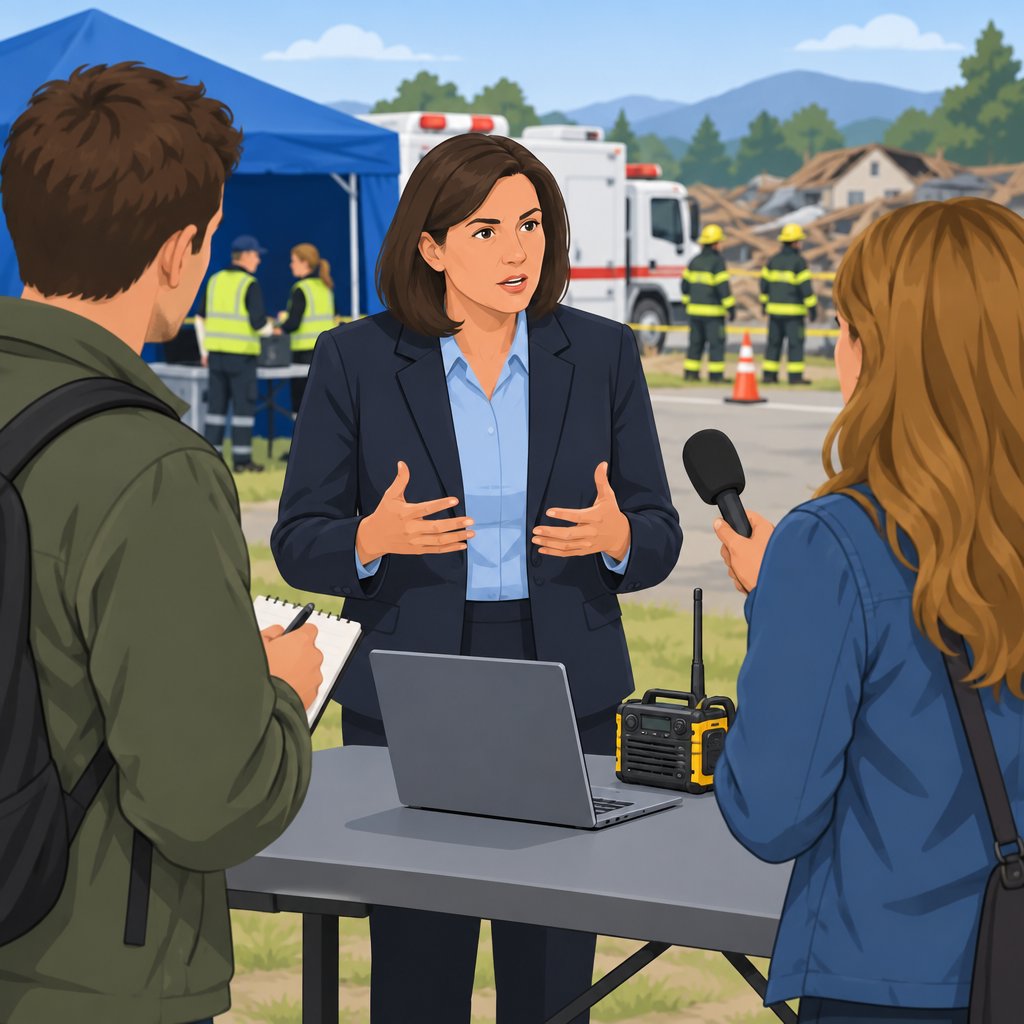
Press conferences give officials opportunities to brief journalists and answer questions.
Prepared talking points keep interviews focused and consistent.
Accurate, timely answers can ease concerns and help prevent panic.
Protecting Confidential and Sensitive Information
Officials must protect the privacy of people affected by emergencies.
Careful handling of sensitive information can reduce additional distress.
Confidentiality procedures and legal requirements restrict unauthorized disclosure.
Uncover the Details: Investigative Duties of Deputy Sheriffs
Utilizing Social Media for Emergency Communication
- Leveraging platforms like Twitter and Facebook for real-time updates.
- Engaging with the community and addressing concerns.
Social media gives emergency management directors a rapid way to share information during emergencies.
Twitter and Facebook help directors reach many residents through familiar communication channels.
These platforms also support direct interaction when residents need clarification.
Providing Real-Time Updates on Twitter
Twitter supports rapid messages when emergency conditions change.
Directors can share evacuation orders, shelter locations, and road closures through timely posts.
Hashtags can help residents find related updates more easily.
Engaging Residents Through Facebook
Facebook gives directors space for detailed emergency information.
They can share resources and answer common questions through posts.
Facebook Live can broadcast press conferences or community meetings and support real-time questions.
Addressing Public Concerns Through Social Media
Directors can monitor social media for questions and emerging concerns.
They can correct misinformation by providing accurate information promptly.
Clear responses can reassure residents and support trust in emergency efforts.
Strengthening Public Confidence Through Digital Communication
Together, these tools help directors keep residents informed during challenging conditions.
Regular updates can reduce uncertainty by clarifying the situation and available information.
Social media communication therefore supports public safety and community engagement.
Find Out More: Parole Officer: Evaluating Program Effectiveness
Post-Emergency Media Evaluations
- Teams assess communication strategy effectiveness.
- Teams identify improvements for future emergencies.
Post-emergency evaluations reveal how communication efforts performed during a crisis.
These evaluations examine message accuracy, information timing, audience reach, and public understanding.
They also guide improvements for future emergency communication.
Assessing Communication Strategy Effectiveness
After an emergency, teams should evaluate their communication strategies carefully.
This review should examine media messages, information timing, and audience reach.
Media coverage can show whether journalists conveyed key messages accurately.
It can also indicate how widely those messages reached the public.
Surveys and focus groups can reveal how audiences understood the information.
Audience feedback may identify gaps or misunderstandings requiring attention.
Transform Your Career Today
Unlock a personalized career strategy that drives real results. Get tailored advice and a roadmap designed just for you.
Start NowImproving Communication During Future Emergencies
Evaluation findings should guide improvements to future emergency communication.
Teams might revise message formats, strengthen media channels, or adopt new dissemination technologies.
Communication speed deserves particular attention during every review.
Delays involving critical updates may require faster information-sharing protocols.
A designated communication team can support prompt and organized updates.
Automated messaging systems can also help deliver information promptly.
Better coordination with response agencies can align messages across organizations.
Shared information can reduce confusion and prevent conflicting public statements.
Teams should also evaluate each communication channel used during the emergency.
Traditional media, social media, and other channels may reach audiences differently.
This assessment helps teams prioritize effective channels during future emergencies.
Media Relations Support Emergency Communication
Media relations help Emergency Management Directors communicate effectively during emergencies.
They maintain public trust by sharing accurate information.
They also promote safety through timely information sharing.


