




The border patrol agency secures the nation’s borders and prevents illegal immigration.
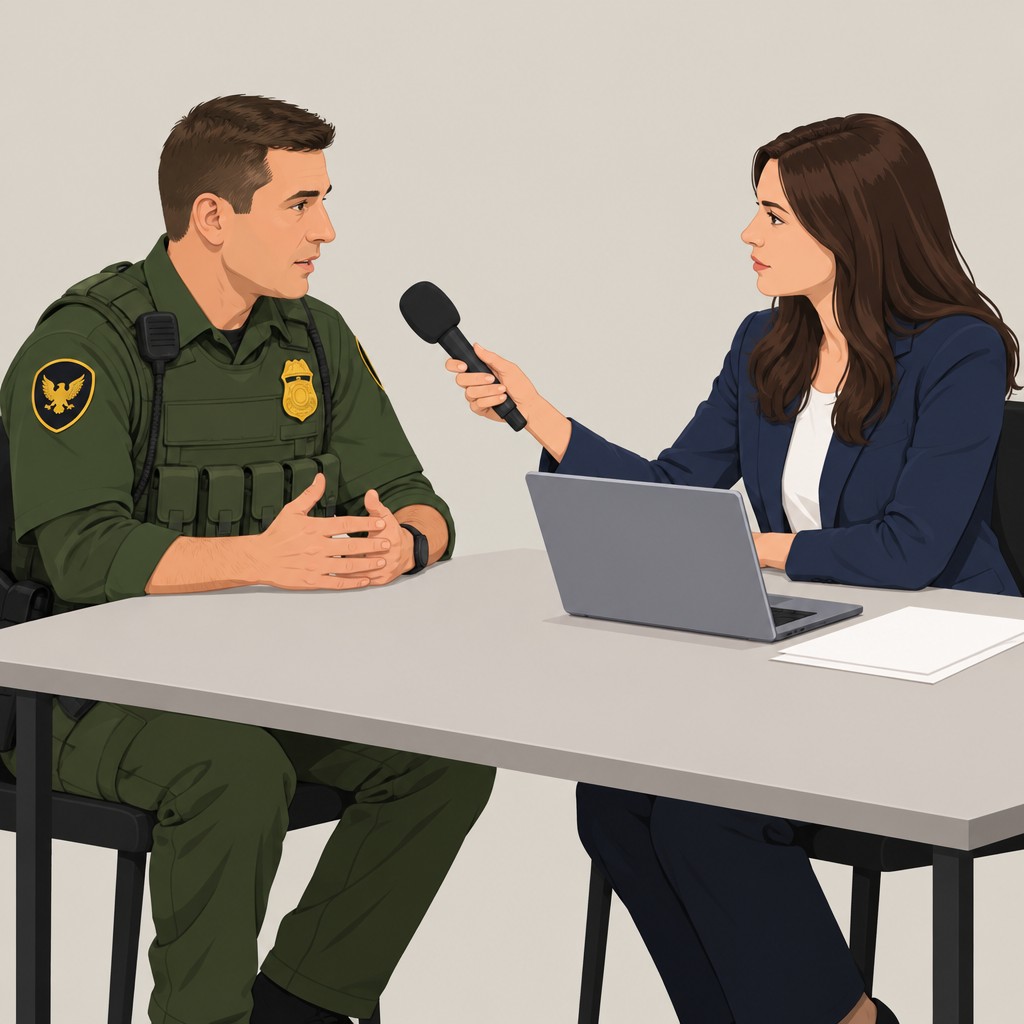
Interviews with veteran border patrol agents provide valuable insights into their experiences and challenges.
This blog post examines these dedicated individuals’ daily responsibilities, struggles, and successes.
Background of the Border Patrol Agents
- With an average of 15 years of service, veteran Border Patrol agents bring extensive experience to their roles.
- Additionally, these agents specialize in surveillance, search and rescue, and K-9 unit operations.
- Throughout their tenure, they have faced dangerous encounters with smugglers and harsh environmental conditions.
Recruitment and Training Process
Applicants complete several demanding steps before they can serve as border patrol agents.
These steps assess their qualifications, fitness, judgment, and readiness for field responsibilities.
After selection, recruits receive academy instruction and practical experience through on-the-job training.
- Candidates submit an initial application and complete a background check.
- They also complete a physical fitness test during the recruitment process.
- Selected candidates attend the Border Patrol Academy for intensive training.
- Academy instruction covers firearms training, immigration law, and physical conditioning.
- Agents complete on-the-job training to develop practical field experience.
Application and Selection Requirements
The recruitment process begins when candidates submit an online application.
Next, applicants complete written, investigative, medical, and screening requirements.
Those who satisfy every requirement receive an offer to become border patrol agents.
- The written exam tests logic, problem-solving, and language proficiency.
- Successful candidates undergo a thorough background investigation.
- Medical examinations help assess each candidate’s fitness for the position.
- Drug screenings form another part of the selection process.
- Candidates who pass all stages receive a position offer.
Academy Training and Continuing Development
Recruits complete a 58-day training program at the Border Patrol Academy in Artesia, New Mexico.
The academy prepares recruits to apply legal, physical, and operational knowledge in their duties.
After graduation, agents continue training to stay current with changing procedures.
- The program covers immigration law, physical fitness, firearms use, and vehicle operations.
- Recruits must pass every training module before graduating.
- Agents receive continuous training throughout their careers.
- They maintain physical fitness standards after completing academy training.
- Regular refresher sessions reinforce procedures and training requirements.
Skills and Qualities for Effective Border Patrol Work
Border patrol agents need communication skills to work with people from diverse backgrounds.
They also rely on physical fitness, critical thinking, and sound judgment in demanding situations.
Additionally, adaptability helps agents respond effectively while working under pressure.
- Strong communication supports effective interactions with diverse individuals.
- Physical fitness helps agents patrol remote areas and apprehend suspects on foot.
- Immigration law knowledge supports informed decisions in the field.
- Critical thinking helps agents assess situations and choose appropriate responses.
- Adaptability and composure support success under pressure.
Gain More Insights: Real-Life Stories from the U.S.-Mexico Border
Daily Tasks and Routines of Border Patrol Agents
Border patrol agents perform many responsibilities during their daily assignments.
Their primary duty is to detect and prevent the illegal entry of individuals, weapons, and contraband into the United States.
They patrol the border, inspect vehicles and cargo, and apprehend unauthorized individuals.
Additionally, agents conduct surveillance, gather intelligence, and respond to potential threats.
They often work long hours in remote areas and harsh conditions.
Furthermore, agents process and detain individuals caught attempting illegal border crossings.
Strategies Used to Secure the Border
Border patrol agents use several strategies to secure the border and prevent illegal entry.
For example, surveillance technology helps agents monitor remote border areas.
This technology includes cameras, sensors, and drones.
Meanwhile, agents conduct vehicle and foot patrols to detect unauthorized individuals.
Agents also coordinate with other law enforcement agencies, including the U.S. Coast Guard and ICE.
These agencies share intelligence and coordinate efforts to address border security concerns.
In addition, agents may collaborate with foreign governments.
Such collaboration addresses transnational crimes, including drug trafficking and human smuggling.
Collaborations with Other Law Enforcement Agencies
Border patrol agents frequently cooperate with other law enforcement agencies.
This cooperation strengthens border security and helps combat illegal activities.
For instance, agents coordinate operations and share information with state and local police departments.
They also partner with federal agencies, including the FBI and DEA.
These partnerships support investigations and prosecutions involving criminal organizations along the border.
Moreover, agents participate in joint task forces addressing threats such as terrorism and drug trafficking.
Through these collaborations, agencies combine their expertise and resources.
Consequently, they work together to secure the border and protect the United States from external threats.
Gain More Insights: Continuing Education for Parole Officers
Personal Experiences and Stories
- Memorable incidents while on duty
- Impact of their work on communities and national security
- Lessons learned from their experiences
Border Patrol Agents face unique and challenging situations while performing their duties.
Transform Your Career Today
Unlock a personalized career strategy that drives real results. Get tailored advice and a roadmap designed just for you.
Start NowThey encounter incidents that remain with them throughout their careers.
These experiences shape their decisions, teamwork, and commitment to public safety.
Memorable Incidents While on Duty
One veteran agent participated in a dramatic rescue mission involving migrants lost in the desert.
The team received a distress call and faced limited time and resources.
They located the group and rescued its members before conditions became fatal.
This experience taught the agent how teamwork supports quick decisions under pressure.
Another agent encountered a drug smuggling operation that affected the surrounding community.
The agents intercepted the illegal substances before they could cause additional harm.
That incident demonstrated how their actions can help prevent addiction from spreading locally.
Impact on Communities and National Security
Border Patrol Agents enforce immigration laws while supporting broader national security efforts.
They prevent illegal border crossings and intercept dangerous individuals and substances.
Consequently, their work protects national security and supports the well-being of citizens.
Their presence also contributes to safety and order within border communities.
By patrolling the border, they deter criminal activity and help create secure surroundings.
This sense of security reinforces the importance of their role in maintaining law and order.
Lessons Learned from Their Experiences
Years of service teach agents to remain vigilant during unpredictable situations.
They also develop adaptability and quick thinking while facing difficult professional challenges.
These skills help them fulfill their responsibilities more effectively and efficiently.
Furthermore, agents develop deep respect for the law and the responsibility to uphold it.
Their experiences expose them to the harsh realities of illegal border activities.
They also witness the consequences those activities can bring to communities.
That understanding strengthens their commitment to protecting the country and its citizens.
These personal accounts reveal the complex and consequential nature of Border Patrol work.
Through dedication and sacrifice, agents support the security and well-being of communities and the nation.
Gain More Insights: Real Stories from ICE Agents: Experiences and Advice
Changes and Advancements in Border Security
Border security has evolved significantly over the years.
It began with simple physical barriers and advanced technologies.
These changes introduced more advanced strategies for securing borders.
Evolution of Border Security Measures
In the early days, border patrol agents relied heavily on physical barriers.
Fences and walls helped prevent unauthorized entry into the country.
However, technology later expanded the tools available for border security.
New Technologies and Security Strategies
One significant advancement involved drones, sensors, and surveillance cameras.
These technologies revolutionized how border patrol agents monitor and secure borders.
For example, drones provide real-time aerial surveillance for border patrol agents.
Challenges in Adapting to Change
Despite these benefits, border patrol agents face challenges when adopting new technologies.
They need constant training and education to keep pace with rapidly evolving technology.
Additionally, budget constraints and political pressures often hinder new security measures.
Uncover the Details: Benefits of Being a TSA Officer: Job Perks and More
Public Perception and Community Relationships
Public perception shapes how communities view border patrol agents and their work.
Some agents face negative stereotypes, while others earn recognition for professional conduct.
Transform Your Career Today
Unlock a personalized career strategy that drives real results. Get tailored advice and a roadmap designed just for you.
Start NowTherefore, agencies can strengthen relationships through clear communication, community engagement, and accountability.
Addressing Misconceptions About Border Patrol Agents
Some people assume that every border patrol agent acts aggressively or responds with hostility.
However, many agents approach their responsibilities as dedicated professionals who prioritize safety and security.
Public education can clarify their role and explain the training that supports professional conduct.
- One misconception portrays all border patrol agents as aggressive or hostile.
- Many agents instead demonstrate professionalism while prioritizing safety and security.
- Public education can explain how agents support border security.
- Extensive training prepares agents to manage situations with professionalism and integrity.
Responding to Criticism and Negative Stereotypes
Advocacy groups and individuals may criticize border patrol enforcement policies.
Such criticism can affect agent morale and personal well-being.
Agents can respond constructively by listening to concerns while maintaining their lawful mission.
- Advocacy groups may challenge the policies that guide border patrol enforcement.
- Negative stereotypes can weaken agents’ morale and affect their well-being.
- Agents can build resilience while focusing on their responsibilities.
- Open communication can help agents understand and address public concerns.
Strategies for Public Relations and Community Engagement
Agencies can create direct opportunities for residents and agents to communicate.
Community events and outreach programs can explain daily work and operational challenges.
Furthermore, transparency, accountability, dialogue, and feedback can support stronger public relationships.
- Agencies can host community events that encourage positive relationships with local residents.
- Agents can join outreach programs that explain their work and challenges.
- Transparency and accountability can help agencies build community trust.
- Dialogue and feedback can narrow the gap between agents and the public.
These efforts can help agents strengthen public relationships and improve community engagement.
Preparation for a Border Patrol Career
Candidates should study the Border Patrol Agent role and understand its responsibilities.
They should monitor current events and policies that affect border security.
Additionally, candidates can prepare through fitness, relevant education, and familiarity with border communities.
- Research the Border Patrol Agent role and its responsibilities thoroughly.
- Stay updated on current events and policies related to border security.
- Develop the physical fitness and agility required for the job.
- Obtain relevant training or education in law enforcement or related fields.
- Learn about border community cultures and languages to build rapport.
Strategies for Handling Field Challenges
Agents need mental resilience for high-stress situations.
Effective communication helps colleagues and communities strengthen working relationships.
Continuous training, mentorship, judgment, and ethical decisions support difficult assignments.
- Remain mentally resilient and prepare for high-stress situations.
- Communicate effectively with colleagues and community members to strengthen relationships.
- Continue training and improving skills to address evolving threats.
- Seek support from mentors and fellow agents during difficult situations.
- Use sound judgment and ethical decision-making to protect professional integrity.
Guidance from Veteran Agents
Veteran agents emphasize service, discipline, and consistent professionalism.
They also recommend open-minded communication when agents face diverse situations.
Self-care and mental well-being can help sustain a fulfilling career.
- Embrace a strong work ethic and commitment to serving and protecting the nation.
- Maintain a positive attitude and open-minded approach to diverse situations.
- Develop communication and interpersonal skills to build trust with others.
- Follow protocols and procedures with discipline to support efficiency.
- Prioritize self-care and mental well-being throughout the profession.
Candidates can pursue excellence by preparing proactively and seeking guidance from experienced agents.
Integrity, professionalism, and dedication can help them meet the demands of border security.
These qualities position candidates for success in a demanding yet rewarding profession.
Recognizing Border Patrol Service and Sacrifice
These interviews highlight the dedication and commitment veteran Border Patrol agents bring to their work.
Furthermore, their service reflects a sustained effort to protect the nation’s borders.
These agents also make significant sacrifices while carrying out their responsibilities.
We appreciate the service these men and women provide.
Moreover, their commitment deserves public recognition and continued support.
Everyone can show gratitude by acknowledging the challenges these agents face each day.
Additional Resources
Google search results for Interviews with Veteran Border Patrol Agents Protective Services
Bing search results for Interviews with Veteran Border Patrol Agents Protective Services


