




Public Health Social Workers and Health Equity
Public health social workers play a crucial role.
They address health disparities by advocating for underserved communities.
This work directly impacts the well-being of marginalized populations.
Role of Public Health Social Workers
Public health social workers address health disparities through advocacy, support, and coordinated services.
They assist marginalized populations seeking healthcare resources and essential services.
They also collaborate with healthcare providers to develop interventions for individuals and families.
- They evaluate community needs and identify areas affected by health inequities.
- They design and implement programs that address disparities and improve health outcomes.
- They advocate for policies that promote equitable healthcare access.
- They educate communities about health issues and available resources.
Responsibilities for Addressing Health Disparities
Social workers assess community conditions before planning responses to health disparities.
They use community information to shape programs that respond to identified needs.
Through advocacy and education, they help communities understand healthcare options and equity concerns.
- Assessment: Social workers evaluate community needs and identify health inequities.
- Intervention: They create programs that address disparities and support better health outcomes.
- Advocacy: They support policies that improve healthcare access and health equity.
- Education: They explain health concerns and available community resources.
Improving Healthcare Access Through Collaboration
Public health social workers help individuals navigate healthcare systems and locate appropriate services.
They connect families with healthcare providers and community organizations that can address their needs.
They strengthen access by coordinating outreach and collaboration across agencies and community groups.
- Case Management: Social workers guide individuals through the healthcare system.
- Referral Services: They connect individuals and families with providers and community resources.
- Community Outreach: They raise awareness about health disparities and available services.
- Collaboration: They work with organizations and agencies to improve healthcare access.
These coordinated efforts support marginalized populations as they seek healthcare services.
By addressing social determinants of health, social workers help reduce barriers affecting individuals, families, and communities.
Their work promotes health equity and supports the well-being of society.
Understanding Health Disparities
Health disparities describe differences in health outcomes among groups of people.
Social, economic, and environmental disadvantages often contribute to these differences.
Social determinants, including income, education, and resources, strongly influence health outcomes.
- Income inequality
- Limited access to healthcare services
- Educational attainment
- Environmental conditions
- Racial and ethnic discrimination
Social Determinants and Health Outcomes
Social determinants shape health opportunities across different populations.
Marginalized populations often experience poorer health outcomes because they face multiple disadvantages.
These conditions can increase chronic disease risks and reduce life expectancy.
- Poorer health outcomes for marginalized populations
- Increased risk of chronic diseases
- Lower life expectancy
- Barriers to healthcare access
- Healthcare disparities based on income and race
Community Strategies for Health Equity
Public health social workers address health disparities by examining their underlying social conditions.
They work with individuals, families, and communities to identify barriers affecting health and well-being.
They also advocate for policies and programs that promote social justice and health equity.
Through outreach, education, and support services, they help people manage their health and well-being.
They collaborate with healthcare providers, government agencies, and community organizations.
These partnerships support comprehensive strategies for improving healthcare access and reducing disparities.
Uncover the Details: School Social Workers: Advocacy for Student Rights
Community Collaboration
Public health social workers partner with community organizations to reach marginalized populations.
These partnerships help workers connect with people who may face barriers to services.
Additionally, community collaboration supports efforts to reduce health disparities.
Culturally Competent Care
Public health social workers learn about clients’ cultural beliefs and practices.
They respect those beliefs while providing culturally competent care.
As a result, cultural understanding helps workers build trust with diverse populations.
Policy Advocacy
Public health social workers advocate for policies addressing systemic causes of health disparities.
They support changes that respond to unequal health outcomes among communities.
Furthermore, advocacy promotes social justice by addressing the root causes of disparities.
Supportive Services and Resources
Public health social workers help individuals access healthcare, housing, and food assistance.
These supportive services connect people with resources addressing essential needs.
Consequently, resource access can help individuals manage challenges affecting their health.
Transform Your Career Today
Unlock a personalized career strategy that drives real results. Get tailored advice and a roadmap designed just for you.
Start NowCommunity Needs Assessments and Education
Public health social workers conduct needs assessments to identify specific community needs.
They use this information to guide responsive support for different populations.
Meanwhile, workers educate communities about preventive measures and healthy behaviors.
This education supports efforts to reduce health disparities.
Social Determinants of Health
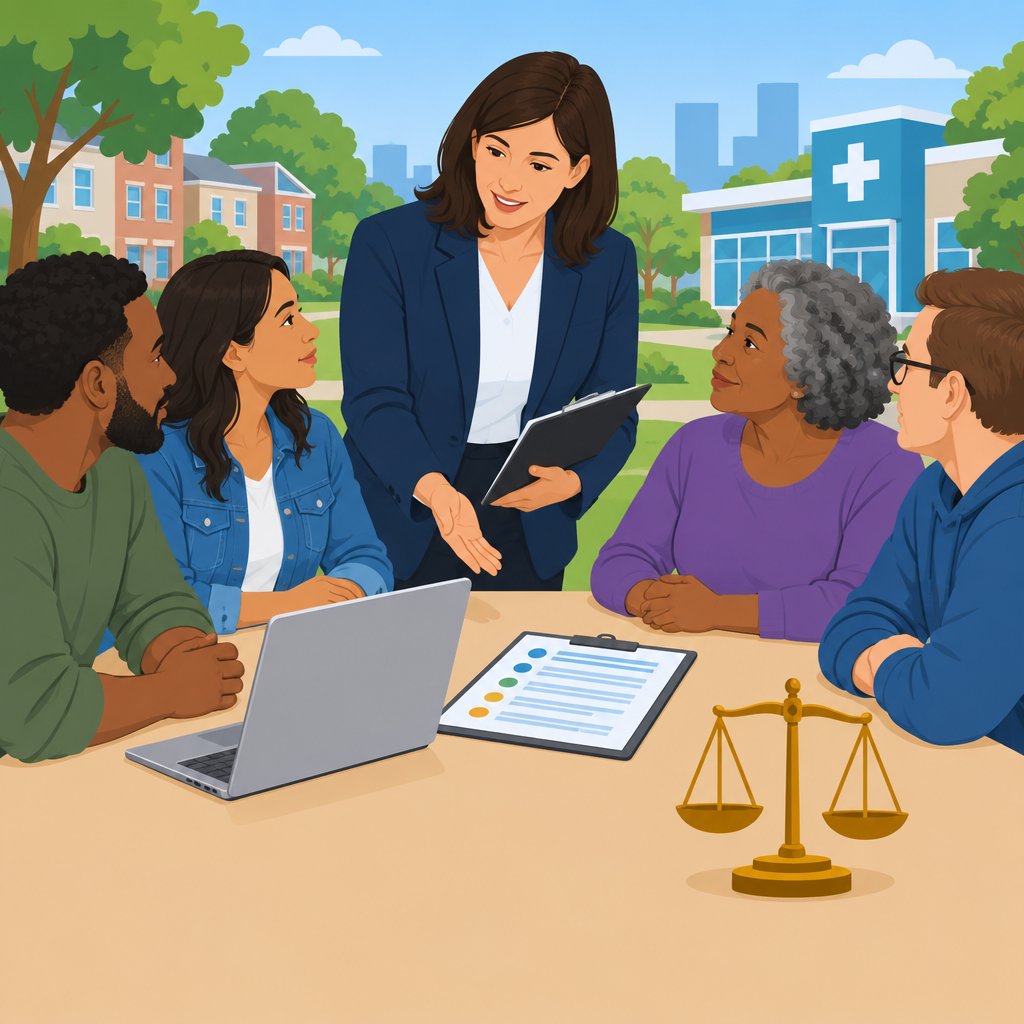
Public health social workers address poverty, racism, and limited access to care.
They recognize these conditions as important factors affecting community health.
By responding to these conditions, workers promote more equitable health outcomes.
See Related Content: Substance Abuse Counseling for Veterans
Case Studies and Examples
- Public health social workers reduce health disparities through targeted interventions.
- A case from a marginalized community shows how a worker addressed local healthcare needs.
- For instance, one worker organized workshops in a low-income neighborhood about preventive health measures.
- Through these sessions, residents learned healthy choices, healthcare access, and disease prevention.
Success Stories
- One worker collaborated with local clinics to provide free health screenings for residents.
- Consequently, screenings helped individuals identify underlying health issues early and receive treatment.
- Another worker advocated for policy changes that increased mental health funding in underserved areas.
- As a result, more individuals accessed mental health resources and support, improving their outcomes.
Outcomes from Interventions
- Research has shown that public health social workers’ interventions can help create healthier communities.
- By addressing healthcare, education, housing, and employment, workers can improve individual well-being.
- Furthermore, these professionals promote health equity by advocating equal healthcare access for everyone.
- Their efforts can improve health outcomes, reduce healthcare costs, and increase quality of life.
Public health social workers’ dedication has improved the health and well-being of communities worldwide.
Their advocacy and interventions offer examples of efforts toward a more equitable, healthier society.
Discover More: Health Educator Job Outlook and Salary Guide
Public health social workers face several challenges while addressing health disparities.
These challenges can affect their ability to provide effective support.
Despite these barriers, they remain committed to promoting health equity in diverse communities.
Challenges Faced by Public Health Social Workers
- Heavy Workload: Heavy caseloads can make it difficult to provide quality care for every client.
- Complex Cases: Complex health disparities and social issues require specialized training and adequate resources.
- Cultural Competency: Workers may struggle to understand cultural nuances within the communities they serve.
- Limited Funding: Limited funding and resources hinder efforts to address health disparities effectively.
- Barriers to Access: Access barriers can make it difficult to reach people who need healthcare services.
- Stigma and Discrimination: Stigma and discrimination can affect care for marginalized populations.
- Burnout and Mental Health: Emotional demands can contribute to burnout and mental health challenges among workers.
- Policy and Legislative Challenges: Complex policies and laws may impede efforts to address health disparities effectively.
- Interdisciplinary Collaboration: Different approaches and priorities can complicate collaboration with healthcare professionals and organizations.
- Language Barriers: Language differences can impede effective support for diverse populations.
Nevertheless, public health social workers continue promoting health equity and addressing disparities in diverse communities.
Find Out More: How to Become a Family Support Worker
Educational Pathways for Public Health Social Work
Public health social work requires focused education and practical preparation.
Students build knowledge about social issues, public health, and research methods.
Training also develops skills for addressing health disparities in professional settings.
Educational Background
- A bachelor’s degree in social work, public health, or a related field provides foundational preparation.
- This education introduces social issues, public health concepts, and research methods.
- Many employers prefer candidates with a master’s degree in social work.
- A public health or health disparities focus can support advanced practice.
- Coursework may include epidemiology, health policy, community organizing, and cultural competence.
- These subjects strengthen preparation for addressing health disparities effectively.
Training and Practical Experience
- Fieldwork and internships help students apply theoretical knowledge in real-world settings.
- These experiences provide opportunities to work directly with clients.
- Students also collaborate with multidisciplinary teams during practical training.
- Continuing education keeps professionals informed about current public health practices.
- Workshops, conferences, and seminars can strengthen professional knowledge and skills.
- Specialized training may address mental health, substance abuse, or HIV/AIDS prevention.
- Additional topics include maternal health, child health, and other relevant concerns.
Certifications and Licensure
- Some states or settings require public health social workers to obtain licensure.
- Requirements typically include a licensing examination and specified practice hours.
- The National Association of Social Workers offers certifications for public health specialists.
- Certification demonstrates commitment to professional development and specialized expertise.
- Professionals may also pursue credentials in case management or addiction counseling.
- Healthcare social work certifications can expand job opportunities and earning potential.
Professional Preparation for Public Health Social Work
A strong educational foundation supports effective practice in public health social work.
Practical training helps professionals apply knowledge while serving individuals and communities.
Ongoing development enables social workers to maintain relevant skills and specialized expertise.
Collaborations and partnerships are crucial for addressing health disparities.
Public health social workers can achieve broader results by working with healthcare professionals and community organizations.
These relationships can improve health outcomes for marginalized populations.
Collaboration Across Health Systems and Communities
- Teamwork supports a comprehensive and holistic approach to addressing health disparities.
- Collaborating with doctors, nurses, and psychologists can provide integrated care for people facing health challenges.
- Working with community organizations can improve access to resources and services addressing social determinants of health.
- Community-based partnerships can strengthen cultural competence and build trust among underserved populations.
- Pooling resources and expertise can produce more effective and sustainable interventions.
Policy Partnerships for Systemic Health Equity
- Public health social workers can advocate for policies addressing the root causes of health disparities.
- Engaging policymakers can support policies that promote health equity and social justice.
- Policy collaboration can create systemic changes that improve community health over time.
- Public health social workers can share expertise about social determinants and effective interventions.
- Joint efforts can create a supportive policy environment for addressing health disparities.
Healthcare professionals, community organizations, and policymakers each contribute valuable resources and expertise.
Consequently, coordinated partnerships can strengthen interventions for marginalized populations.
These combined efforts can create meaningful improvements in community health outcomes.
Advancing Health Equity Through Public Health Social Work
Public health social workers help build fairer systems by centering marginalized populations’ needs.
They also promote access to quality healthcare services through advocacy and informed action.
Their understanding of social determinants helps them identify conditions that influence unequal health outcomes.
Furthermore, they translate community concerns into practical strategies with providers and policymakers.
Cultural competency helps them respect different experiences and communicate across communities.
Through counseling and case management, they connect vulnerable people with appropriate support.
They also use policy development and empowerment to strengthen people’s ability to influence change.
Supporting this work can advance a healthier society grounded in social justice.


