




Introduction
School social workers connect students, families, and schools.
They help protect student rights within educational settings.
Additionally, they support fair access to opportunities and resources.
The Role of School Social Workers
School social workers are trained professionals who advocate for students facing difficult circumstances.
They support students experiencing poverty, homelessness, mental health issues, or discrimination.
Furthermore, they help students access equal educational opportunities and necessary resources.
The Importance of Student Rights Advocacy
Advocating for student rights helps schools create safe and inclusive learning environments.
When schools respect student rights, students can develop academically, socially, and emotionally.
School social workers help ensure fair treatment and access to needed support.
They address bullying, discrimination, limited educational opportunities, and inadequate support services.
Moreover, they encourage students to speak up for themselves.
This support helps students participate actively in their educational experiences.
Therefore, rights-based advocacy helps create nurturing schools where students can reach their potential.
Overview of School Social Workers
School social workers support students who face social, emotional, behavioral, or educational challenges.
They provide direct services while coordinating responses with people involved in student support.
Through this work, they help students address barriers within school settings.
Role and Responsibilities of School Social Workers
School social workers counsel students who experience social, emotional, and behavioral concerns.
They assess student needs and connect students with helpful community resources.
They also coordinate intervention plans with teachers, parents, and other professionals.
- School social workers provide counseling services for students facing personal or behavioral difficulties.
- They collaborate with teachers, parents, and professionals to develop student intervention plans.
- They assess student needs and connect families with community resources.
- They advocate for student rights within schools and surrounding systems.
- They assist with crisis intervention and support students during emergencies.
Advocating for Student Rights
School social workers notice problems that may limit a student’s ability to succeed.
They work with students, families, and school staff to address those concerns.
They also promote equitable support and encourage students to participate in their education.
- They identify issues that may interfere with student learning and school success.
- They help students receive accommodations and support needed for educational access.
- They advocate for policies and programs that promote equity and social justice.
- They empower students to advocate for themselves within educational settings.
- They work with administrators to address systemic issues affecting student rights.
Key Student Rights in School Settings
School social workers advocate for student rights within educational settings.
These rights help students access education, safety, fairness, support, privacy, and expression.
Moreover, protecting these rights strengthens students’ ability to participate and learn.
- Students have the right to a Free and Appropriate Public Education.
- Every student has the right to a safe and secure learning environment.
- Schools must provide non-discrimination and equal treatment for every student.
- Students with disabilities have the right to individualized education plans.
- Students have the right to confidentiality and privacy.
- Learners have the right to freedom of speech and expression.
Why Student Rights Matter in Schools
Protecting student rights shapes how schools respond to student needs.
Fair practices can improve access to education and support meaningful participation.
They also encourage students and staff to treat one another with dignity.
- Quality education prepares students for future success.
- Inclusive practices create positive learning environments for all students.
- Fair treatment upholds justice and equality in education.
- Rights-based support helps students pursue their goals.
- Respectful schools foster dignity and understanding among students and staff.
- Student empowerment encourages learners to challenge injustice and advocate for themselves.
You Might Also Like: Substance Abuse Counseling for Veterans
Common Challenges Faced by Students
Students often face challenges that affect their academic performance.
These difficulties can also influence their well-being at school.
Several personal, social, and educational concerns may require additional support.
- Bullying and peer pressure
- Academic stress and pressure to excel
- Family issues and domestic struggles
- Mental health concerns
- Substance abuse and addiction
- Learning disabilities and special needs
- Socioeconomic inequalities and financial hardships
How School Social Workers Can Help
School social workers help students navigate challenges within school environments.
They provide interventions that support students’ emotional and academic needs.
Additionally, they advocate for resources that promote student well-being.
Individual Counseling and Support
School social workers provide one-on-one counseling sessions for students.
These sessions help students develop coping mechanisms.
Students can also build resilience while navigating challenging situations.
Group Therapy and Support Groups
Support groups bring together students who face similar challenges.
These groups create a safe space for students to share experiences.
Transform Your Career Today
Unlock a personalized career strategy that drives real results. Get tailored advice and a roadmap designed just for you.
Start NowFurthermore, students can build a supportive community within the school.
Referrals to External Services
School social workers connect students and families with external resources.
They may refer families to mental health agencies or treatment centers.
They can also identify financial assistance programs for families.
Collaboration with School Staff
Social workers collaborate with teachers, administrators, and other school staff.
This teamwork helps staff develop strategies for student support.
Those strategies can address academic and emotional needs at school.
Advocacy for Student Rights
School social workers advocate for students’ rights within the school system.
They help students access necessary accommodations and resources.
They also support students’ academic and emotional progress.
Crisis Intervention and Prevention
School social workers respond when students experience serious crises.
They can intervene during bullying incidents or mental health emergencies.
Immediate support helps protect student safety and well-being.
Education and Prevention Programs
Social workers develop education programs about bullying, substance abuse, and mental health.
These programs raise awareness among students.
They also equip students with skills for managing challenges.
Family Engagement and Support
School social workers collaborate with families to address underlying issues.
Family collaboration adds support beyond the classroom.
This approach addresses student needs through coordinated family support.
Through these services, school social workers help students manage challenges in school environments.
See Related Content: Health Educator Job Outlook and Salary Guide
Advocacy Strategies
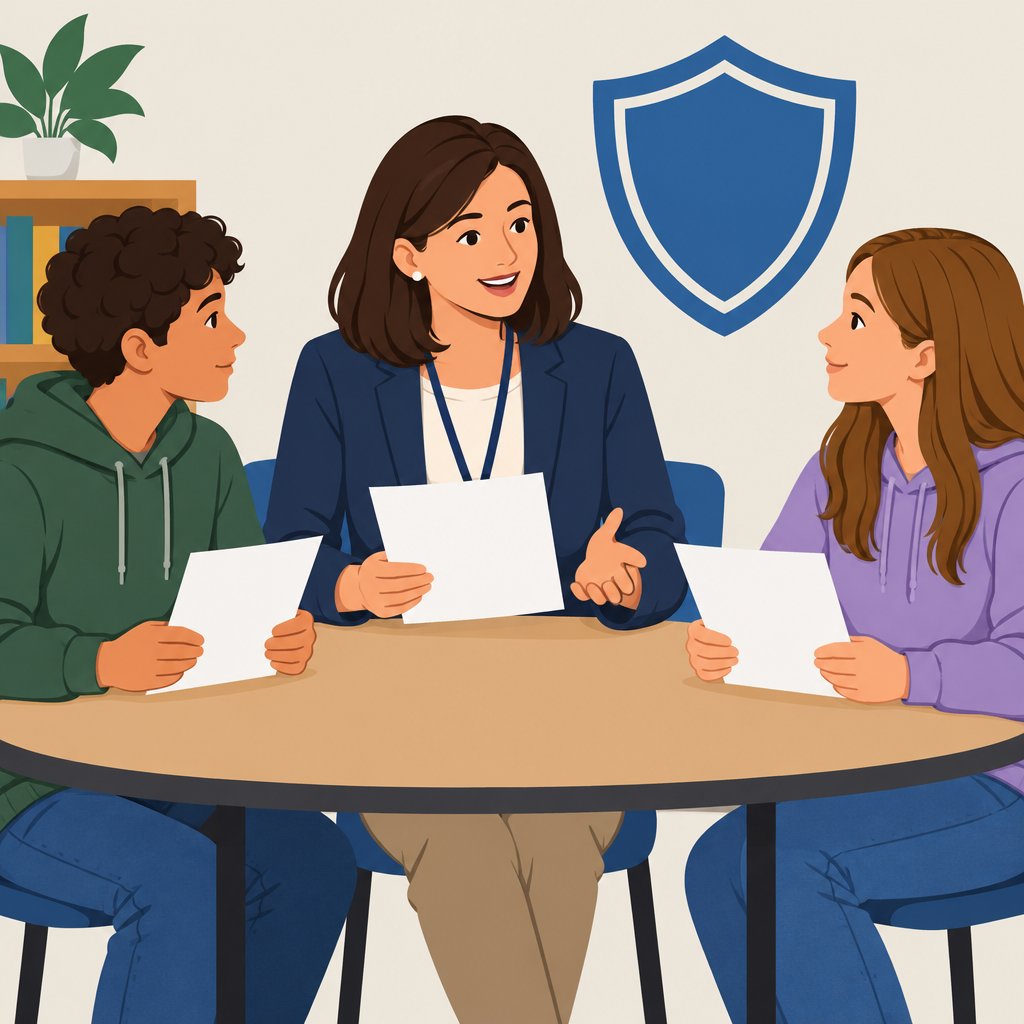
School social workers use various strategies to promote and protect student rights.
These strategies address individual, institutional, community, and legislative barriers.
They also help students access support and advocate for themselves.
- School social workers provide individual and group counseling to help students advocate for themselves.
- They conduct workshops for students, teachers, and parents about student rights and advocacy methods.
- They analyze school policies to identify gaps or provisions that may infringe on student rights.
- They collaborate with community organizations to secure resources for students facing barriers.
- They lobby lawmakers and policymakers for legislation that protects student rights.
Role of Collaboration and Partnership
Collaboration and partnership support effective advocacy for student rights.
School social workers coordinate with stakeholders to address student needs comprehensively.
This teamwork helps create supportive environments that respect and promote student rights.
- School social workers collaborate with administrators to address systemic issues affecting student rights.
- They partner with teachers and staff to promote empowerment and respect for student rights.
- They involve parents and families in advocacy efforts for their children.
- They build partnerships with community organizations, legal aid services, and advocacy groups.
- They work with psychologists and counselors to develop comprehensive solutions for complex student needs.
Learn More: How to Become a Family Support Worker
Case Studies
These examples show how school social workers address barriers affecting students’ education, safety, and well-being.
They connect students with accommodations, resources, and support while responding to immediate concerns.
As a result, students can pursue learning with greater confidence and stability.
- A school social worker advocates for a student with a learning disability.
- The social worker ensures the student receives necessary accommodations.
- Consequently, the student’s academic performance improves, strengthening self-esteem and overall well-being.
- Another school social worker helps a homeless student access stable housing resources and support.
- With this assistance, the student focuses on education and successfully graduates.
- This outcome helps the student break the cycle of poverty.
- Additionally, a school social worker intervenes in a bullying situation.
- The social worker advocates for the victim and promotes a safe school environment.
- As bullying stops, both students receive counseling and support to heal and move forward.
Impact on Student Outcomes
Advocating for student rights can increase academic success and improve overall well-being.
When students feel safe, supported, and heard, they become more likely to excel in their studies.
Furthermore, school social workers help create positive and inclusive school climates.
- Access to resources and accommodations can create fairer opportunities for students facing adversity.
- Advocacy empowers students to develop self-advocacy skills and confidence.
- School social workers play a crucial role in supporting students’ success at school and beyond.
Delve into the Subject: Top Organizations Hiring Child Welfare Specialists
Supporting Resources
Educational websites such as NASW and ASCA provide advocacy guidance.
Books such as “The School Social Work Toolkit” offer practical tips.
Online courses, webinars, and workshops strengthen advocacy knowledge and skills.
- Educational websites like NASW and ASCA for advocacy guidance.
- Books such as “The School Social Work Toolkit” for practical tips.
- Online courses on student rights and advocacy strategies.
- Webinars and workshops organized by professional associations.
Professional Development Opportunities
School social workers advocate for student rights within educational systems.
Therefore, continuous professional development can strengthen their advocacy efforts.
Transform Your Career Today
Unlock a personalized career strategy that drives real results. Get tailored advice and a roadmap designed just for you.
Start NowThese opportunities help practitioners develop relevant knowledge and skills.
- Participate in workshops and conferences focused on student rights and advocacy.
- Join professional associations such as NASW and ASCA for resources and networking.
- Enroll in online courses about student rights, social justice, and advocacy strategies.
- Attend webinars led by school social work and student rights advocacy experts.
- Read books and publications about best practices for advocating for student rights.
By pursuing these opportunities, school social workers can stay informed about advocacy trends and strategies.
They can also enhance their ability to support and advocate for all students.
Advancing Equity Through Student Rights Advocacy
They support students who lack the voice or resources to advocate for themselves.
By promoting student rights, social workers help schools create inclusive and supportive environments.
Furthermore, they continue advocating for quality education, essential resources, and meaningful student support.
They also promote policies and practices that advance equity and social justice.
Consequently, their dedication helps every student pursue a safe, empowering, and successful educational experience.
Additional Resources
Bing search results for School Social Workers: Advocacy for Student Rights Social and Human Services


