




Technology and Agricultural Labor
Technology has transformed many industries by improving efficiency and productivity.
Agriculture has experienced significant changes as farmers adopt advanced tools and machinery.
These developments continue to reshape agricultural labor and workplace expectations.
Technological Advancements in Agriculture
Farmers now use advanced machinery and digital tools to streamline agricultural operations.
For example, drones help farmers monitor crops across agricultural fields.
Additionally, precision agriculture techniques support more efficient farming practices.
Automation in Agricultural Labor
Technology automates many repetitive tasks within agricultural labor.
Machines now handle activities such as planting, harvesting, and irrigation.
Consequently, farms may require fewer workers for certain manual responsibilities.
Increased Efficiency and Productivity
Technological adoption has increased efficiency and productivity across agricultural operations.
Automated machinery enables farmers to complete work within shorter periods.
As a result, farms can produce higher yields with improved equipment.
Training and Skill Development
Modern agricultural technology creates a growing need for new worker skills.
Farmers must learn how to operate increasingly complex machinery.
Therefore, training programs help agricultural workers adapt to technological changes.
Challenges Faced by Agricultural Laborers
Technology also creates challenges for agricultural laborers.
Machines may replace some traditional roles, creating potential job displacement.
Meanwhile, workers may need different skills as agricultural tasks become more automated.
Future Directions for Agricultural Labor
Technology will continue influencing agricultural labor as digital tools and machinery advance.
The industry must address both the challenges and opportunities created by these developments.
Supporting worker adaptation can help maintain a sustainable and productive agricultural sector.
Historical Background of Agricultural Labor
Agriculture has shaped human society since civilization began.
Early farming depended heavily on manual labor to produce food.
- Humans began farming approximately 10,000 years ago after leaving hunter-gatherer societies.
- Meanwhile, Mesopotamia, Egypt, and China relied on manual labor for crops and livestock.
- Many ancient societies also used enslaved people as agricultural laborers.
Traditional Agricultural Practices
Traditional farming relied on manual labor and basic tools.
Farmers used hoes, sickles, and plows to cultivate their fields.
- Farmers planted seeds, removed weeds, irrigated crops, and harvested produce by hand.
- They worked long hours under difficult conditions to secure successful harvests.
- Families, including women and children, often shared subsistence farming responsibilities.
The Role of Manual Labor in Farming
Manual labor supported agricultural production throughout history.
Farmers used physical strength and practical skills to cultivate land and produce food.
- Workers cleared land, prepared soil, planted seeds, and tended growing crops.
- Farmers developed sustainable practices from their knowledge of local land and conditions.
- Generations passed this agricultural knowledge to their communities.
- Their labor supported food security and helped societies develop.
Advancements in Technology in Agriculture
Modern agricultural technologies have revolutionized farming practices, making them more efficient and productive.
These advancements have significantly impacted agricultural labor jobs.
- Introduction to modern agricultural technologies: The agricultural sector has experienced rapid technological transformation in recent years.
- Transformation of farming practices: Modern tools and equipment have replaced traditional farming methods, increasing efficiency and productivity.
- The introduction of tractors, combine harvesters, and irrigation systems has automated many previously manual tasks.
- This change has reduced labor-intensive work and increased output with less human effort.
Farmers now use drones to monitor crops.
They provide real-time data about crop health, water usage, and pest infestations.
This information helps farmers make informed decisions and protect crops promptly.
Consequently, farms can increase yields while reducing labor costs.
Precision agriculture has also transformed farming practices.
It uses sensors, GPS technology, and data analytics to optimize field operations.
These operations include planting, irrigation, and fertilization.
Farmers can therefore improve yields, reduce waste, and minimize environmental impacts.
Advancements in biotechnology have enabled genetically modified crops with greater resistance to pests, diseases, and adverse weather.
These crops require fewer inputs, including pesticides and fertilizers.
They can also produce higher yields than conventional varieties.
Transform Your Career Today
Unlock a personalized career strategy that drives real results. Get tailored advice and a roadmap designed just for you.
Start NowConsequently, farmers can produce more with less labor and focus resources elsewhere.
These technologies have made farming more efficient, productive, and sustainable.
They have also changed the demands placed on agricultural labor jobs.
Farmers can improve profitability, reduce labor costs, and support food security for future generations.
Explore Further: Workplace Rights for Agricultural Laborers
Impact of Technology on Agricultural Labor Jobs
Technology has revolutionized agriculture and significantly affected agricultural labor jobs.
Automation, machinery, and robotics now influence how farms organize their work.
Consequently, farmers increasingly use technology to improve efficiency and reduce labor costs.
Decrease in Demand for Manual Labor
Automation in farming reduces demand for manual labor.
Machines and robots now perform tasks that human workers traditionally handled.
Therefore, farms offer fewer opportunities for laborers performing routine manual work.
- Automation in farming processes has decreased demand for manual labor.
- Machines and robots now perform tasks traditionally completed by human workers.
- This shift toward automation has created fewer job opportunities for agricultural laborers.
- Farmers increasingly use technology to improve efficiency and reduce labor costs.
- As a result, farms need fewer workers for manual tasks.
Shift in Required Skill Sets
Technology adoption has also changed the skills agricultural workers need.
Workers must operate and maintain complex machinery.
Moreover, data analysis and technical knowledge have become increasingly important.
- Agricultural workers now need proficiency in operating and maintaining complex machinery.
- Skills such as data analysis and technical knowledge are becoming increasingly important in agriculture.
- Workers must adapt to new technologies and regularly update their skills to remain competitive.
- This shift highlights the importance of education and training for agricultural workers.
- Education and training help workers prepare for agriculture’s changing landscape.
As technology advances, workers must adapt and update their skills to remain relevant.
Education and training can help workers prepare for agriculture’s changing labor demands.
Uncover the Details: Introduction to the Role of a Viticulturist
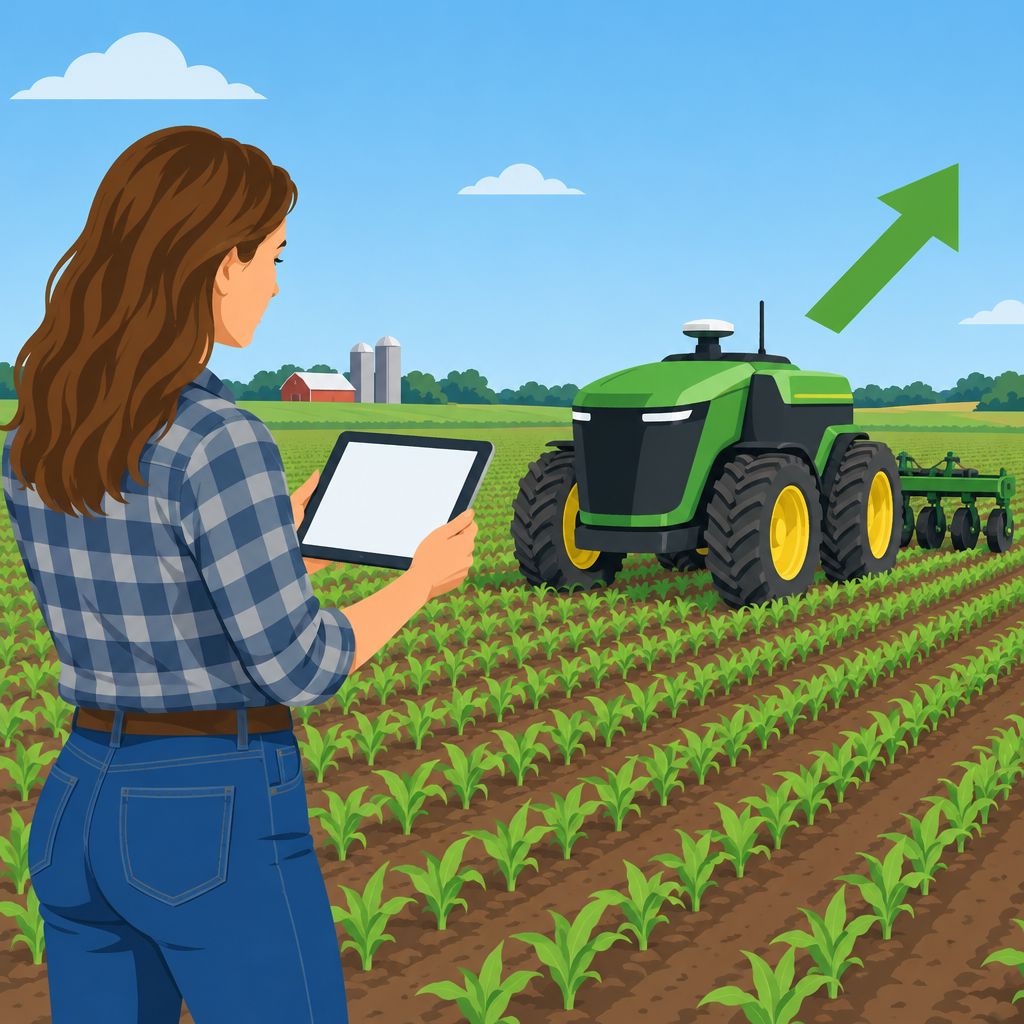
Benefits of Technology in Agriculture
- Increased efficiency and productivity
- Reduction in labor-intensive tasks
Technology has revolutionized agriculture and created numerous benefits for farmers and the industry.
One key advantage involves increased efficiency and productivity.
Advanced machinery allows farmers to produce more crops in less time.
This process can increase yields and profits.
Additionally, technology reduces labor-intensive tasks on farms.
Automation and machinery now handle tasks that once required substantial time and physical effort.
Therefore, farmers save time and energy while reducing their need for manual labor.
They can then focus on other important operational responsibilities.
Moreover, technology improves precision throughout farming practices.
GPS-guided tractors and drones support accurate planting and harvesting.
This precision can improve produce quality, minimize waste, and reduce environmental impact.
Furthermore, technology provides access to real-time agricultural data.
Smart sensors and analytics software help farmers monitor crops, soil conditions, and weather patterns.
Consequently, farmers can make informed decisions about resources, pest control, and irrigation.
These decisions support stronger crop management and higher yields.
Technology has therefore reshaped agricultural work through efficiency, automation, precision, and data access.
These benefits support a more sustainable and profitable future for agriculture.
Find Out More: Farm Manager Responsibilities and Daily Tasks
Challenges Faced by Agricultural Laborers
Agricultural technology creates new opportunities, but it also introduces serious challenges for agricultural laborers.
Workers must manage changing job requirements, financial pressures, workplace hazards, and concerns about their well-being.
These challenges require practical support as modern farming continues to reshape agricultural work.
Job Displacement and Changing Work Roles
Machines and automation have replaced some traditional agricultural roles.
Consequently, many workers have lost livelihoods that depended on manual farming tasks.
Transform Your Career Today
Unlock a personalized career strategy that drives real results. Get tailored advice and a roadmap designed just for you.
Start NowGenerations of laborers who cultivated land manually now face fewer employment opportunities.
Training for New Agricultural Technologies
Modern equipment requires agricultural laborers to develop new technical skills.
Therefore, workers need accessible training programs and resources to operate complex machinery safely.
Without proper training, laborers may experience job insecurity and reduced productivity.
Financial Pressure from Technological Investments
New technology can create financial difficulties for small-scale farmers and agricultural laborers.
Purchasing, maintaining, and upgrading machinery often requires substantial financial resources.
As a result, workers with limited funds may struggle to compete with larger farms.
Health and Safety Risks
Heavy machinery can expose agricultural laborers to serious workplace accidents and injuries.
Moreover, chemicals and pesticides used in modern farming can harm workers’ health.
Employers must provide proper training and safety protocols to reduce these risks.
Job Satisfaction and Mental Well-Being
Automation can increase workers’ fears about job insecurity and replacement.
Additionally, isolated and repetitive tasks may increase stress among agricultural laborers.
Employers and policymakers should prioritize worker well-being as technology changes agricultural employment.
Explore Further: Daily Routine of an Agricultural Equipment Operator
Case Studies of Technological Implementations in Agriculture
Farms increasingly apply advanced tools to manage irrigation, harvesting, crop monitoring, and pest control.
These systems support more precise decisions while changing how workers perform routine agricultural tasks.
Consequently, farms can coordinate resources and operations with greater consistency.
Advanced Technologies Used on Farms
Different farms use technology for specific operational needs.
Some systems target water management, while others support harvesting or crop surveillance.
Together, these applications demonstrate ways technology can reduce manual effort and improve operational control.
- Farm A uses sensor-equipped irrigation to monitor soil moisture and deliver water precisely, reducing waste and manual irrigation labor.
- Farm B uses automated harvesting machinery for wheat and corn, while computer vision separates ripe crops from unripe crops.
- Farm C uses drones with multispectral cameras to monitor crop health, detect pests, and target pesticide applications.
Effects on Labor Requirements and Efficiency
These implementations affect labor requirements, operating speed, decision-making, and resource use.
Automation can reduce repetitive work, while monitoring tools can guide more targeted interventions.
Therefore, farms may improve consistency without relying on the same amount of manual activity.
- Farms can reduce labor costs by automating irrigation and harvesting tasks.
- Automated machinery can complete tasks faster and more precisely than manual labor.
- Sensors and drones provide timely crop and soil information for informed decisions, supporting yield and produce quality.
- Advanced systems help farms optimize water, pesticides, and fertilizers while reducing waste and environmental effects.
These examples show how technological implementation can streamline operations and support agricultural productivity.
Future Trends in Technology and Agricultural Labor Jobs
- Predictions on the continued shift towards automation
- Potential solutions for balancing technological advancements with job retention
Automation will likely expand across agriculture as robotics and artificial intelligence improve farming efficiency.
These tools can reduce operating costs while changing how farms organize daily work.
At the same time, farmers must consider how automation will affect traditional agricultural labor.
Predictions for Agricultural Automation
Autonomous vehicles may become more common, reducing the need for people to operate farm machinery.
Drones with cameras and sensors can monitor crops and livestock, helping farmers make data-driven decisions.
Similarly, robotic arms and automated equipment can support planting, harvesting, and produce packaging.
However, capable machines may displace workers who previously performed these manual tasks.
Therefore, the industry must examine how new technology can also create agricultural job opportunities.
Strategies for Retaining Agricultural Workers
Farmers can help retain workers by teaching them to operate and maintain emerging technologies.
Training and education can prepare employees to work effectively alongside automated equipment.
Meanwhile, diversified roles can move workers from routine tasks into data analysis, software development, and robotic maintenance.
Such transitions can preserve talent while farms adopt new systems.
Furthermore, technology developers and agricultural organizations should collaborate on workforce planning.
Labor unions, government agencies, and industry stakeholders can discuss policies supporting job creation and economic growth.
These efforts can help farmers use innovation while supporting a sustainable future for workers.
Technology’s Lasting Role in Agricultural Labor
Technology now connects efficient production with changing workforce needs.
Transform Your Career Today
Unlock a personalized career strategy that drives real results. Get tailored advice and a roadmap designed just for you.
Start NowAutomation and machinery reduce manual tasks, decreasing demand for some traditional agricultural jobs.
At the same time, farms need skilled workers to operate and maintain advanced equipment.
Consequently, technology strengthens farm management while supporting more productive agricultural operations.
Looking ahead, precision farming and data-driven decisions will continue shaping agricultural work.
Although automation may replace some roles, technical skills will become increasingly valuable.
Workers who understand robotics and artificial intelligence can support agriculture’s continuing development.
These changes can help agriculture respond to global challenges and pursue long-term sustainability.
Additional Resources
Google search results for Impact of Technology on Agricultural Labor Jobs Agricultural
Bing search results for Impact of Technology on Agricultural Labor Jobs Agricultural


