




Role of Agricultural Equipment Operators
Agricultural equipment operators operate machinery used in farming activities.
They help agricultural businesses complete essential tasks efficiently.
Their work supports productive farming operations.
Importance of Agricultural Equipment Operators
These operators perform tasks such as plowing, planting, harvesting, and irrigation.
They ensure agricultural tasks receive accurate and efficient execution.
Skilled operators can increase yields and improve crop quality.
Moreover, they help agricultural businesses maximize productivity and minimize downtime.
Operators also perform routine maintenance to keep equipment in optimal condition.
This maintenance helps prevent breakdowns and delays during agricultural activities.
Efficient machinery operation helps farms meet planting and harvesting deadlines.
Therefore, operators need attention to detail and strong knowledge of farming practices.
Their work directly affects the success of agricultural operations.
Furthermore, their skills support sustainability and profitability within the agricultural industry.
Agricultural equipment operators remain integral to the agricultural sector.
They ensure farm tasks proceed efficiently and support successful agricultural businesses.
Start of the Day
- Wake up early to begin the day.
- Check the weather forecast to plan daily tasks.
- Fuel up and prepare equipment for work.
The workday begins early and requires careful preparation.
An early start provides enough time to complete tasks efficiently.
Quiet morning hours create space for initial planning.
Early Morning Preparation
Waking early gives the operator a head start on daily responsibilities.
This head start helps ensure that tasks finish within the available time.
Additionally, quiet morning hours provide a peaceful beginning before activity increases.
Weather Planning
Checking the weather forecast helps the operator organize the day’s tasks.
Rain, storms, and extreme temperatures can affect planned work.
Therefore, the operator can adjust the schedule to support productivity.
Equipment Readiness
After reviewing the forecast, the operator fuels the equipment.
Checking fuel levels and machinery condition supports smooth field operations.
Regular maintenance also helps address potential issues before they become larger problems.
Fieldwork
Fieldwork involves operating agricultural equipment during crop cultivation.
Operators complete several machine-based tasks that support planting and harvesting.
They also monitor conditions, equipment, and safety requirements throughout field operations.
Core Fieldwork Tasks
- Operate tractors, combines, and other machinery to plow, plant, and harvest crops.
- Monitor equipment performance and adjust settings when field conditions require changes.
- Follow safety protocols throughout each operation.
Tractors support several field activities, including plowing before seeds enter the soil.
During planting, operators can use tractors to prepare fields for seed placement.
Combine harvesters help operators gather wheat, corn, and soybeans efficiently during harvest.
These machines handle large-scale harvesting work during the seasonal crop cycle.
Operators closely monitor engine temperature, fuel levels, and unusual noises.
These checks can reveal equipment problems that require attention.
Additionally, operators adjust machinery to maintain suitable performance.
For example, they can change planter settings to achieve desired seed spacing.
They can also adjust combine header height to support crop yield.
Safety remains essential during every field operation.
Transform Your Career Today
Unlock a personalized career strategy that drives real results. Get tailored advice and a roadmap designed just for you.
Start NowOperators wear protective gear and ensure that safety guards remain in place.
They also watch for other workers near the machinery.
Beyond operation, they grease moving parts and check fluid levels.
They perform minor repairs to keep equipment running smoothly.
Consequently, careful fieldwork supports planting, harvesting, and equipment upkeep.
Find Out More: Challenges Faced by Dairy Scientists Today
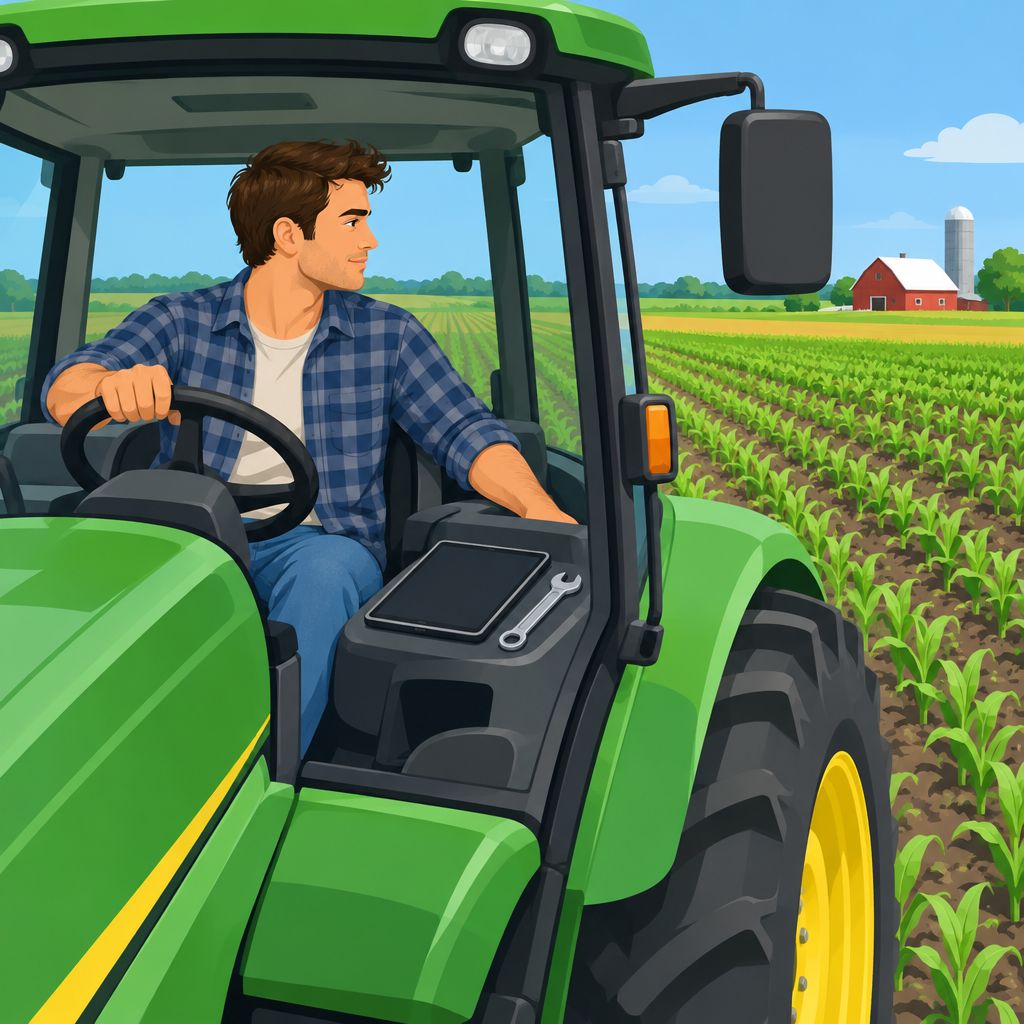
Maintenance
Regular maintenance helps agricultural equipment perform reliably during farm operations.
These tasks also support equipment longevity and help operators identify problems early.
Therefore, operators should include inspections, cleaning, storage, and recordkeeping in their routine.
Conduct Routine Maintenance
Start by checking oil levels and topping them up when necessary.
Next, inspect filters and replace them when they no longer function properly.
Also, grease moving parts and inspect tires for wear, tear, and correct pressure.
- Check oil levels and top them up if necessary.
- Inspect filters and replace them when needed.
- Grease moving parts to prevent friction and wear.
- Inspect tires for wear and tear and adjust pressure as needed.
Routine maintenance can reveal potential issues early and help prevent costly repairs later.
Clean and Store Equipment Properly
After each use, remove debris and dirt from the equipment.
Additionally, wash the equipment regularly to help prevent corrosion and rust.
Then, store the equipment in a dry, sheltered location away from the elements.
- Remove any debris or dirt from the equipment after each use.
- Wash the equipment regularly to prevent corrosion and rust.
- Store the equipment in a dry and sheltered location to protect it from the elements.
- Cover the equipment with a tarp to shield it from dust and moisture.
Proper cleaning and storage help extend equipment lifespan and maintain performance over time.
Keep Detailed Records
Maintain a log of every maintenance task performed on each piece of equipment.
Record repairs and replacements so you can review the equipment’s service history.
Meanwhile, track operating hours to schedule maintenance at appropriate intervals.
- Maintain a log of all maintenance tasks performed on each piece of equipment.
- Record any repairs or replacements made to the equipment.
- Track operating hours for each machine to schedule maintenance at appropriate intervals.
Detailed records keep maintenance activities organized and reveal patterns in equipment performance.
Following these practices helps agricultural equipment operate efficiently and productively on the farm.
Gain More Insights: How to Handle Market Crises in Agriculture
Communication in Agricultural Operations
Communication supports successful daily operations for agricultural equipment operators.
It helps teams coordinate work, report problems, and improve fieldwork efficiency.
Clear exchanges also help operators follow plans and respond to changing needs.
- Coordinate with farm managers, agronomists, and team members to plan tasks
Operators coordinate with farm managers, agronomists, and team members to plan tasks.
These discussions clarify the day’s overall plan.
Consequently, operators can complete tasks efficiently and follow the established schedule. - Communicate equipment or crop issues promptly
Operators communicate equipment or crop issues promptly.
Early reports allow teams to arrange repairs or adjustments.
This response reduces downtime and limits effects on productivity. - Collaborate with other operators to maximize fieldwork efficiency
Operators collaborate with other operators to maximize fieldwork efficiency.
They coordinate tasks, share resources, and provide assistance when needed.
Thus, teamwork helps complete fieldwork efficiently and effectively.
Effective communication helps agricultural equipment operators succeed during daily operations.
By coordinating with stakeholders, operators keep tasks organized and timely.
Prompt reporting and teamwork contribute to the farm’s success.
Find Out More: Extension Agents and Climate Change Adaptation
Breaks and Meals
Taking care of your body supports productivity and safety during agricultural equipment operation.
Regular breaks, nourishing meals, and hydration help you maintain energy and focus.
Together, these habits support steady performance throughout the workday.
Regular Breaks
- Take regular breaks to rest and refuel.
- Short breaks every few hours can help prevent fatigue and maintain focus.
- Use break time to stretch and relax your muscles, which helps prevent stiffness and injuries.
- Step away from the equipment to give your body and mind a break.
- Plan breaks strategically around natural stopping points in your work.
Nutritious Meals
- Eat nutritious meals to sustain your energy levels throughout the day.
- Include carbohydrates, proteins, and healthy fats in balanced meals.
- Pack fruits, nuts, and energy bars to stay fueled during long shifts.
- Avoid heavy and greasy foods because they can make you feel sluggish.
- Choose water or electrolyte-rich beverages instead of sugary drinks.
Hydration
- Stay hydrated to prevent dehydration during long hours of work.
- Carry a water bottle and sip from it throughout the day.
- Dehydration can cause fatigue, dizziness, and decreased cognitive function.
- Monitor your urine color to check your hydration and adjust your intake accordingly.
- Increase your water intake during hot weather to replace fluids lost through sweat.
By prioritizing breaks, nutritious meals, and hydration, you can maintain energy and focus during equipment operation.
Gain More Insights: Understanding Food Preservation Methods by Scientists
The Broader Value of Agricultural Equipment Operators
Agricultural equipment operators make a valuable contribution to modern farming.
Their efforts help farms complete necessary work with greater efficiency.
Modern agriculture increasingly depends on operators who can manage specialized equipment effectively.
Furthermore, technological advances have made their responsibilities more demanding and increasingly important.
Farmers depend on skilled operators to use advanced machinery and support productive operations.
Transform Your Career Today
Unlock a personalized career strategy that drives real results. Get tailored advice and a roadmap designed just for you.
Start NowConsequently, their performance influences how efficiently farms use available equipment.
Reliable equipment operation helps agricultural businesses maintain steady production.
Moreover, these workers help reduce the labor demands associated with farming.
Although their work often occurs behind the scenes, its effects support the food supply.
Their dedication helps farms thrive and keeps food production moving forward.
Therefore, people should recognize agricultural equipment operators and their contributions to agriculture.
Next time you enjoy a meal, remember the workers whose efforts support food production.
Additional Resources
Google search results for Daily Routine of an Agricultural Equipment Operator Agricultural
Bing search results for Daily Routine of an Agricultural Equipment Operator Agricultural


