




Farm Machinery Safety
Safety remains paramount when operators use farm machinery.
Farm machinery can cause rollovers.
Operators also face entanglement and collision risks.
Proper Training for Farm Machinery
Proper training helps operators use farm machinery efficiently.
It also improves understanding of equipment functions and safety features.
Furthermore, training prepares operators to follow safe operating procedures.
- Join a Training Program: Enroll in a formal program offered by agricultural organizations or equipment manufacturers.
- Hands-on Experience: Practice under an experienced operator’s supervision in a controlled environment.
- Study Equipment Manuals: Read the operator’s manual before using the machinery.
- Seek Mentoring: Ask a knowledgeable mentor for practical guidance about operating farm machinery.
Regular Farm Machinery Maintenance
Regular maintenance keeps farm machinery in suitable operating condition.
Routine inspections can identify equipment problems before operation begins.
Additionally, scheduled servicing supports dependable performance and longer equipment use.
- Inspect Daily: Check for loose bolts, worn parts, and proper fluid levels before operation.
- Follow the Maintenance Schedule: Change filters, lubricate moving parts, and replace worn components regularly.
- Clean Machinery: Remove dirt and debris to help prevent corrosion and equipment malfunctions.
- Store Properly: Keep machinery in a sheltered area away from harsh weather conditions.
Safe Farm Machinery Operation
Operators should apply consistent safety practices during machinery use.
Protective equipment helps shield operators from debris and excessive noise.
Moreover, alert operators can respond appropriately to changing conditions.
- Use Protective Gear: Wear gloves, goggles, and ear protection during operation.
- Observe Surroundings: Check for obstacles, people, and animals before starting the machinery.
- Avoid Distracted Driving: Focus on operating the machinery and avoid mobile device use.
- Follow Traffic Rules: Signal intentions, yield to other vehicles, and obey speed limits.
Proper training, regular maintenance, and careful operation help operators improve efficiency and reduce avoidable risks.
Inspecting Farm Machinery
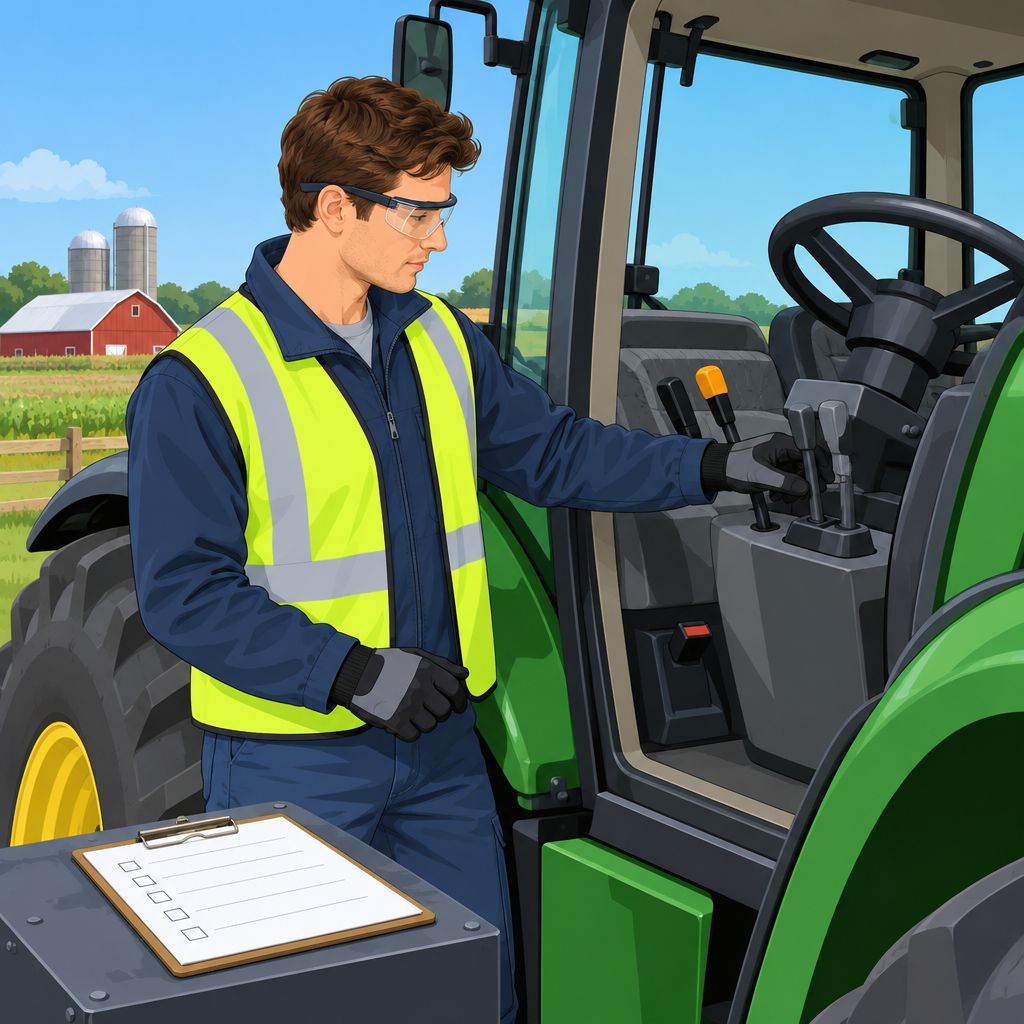
Inspect machinery before operation to confirm that every component works properly.
A thorough inspection helps identify problems before they cause accidents or breakdowns.
Therefore, complete each check before operating equipment.
- Inspect the brakes for wear, and confirm that they respond properly.
- Test every light to maintain visibility, especially during night operations.
- Examine the tires for punctures, low pressure, or damage that could cause a blowout.
- Test the steering and confirm that the wheel turns smoothly with proper alignment.
- Check the oil, hydraulic fluid, and coolant levels to prevent overheating or engine damage.
- Test all safety switches and guards to protect the operator during use.
- Secure loose bolts and nuts so parts remain attached during operation.
- Look for leaks in hydraulic hoses, fuel lines, and other components.
These inspections minimize accident risks and support efficient equipment operation.
Find Out More: How Biotechnology Specialists Combat Plant Diseases
Personal Protective Equipment for Farm Machinery Operation
Operators should wear appropriate personal protective equipment when operating farm machinery.
This equipment creates a protective barrier between operators and potential hazards.
Additionally, proper PPE can reduce injury severity during accidents.
- Helmets: Helmets protect the head during rollovers or collisions.
- Gloves: Gloves help prevent cuts, bruises, burns, and chemical exposure.
- Boots: Sturdy boots with reinforced toes protect feet and ankles from heavy equipment.
Each item serves a specific purpose during machinery operation.
For example, helmets help prevent concussions and traumatic brain injuries during rollovers or collisions.
Similarly, gloves shield hands from abrasions, burns, chemicals, and hazardous materials.
Finally, reinforced boots can help prevent crushing injuries and puncture wounds.
- Helmets: Helmets can prevent serious head injuries during collisions or rollovers.
- Gloves: Gloves protect hands from cuts, abrasions, burns, and hazardous substances.
- Boots: Reinforced boots protect feet from crushing injuries and puncture wounds.
Therefore, wearing suitable PPE adds another layer of protection during agricultural operations.
Operators should select equipment that matches the hazards associated with their tasks.
See Related Content: Understanding Pest Management Strategies
Following Manufacturer Guidelines
Farm machinery operators must follow the manufacturer’s guidelines and recommendations.
These instructions support safe operation and help protect equipment from unnecessary damage.
Operators should always use machinery within its designated limits.
Reasons Manufacturer Guidelines Matter
First, manufacturer instructions establish procedures that reduce operational risks.
Additionally, correct operation supports equipment performance and reduces unnecessary downtime.
Finally, recommended practices can help prevent premature equipment wear.
- Safe procedures help operators reduce accident and injury risks.
- Designated operating limits support consistent machinery performance.
- Proper use can help extend equipment service life.
Important Operating Requirements
Operators should follow the manufacturer’s maintenance schedule for servicing the machinery.
This schedule may include oil changes, filter replacements, and general equipment upkeep.
Furthermore, operators should use machinery only under approved terrain, weather, and load conditions.
- Complete required maintenance at the intervals specified by the manufacturer.
- Respect terrain, weather, and load capacity restrictions.
- Confirm that operators understand the equipment before use.
Benefits of Operating Within Designated Limits
Following the guidelines helps operators use machinery more safely and effectively.
Moreover, proper operation can improve output while reducing maintenance costs.
Manufacturers may also require compliance with their guidelines for warranty coverage.
Transform Your Career Today
Unlock a personalized career strategy that drives real results. Get tailored advice and a roadmap designed just for you.
Start Now- Guideline compliance can reduce risks for operators and nearby people.
- Correct operation supports better performance and efficiency.
- Following recommendations can help preserve applicable warranty coverage.
Responsible Machinery Operation
Operators should read the manufacturer’s instructions before using farm machinery.
They should also remain within every specified operating limit during use.
These practices promote safer operation, reliable performance, and longer equipment service life.
Explore Further: Training Programs for Aspiring Quality Control Inspectors
Limit Distractions
Operating farm machinery requires full attention to support safety and efficiency.
Distractions can cause accidents and injuries.
- Therefore, avoid using mobile phones while operating farm machinery.
- Also, limit conversations with passengers to maintain focus.
- Additionally, avoid eating or drinking while operating the machinery.
- Furthermore, avoid loud music that could distract your attention.
- Finally, avoid looking at or using GPS devices while the machinery moves.
Distractions while operating farm machinery can have serious consequences.
Therefore, prioritize safety by minimizing distractions.
Find Out More: Understanding Mastitis: A Dairy Scientist's View
Avoid Overworking Farm Machinery
Overworking farm machinery creates avoidable risks and consequences.
Therefore, operators should manage workloads carefully to support reliable equipment performance.
Balanced use also helps promote efficient operation and longer equipment service life.
Risks of Overworking Farm Machinery
Excessive workloads place additional strain on critical machinery components.
As a result, equipment may break down more often and operate less efficiently.
These conditions can also increase maintenance demands and create hazards for farm workers.
- Overworking machinery accelerates wear and tear on critical components, which can lead to breakdowns.
- Constant overworking reduces machinery efficiency, increases fuel consumption, and lowers output.
- Overworked machinery requires more frequent repairs and maintenance, increasing overall costs.
- Machinery malfunctions become more likely, increasing accident and injury risks on the farm.
Maintenance Practices for Appropriate Machinery Use
Operators can reduce overworking by planning equipment use and maintenance carefully.
Meanwhile, regular attention helps maintain machinery in suitable working condition.
Rest periods and usage records also support better workload management.
- Implement regular maintenance to keep machinery in optimal condition and prevent breakdowns.
- Track usage hours to prevent overworking and schedule maintenance appropriately.
- Allow sufficient rest between heavy workloads to prevent overheating and excessive wear.
- Invest in quality equipment designed to withstand heavy workloads and extended use.
Focused Operation of Farm Machinery
Operating farm machinery requires your full attention.
Distractions can lead to accidents and injuries.
Staying alert helps operators work safely and efficiently.
Awareness of Surrounding Hazards
Operators should constantly scan their surroundings during machinery operation.
This awareness helps them notice potential hazards promptly.
Careful observation protects operators and other people nearby.
Benefits of Staying Focused
Focused operation helps prevent accidents.
It also supports smooth machinery operation.
Furthermore, alert operators protect themselves and others.
- Prevents accidents
- Ensures smooth operation
- Protects yourself and others
Ways to Maintain Focus
Operators can maintain focus by avoiding phones and other distractions.
Regular breaks help operators remain alert during work.
Additionally, hydration, rest, and training support attentive machinery operation.
- Avoid using your phone or other distractions
- Take regular breaks to stay alert
- Stay hydrated and well-rested
- Attend training sessions on machinery operation
Emergency Preparedness
Farm machinery emergencies require calm decisions and prompt action.
A clear emergency plan helps operators respond effectively during accidents.
Preparation also helps protect operators and others nearby.
- Stay calm and collected during emergencies because panic can worsen the situation.
- First, assess the situation and determine the emergency’s severity before making decisions.
- Contact emergency services or relevant authorities when the situation requires immediate assistance.
- Follow established emergency procedures, including shutting off machinery or evacuating the area.
- Keep emergency contacts available, including emergency services, family members, and neighbors.
- Report emergencies clearly and provide as much detail as possible about the situation.
- Employers should train employees on emergency protocols and procedures.
- Finally, review and update the emergency plan after equipment or procedure changes.
Clear communication helps everyone understand the emergency and respond appropriately.
Regular planning keeps emergency procedures current and supports safer machinery operation.
Safe Daily Operation Practices
Safe daily practices help operators manage routine farm machinery work.
Therefore, operators should apply each safety measure before and during operation.
These habits support efficient work while reducing preventable accidents and injuries.
- Always wear appropriate safety gear.
- Inspect machinery regularly for defects.
- Take breaks to prevent fatigue during operation.
- Stay alert and focused on the task.
- Follow all safety guidelines and protocols.
Consistent attention to these practices helps operators work efficiently and reduce accident risks.
Additional Resources
Google search results for Safety Tips for Operating Farm Machinery Efficiently Agricultural
Transform Your Career Today
Unlock a personalized career strategy that drives real results. Get tailored advice and a roadmap designed just for you.
Start NowBing search results for Safety Tips for Operating Farm Machinery Efficiently Agricultural


