




Technology’s Role in Agricultural Consulting
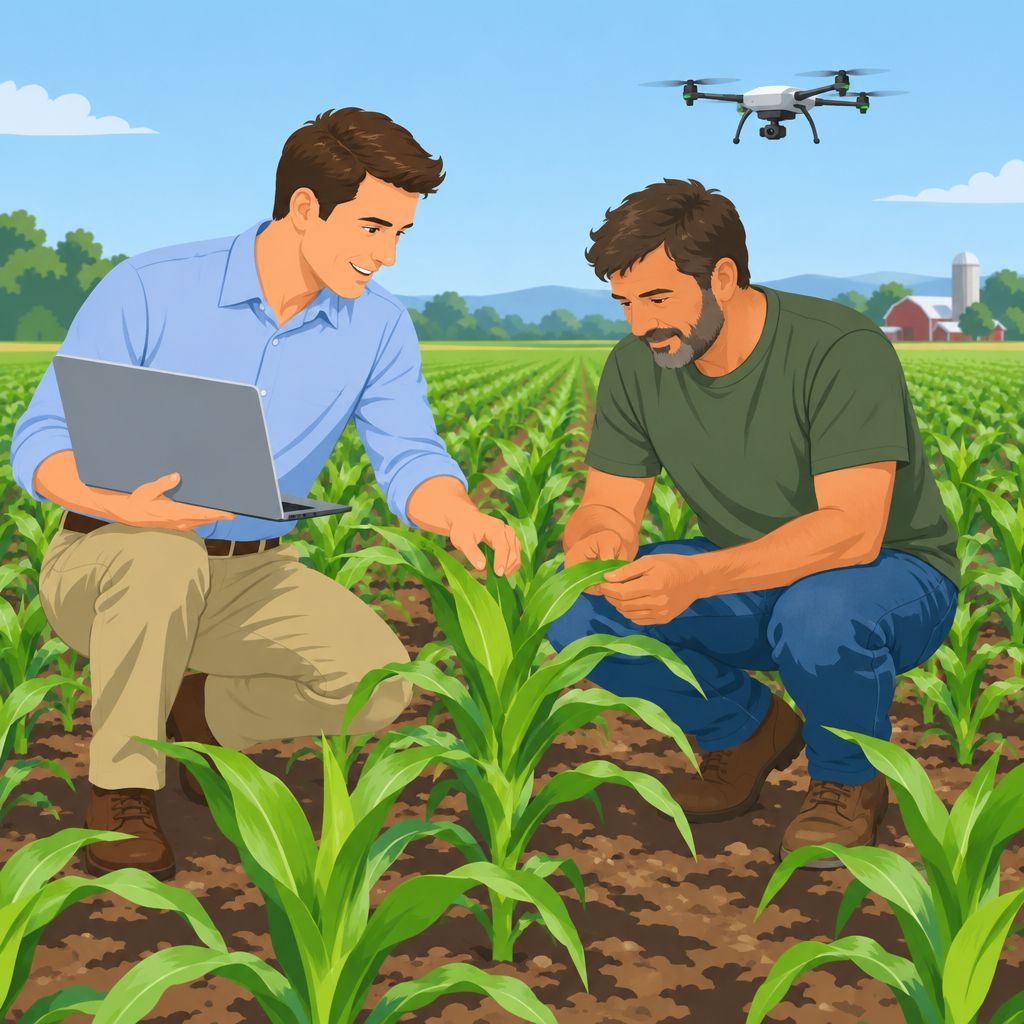
Technology now helps agricultural consultants guide farmers toward informed decisions, stronger productivity, and more sustainable operations.
Previously, consultants assessed farms onsite and based recommendations on direct observations.
Now, technology lets them collect and analyze information more efficiently.
Consequently, data-driven methods support precise decisions and solutions tailored to each farm’s needs.
Precision agriculture uses drones, satellite imagery, and GPS technology to gather detailed farm data.
Consultants can examine soil conditions, crop health, and weather patterns with greater accuracy.
Real-time information helps farmers allocate resources efficiently and improve operations.
Data analytics and predictive modeling also strengthen agricultural consulting.
These tools help consultants forecast trends and identify potential risks.
They can then recommend proactive strategies that address challenges before they worsen.
Mobile apps and software platforms improve communication between consultants and farmers.
These tools support quick information sharing, timely collaboration, and faster decisions.
Remote monitoring systems and Internet of Things devices provide continuous operational insights.
Those insights can increase productivity and reduce manual labor.
By adopting these technologies, consultants can deliver tailored recommendations for changing farm conditions.
Farmers can therefore pursue greater yields, profitability, and environmental sustainability.
The Evolution of Technology in Agriculture
Understanding agricultural technology requires examining its history.
This journey reveals technology’s transformative impact on the industry.
It also shows how farming methods changed over time.
History of Technology in Agriculture
- Early agricultural practices required intensive labor and depended heavily on manual work.
- The plow increased farming efficiency and productivity.
- The Industrial Revolution mechanized agriculture through machines such as the tractor.
- The Green Revolution introduced new crop varieties and techniques that increased yields.
Key Advancements in Agricultural Technology
- Precision agriculture uses GPS technology and sensors to optimize field operations and crop management.
- Biotechnology has produced genetically modified crops with improved pest and disease resistance.
- Drones monitor crops, assess soil health, and apply pesticides precisely.
- Data analytics and artificial intelligence help farmers use real-time information and predictive models.
These advances have steadily improved agricultural efficiency, sustainability, and productivity.
They have also transformed modern farming practices.
Technology now supports nearly every aspect of agricultural production.
Benefits of Technology in Agricultural Consulting
Improved efficiency and productivity: Technology streamlines agricultural processes and helps farmers use resources efficiently.
Precision agriculture reduces waste while supporting more productive farming practices.
Consequently, automation and data-driven insights can help farmers improve their operational results.
These tools can also help farmers strengthen their financial outcomes.
Access to real-time data: Technology gives farmers current information for monitoring and analysis.
Sensors, drones, and satellite imagery reveal soil moisture, crop health, and weather conditions.
Farmers can then adjust irrigation, fertilization, and pest control decisions using that information.
Furthermore, timely data helps farmers respond quickly to challenges and improve crop yields.
Gain More Insights: Importance of Credit Analysis in Agricultural Loans
Types of Technology Used in Agricultural Consulting
Agricultural consultants use several technologies to support field management and planning.
These tools help consultants examine crops, resources, equipment, and operational data.
They also support recommendations that address productivity, resource use, and farm management.
Precision Farming Tools and Equipment
- GPS-guided tractors and machinery
- Automated irrigation systems
- Variable rate technology for fertilizers and pesticides
- Drones for aerial imaging and crop monitoring
GPS-guided equipment helps farmers manage field operations with greater accuracy.
Automated irrigation systems support consistent water application across managed areas.
Variable rate tools and drones help consultants assess applications and crop conditions.
Remote Sensing and Geospatial Technologies
- Satellite imagery for monitoring crop health
- Drones for surveying and mapping land
- GIS software for analyzing spatial data
- Weather forecasting tools for predicting conditions
Satellite imagery gives consultants information about crop health across monitored fields.
Drones provide additional surveying and mapping information for land assessment.
GIS software and weather tools help consultants interpret spatial data and expected conditions.
Transform Your Career Today
Unlock a personalized career strategy that drives real results. Get tailored advice and a roadmap designed just for you.
Start NowFarm Management Software
- Field mapping and planning software
- Inventory and supply chain management tools
- Financial tracking and reporting systems
- Crop monitoring and yield forecasting platforms
Field mapping software helps consultants organize plans and review farm information.
Inventory, supply chain, and financial tools organize essential operational records.
Crop monitoring and yield forecasting platforms support progress reviews and recommendations.
Technology Integration in Agricultural Consulting
These technologies give consultants multiple ways to examine agricultural operations.
Consultants can combine equipment data, geospatial information, and management records during assessments.
This integrated approach supports informed recommendations for farm planning and sustainable growth.
Learn More: How Plant Pathologists Study Bacterial Diseases
Successful Technology Implementation in Agricultural Consulting
Successful technology implementations show how agricultural consulting can improve farm decisions.
These case studies connect digital tools with crop performance, resource management, and profitability.
Moreover, they demonstrate how timely information can support more sustainable production.
Drone Monitoring for Crop Health
Consultants use drones to monitor crop health and identify emerging issues.
Consequently, farmers can target areas requiring attention before problems cause greater losses.
These timely interventions can increase yields and optimize production.
Soil Sensors for Irrigation Decisions
Consultants also use soil sensors to provide real-time information about moisture levels.
Using this data, farmers can make better irrigation decisions and conserve water.
As a result, farms can improve crop yields while reducing water costs.
Precision Agriculture for Efficient Field Operations
Precision agriculture includes tools such as GPS-guided tractors.
These technologies help farmers use resources more efficiently and reduce input costs.
Furthermore, optimized field operations can increase profitability and reduce environmental impact.
Technology’s Impact on Farm Performance
Technology enables farmers to produce more while using fewer resources.
Therefore, farms can improve profitability through more informed production decisions.
Data-driven land management also supports stronger sustainability in modern farming.
Delve into the Subject: Precision Agriculture: Improving Water Management
Challenges and Limitations of Technology in Agricultural Consulting
Technology supports agricultural consulting, but it also creates operational challenges.
These challenges can affect consultants, farmers, and the services they provide.
Therefore, consultants must manage technology carefully while preserving its practical value.
Data Privacy and Security Concerns
Data privacy remains a major concern when consultants use technology.
Farmers may hesitate to share sensitive operational information because they fear privacy violations.
Consequently, consultants must protect information throughout collection, storage, and analysis.
- Consultants need to encrypt and store data securely to protect farmer information.
- Cyber attacks could compromise agricultural technology systems and damage data integrity.
- Strong security practices help consultants maintain farmer trust when using digital tools.
Cost of Investment in Technology
Technology can require substantial investment, especially for small consultancy firms.
Consultants may need hardware, software, and training to use digital tools effectively.
Moreover, ongoing maintenance and updates increase the total cost of technology adoption.
- High upfront costs can discourage consultants from adopting technology in their practices.
- Hardware purchases can increase the initial financial burden for consultancy firms.
- Software expenses can add further costs during technology implementation.
- Training programs require additional resources before consultants can use technology confidently.
- Maintenance and updates continue adding expenses after the initial investment.
Connectivity Issues in Remote Rural Areas
Poor connectivity creates another significant challenge for agricultural consultants.
Consultants rely on internet access to gather data, communicate with farmers, and use online tools.
Without reliable connections, consultants may struggle to deliver timely services.
- Remote rural areas may lack dependable internet connections.
- Connectivity problems can delay communication between consultants and farmers.
- Limited access can hinder consultants when they gather or review information.
- Consultants may use offline methods for data collection and analysis.
These limitations do not remove technology’s value in agricultural consulting.
Instead, consultants must address privacy, cost, and connectivity challenges directly.
By managing these barriers, consultants can continue supporting farmers and improving agricultural practices.
Find Out More: Precision Agriculture: Leveraging Machine Learning
Training and Education in Technology for Agricultural Consultants
Continuous learning helps agricultural consultants stay current with technological advancements.
Transform Your Career Today
Unlock a personalized career strategy that drives real results. Get tailored advice and a roadmap designed just for you.
Start NowAs agriculture evolves, consultants must adapt tools and techniques to serve clients effectively.
Additionally, ongoing development helps consultants respond to changing agricultural challenges.
Agricultural consultants help farmers optimize operations and improve productivity.
Because technology increasingly shapes modern agriculture, consultants must strengthen their technical skills.
Programs and Resources for Technology Upskilling
Several programs and resources help agricultural consultants develop technology skills.
These opportunities provide knowledge and tools for applying technology within consulting practices.
Furthermore, practical learning helps consultants expand services as agricultural needs change.
- Online courses cover precision agriculture, data analysis, and farm management software for agricultural professionals.
- Workshops and seminars let consultants learn from experts and connect with peers.
- Certifications provide recognized credentials that demonstrate proficiency in agricultural technology.
- Industry publications, research papers, and case studies reveal technological developments and useful practices.
- Hands-on training and field demonstrations give consultants experience with tools and equipment in real agricultural settings.
By using these resources, consultants can strengthen technology competencies and expand their service offerings.
Therefore, continuous development supports success in a technology-driven agricultural consulting environment.
Future Trends in Technology for Agricultural Consulting
Emerging technologies such as artificial intelligence, blockchain, and the Internet of Things are transforming agricultural consulting.
These technologies can significantly influence the agricultural industry and create new opportunities for growth.
Furthermore, they can support more efficient, sustainable, and profitable agricultural practices.
Artificial Intelligence in Agricultural Consulting
Artificial intelligence is changing how agricultural consulting firms analyze data and make informed decisions.
AI algorithms can process vast amounts of information quickly and provide valuable insights for farmers and consultants.
Additionally, AI-powered tools can predict crop yields and optimize resource allocation.
These capabilities can also strengthen decision-making processes throughout agricultural consulting practices.
Blockchain Technology in Agricultural Consulting
Blockchain technology provides agricultural consulting firms with transparent and secure data storage.
Moreover, consultants can track supply chains from farms to tables, supporting traceability and quality control.
Smart contracts can automate transactions, reduce paperwork, and improve efficiency within agricultural consulting practices.
Internet of Things in Agricultural Consulting
Internet of Things devices, including sensors and drones, are transforming agricultural data collection and analysis.
These devices can monitor soil moisture, crop health, and weather conditions in real time.
Consequently, consultants receive actionable insights that support more responsive agricultural management.
IoT technology enables precision agriculture, improving resource management while supporting yields and reducing environmental impact.
As agriculture adopts these technologies, agricultural consulting can achieve greater efficiency, sustainability, and profitability.
Technology’s Role in Agriculture’s Future
Technology continues to reshape agricultural consulting and influences how farmers manage daily decisions.
By using digital tools, farmers can make informed choices, allocate resources wisely, and pursue greater productivity.
Moreover, precision agriculture helps farmers reduce waste and limit environmental impact.
These capabilities help consultants deliver practical insights, recommendations, and support for stronger farm performance.
Therefore, farmers and consultants should continue applying technology to advance agriculture and protect the environment.
Additional Resources
Google search results for The Role of Technology in Agricultural Consulting Agricultural
Bing search results for The Role of Technology in Agricultural Consulting Agricultural


