




Precision Agriculture for Large-Scale Farms
Precision agriculture uses technology to optimize farming practices.
It combines sensor data and GPS technology to manage field variability precisely.
Large-scale farms can improve efficiency, reduce costs, and increase yields through data-driven decisions.
Technology-Driven Farm Management
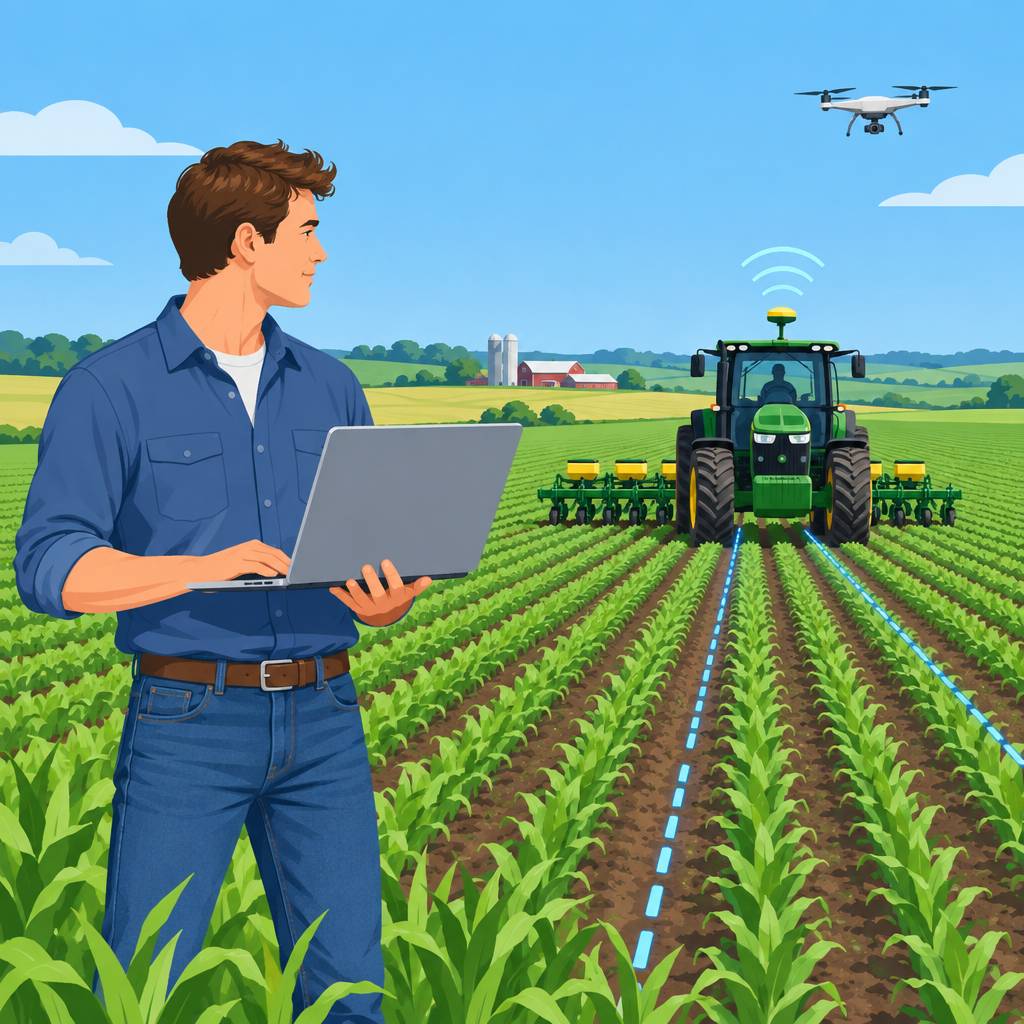
Farmers can monitor crop health in real time using drones and satellite imagery.
These tools help farmers detect nutrient deficiencies and pest infestations early.
Consequently, farmers can take corrective action before problems expand.
Precision techniques also optimize fertilizer, water, and pesticide use.
Variable rate application delivers inputs at the right rate and time.
Therefore, crops receive necessary nutrients while farms avoid unnecessary waste.
This approach also supports sustainability by reducing pollution, soil erosion, and water waste.
As a result, farms can strengthen long-term viability and profitability.
Technology can help large-scale farms remain competitive in a rapidly evolving agricultural industry.
Understanding Precision Agriculture
Precision agriculture uses technology and data to optimize farming practices.
Farmers collect information through sensors, drones, GPS, and satellite imagery.
These tools help farmers make informed decisions about field and crop management.
Benefits for Large-Scale Farms
- Precision agriculture helps farmers optimize water, fertilizer, and pesticide use.
- Farmers can reduce waste and save money by applying precise amounts of inputs.
- Soil, weather, and plant data can help farmers improve crop yields.
- Farmers can reduce environmental impacts by using fewer chemicals.
- Data-driven insights help farmers make better crop management decisions.
- Plant health monitoring helps farmers maintain the quality of their produce.
- Real-time data lets farmers monitor fields and control equipment remotely.
- Early issue detection helps farmers take corrective action and manage risks.
Precision Agriculture at XYZ Farms
- XYZ Farms implemented precision agriculture techniques to improve its operations.
- Soil sensors helped the farm optimize irrigation and reduce water usage by 20%.
- The farm increased crop yields while using its irrigation resources more efficiently.
- Drones monitored plant health and detected pest infestations at an early stage.
- Timely interventions helped the farm respond to detected pest problems.
- Data analysis identified field areas that required additional nutrients.
- XYZ Farms adjusted fertilizer applications according to those identified needs.
- The farm increased crop yields by 15% and reduced production costs.
- These practices also improved the farm’s environmental sustainability.
Operational Gains from Data-Driven Farming
Precision agriculture combines field technology with practical farm management.
Farmers can use collected data to improve efficiency, crop quality, and resource management.
The XYZ Farms case study shows how targeted decisions can improve farm performance.
Efficiency Gains on Large-Scale Farms
Large-scale farms can improve operational efficiency through targeted precision agriculture practices.
These methods help farmers reduce unnecessary inputs while supporting crop health.
Additionally, data-guided planning helps teams direct resources where crops need them most.
- Reduction in input costs such as water, fertilizer, and pesticides
- Optimization of resource allocation through data-driven decision-making
Reduction in Input Costs
Farmers use soil sensors and drones to monitor crop conditions closely.
Consequently, they irrigate only when necessary and reduce water expenses.
Variable rate technology also helps them apply fertilizer and pesticides more precisely.
Optimization of Resource Allocation
Farmers analyze sensor data and satellite imagery to guide resource allocation.
This information shows where crops require water, fertilizer, or pesticides.
As a result, targeted applications reduce waste and support stronger yields.
Precision agriculture therefore helps large-scale farms use resources efficiently and control input costs.
See Related Content: Career Path: Becoming a Seed Technologist
Enhanced Productivity Through Precision Agriculture
Precision agriculture can raise productivity on large-scale farms through targeted crop management.
It helps farmers support stronger yields and better produce quality.
Furthermore, connected tools let farmers respond to crop conditions without constant field visits.
- Farmers can improve crop yield and quality.
Data-driven insights help farmers adjust water, fertilizers, and pesticides for individual crops.
Drones and sensors reveal crop conditions, supporting timely decisions throughout growth.
This targeted approach can increase yields while improving produce quality. - Farmers can monitor and manage crops remotely.
IoT devices collect real-time information about soil moisture, temperature, and nutrient content.
Farmers can analyze these measurements to guide irrigation, fertilization, and pest control.
Early detection helps prevent crop damage and maintain suitable growing conditions.
Remote access also reduces manual labor and helps farmers use resources efficiently.
Discover More: How to Become a Precision Agriculture Specialist
Sustainability of Large-Scale Farming Operations
Large-scale farming operations help feed the growing global population.
However, these operations can significantly affect the environment without careful management.
Precision agriculture offers several benefits that support sustainable farming practices.
Minimizing Environmental Impact Through Targeted Input Application
- Precision agriculture helps farmers use fertilizers, pesticides, and water more efficiently.
- GPS-guided machinery and sensors help farmers apply inputs only where and when needed.
- This targeted approach minimizes waste and reduces harmful substances entering soil or water sources.
- Consequently, large-scale farms can reduce their environmental footprint over time.
Improving Soil Health Management Practices
- Precision agriculture helps farmers monitor soil conditions at a detailed level.
- Farmers can collect data about soil moisture, nutrient levels, and pH.
- They can adjust practices promptly to improve soil health and productivity.
- Healthy soils support stronger yields, reduce erosion, and enhance biodiversity.
Sustainable Management of Large-Scale Farms
Precision agriculture can strengthen the sustainability of large-scale farming operations.
Targeted applications can lower waste, reduce costs, and limit environmental harm.
Meanwhile, soil-focused decisions can support productivity and responsible stewardship as food demand continues to rise.
Explore Further: Key Skills for Successful Extension Agents
Transform Your Career Today
Unlock a personalized career strategy that drives real results. Get tailored advice and a roadmap designed just for you.
Start NowImproved Risk Management
Precision agriculture helps large-scale farms manage risks more effectively.
Connected tools reveal changing field conditions before problems become widespread.
Consequently, farmers can protect crops, resources, and investments more confidently.
Early Detection of Crop Diseases and Pest Infestations
Sensors and drones can detect crop diseases and pest infestations at an early stage.
Farmers can then take proactive measures to prevent diseases and pests from spreading.
This approach saves time and reduces costs over the long term.
Weather Risk Mitigation Through Real-Time Monitoring
Precision agriculture monitors weather conditions in real time across farm areas.
Farmers receive current information about temperature, humidity, rainfall, and other crop-related factors.
With these updates, farmers can adjust irrigation, nutrient application, and other practices.
These decisions can reduce weather-related crop losses.
As a result, farms may achieve higher yields and stronger profitability.
Data-driven insights also help farmers protect their investments from unforeseen challenges.
Uncover the Details: Challenges of Organic Grape Production
Empowering Farmers Through Data
Data-driven tools give farmers clearer information for daily crop management.
First, sensors and drones collect details about soil moisture, crop health, and pest presence.
- Sensors and drones collect important farm data.
- Data analytics supports informed farming decisions.
Farmers can then examine these details with data analytics tools.
Consequently, they can choose crop management strategies using current field information.
This approach helps farmers optimize resources, improve yield, and reduce costs.
Moreover, farmers can tailor actions to insights from collected data.
These insights help farmers address unpredictable weather, soil variability, and pest outbreaks.
Such decisions support more sustainable and profitable farming practices.
Data therefore helps transform large-scale farming operations and support long-term agricultural success.
Potential Challenges of Adopting Precision Agriculture on Large-Scale Farms
Large-scale farms may encounter several challenges when they adopt precision agriculture.
These obstacles can affect implementation, daily operations, and access to expected benefits.
However, strategic planning, investment, and training can help farmers address these difficulties.
High Initial Investment Costs
First, precision agriculture often requires substantial upfront spending on technology and equipment.
Farmers may need drones, sensors, and GPS-guided machinery for implementation.
Consequently, the initial financial outlay can create a significant barrier for large-scale farms.
Training Requirements for Effective Technology Use
Additionally, farmers need appropriate training to use precision agriculture technology effectively.
Some farmers may lack the technical skills needed to operate drones or interpret sensor data.
Training also helps teams program GPS-guided machinery and apply available tools confidently.
Despite these challenges, many large-scale farms continue embracing precision agriculture.
These farms seek greater efficiency, less waste, and improved overall productivity.
By addressing costs and training needs, farmers can unlock more value from this approach.
Strategic Adoption of Precision Agriculture
Precision agriculture gives large-scale farms a practical path toward efficient, productive, and sustainable operations.
Farmers can use GPS-guided machinery, drones, and sensors to guide operational decisions.
These tools help farmers coordinate field activities while using available resources more carefully.
As a result, farms can improve yields, reduce input costs, and limit environmental impact.
Sustainable production also strengthens agriculture’s contribution to global food security.
Therefore, farmers should consider adopting precision agriculture within their operations.
Transform Your Career Today
Unlock a personalized career strategy that drives real results. Get tailored advice and a roadmap designed just for you.
Start NowBy embracing innovation, farmers can remain competitive in a rapidly changing agricultural landscape.
In practice, these tools can help farmers maximize yields, minimize waste, and support a more sustainable agricultural future.
Additional Resources
Google search results for Precision Agriculture: Benefits for Large-Scale Farms Agricultural
Bing search results for Precision Agriculture: Benefits for Large-Scale Farms Agricultural


