




Precision Agriculture and Machine Learning
Precision agriculture uses technology to improve farming efficiency and productivity.
Farmers collect data about soil moisture, nutrients, and pest presence to make informed decisions.
Machine learning uses algorithms to analyze and interpret data.
It helps industries automate processes, predict outcomes, and improve decision-making.
In precision agriculture, farmers use machine learning to analyze data from sensors, drones, and satellite imagery.
These algorithms identify patterns, trends, and anomalies that provide valuable insights for farmers.
Drone-Based Crop Health Monitoring
Farmers use drones with high-resolution cameras to capture crop health data in real time.
These images reveal visual changes across growing areas.
Machine learning models then examine the collected imagery for disease and pest indicators.
- Drone cameras collect crop health images.
- Machine learning algorithms analyze the collected images.
- Farmers receive real-time insights for preventive action.
Image recognition and pattern detection help models distinguish specific crop health problems.
This analysis works faster than manual inspection.
Consequently, farmers can respond before damage spreads.
Real-time findings support informed decisions about crop management.
Farmers can use these findings to plan preventive actions.
Algorithms also assess historical data and environmental factors.
They can recommend effective approaches for water, fertilizer, and pesticide use.
These recommendations improve resource use and reduce environmental impact.
Such monitoring can support healthier crops, higher yields, and greater profitability.
Machine learning will continue shaping crop health monitoring and farming decisions.
Predictive Analytics for Yield Forecasting
Predictive analytics helps farmers estimate crop yields and improve production planning.
By combining soil, weather, and crop development information, models identify factors that influence harvest results.
Farmers can then adjust planting strategies and prepare for potential production challenges.
Additionally, forecasts support more efficient resource use and promote sustainable farming practices.
- Soil quality information
- Weather condition records
- Crop development stages
Collecting Data for Yield Forecasting
Farmers first collect information about soil quality, weather conditions, and crop development stages.
This information provides the foundation for training models that estimate future crop yields.
Soil records can include pH levels, nutrient content, and moisture levels.
Weather records can include temperature, precipitation, and humidity measurements.
Crop development records show how plants progress throughout the growing period.
Training Models with Historical Yield Data
After collecting the data, farmers train machine learning models with historical yield information.
The models compare past yields with soil, weather, and crop development conditions.
They identify patterns that connect environmental conditions with crop production results.
Farmers can refine the models by adding new information over time.
This process can improve forecast reliability and support better production decisions.
Using Forecasts for Crop Management Decisions
Yield forecasts help farmers evaluate crop rotation, fertilization, and harvest timing.
For example, yield patterns can guide rotation choices that support soil fertility.
Soil nutrient information can also guide fertilizer selection and application timing.
Applying suitable fertilizer amounts can reduce waste while supporting crop growth.
Furthermore, predicted yield levels can help farmers select an appropriate harvest period.
Harvest timing can influence crop quality and help farmers respond to market demand.
Forecasts may also reveal conditions associated with pest infestations or crop diseases.
Transform Your Career Today
Unlock a personalized career strategy that drives real results. Get tailored advice and a roadmap designed just for you.
Start NowFarmers can respond earlier when the data indicates potential risks.
Delve into the Subject: The Journey from Vineyard to Wine Bottle
Machine Learning for Precision Irrigation
Precision irrigation uses machine learning to improve water management and support crop production.
Farmers combine field data with predictive tools to make irrigation decisions.
This approach targets water delivery while responding to changing crop and environmental conditions.
Monitoring Soil Moisture and Weather Conditions
Sensors measure soil moisture throughout fields in real time.
Farmers use these readings to assess current water requirements.
Weather forecasts add forward-looking information about upcoming conditions.
Together, these inputs help farmers adjust irrigation timing more carefully.
Optimizing Irrigation Schedules with Machine Learning
Machine learning algorithms analyze sensor readings and weather forecasts to improve irrigation schedules.
These systems identify patterns that manual analysis might overlook.
They also consider soil type, crop type, and historical weather data.
As a result, farmers receive irrigation plans that support water efficiency and crop health.
Reducing Waste Through Targeted Irrigation
Targeted irrigation delivers water directly to areas that need it most.
This method helps farmers avoid over-irrigation and reduce runoff.
Farmers can also provide crops with suitable water amounts at appropriate times.
Consequently, targeted watering can improve crop yield and quality.
Supporting Sustainable Modern Farming
Technology will continue shaping precision agriculture and modern farming practices.
Machine learning can help farmers optimize water use and reduce waste.
These improvements support crop productivity and contribute to industry sustainability.
Uncover the Details: Collaboration Between Food Safety and Other Departments
Automated Equipment Control with Machine Learning
Machine learning can transform automated tractors and machinery used in farming operations.
Artificial intelligence helps farmers optimize planting, fertilization, and harvesting according to real-time field conditions.
These systems support more responsive decisions throughout farm operations.
- Machine learning algorithms analyze soil composition and moisture levels to determine optimal seed depth and spacing.
- Weather and crop health data help automated equipment adjust fertilization schedules, maximizing yield and reducing waste.
- During harvesting, machine learning identifies mature crops for efficient collection, improving yields and produce quality.
Benefits of Automated Equipment Control
Automated equipment can improve efficiency, reduce labor costs, and increase operational precision.
Farmers can use real-time analysis to adjust tasks as field conditions change.
These capabilities help operations use resources more effectively.
Automated equipment increases efficiency.
- Automated equipment can work continuously, optimizing tasks without human intervention and maximizing productivity.
- Real-time analysis allows immediate adjustments to planting, fertilization, and harvesting processes.
Automated machinery can reduce labor costs.
- Farmers can reduce labor expenses when automated machinery handles repetitive tasks.
- Streamlined operations let farmers focus on higher-level decisions and strategic planning.
Machine learning improves operational precision.
- Machine learning enables precise control over planting depth, fertilizer rates, and harvest timing.
- Dynamic adjustments help farmers achieve desired results with fewer resources.
Integrating machine learning into equipment control can support efficient, economical, and sustainable farming practices.
Farmers can use these technologies to improve crop yields while managing operational demands.
Find Out More: Technological Advances in Seed Processing
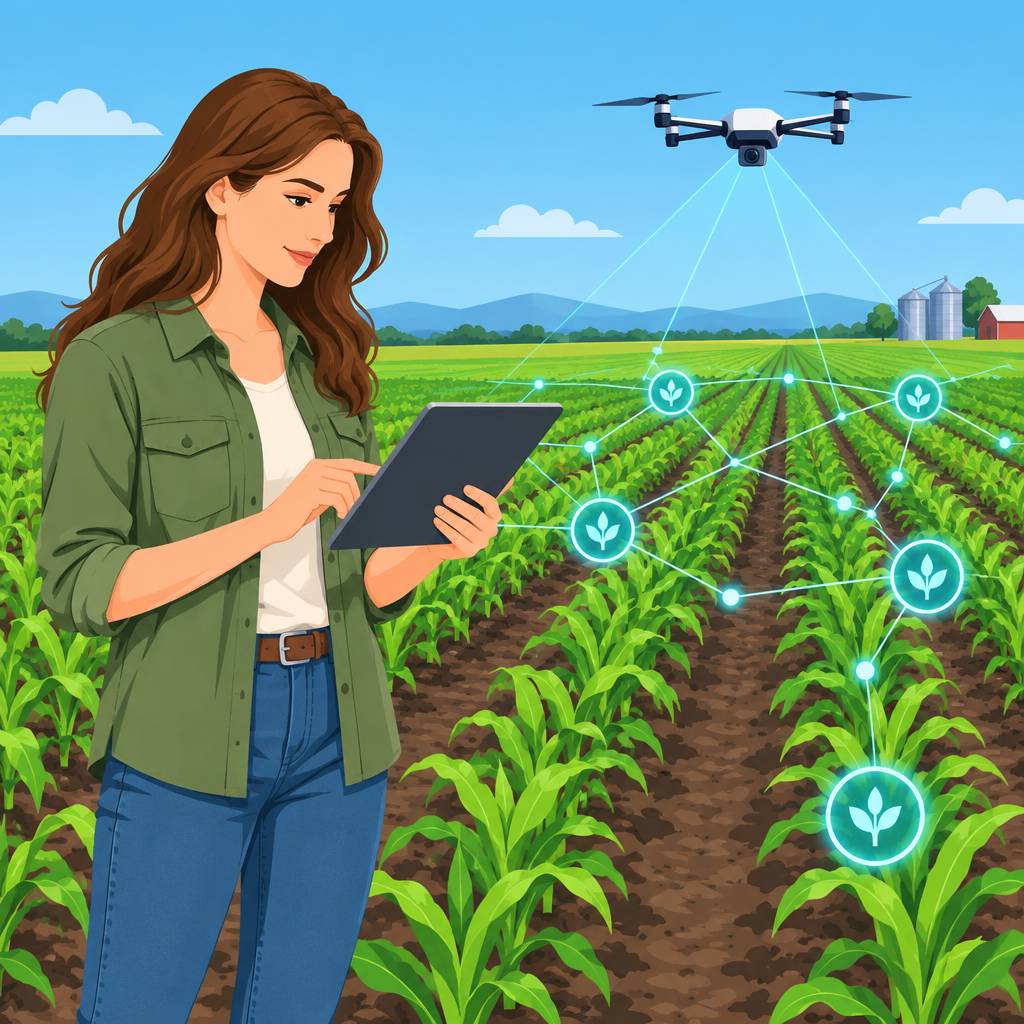
Disease and Pest Management Using Machine Learning
Machine learning can help farmers detect early signs of crop diseases and pests.
These insights support proactive action before infestations or disease outbreaks spread.
Farmers can therefore monitor crop health and respond more effectively.
- Targeted spraying or treatment based on machine learning predictions can focus action where crops need it.
- Reduced chemical use can limit environmental impacts while supporting sustainable farming practices.
Instead of spraying entire fields, farmers can use data-driven insights to identify areas requiring treatment.
This targeted approach saves time and resources while minimizing potential negative environmental effects.
Additionally, accurate predictions can reduce overall chemical use on crops.
Consequently, farmers can support higher yields and environmental conservation through machine learning technologies.
Transform Your Career Today
Unlock a personalized career strategy that drives real results. Get tailored advice and a roadmap designed just for you.
Start NowThese tools help farmers monitor and treat crops proactively.
Therefore, machine learning can improve productivity and reduce costs while minimizing environmental impact.
Discover More: Future of Agricultural Marketing: Predictions and Insights
Data Integration and Analysis for Decision Support
Precision agriculture depends on integrated data and analytical tools that support practical farm decisions.
Farmers can combine information from multiple sources to understand field conditions more completely.
Machine learning can help reveal patterns that manual review may miss.
Aggregating Data from Multiple Agricultural Sources
Sensors, drones, satellites, and weather stations provide information about soil moisture, temperature, and crop health.
A centralized platform brings these measurements together for comprehensive field analysis.
Consequently, farmers can examine related conditions instead of relying on isolated observations.
Developing Machine Learning Models for Farm Insights
Machine learning models process large datasets and turn findings into practical recommendations.
By reviewing historical conditions, models can help predict outcomes and suggest timely farming actions.
For example, algorithms can compare soil quality, weather conditions, and crop types when recommending farm activities.
Using Data to Improve Farming Decisions
Data-based insights help farmers adjust practices using observed field conditions.
They can use these insights to refine resource application and coordinate work more efficiently.
As a result, farmers can pursue higher yields, lower costs, and less environmental impact.
This integrated approach supports sustainable agriculture while improving farm efficiency.
Future Opportunities for Sustainable Farming
Precision agriculture and machine learning can reshape farming through more efficient and sustainable operations.
Together, these technologies can help farmers pursue stronger yields while controlling costs.
Moreover, data-driven decisions can support practical improvements across daily farm management.
Machine learning can also help farmers interpret complex information and respond with greater confidence.
As technology advances, farmers should evaluate suitable tools for their own operations.
This approach can strengthen profitability while reducing agriculture’s environmental impact.
Furthermore, wider adoption can support more sustainable global food production.
The farming community can explore these possibilities and help shape a more sustainable future in farming.
Additional Resources
Google search results for Precision Agriculture: Leveraging Machine Learning Agricultural
Bing search results for Precision Agriculture: Leveraging Machine Learning Agricultural


