




Introduction
Effective lesson plans are essential in agricultural education.
They help teachers achieve successful learning outcomes.
Detailed plans also keep students engaged.
Understanding Student Needs
Educators should begin agricultural lesson planning by identifying what students already know and can do.
That information helps teachers adjust instruction for different learners.
Consequently, students receive learning opportunities that match their current agricultural education needs.
Assessing Agricultural Knowledge and Skills
Quizzes, tests, and hands-on activities can reveal students’ understanding of agricultural concepts.
These assessments also show which skills require further development.
Teachers can then provide targeted support within subsequent lesson activities.
Recognizing Diverse Learning Styles and Abilities
Students may learn effectively through hands-on activities or traditional classroom instruction.
Learning abilities also differ across the class.
Therefore, educators should include varied approaches when designing agricultural lessons.
Tailoring Lessons to Individual Needs
Teachers can modify activities after reviewing assessment results and learning preferences.
They may provide additional resources or extra support for students who struggle.
This customization gives every student an opportunity to succeed in agricultural education.
Applying Student-Centered Agricultural Instruction
Effective plans connect assessment findings with suitable learning activities.
Furthermore, educators can use student needs to shape engaging and impactful instruction.
These practices help students progress throughout their agricultural education journey.
Clear Learning Objectives for Agricultural Education
Setting clear learning objectives is crucial when educators design effective agricultural education lesson plans.
Each objective gives students a clear understanding of expected learning and achievable results.
Additionally, defined objectives help educators focus instruction on essential concepts and skills.
Clearly Defined Lesson Goals and Objectives
Educators should clearly define the goals and objectives for every lesson.
This approach provides students with a roadmap for their learning activities.
Furthermore, precise objectives help educators emphasize the concepts and skills students need to develop.
Alignment with Curriculum Standards and Learning Outcomes
Educators should align lesson objectives with curriculum standards and intended learning outcomes.
As a result, lessons address required content and support students’ progress toward expected outcomes.
This alignment also helps educators maintain appropriate instructional focus.
Expected Student Accomplishments
Each lesson should specify what students can accomplish by its conclusion.
Clear expectations help students understand their responsibilities and recognize successful achievement.
Meanwhile, educators can monitor progress and adjust instruction when necessary.
Find Out More: Educational Outreach by Extension Agents
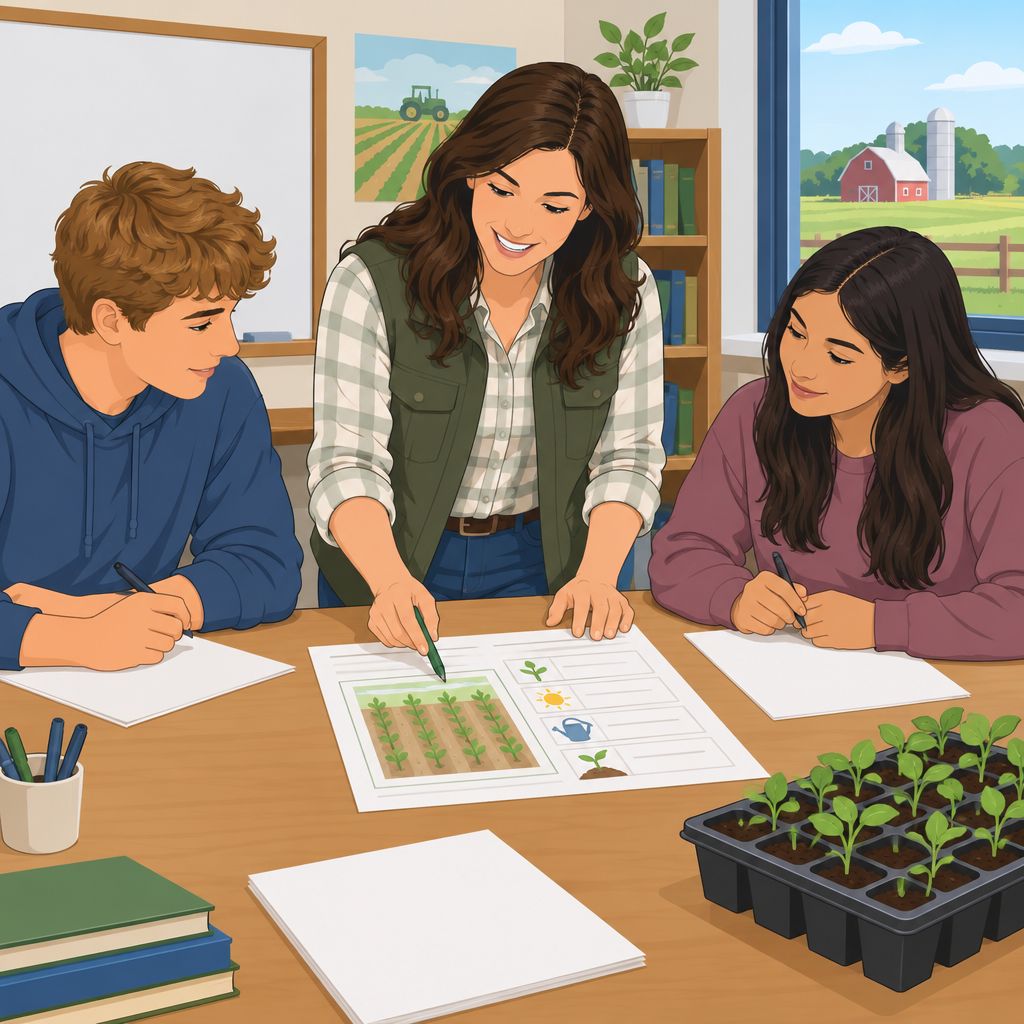
Practical Learning Through Agricultural Activities
Hands-on activities strengthen agricultural education by connecting classroom ideas with practical experiences.
Therefore, lesson plans should include field trips, experiments, and interactive projects.
These experiences engage students and deepen their understanding of agricultural concepts.
Moreover, students apply theoretical concepts in real-world settings, making learning more meaningful and impactful.
Field trips to local farms or agricultural facilities provide firsthand views of the industry.
There, students observe farming practices, techniques, and technologies in action.
Consequently, those observations reinforce concepts introduced in the classroom.
Experiments with plant growth, soil testing, or animal husbandry reveal scientific principles behind agricultural practices.
Through these activities, students develop critical thinking, problem-solving, and teamwork skills.
Transform Your Career Today
Unlock a personalized career strategy that drives real results. Get tailored advice and a roadmap designed just for you.
Start NowMeanwhile, interactive projects can include creating a garden, designing a sustainable farming system, or conducting a market analysis.
Such projects help students apply knowledge practically while fostering creativity and innovation.
Additionally, hands-on learning can support different learning styles.
By offering varied activities, educators address diverse student needs and interests.
As a result, classrooms become more engaging and dynamic.
Practical experiences also strengthen students’ skills and interest in agriculture.
Explore Further: Agricultural Educators: Building Community Ties
Differentiating Instruction
- Cater to the diverse needs and abilities of students through differentiated instruction.
- Offer various learning activities to accommodate different learning styles.
- Provide support and challenge for students at different proficiency levels.
When planning agricultural education lessons, teachers must consider students’ diverse needs and abilities.
Differentiated instruction ensures that every student receives appropriate support and meaningful challenges.
Therefore, educators can help all students succeed through responsive teaching methods.
Meeting Diverse Needs
Teachers can differentiate agricultural instruction by addressing students’ varied learning styles, backgrounds, and abilities.
This approach recognizes that students learn differently and need varied instructional methods.
Consequently, teachers can adjust their methods to address individual learning differences.
For example, visual learners may benefit from hands-on activities or visual aids.
Meanwhile, auditory learners may prefer lectures, conversations, or classroom discussions.
By offering varied activities, educators can accommodate more students’ learning preferences.
Accommodating Learning Styles
Another important aspect involves supporting students at different proficiency levels.
Some students may need additional help or resources to understand new concepts.
Meanwhile, advanced students may need challenging materials to remain engaged.
Accordingly, educators can offer activities and assignments suited to different proficiency levels.
This approach ensures that students receive suitable challenges and support during their learning.
For instance, teachers can provide extra practice materials for students who need reinforcement.
They can also offer extension activities for advanced learners.
Additionally, teachers may group students by ability for selected learning tasks.
Creating a Supportive Learning Environment
The primary goal involves creating a supportive environment where every student feels valued.
Such an environment helps students believe they can achieve success.
Furthermore, varied learning opportunities can strengthen inclusion and belonging within the classroom.
Effective agricultural education lessons should include differentiated instruction as a central component.
This approach gives every student opportunities to thrive academically and personally.
By responding to student differences, educators create dynamic and engaging agricultural learning experiences.
See Related Content: The Role of Research in Advancing Viticulture
Assessing Student Learning
Implement formative and summative assessments to monitor student progress.
Additionally, use quizzes, projects, and presentations to assess learning.
Provide feedback that guides students and improves their performance.
Delve into the Subject: Extension Agents: Supporting Urban Agriculture
Reflecting and Adjusting Lesson Plans
Teachers can evaluate lesson plans by reviewing student engagement and learning outcomes.
During lessons, regular monitoring reveals whether students remain engaged with the content.
Additionally, formative assessments show student understanding and guide necessary adjustments.
- Reflect on lesson effectiveness by reviewing student engagement and learning outcomes.
- Monitor student engagement regularly to gauge lesson effectiveness.
- Use formative assessments to measure understanding and adjust plans accordingly.
- Seek student feedback to understand perspectives on lesson plans.
Areas for Improvement in Future Lesson Plans
Student performance data can reveal areas where learners experienced difficulty.
Furthermore, collaboration with colleagues can provide insights into effective teaching strategies.
Transform Your Career Today
Unlock a personalized career strategy that drives real results. Get tailored advice and a roadmap designed just for you.
Start NowTeachers can then refine lesson delivery by considering technology, multimedia, interests, and learning styles.
- Analyze student performance data to identify areas where students struggled.
- Collaborate with colleagues to gather insights on effective teaching strategies.
- Incorporate technology and multimedia resources to enhance lesson delivery.
- Consider student interests and learning styles when creating lesson plans.
Continuous Refinement of the Learning Experience
Continuous evaluation helps teachers refine lesson plans and strengthen the learning experience.
Professional development workshops can help educators stay updated on teaching practices.
Meanwhile, student feedback and participation can support more engaging lesson planning.
- Attend professional development workshops to stay updated on best practices.
- Reflect on student feedback and adjust lesson plans accordingly.
- Encourage student participation in the lesson planning process.
- Implement innovative teaching methods to keep students engaged and motivated.
Strengthening Agricultural Education Through Lesson Planning
Effective lesson plans guide agricultural students toward meaningful learning experiences.
Well-designed plans ensure teachers cover key concepts comprehensively.
They also engage students in diverse agricultural topics.
These strategies can improve student learning outcomes and classroom engagement.
Teachers should adapt and innovate their lesson planning approaches.
Real-world examples connect agricultural concepts to meaningful contexts.
Hands-on activities help students understand and apply agricultural concepts.
Technology can make lessons more dynamic and interactive.
Effective planning gives teachers a practical tool for enhancing student learning.
Teachers can use these approaches to create supportive agricultural learning environments.
Such environments promote student growth and development.
Teachers should embrace these strategies when designing agricultural education lessons.
Additional Resources
Google search results for Effective Lesson Plans for Agricultural Education Agricultural
Bing search results for Effective Lesson Plans for Agricultural Education Agricultural


