




Managing Farm Infrastructure and Equipment
Successful farms depend on well-managed infrastructure and equipment.
These assets include buildings, facilities, and machinery used in farming operations.
Therefore, effective management can improve productivity and efficiency across the farm.
Importance of Farm Asset Management
Proper management keeps farm assets maintained and ready for use.
It also helps farmers prevent breakdowns and delays during farm operations.
Consequently, farmers can save time and control operating costs.
Improving Farm Productivity and Efficiency
Farmers can optimize resources by managing infrastructure and equipment effectively.
Additionally, streamlined operations can improve planting, harvesting, and irrigation tasks.
Regular maintenance and servicing can extend equipment lifespan and reduce replacement needs.
Moreover, organized infrastructure can support a safer work environment for farm workers.
That environment can further enhance productivity and efficiency on the farm.
Current Farm Infrastructure and Equipment Assessment
Start with a thorough inventory of existing farm infrastructure and equipment.
Record each item’s condition, age, and functionality during the assessment.
Use the findings to identify repairs, replacements, and critical operational priorities.
- Inspect every item for wear, damage, or malfunction that could reduce performance.
- Identify infrastructure requiring immediate repair or replacement to prevent further deterioration.
- Give special attention to equipment essential for daily farm operations.
- Prioritize irrigation systems and machinery that directly support productivity and efficiency.
- Consider hiring a professional inspector to assess infrastructure and equipment conditions.
- Create a detailed report that guides future maintenance and investment decisions.
- Record recurring issues and breakdown patterns to address underlying causes.
Farm Maintenance and Repair Planning
Base the maintenance plan on the assessment findings.
Schedule inspections and maintenance checks to prevent problems and extend equipment service life.
Review the plan regularly as performance data and farm needs change.
- Allocate funds for necessary repairs, replacements, and upgrades.
- Prioritize safety measures and regulatory compliance throughout the plan.
- Train farm workers in proper equipment handling and maintenance procedures.
- Use preventive maintenance to resolve minor issues before they escalate.
- Monitor equipment performance through consistent inspections and operating records.
- Track maintenance activities for future reference and planning.
- Work with suppliers, manufacturers, or technicians when expert guidance is needed.
- Adjust maintenance activities using worker feedback and performance information.
New Farm Equipment and Technology Investments
Evaluate new equipment when existing machinery becomes outdated or inefficient.
Research emerging technologies that may improve productivity and sustainability.
Compare repair costs with replacement benefits before making investment decisions.
- Explore modern, energy-efficient equipment and technology upgrades.
- Consider fuel efficiency, automation capabilities, and environmental impact during selection.
- Seek recommendations from industry experts and experienced farmers.
- Investigate government incentives, grants, and financing options for equipment upgrades.
- Test new equipment on a small scale before expanding its use.
- Confirm compatibility with existing farm infrastructure before purchasing.
- Consult suppliers or manufacturers about solutions suited to farm requirements.
- Create a gradual transition plan for integrating new equipment.
- Use the transition plan to maintain smooth farm operations during implementation.
Farm Equipment and Infrastructure Maintenance Schedule
Regular maintenance protects farm equipment and infrastructure from avoidable damage.
A clear schedule helps operators organize tasks and identify potential issues early.
Farm teams can also prevent costly breakdowns by following the schedule consistently.
- Establish a regular maintenance schedule for farm equipment and infrastructure.
- Include tasks such as oil changes, lubrication, inspections, and repairs.
- Document all maintenance tasks and complete them consistently.
Consider each asset’s specific needs when establishing the maintenance schedule.
Review usage frequency, task requirements, and manufacturer recommendations.
These factors help you create a schedule suited to your farm.
Regular oil changes represent one essential maintenance task.
Oil lubricates moving parts, reduces friction, and limits wear.
Therefore, timely oil changes can extend equipment life and support smooth operation.
Likewise, include lubrication tasks in the maintenance schedule.
Lubricate bearings, chains, and gears to reduce friction and prevent premature wear.
Use the appropriate lubricant for each component and follow manufacturer guidelines.
Regular inspections can reveal potential issues before they become major problems.
Inspect equipment and infrastructure for wear, damage, or loose parts.
When you find issues early, you can address them promptly.
This approach can reduce the need for costly repairs later.
Even well-maintained equipment may require repairs occasionally.
Include repair provisions in the maintenance schedule.
Create a contingency plan for unexpected breakdowns.
Keep a trusted repair service available for complex issues.
Transform Your Career Today
Unlock a personalized career strategy that drives real results. Get tailored advice and a roadmap designed just for you.
Start NowDocument every maintenance task to track progress and prevent omissions.
Record when each task occurred, what workers completed, and which issues they observed.
Detailed records help teams remain organized and recognize patterns over time.
Consistency remains essential when teams follow a maintenance schedule.
Complete every task on time and according to the established schedule.
Assign responsibilities to specific team members when necessary.
Additionally, hold regular meetings to review progress and address concerns.
A comprehensive schedule supports effective farm equipment and infrastructure management.
Regular maintenance can extend asset life and improve performance and reliability.
Preventive care remains preferable to emergency repairs for farm assets.
See Related Content: Educational Path to Becoming a Poultry Scientist
Farm Equipment Storage Solutions
Farm operations need organized storage for equipment, tools, machinery parts, and harvested crops.
A designated storage area protects valuable items from damage, loss, and theft.
Furthermore, organized storage helps farmers and workers access necessary items quickly.
- Organize a designated storage area for all farm equipment and tools.
- Use shelves, racks, and bins to keep items organized and accessible.
- Track and inventory equipment to reduce the risk of loss or theft.
Designated Storage Areas
Choose a specific area for storing all farm equipment and tools.
This arrangement keeps equipment organized and makes necessary items easier to locate.
Additionally, keep the area accessible to workers while securing it against theft and damage.
Shelves, Racks, and Bins
Install shelves, racks, and bins to maximize available storage space.
Shelving units keep smaller items arranged neatly and ready for use.
Meanwhile, racks can hold larger equipment, machinery parts, or harvested crops.
Bins provide practical storage for loose items.
Label every shelf, rack, and bin so workers can find items quickly.
This labeling system saves time and supports efficient farm operations.
Equipment Tracking and Inventory
Use barcode scanning or RFID tags to monitor farm equipment and tools.
These tracking methods help staff identify equipment and reduce loss or theft.
Conduct regular inventory checks to confirm that every item remains accounted for.
Also, maintain digital records containing purchase dates and maintenance schedules.
Train farm staff to use the tracking system and maintain accurate records.
Consequently, accurate records streamline operations and strengthen farm management.
Storage Practices Support Farm Productivity
Proper storage helps farmers protect equipment and tools between uses.
Organized storage also improves access, reduces delays, and supports daily farm work.
By combining secure areas, labeled storage units, and equipment tracking, farms can manage resources effectively.
Explore Further: The Economic Impact of Insects: Insights from Entomologists
Managing farm infrastructure and equipment requires ongoing investment in new technology.
New Technology for Farm Operations
Farm technology continues to advance, making research essential for competitive and efficient operations.
Investing in new equipment can improve efficiency and increase farm productivity.
Therefore, farmers should evaluate useful technologies before integrating them into daily work.
Tools for Precise and Efficient Farming
GPS systems help farmers track and monitor fields for precise planting and harvesting.
Automated machinery streamlines tasks and reduces manual labor.
Monitoring sensors provide real-time data on soil health, weather conditions, and crop growth.
Transform Your Career Today
Unlock a personalized career strategy that drives real results. Get tailored advice and a roadmap designed just for you.
Start NowEmployee Training for New Technology
Introducing new technology requires proper employee training.
Employees should learn how to operate and maintain each piece of equipment effectively.
As a result, training supports smooth integration into daily farm operations.
By investing in new technology, farmers can improve operations and strengthen their competitive position.
Embracing innovation can help farms thrive.
See Related Content: Choosing the Right Education for Pest Control Advisory
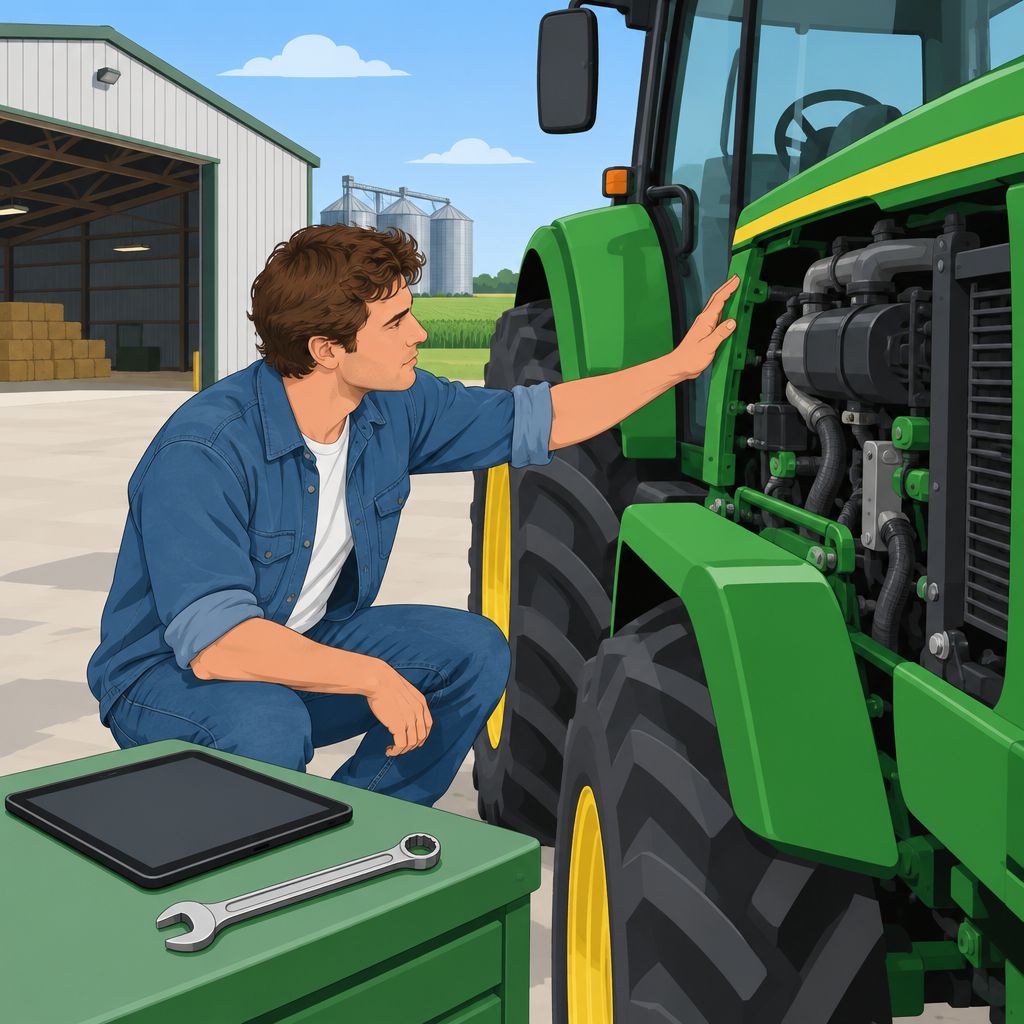
Comprehensive Farm Staff Training
Proper training helps farm staff operate infrastructure and equipment efficiently.
First, staff members need thorough instruction for each type of farm equipment.
Hands-on sessions help staff become familiar with equipment and learn safe operating practices.
- Train every staff member to operate different types of farm equipment.
- Use hands-on sessions to build equipment familiarity and reinforce safe operation.
- Teach maintenance procedures that prevent breakdowns and extend equipment life.
Farm Equipment Safety Practices
Safe equipment handling protects staff from preventable accidents and injuries.
Therefore, supervisors should explain safety guidelines and applicable authority regulations clearly.
Staff also need regular reminders about protective equipment and responsible equipment handling.
- Emphasize safety guidelines to help prevent accidents and injuries on the farm.
- Confirm that every staff member understands and follows applicable safety regulations.
- Encourage personal protective equipment use and careful equipment handling.
Ongoing Training and Skill Development
Regular training keeps farm staff informed about changing equipment and agricultural technologies.
Additionally, refresher courses reinforce correct operating procedures and maintenance practices.
Continued development gives staff opportunities to strengthen their skills and knowledge.
- Provide updates about new technologies and equipment developments in agriculture.
- Schedule refresher courses for operating procedures and maintenance practices.
- Encourage staff participation in workshops and training programs.
Investing in staff development builds the knowledge required to operate and maintain farm infrastructure effectively.
As a result, trained staff can support productive farm operations.
Training also helps create a safer working environment for everyone involved.
See Related Content: Steps to Becoming an Artificial Insemination Technician
Budgeting for Infrastructure and Equipment Upgrades
Farm infrastructure and equipment upgrades require careful financial planning.
First, assess the resources needed to maintain reliable farm operations.
Then, build a budget that accounts for immediate needs and future costs.
Budgeting for Necessary Upgrades
Begin by reviewing the condition of each infrastructure and equipment item.
Next, identify repairs or replacements that require financial attention.
Afterward, prepare a detailed budget for every planned upgrade.
Include equipment, materials, labor, installation, and permit expenses.
Also, reserve funds for unexpected costs that may arise during the work.
Prioritizing Upgrades by Urgency
After developing the budget, rank each upgrade by urgency and operational impact.
Safety concerns should receive attention before less critical improvements.
Likewise, prioritize upgrades that protect efficiency and productivity.
Addressing pressing needs can reduce disruptions from equipment failures or infrastructure deficiencies.
Researching Cost-Effective Upgrade Options
Finally, research cost-effective options from multiple suppliers or vendors.
Compare prices while maintaining the required quality of equipment and materials.
Furthermore, investigate available discounts or deals before purchasing.
Leasing or loans may help spread upgrade costs over time.
These steps can help the farm secure necessary tools within its financial capacity.
Sustainable Practices for Farm Infrastructure and Equipment
Sustainability should guide farm infrastructure and equipment management.
Farm operators can integrate sustainable practices into their daily operations.
These choices support environmental conservation and long-term farm viability.
Incorporating Sustainable Practices
Farm operators can use eco-friendly materials when constructing infrastructure.
Transform Your Career Today
Unlock a personalized career strategy that drives real results. Get tailored advice and a roadmap designed just for you.
Start NowThey can also install water-saving irrigation systems to conserve water.
Maintaining biodiversity on the land further supports sustainable farm operations.
Energy-Efficient Equipment and Renewable Energy
Energy-efficient equipment can reduce energy consumption across farm operations.
Solar-powered irrigation systems, electric tractors, and LED lighting support efficient energy use.
Furthermore, wind and solar power can decrease the farm’s carbon footprint.
Waste Reduction and Environmental Protection
Efficient usage and proper disposal practices help reduce operational waste.
Farm operators can recycle materials and compost organic waste.
Avoiding excessive chemical use helps protect the surrounding ecosystem.
Sustainable management supports environmental conservation throughout farm operations.
It also strengthens the farm’s long-term viability.
Farm Infrastructure and Equipment Management
Farmers manage infrastructure and equipment to keep farm operations efficient.
Regular oversight keeps facilities and tools in good working condition.
This approach reduces downtime and supports effective resource use.
Efficient Resource Allocation
Effective management helps farmers allocate resources efficiently.
Consequently, equipment serves its intended purpose more fully.
That efficiency can lower costs and support greater farm profitability.
Improved Farm Productivity
Well-maintained facilities and equipment support stronger farm productivity.
Machinery in good working order completes tasks more efficiently.
As a result, farms can achieve higher output and better product quality.
Enhanced Farm Sustainability
Careful management also supports sustainable farm operations.
It reduces waste and limits unnecessary resource depletion.
Therefore, sustainable practices help protect the environment and preserve long-term farm viability.
Additional Resources
Google search results for Managing Farm Infrastructure and Equipment Agricultural
Bing search results for Managing Farm Infrastructure and Equipment Agricultural


