




Introduction
Poultry scientists conduct research and develop strategies to improve poultry production.
They play a crucial role in advancing the agricultural industry.
Their work supports progress throughout poultry science and production.
Becoming a Poultry Scientist
A career in poultry science requires dedication, education, and practical experience.
Students can build their foundation through related academic programs.
Meanwhile, research experience and professional connections can strengthen career preparation.
Undergraduate Education
Begin with a bachelor’s degree in animal science, biology, or agriculture.
These fields provide a solid foundation for studying poultry science.
Undergraduate education introduces essential knowledge for future poultry research.
Graduate Studies
Consider pursuing a master’s or doctoral degree in poultry science.
Related graduate disciplines can also support advanced study in this field.
Graduate education allows students to specialize and conduct in-depth research.
Research Experience
Gain practical experience through internships, research projects, or poultry facility work.
These opportunities connect academic learning with daily poultry operations.
Hands-on practice strengthens skills and expands knowledge in poultry science.
Professional Networking
Build professional relationships within the poultry science community.
Attend conferences, workshops, and industry events to meet other professionals.
These connections can create opportunities for collaboration and career advancement.
Continuing Education
Stay current with advancements in poultry science through continuing education.
Courses and workshops can help professionals maintain and expand their knowledge.
Ongoing learning helps poultry scientists remain competitive in the field.
Following these steps can support a successful and rewarding poultry science career.
Educational Requirements
- Bachelor’s degree in animal science, poultry science, or a related field
- Master’s degree for advanced positions
- Optional PhD for research and academic roles
These educational paths help aspiring poultry scientists develop relevant scientific and management skills.
Students can select programs that match their desired responsibilities and career direction.
Advanced degrees provide additional preparation for specialized, research, and academic positions.
Bachelor’s Degree
A bachelor’s degree in animal science, poultry science, or a related field provides essential preparation.
Coursework typically covers biology, animal nutrition, genetics, and poultry production.
Students also gain practical experience through internships or laboratory work involving poultry farming and management.
Elective courses allow students to focus more closely on poultry science.
These electives may address poultry health, reproduction, behavior, and welfare.
Additionally, faculty-guided research projects can introduce students to poultry science investigations.
Master’s Degree
A master’s degree can help professionals advance within poultry science careers.
Graduate students may specialize in poultry nutrition, disease management, or genetics.
This advanced study develops deeper knowledge of poultry science theories and practices.
Master’s programs often require independent research or thesis work.
Faculty advisors supervise these projects and support students throughout the research process.
Consequently, graduates strengthen the analytical skills needed for research or management positions.
PhD for Research and Academic Roles
A PhD in poultry science or a related field can support advanced research careers.
Doctoral study develops specialized research skills and extensive subject expertise.
Students may investigate animal behavior, nutrition, genetics, or other poultry science topics.
Transform Your Career Today
Unlock a personalized career strategy that drives real results. Get tailored advice and a roadmap designed just for you.
Start NowPhD candidates typically collaborate with faculty mentors on detailed research projects.
They may publish findings in scientific journals and present their work at conferences.
Some doctoral students also teach undergraduate or graduate poultry science courses.
Graduates can pursue positions in academia, research institutions, or industry leadership.
Relevant Courses to Take
Aspiring poultry scientists need courses that establish strong foundations in poultry science.
These subjects address poultry production, management, health, nutrition, and research.
Together, they develop knowledge and skills for diverse poultry science careers.
- Animal nutrition
- Physiology of reproduction
- Poultry diseases
- Genetics and breeding
- Food safety and quality assurance
Animal Nutrition
Animal nutrition helps poultry scientists understand the dietary requirements of different poultry species.
Students examine feed ingredients and learn how nutrition supports growth, health, and productivity.
They also study diet formulation and strategies for providing proper poultry nutrition.
Physiology of Reproduction
Reproductive physiology gives poultry scientists essential knowledge about poultry breeding processes.
The course examines reproductive anatomy, endocrinology, and breeding practices in poultry species.
Students study egg production, fertility, hatchability, and reproductive efficiency.
Poultry Diseases
Poultry disease courses prepare scientists to prevent, diagnose, and manage health problems.
Students examine disease symptoms, transmission methods, and control measures.
They also learn about biosecurity practices and vaccination strategies for disease prevention.
Genetics and Breeding
Genetics and breeding courses support poultry scientists involved in genetic improvement programs.
Students explore genetic inheritance, breeding methods, selection criteria, and genetic diversity.
These skills help them improve desirable traits and develop superior poultry breeding lines.
Food Safety and Quality Assurance
Food safety and quality assurance courses address the production of safe, high-quality poultry products.
Students study regulations, industry standards, and safety practices across the poultry supply chain.
They also learn quality control, risk assessment, and compliance with food safety guidelines.
Delve into the Subject: The Economic Impact of Insects: Insights from Entomologists
Internship Experience in Poultry Science
Internships provide aspiring poultry scientists with practical experience that complements their academic preparation.
Farm and company placements introduce students to daily poultry operations.
They also connect classroom knowledge with direct workplace responsibilities.
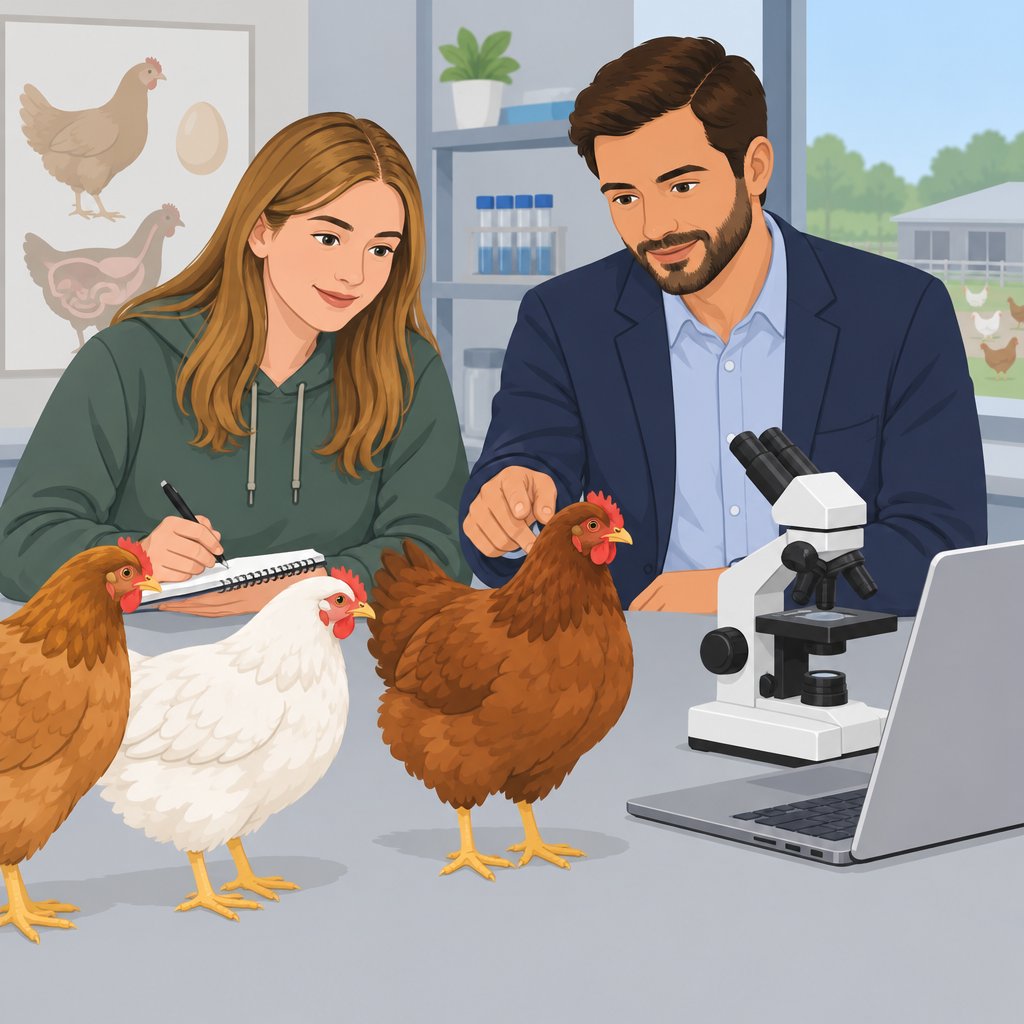
Practical Work on Poultry Farms
Interning at a poultry farm or company provides hands-on experience with daily operations.
Students learn about feeding, breeding, and the general care of poultry.
Consequently, this workplace exposure builds practical skills for future poultry science roles.
Breeding, Hatching, and Production Activities
Internships allow students to participate directly in breeding and hatching activities.
They can also observe production processes while applying poultry science concepts.
These tasks deepen their understanding of the science behind poultry production.
Professional Networking in Poultry Science
Industry internships create opportunities to meet professionals in poultry science.
These professionals can offer guidance and mentorship during career development.
Moreover, early relationships may support future employment and collaboration opportunities.
Delve into the Subject: Choosing the Right Education for Pest Control Advisory
Advanced Education in Poultry Science
Advanced education can strengthen your preparation for specialized poultry science work.
Graduate study helps you develop deeper knowledge and practical skills within a focused area.
These opportunities can position you for a rewarding career in poultry science.
Specialized Knowledge Through Graduate Study
A master’s degree allows you to explore specific areas of poultry science in greater depth.
Transform Your Career Today
Unlock a personalized career strategy that drives real results. Get tailored advice and a roadmap designed just for you.
Start NowGraduate coursework can provide advanced training that strengthens your professional expertise.
This focused preparation can help distinguish you within the poultry science industry.
Research Opportunities in Poultry Science
Research opportunities let you conduct hands-on experiments and gain practical experience.
Working on research projects can strengthen your critical thinking and problem-solving abilities.
These projects also deepen your understanding of poultry science.
Financial Support for Graduate Education
Scholarships, grants, and assistantships may help support your graduate education.
Universities and organizations offer financial assistance to students pursuing poultry science degrees.
Seeking these opportunities proactively can reduce the financial burden of advanced education.
By combining specialized study, research experience, and financial planning, you can advance your poultry science preparation.
Uncover the Details: Steps to Becoming an Artificial Insemination Technician
Develop Specialization
Aspiring poultry scientists should develop specialized knowledge and skills related to poultry science.
Specialization helps professionals contribute meaningfully to research, production, and food-related work.
They can focus on nutrition, genetics, or food safety while building their professional expertise.
- Focus on areas like nutrition, genetics, or food safety
- Gain certifications in specific areas of expertise
- Attend conferences and workshops to stay updated on industry trends
Focus on Nutrition, Genetics, or Food Safety
- Choose a specific area to specialize in
- Take advanced courses in that area
- Work on research projects related to your specialization
Choosing a specialization allows aspiring poultry scientists to explore one area more deeply.
Advanced courses can strengthen understanding of the selected subject.
Research projects also provide opportunities to apply specialized knowledge.
Gain Certifications in Specific Areas
- Look for certification programs in your desired specialization
- Complete the necessary coursework and exams
- Showcase your certification on your resume and professional profiles
Certification programs can strengthen expertise in a chosen area of poultry science.
They provide valuable insights and hands-on experience through coursework and examinations.
Professionals can display these credentials on resumes and professional profiles.
Attend Conferences and Workshops
- Regularly attend poultry science conferences and workshops
- Participate in panel discussions and networking events
- Stay current on the latest research and advancements in the field
Conferences and workshops help aspiring poultry scientists follow developments within the field.
These events provide opportunities to share knowledge and exchange ideas.
Participants can also learn about emerging trends, technologies, and professional practices.
Uncover the Details: Funding Dairy Science Research Projects
Seek Professional Certifications
- Consider becoming a Certified Poultry Scientist (CPS).
- Join professional organizations like the Poultry Science Association.
- Continue education and training to maintain certification.
Professional certifications demonstrate expertise and commitment to poultry science.
A Certified Poultry Scientist (CPS) credential can open opportunities and distinguish candidates in competitive job markets.
Professional organizations provide networking opportunities and access to current research.
They also offer opportunities for professional development.
After earning certification, continue education and training to maintain it.
Attend conferences, workshops, and seminars to support ongoing professional development.
Also, stay informed about current developments in poultry science.
Career Pathways and Contributions in Poultry Science
Embarking on an educational path toward poultry science requires dedication and passion.
Following a focused pathway can help you pursue your desired poultry science career.
A career in poultry science can offer opportunities in research, production, and management.
- Obtain a bachelor’s degree in poultry science or a related field.
- Pursue a master’s degree to deepen your knowledge and expertise.
- Gain practical experience through internships or research opportunities.
- Consider pursuing a Ph.D. for advanced research and career opportunities.
Furthermore, poultry scientists can support important advances across the poultry industry.
- Contribute to advancements in animal welfare and food safety.
- Help meet the global demand for poultry products.
- Participate in a dynamic industry with opportunities for growth.
If poultry science interests you, pursue your goals with suitable education and experience.
These preparations can help you make a meaningful impact in poultry science.
Additional Resources
Google search results for Educational Path to Becoming a Poultry Scientist Agricultural
Bing search results for Educational Path to Becoming a Poultry Scientist Agricultural


