




Introduction
A farm manager oversees daily operations on a farm.
This role supports productivity and efficiency across farm activities.
Meanwhile, biodiversity conservation strengthens soil health, pest control, pollination, and ecosystem balance.
Biodiversity Conservation in Agriculture
Biodiversity describes the variety of plant and animal species within a particular environment.
It supports stable and resilient ecosystems.
Therefore, agricultural biodiversity supports sustainable food production and environmental protection.
Farm Management and Biodiversity Protection
Farm managers can protect biodiversity through practical decisions across agricultural operations.
These decisions can support species variety and healthier farm environments.
Additionally, managers can involve workers and communities in conservation efforts.
Agroecological Farming Practices
Farm managers can adopt agroecological practices to promote biodiversity.
For example, crop rotation changes the crops grown across farming cycles.
Meanwhile, intercropping places different crops together within the agricultural system.
Wildlife Habitat Creation
Farm managers can set aside areas that support wildlife.
Wildflower areas can provide habitats for beneficial insects.
Similarly, hedgerows can provide additional habitats for insects and wildlife.
Integrated Pest Management
Integrated Pest Management helps managers reduce chemical pesticide use.
Furthermore, IPM promotes natural methods for controlling pests.
This approach supports biodiversity by limiting reliance on chemical pesticides.
Crop Variety and Genetic Diversity
Planting various crops helps maintain genetic diversity.
Crop variety also reduces risks associated with pests and diseases.
As a result, diverse plantings can reduce the risk of crop failures.
Conservation Tillage and Soil Biodiversity
Conservation tillage helps improve soil health.
It also reduces erosion across agricultural land.
Moreover, this practice helps preserve biodiversity within the soil ecosystem.
Participation in Conservation Programs
Farm managers can participate in government conservation programs.
They can also engage with private programs that promote agricultural biodiversity.
Through these programs, managers can support conservation on agricultural lands.
Education for Workers and Communities
Farm managers can educate workers about biodiversity conservation.
They can also share conservation information with local communities.
Consequently, education can raise awareness and encourage positive practices.
Long-Term Agricultural Resilience
Farm managers play a crucial role in conserving biodiversity within agriculture.
By applying sustainable practices, they support the long-term health of ecosystems.
Prioritizing biodiversity can help create a sustainable and resilient agricultural sector for future generations.
Farm Manager Responsibilities
Farm managers handle diverse tasks that support smooth farm operations.
Their responsibilities require careful attention, strong leadership, and agricultural knowledge.
They can also integrate biodiversity conservation into daily decisions and management practices.
Overview of Farm Management Tasks
Farm managers organize crop cultivation, livestock production, and broader farm activities.
They coordinate workers, maintain resources, and monitor operational performance.
They also make financial and strategic decisions that guide farm development.
- Planning and Decision Making: Farm managers create plans for crops, livestock, resource allocation, budgets, and strategic development.
- Supervision and Coordination: They oversee daily tasks and coordinate workers, technicians, and other staff members.
- Implementing Farm Practices: They select seeds, fertilizers, and pesticides while monitoring crop health and growth.
- Maintaining Farm Infrastructure: They maintain buildings, equipment, and machinery while managing repairs and upgrades.
- Managing Farm Finances: They develop budgets, track expenses, and analyze financial performance to support sustainable growth.
How Biodiversity Conservation Supports Farm Management
Farm managers can include biodiversity conservation within their regular operational responsibilities.
Transform Your Career Today
Unlock a personalized career strategy that drives real results. Get tailored advice and a roadmap designed just for you.
Start NowThis approach supports environmental sustainability while strengthening farm resilience.
It also encourages practices that protect ecosystems and support productive agricultural operations.
Agroecological Practices
Farm managers can diversify crops to support varied agricultural systems.
They can use intercropping, agroforestry, and crop rotation within farm plans.
These practices support soil health, pest control, and nutrient cycling while reducing synthetic input reliance.
Preserving Natural Habitats
Farm managers can designate parts of the farm as wildlife habitats or conservation zones.
These areas protect native plants and animals from unnecessary disturbance.
They also attract beneficial insects, birds, and other wildlife that contribute to ecosystem balance.
Implementing Sustainable Land Management Practices
Sustainable land management helps reduce soil erosion, water pollution, and habitat loss.
Farm managers can use conservation tillage, cover crops, and organic farming methods.
These methods improve resource efficiency while supporting soil conservation and water quality.
Adopting Integrated Pest Management Strategies
Integrated Pest Management combines biological, cultural, and physical pest control methods.
Farm managers can use these strategies to control pests while limiting chemical inputs.
This approach protects beneficial insects and pollinators while supporting ecosystem protection and farm viability.
Delve into the Subject: Impact of Nutrition on Livestock Productivity
Importance of Sustainable Farming Practices
Sustainable farming practices conserve biodiversity by supporting healthier soil, water, and farm ecosystems.
They also reduce pressures from chemical inputs, erosion, and habitat loss.
Consequently, farm managers can protect biodiversity while maintaining productive agricultural operations.
- Sustainable practices promote soil health and fertility.
- They reduce the need for harmful chemical inputs.
- These methods minimize soil erosion and degradation.
- They enhance water quality and availability.
- Sustainable farms support pollinators and beneficial insects.
Ways Farm Managers Can Implement Sustainable Practices
Farm managers can combine several methods to conserve biodiversity across their operations.
These approaches support soil, water, crops, livestock, and beneficial organisms.
Moreover, coordinated practices can strengthen conservation efforts throughout the farm.
- Adopt agroforestry practices across suitable farm areas.
- Implement crop rotation and cover cropping systems.
- Use organic farming methods where appropriate.
- Install efficient irrigation systems to manage water resources.
- Integrate livestock into crop rotation systems.
- Incorporate biodiversity corridors throughout the farm.
- Implement integrated pest management strategies.
- Use natural predators to control pests instead of pesticides.
- Establish buffer zones along water bodies.
- Participate in conservation programs and initiatives.
By adopting these practices, farm managers can conserve biodiversity and support healthier ecosystems.
Gain More Insights: Effective Lesson Plans for Agricultural Education
Benefits of Diverse Crops and Livestock
Farm managers promote biodiversity by incorporating diverse crops and livestock into farm operations.
This diversity supports environmental health, community needs, and long-term farm sustainability.
Different species also strengthen farm resilience while supporting productive and sustainable operations.
- Enhanced soil health: Different crops use varied roots and nutrients, which can improve soil quality.
- Natural pest control: Diverse plants attract beneficial insects and reduce chemical pesticide needs.
- Resilience to climate change: Diverse crops can withstand droughts, floods, and other extreme weather conditions.
- Improved nutrition: Growing varied crops can provide balanced diets and strengthen food security.
- Support for pollinators: Diverse plants attract bees, butterflies, and other pollinators that support crop production.
Farming Practices That Promote Biodiversity
Farm managers can rotate crops across successive seasons to improve soil health and reduce pest pressure.
They can also combine different crops to use land efficiently and increase farm biodiversity.
Additionally, managers can integrate trees, save seeds, and protect native habitats.
- Crop rotation: Rotating crops helps prevent disease buildup and supports healthier soil.
- Intercropping: Planting different crops together can improve land use and farm productivity.
- Polyculture: Growing multiple crops simultaneously can imitate natural ecosystems and increase biodiversity.
- Agroforestry: Integrating trees and shrubs can improve soil fertility, store carbon, and provide wildlife habitat.
- Seed saving: Saving seeds preserves genetic diversity, strengthens crop resilience, and maintains traditional practices.
- Supporting local biodiversity: Conservation partnerships can protect and restore wetlands, forests, and grasslands.
You Might Also Like: Educational Outreach by Extension Agents
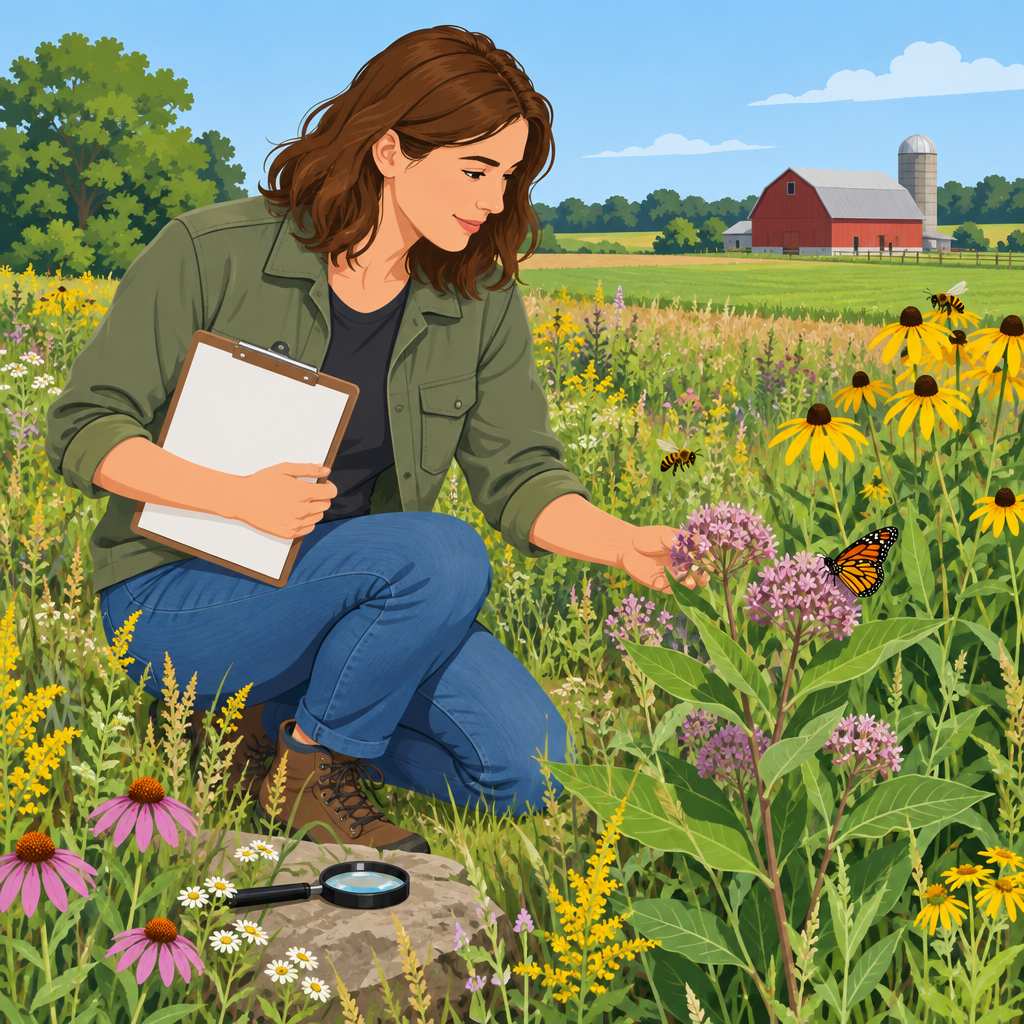
Conservation of Natural Habitats
Natural habitats on farms shelter diverse plant and animal species.
They provide food, protection, and breeding grounds for wildlife.
Therefore, protecting these areas helps maintain biodiversity across the farm.
- Importance of maintaining natural habitats on the farm
- Role of farm managers in preserving and restoring habitats
Farm Management for Habitat Protection
Farm managers identify the ecosystems present on their farms.
They protect existing habitats through careful planning and responsible land management.
Additionally, managers can restore damaged areas by planting native vegetation.
Restoring Habitats and Supporting Ecosystem Services
Managers can create wetlands and restore streams or rivers when habitats suffer damage.
These restoration efforts increase farm biodiversity and support healthier surrounding environments.
Healthy ecosystems also provide pollination, pest control, and soil fertility.
Consequently, farms may improve crop yields while reducing chemical inputs.
Transform Your Career Today
Unlock a personalized career strategy that drives real results. Get tailored advice and a roadmap designed just for you.
Start NowHabitat conservation therefore supports farm sustainability and benefits surrounding communities.
Gain More Insights: Agricultural Educators: Building Community Ties
Managing Pests and Diseases
Farm managers must manage pests and diseases while protecting biodiversity.
Effective management supports healthier farms and reduces harm to beneficial organisms.
Integrated pest management combines several methods to control pests responsibly.
The Significance of Integrated Pest Management Techniques
Integrated Pest Management, or IPM, helps farm managers control pests without relying heavily on harmful pesticides.
IPM combines biological control, crop rotation, and habitat manipulation.
These methods protect beneficial insects and other organisms within farm ecosystems.
Reducing Harmful Pesticide Use for Biodiversity Conservation
Farm managers can reduce pesticide use through practical, biodiversity-friendly strategies.
These strategies disrupt pest life cycles and support natural pest control.
Regular monitoring also helps managers respond before pest problems become severe.
- Farm managers can use crop rotation to disrupt pest life cycles and reduce pesticide needs.
- They can encourage natural predators, including ladybugs and lacewings, to control pest populations.
- Growing diverse crops can create balanced ecosystems and reduce pest outbreak risks.
- Regular field monitoring helps managers detect pest problems early and respond appropriately.
- Companion plants can attract beneficial insects and support pest control without harmful chemicals.
Supporting Biodiversity Through Sustainable Pest Management
IPM allows farm managers to protect ecosystems while addressing pest pressures.
Reducing harmful pesticide use protects beneficial insects and other wildlife.
Consequently, sustainable pest management strengthens biodiversity conservation across the farm.
Collaborating with Conservation Organizations
Biodiversity conservation supports sustainable agriculture.
Farm managers can strengthen this work by collaborating with conservation organizations.
These partnerships connect farms with expertise, resources, funding, and conservation networks.
Benefits of Conservation Partnerships
Conservation organizations can identify biodiversity hotspots on farms.
They can recommend measures that protect endangered species and important habitats.
In addition, these organizations provide technical support and training.
Farm managers can learn practical methods for protecting biodiversity.
Furthermore, conservation organizations often connect farmers with funding opportunities and grants.
These resources can support conservation projects that require significant investment.
Partnerships also help farm managers build relationships with other conservation stakeholders.
Those relationships can encourage valuable collaborations across agricultural and conservation communities.
Moreover, conservation organizations share current research and developments.
Farm managers can use this knowledge to improve conservation practices and technologies.
Consequently, these partnerships can strengthen farm resilience and support wider conservation goals.
Partnerships with Local Conservation Organizations
Farm managers can contact local conservation groups or agencies to discuss partnership opportunities.
They should explain their interest in promoting biodiversity on the farm.
Next, managers can invite conservation representatives to assess farm biodiversity.
These assessments can identify areas with high conservation value.
Farm managers and conservation organizations can then create tailored conservation plans.
Such plans can protect and improve biodiversity across the farm.
Farm managers can also join community-based conservation projects.
These initiatives bring farmers, conservationists, agencies, and communities together.
Through cooperation, participants can address shared biodiversity priorities.
Additionally, farm managers can volunteer time and resources for local conservation activities.
They may plant trees, monitor wildlife, or restore habitats.
They can also support educational outreach that promotes biodiversity conservation.
Transform Your Career Today
Unlock a personalized career strategy that drives real results. Get tailored advice and a roadmap designed just for you.
Start NowFinally, managers can attend workshops and educational programs offered by conservation organizations.
These activities develop practical skills for implementing conservation projects.
They also help farm managers take a proactive approach to biodiversity protection.
Through sustained cooperation, farms can support broader conservation goals within their communities.
Farm Management and Biodiversity Conservation
Farm managers implement conservation practices and manage land sustainably to promote biodiversity.
Biodiversity supports soil health, pest control, pollination, and ecosystem resilience.
Moreover, preserving biodiversity can improve crop productivity and reduce reliance on chemical inputs.
Therefore, farm managers can promote long-term agricultural sustainability by protecting biodiversity.
Additional Resources
Google search results for Farm Manager's Role in Biodiversity Conservation Agricultural
Bing search results for Farm Manager's Role in Biodiversity Conservation Agricultural


