




Impact of Agricultural Economists
Agricultural economists play a crucial role in food distribution networks.
They help maximize the efficiency and effectiveness of these networks.
Therefore, their work helps ensure food reaches those who need it.
Role of Agricultural Economists in Supply and Demand Analysis
Agricultural economists examine food production and consumption through economic models and data analysis.
They study consumer preferences, market trends, and government policies to assess changing supply and demand.
Their findings guide decisions about distributing food products across markets.
Importance of Supply and Demand Analysis
Efficient food distribution networks depend on clear supply and demand information.
By comparing consumer needs with production capabilities, economists support informed business decisions.
Additionally, their analysis helps businesses determine how much food each market requires.
Forecasting Future Demand
Agricultural economists examine historical data and current market conditions to estimate future demand.
These forecasts help businesses schedule production and prepare suitable distribution strategies.
As a result, companies can align food availability with expected consumer needs.
Optimizing Distribution Channels
Economists assess transportation costs, infrastructure, and market demand when reviewing distribution channels.
They identify cost-effective methods for moving and storing food products.
Consequently, businesses can choose distribution networks that match operational conditions.
Implementing Pricing Strategies
Supply and demand analysis supports pricing recommendations for food products.
Economists evaluate market dynamics to help businesses set competitive prices.
Those prices can support profitability while continuing to meet consumer demand.
Addressing Food Security Challenges
Agricultural economists analyze supply and demand to identify potential food shortages.
They can then recommend policies that support food accessibility across society.
This work connects market analysis with efforts to address food security challenges.
Agricultural Economists and Pricing Strategy
Agricultural economists analyze production costs to guide suitable prices for food products.
They also evaluate market conditions and consumer demand when recommending pricing structures.
Consequently, their analysis helps producers balance profitability with consumer affordability.
Pricing Strategies for Fair Food Access
Effective pricing strategies can support fair access to essential food products.
Appropriate prices can reduce the risk of shortages, surpluses, and sharp price fluctuations.
Furthermore, thoughtful pricing can strengthen competition and encourage greater market efficiency.
Discover More: Career Outlook for Food Safety Specialists
Agricultural Economists and Government Policy
Agricultural economists shape government decisions about food distribution networks.
They explain how policy choices affect agriculture and the food supply chain.
Through research, they clarify the economic implications of proposed government decisions.
- They advocate policies that promote sustainability in food production and distribution.
- They emphasize equitable food access for all members of society.
- They work with government agencies to develop supportive regulations and programs.
Policy Advocacy by Agricultural Economists
Agricultural economists advocate policies that support fair outcomes for farmers and consumers.
They also encourage competitive markets, environmental protection, and agricultural innovation.
Furthermore, they collaborate with policymakers to address food insecurity and strengthen local production.
- They support regulations that promote competition and prevent food industry monopolies.
- They highlight environmental policies that encourage sustainable agricultural practices.
- They promote agricultural technology research to improve distribution efficiency.
- They help design programs that address hunger within communities.
- They encourage incentives for local food production and reduced import reliance.
Find Out More: Exploring Food Additives and Their Safety
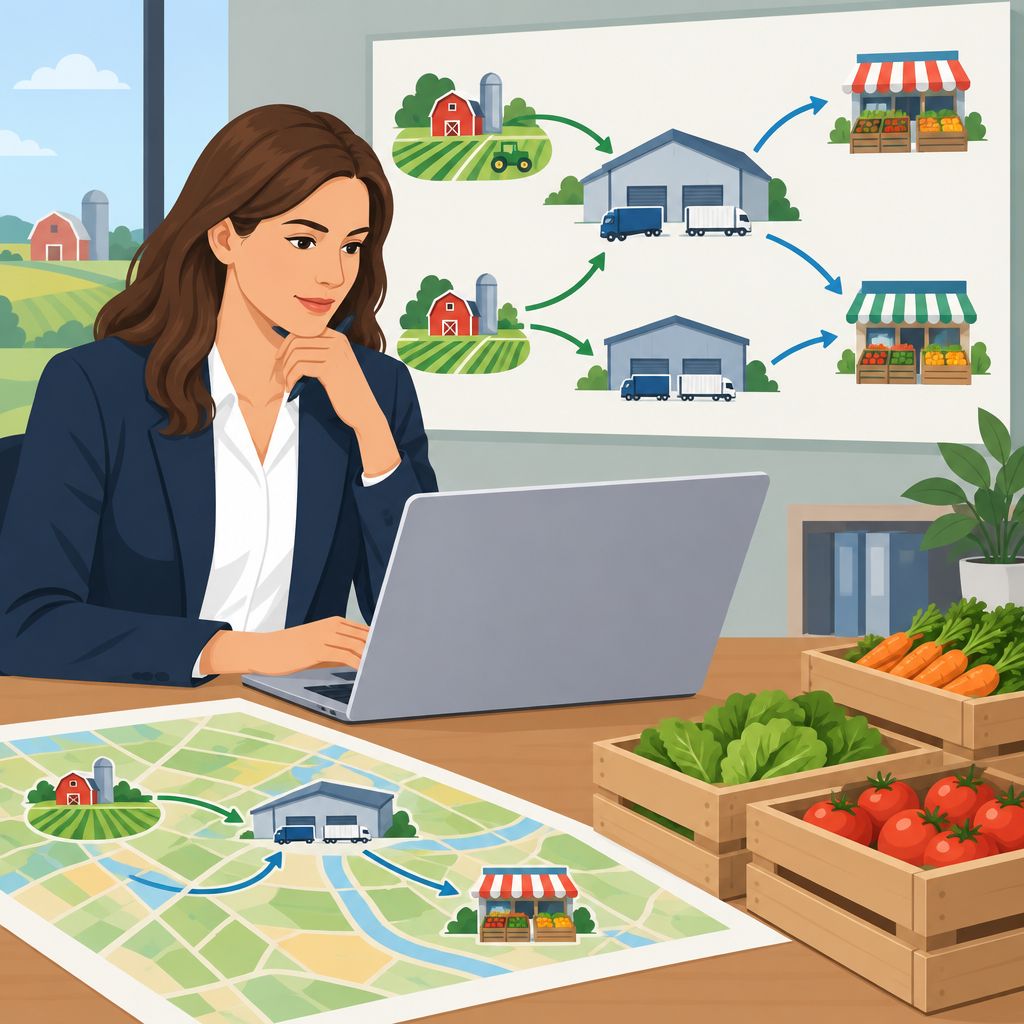
Collaboration With Industry Stakeholders
- Collaborating with farmers, distributors, and retailers is crucial for agricultural economists.
- These collaborations improve coordination and efficiency throughout the food distribution network.
- By working closely with industry stakeholders, agricultural economists understand market challenges and opportunities.
- Farmers provide insights into production trends, resource availability, and market demand.
- This information supports efficient distribution strategies and helps maintain a steady food supply chain.
- Industry stakeholders also share valuable information about consumer preferences, pricing strategies, and supply chain logistics.
- Agricultural economists integrate these insights to optimize the distribution network and improve outcomes.
- Distributors help agricultural economists identify transportation and storage challenges throughout the supply chain.
- Efficient transportation and storage help preserve food quality and freshness during distribution.
- Meanwhile, retailers help agricultural economists evaluate market trends, demand fluctuations, and stocking requirements.
- This collaboration helps retailers provide suitable products at suitable times for consumer needs.
Explore Further: Community Engagement in Agricultural Environmental Projects
Technology and Data Analysis in Food Distribution
Technology and data analysis support efficient food distribution networks.
Agricultural economists use these tools to evaluate markets, manage supplies, and improve distribution decisions.
These methods also promote sustainability and better resource allocation throughout the food industry.
Technology and Data Analysis Methods
First, agricultural economists examine market data to identify regional trends and changing demand.
Transform Your Career Today
Unlock a personalized career strategy that drives real results. Get tailored advice and a roadmap designed just for you.
Start NowThey also use software and analytics to monitor products and forecast consumer preferences.
Additionally, geographic tools and tracking technologies help them coordinate transportation and inventory management.
- They use market data to identify trends and demand across different regions.
- They implement supply chain software to track food products in real time.
- They apply data analytics to forecast consumer preferences and market changes.
- They use GIS tools to optimize transportation routes and support timely deliveries.
- They use RFID technology to manage inventories and track perishable goods.
Effects of Technology on Food Distribution
Consequently, technological advancements improve inventory management and reduce food wastage.
They also strengthen product traceability, food safety, and quality control.
Furthermore, data-driven systems streamline supply chains and improve decisions about resource allocation.
- Improved inventory management helps reduce food wastage.
- Enhanced traceability supports food safety and quality control.
- Streamlined supply chain processes support faster deliveries to consumers.
- Greater transparency helps stakeholders understand the food distribution network.
- Data-driven insights improve decisions about resource allocation.
Learn More: Daily Responsibilities of a Viticulturist
Common Challenges in Food Distribution Networks
Food distribution networks face several challenges that affect how efficiently producers reach markets.
Agricultural economists examine these obstacles to improve movement from farms to consumers.
Their analysis supports practical decisions about logistics, infrastructure, market access, and planning.
- High transportation costs can reduce returns and make market delivery more difficult.
- Limited infrastructure can slow food movement and restrict storage capacity.
- Restricted market access can prevent farmers from selling produce efficiently.
- Inefficient supply chains can increase spoilage and food waste.
- Changing market demand can complicate distribution planning.
Strategies for Smoother Food Distribution
Agricultural economists develop coordinated strategies to address these distribution challenges.
They compare costs, assess market conditions, and recommend improvements across the supply chain.
As a result, producers and consumers can benefit from a smoother distribution process.
- Transportation analysis can identify efficient routes and reduce delivery expenses.
- Infrastructure recommendations can improve transportation and storage facilities.
- Market research can reveal potential markets and changing consumer preferences.
- Supply chain practices can streamline operations and limit spoilage.
- Risk management can help organizations respond to demand volatility.
Building a Resilient and Equitable Food System
Agricultural economists connect research with practical improvements across food distribution networks.
Their findings help farmers, retailers, and consumers respond to changing food system needs.
Moreover, continued research can reveal opportunities to strengthen food security and sustainability.
Partnerships among economists, policymakers, and industry stakeholders can address emerging distribution challenges.
These partnerships encourage coordinated responses and support lasting improvements throughout the food system.
Consequently, consumers can access diverse, affordable food products when networks function effectively.
Agricultural economists also help build a food system that serves a growing global population.
Supporting their research can promote a more prosperous and sustainable future.
Additional Resources
Google search results for Agricultural Economists: Impact on Food Distribution Networks Agricultural
Bing search results for Agricultural Economists: Impact on Food Distribution Networks Agricultural


