




Pruning cuts back grapevines to remove unwanted growth and shape the plant.
This practice supports better fruit quality and higher yields in vineyards.
Enhancing Fruit Quality
By pruning, vineyard owners direct the plant’s energy toward high-quality grapes.
As a result, the grapes develop improved flavors, aromas, and overall taste.
These qualities contribute to the character of the wine produced.
Managing Vine Growth
Pruning controls vine growth and prevents overcrowding.
It also maintains proper air circulation throughout the plant.
Consequently, the vines face less disease risk and maintain better health.
Increasing Grape Yields
Proper pruning distributes fruit more uniformly along each vine.
This arrangement maximizes sunlight exposure across the developing grapes.
Therefore, the fruit ripens evenly and grape yields can increase.
Regulating Vine Stress
Pruning helps vineyard managers regulate the stress experienced by each plant.
Removing excess shoots reduces competition for the plant’s resources.
In turn, the vine can focus those resources on producing quality fruit.
Improving Harvest Efficiency
Well-pruned vines make grapes easier to reach during harvesting.
Evenly spaced fruit also simplifies the harvesting process.
Thus, vineyard owners can complete the harvest more efficiently and cost-effectively.
Supporting Long-Term Plant Health
Regular pruning supports the long-term health and longevity of grapevines.
It encourages new growth while helping prevent diseases and pests from spreading.
Over time, this care helps maintain productive and healthy vines.
Benefits of Pruning in Vineyards
Pruning supports grapevine health and productive vineyard management.
It guides plant growth while improving canopy organization.
Additionally, regular pruning supports easier vineyard care and harvesting.
Enhanced Air Circulation
Pruning opens the canopy and allows air to move around the vine.
Better airflow reduces humid conditions within the foliage.
Consequently, the vine faces lower risks from mildew and rot.
- Removing excess shoots creates more space within the canopy.
- Open foliage improves circulation around developing grape clusters.
- Reduced humidity discourages diseases that thrive in moist conditions.
Improved Sunlight Exposure
Pruning helps each grape cluster receive more direct sunlight.
Greater exposure supports photosynthesis throughout the vine.
As a result, grapes can accumulate sugar and ripen more effectively.
- Removing crowded growth exposes grape clusters to available sunlight.
- Improved light access helps the vine perform photosynthesis.
- Better exposure supports sugar accumulation during grape development.
Stronger Vine Structure
Pruning shapes the vine and supports organized growth.
It also helps maintain support for fruit-bearing canes.
Furthermore, an orderly structure makes harvesting easier.
- Pruning guides the vine toward a manageable structure.
- Well-positioned canes provide support for developing fruit.
- Organized growth helps workers harvest grapes more easily.
Managed Vineyard Density
Pruning controls the amount of growth within each vine.
It gives individual vines more room to grow and thrive.
Therefore, pruning reduces overcrowding and competition for resources.
- Removing excess growth creates space around each vine.
- Additional space reduces competition among growing plant parts.
- Balanced density promotes healthier vine development.
Long-Term Vine Health
Regular pruning supports vine health across successive growing seasons.
It removes dead or diseased wood from the plant.
This practice helps limit the spread of pests and diseases.
- Removing unhealthy wood supports sustainable grape production.
- Pruning eliminates parts that may harbor disease.
- Healthier vines can support vineyard productivity year after year.
Disease Prevention Through Pruning
- Improved air circulation within the vines
- Reduced risk of mildew and botrytis
Proper pruning plays a critical role in vineyard disease prevention.
It improves airflow among vines and helps keep grape clusters dry.
Transform Your Career Today
Unlock a personalized career strategy that drives real results. Get tailored advice and a roadmap designed just for you.
Start NowConsequently, reduced moisture makes conditions less favourable for fungal growth.
Mildew and botrytis can threaten grape yields when damp conditions persist.
Pruning creates space around clusters, allowing air to circulate more freely.
As a result, moisture has fewer opportunities to accumulate around the vines.
Furthermore, removing old and diseased wood eliminates potential infection sources.
This practice can also help limit the spread of viruses and bacterial diseases.
Therefore, consistent pruning supports healthier vines and successful harvests year after year.
You Might Also Like: Agricultural Economists: Challenges and Opportunities
Pruning Practices in Vineyard Management
Pruning shapes grapevines and helps growers manage their development throughout the growing season.
It also directs the plant’s resources toward productive growth instead of excessive foliage.
These decisions influence canopy organization, grape development, vineyard appearance, and daily management.
Canopy Structure and Grape Development
Growers selectively prune vines to create an organized canopy with suitable spacing between grape clusters.
Consequently, the canopy receives more balanced sunlight, which supports more consistent grape ripening.
Proper spacing also helps vines use their energy efficiently during grape production.
- Pruning manages the canopy and maintains useful spacing between grape clusters.
- Improved sunlight exposure can support better grape ripening and increased production.
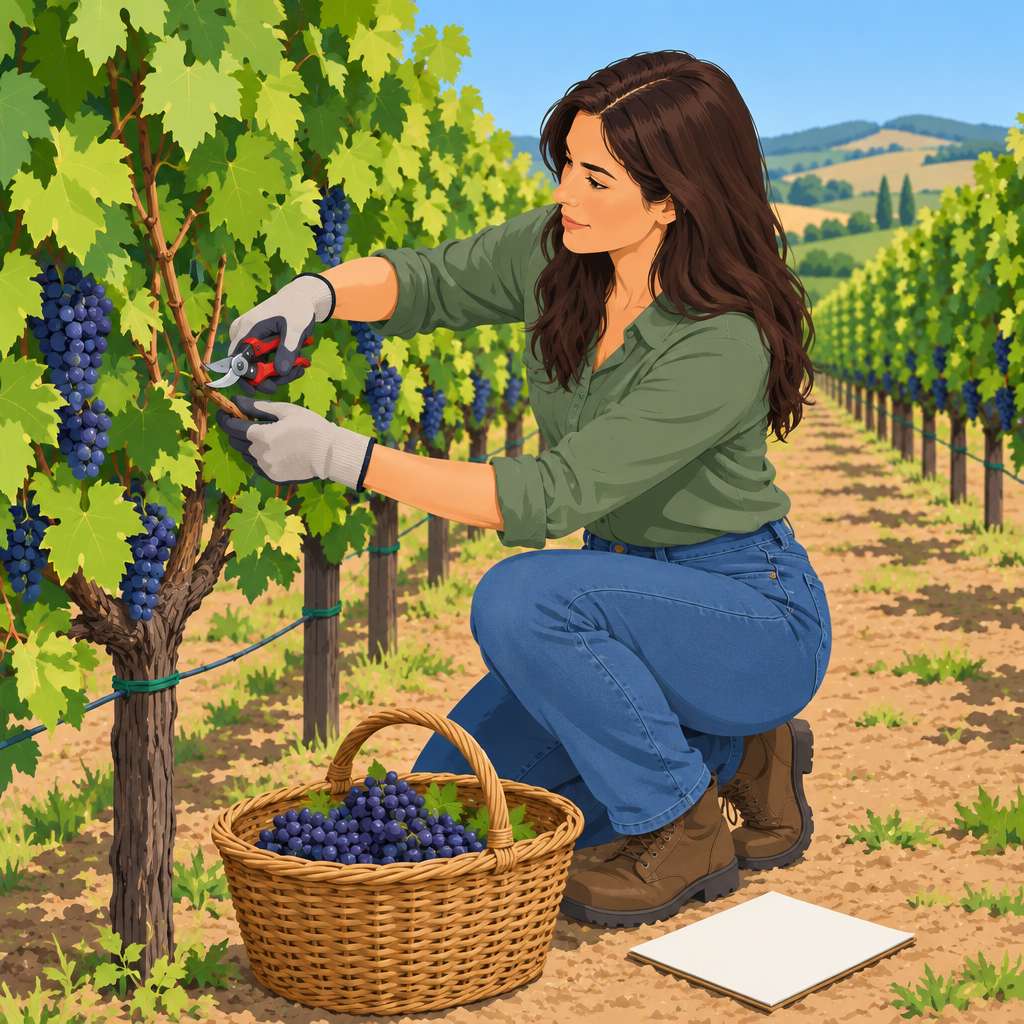
Harvest Access and Vineyard Sustainability
Well-pruned vines give workers easier access to fruit during harvest.
As a result, workers can move through the vineyard more efficiently while collecting grapes.
Additionally, orderly pruning creates a neat appearance and supports the vineyard’s visual appeal.
Thoughtful pruning can reduce the need for chemical interventions and support vineyard longevity.
Find Out More: Key Duties of Agricultural Quality Control Inspectors
Vine Shape and Structural Management
Pruning shapes the vine and helps maintain its structure.
It directs growth toward a manageable form that supports fruit production and sunlight exposure.
Properly pruned vines remain easier to manage and train as they develop.
- Pruning controls vine growth and encourages a desirable shape.
- Removing excess growth helps preserve the vine’s structural integrity.
- A strong structure supports fruit weight and promotes vine longevity.
- Pruned vines simplify training, trellising, and harvesting tasks.
- Selective cuts guide young vines along a trellis or support system.
- Opening the canopy allows more sunlight to reach leaves and fruit.
- Pruning prevents overcrowding and reduces competition for nutrients and sunlight.
- Fewer clusters allow the vine to direct more energy toward fruit development.
- Regular pruning prevents vines from becoming overgrown and difficult to manage.
You Might Also Like: Agricultural Technician Professional Associations
Long-Term Vine Health
- Regular pruning removes dead or diseased wood from grapevines.
- This practice supports vine health and longevity.
- Healthy vines can support consistent grape production in future seasons.
Pruning remains an essential vineyard practice.
It helps growers maintain healthy and productive grapevines.
Furthermore, regular pruning supports reliable grape production over time.
Removal of Dead or Diseased Wood
Growers remove dead wood through regular pruning.
Dead wood can provide a breeding ground for pests and diseases.
Therefore, prompt removal helps protect healthier parts of the vine.
Protection of Overall Vine Health
Pruning eliminates potential sources of infection from the vine.
As a result, growers can help limit disease spread.
Healthy vines remain better prepared to produce high-quality grapes.
Support for Vine Longevity
Regular pruning helps growers keep grapevines healthy.
Healthy vines can remain productive for many years.
Consequently, pruning can extend the useful lifespan of vineyard plants.
Consistency in Grape Production
Long-term vine health supports consistent grape production.
Healthy vines can better withstand environmental stressors.
Thus, growers can pursue reliable yields from season to season.
Explore Further: Tools and Equipment Used by Plant Pathologists
Sustainability and Vineyard Management
Pruning plays a crucial role in sustainable vineyard practices.
Transform Your Career Today
Unlock a personalized career strategy that drives real results. Get tailored advice and a roadmap designed just for you.
Start NowProperly pruned vines require less water and fertilizer input.
This approach makes vineyard management more environmentally friendly.
Careful pruning promotes healthier grapevines that can better resist diseases and pests.
As a result, growers may reduce their reliance on chemical inputs.
Well-managed vines need fewer resources to thrive.
Reducing water and fertilizer inputs lowers costs for growers.
It also supports a more sustainable approach to vineyard management.
Furthermore, lower input requirements can reduce the environmental impact of grape cultivation.
Excessive fertilizer use can cause nutrient runoff and water pollution.
These effects can harm the surrounding ecosystem.
Proper pruning helps growers protect the natural environment.
Well-pruned vines experience less overcrowding.
Reduced overcrowding supports better air circulation and lowers vulnerability to diseases.
Maintaining appropriate spacing creates a healthier environment for grapevines.
Strategic pruning can also support soil health and vineyard biodiversity.
Better airflow and sunlight exposure can enhance microbial activity in the soil.
In turn, microbial activity supports nutrient cycling and organic matter decomposition.
These processes help create a more balanced and resilient vineyard ecosystem.
Pruning therefore supports resource efficiency, environmental stewardship, and vineyard health.
Growers can promote eco-friendly grape cultivation by incorporating proper pruning techniques.
Timing and Techniques of Pruning
Pruning remains an important part of vineyard management.
Proper timing helps vines prepare for productive growth during the upcoming season.
Meanwhile, suitable techniques help managers guide each vine according to its needs.
Importance of Dormant Season Timing
Pruning during dormancy allows vines to direct energy toward root growth and stored reserves.
Consequently, correct timing prepares vines to produce high-quality grapes during the growing season.
Winter pruning also helps managers control vine size and structure.
Furthermore, an organized canopy allows better airflow and sunlight penetration.
Managers can assess each vine and remove damaged or diseased wood during this period.
They can also adjust the structure to support productive growth.
Common Pruning Techniques
Vineyard managers choose pruning methods according to vine needs and production goals.
Each method controls growth differently while supporting consistent grape production.
Therefore, understanding these approaches helps managers make suitable pruning decisions.
Cane Pruning
- Cane pruning retains one or two fruiting canes from the previous season and removes the remaining growth.
- This method supports high-quality fruit production by balancing vegetative growth with fruit development.
- By positioning selected canes carefully, managers control cluster numbers and manage vine vigor.
Spur Pruning
- Spur pruning shortens previous-season growth to a specific number of buds called spurs.
- Managers often use this method where vigorous growth and high yields require greater control.
- The method encourages new shoots while controlling the number of buds remaining on each vine.
Each technique offers a different way to balance vegetative growth and fruit production.
Ultimately, managers should select the method that best matches their vineyard objectives.
Mastering timing and technique supports healthy vines and reliable grape production over time.
Pruning Techniques Ensure Optimal Vine Growth
Pruning controls vine growth throughout the vineyard.
It helps maintain balanced development within each vine.
Therefore, careful pruning supports optimal vine growth.
Proper Pruning Enhances Grape Quality
Pruning directs nutrients toward grape production.
As a result, the vines can support improved grape quality.
Transform Your Career Today
Unlock a personalized career strategy that drives real results. Get tailored advice and a roadmap designed just for you.
Start NowFurthermore, focused growth helps maintain productive vineyard conditions.
Healthy Vines Through Correct Pruning
Regular pruning supports overall vine health.
It also reduces the spread of disease within the vineyard.
Consequently, correct pruning helps vines remain healthy and productive.
Sustainable Vineyard Management Practices
Pruning contributes to sustainable vineyard management.
Moreover, it supports the long-term viability of vineyard operations.
Careful pruning helps managers maintain productive vines over time.
Pruning Supports Complete Vineyard Care
Pruning influences vine growth, grape quality, and overall vine health.
It also supports sustainable management across the vineyard.
Thus, proper pruning remains essential for effective vineyard maintenance.
Additional Resources
Google search results for The Importance of Pruning in Vineyards Agricultural
Bing search results for The Importance of Pruning in Vineyards Agricultural


