




Understanding Soil Types for Grape Growing
Understanding soil types helps growers cultivate grapes with desired quality and characteristics.
Different soils influence drainage, root conditions, and grape development.
Therefore, growers should evaluate soil before selecting or managing a vineyard site.
Soil Characteristics and Grape Quality
Soil characteristics directly affect grape quality.
For example, sandy soil drains quickly and can stress grapevines during development.
That stress may influence how grapes develop throughout the growing season.
Characteristics of Ideal Grape-Growing Soil
Ideal grape-growing soil drains well and allows air to reach the roots.
Good drainage reduces waterlogging and supports healthier root conditions.
Additionally, loamy soil with adequate organic matter often suits grape cultivation.
Suitable Soil Types for Grape Cultivation
Grapes can adapt to several soil types, although some provide more balanced conditions.
Sandy loam, clay loam, and loamy soils commonly support grape cultivation.
These soils can combine useful drainage with suitable fertility levels.
Challenges Created by Different Soil Types
Each soil type creates distinct management challenges for grape growers.
Clay soil may retain excess water and create conditions that encourage root rot.
Growers must manage these conditions carefully to support vine growth.
Soil Testing and Amendments for Grape Growing
Soil testing reveals pH levels, nutrient content, and soil structure.
Growers can use those results to identify needed amendments.
Adding nutrients or organic matter can help optimize grape growth.
Soil Management for Successful Grape Production
Careful soil selection gives grapevines conditions that support productive cultivation.
Regular evaluation helps growers respond to drainage, fertility, and structure concerns.
By managing soil appropriately, growers can support high-quality grapes and successful harvests.
Importance of Soil Types for Grape Growing
Soil type strongly influences grapevine health and grape quality.
Each soil has distinct drainage, nutrient, temperature, pH, and structural characteristics.
Therefore, growers can improve cultivation by matching soil management with grapevine needs.
Soil Effects on Grapevine Growth
Drainage determines how easily grapevine roots access water without becoming stressed.
Meanwhile, excessive moisture can restrict roots and encourage unhealthy growing conditions.
Loamy soils generally combine drainage and water retention effectively.
- Sandy soils drain water quickly and may stress roots.
- Clay soils drain poorly and may become waterlogged.
- Loamy soils balance drainage and water retention.
Nutrient and Water Supply
Soil stores water and nutrients that grapevines require for healthy development.
However, rapid drainage can remove nutrients before roots absorb them.
Conversely, prolonged saturation can damage roots and encourage root rot.
- Sandy soils drain quickly and may cause nutrient leaching.
- Clay soils retain water and nutrients but may cause root rot.
- Loamy soils support balanced nutrient uptake and water retention.
Microclimates Created by Soil Types
Soil influences the temperature and moisture conditions surrounding grapevines.
As a result, soil characteristics can affect grape ripening and fruit quality.
Growers can consider these effects when matching soils with local climate conditions.
- Sandy soils warm quickly and suit cooler climates.
- Clay soils retain moisture and suit warmer regions.
- Loamy soils remain versatile across many climates.
Soil pH and Grapevine Health
Soil pH affects how effectively grapevine roots absorb available nutrients.
Therefore, growers should monitor pH and adjust it when necessary.
Suitable pH conditions help support grapevine health and fruit production.
- Sandy soils often have acidic pH and may require lime.
- Clay soils may have alkaline pH and require acidification.
- Loamy soils often provide a neutral pH for grapevines.
Soil Structure and Root Development
Soil structure determines how easily grapevine roots penetrate and spread.
Well-structured soil improves access to nutrients and supports plant stability.
In contrast, compacted or loose soil can limit healthy root development.
- Sandy soils have loose structures that may produce shallow roots.
- Clay soils have compact structures that can restrict root penetration.
- Loamy soils support strong root growth through good structure.
Successful vineyards depend on evaluating soil conditions and managing each limitation carefully.
Transform Your Career Today
Unlock a personalized career strategy that drives real results. Get tailored advice and a roadmap designed just for you.
Start NowSoil selection significantly affects grape quality and flavor.
Each soil type offers characteristics that can support or limit grapevine growth.
Growers should match soil conditions with grapevine needs.
Sandy Soil for Grapevines
- Sandy soil contains large particles and provides excellent drainage.
- It warms quickly during spring, which supports early grapevine growth.
- However, sandy soil retains little water and requires frequent irrigation.
- Its drainage prevents waterlogging and encourages root aeration.
Loamy Soil for Grapevines
- Loamy soil combines sand, silt, and clay particles.
- It drains well while retaining moisture and nutrients.
- Its aeration supports healthy grapevine root development.
- Loamy soil creates stable conditions for producing high-quality grapes.
Clay Soil for Grapevines
- Clay soil contains abundant nutrients and retains water effectively.
- However, its heavy structure can compact and restrict drainage.
- Clay warms slowly in spring but preserves moisture during dry periods.
- Organic matter can improve drainage and make clay soil more suitable.
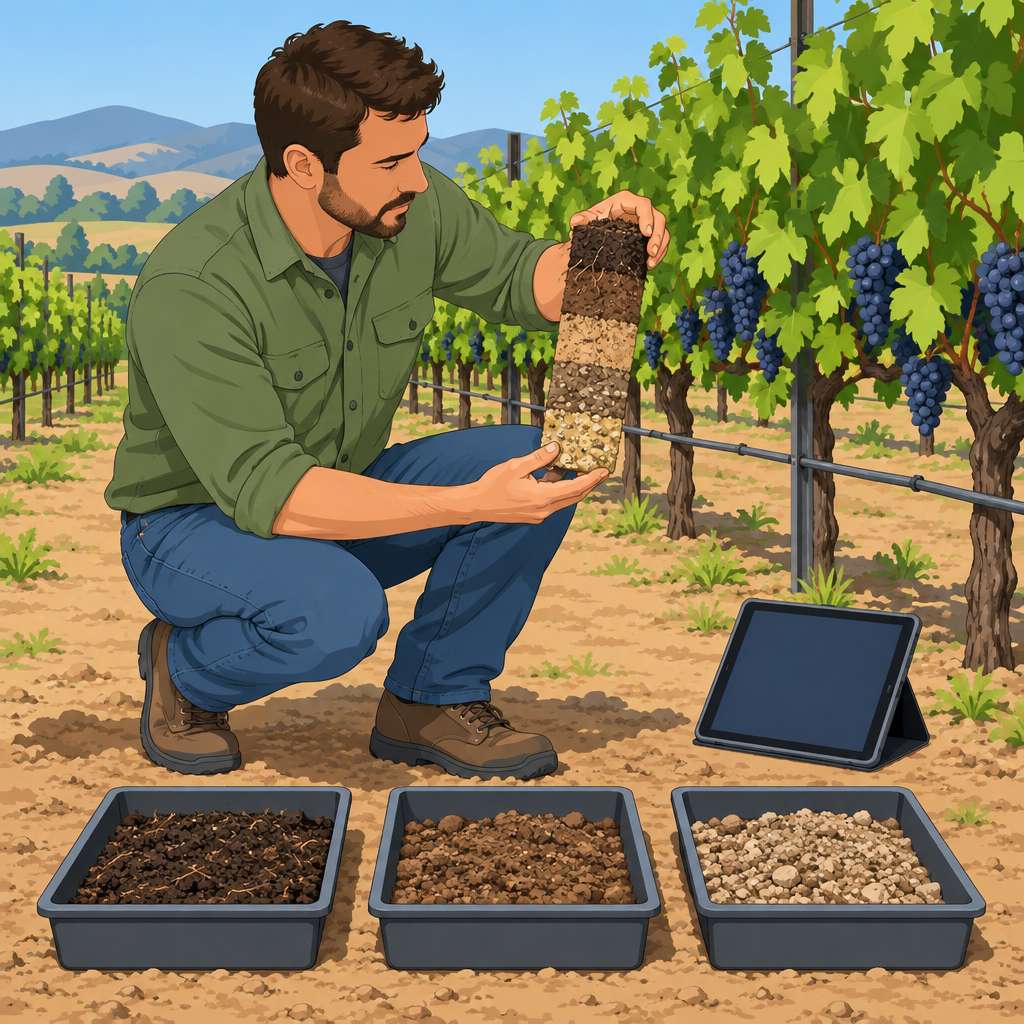
Choosing Soil for Grape Cultivation
Loamy soil usually provides the most balanced conditions for grape cultivation.
Sandy soil can also perform well when growers provide adequate irrigation.
Clay soil needs careful management to reduce waterlogging and root stress.
See Related Content: Public Outreach: Entomologists Educating the Community
Significance of Soil pH in Grape Growing
Soil pH influences nutrient availability for grapevines.
The ideal pH range for grape growing is 6.0 to 6.5.
This range remains slightly acidic to neutral.
- Soil pH affects grapevine absorption of essential minerals.
- These minerals include nitrogen, phosphorus, and potassium.
- Imbalanced pH levels can cause nutrient deficiencies in grapevines.
- However, unsuitable pH levels can also create mineral toxicities.
- Soil pH also influences microbial activity around grapevine roots.
- Healthy microbial activity supports strong grapevine growth.
- Therefore, growers should monitor pH to support balanced nutrition.
- Maintaining suitable pH conditions can encourage healthy grapevine development.
Testing and Adjusting Soil pH for Grapevines
Growers can test soil pH with a meter or kit from a garden center.
Collecting samples from several vineyard areas provides a more accurate reading.
Follow the test kit instructions when measuring soil pH.
- A pH below 6.0 indicates soil that is too acidic.
- A pH above 6.5 indicates soil that is too alkaline.
- Growers can lower pH by adding organic materials, such as compost.
- Peat moss or pine needles can also help lower soil pH.
- Apply lime when acidic soil requires a higher pH.
- Test the soil again after making adjustments.
- Regular monitoring helps growers maintain suitable conditions for grapevines.
- Proper pH management supports healthy growth and high-quality fruit production.
Delve into the Subject: Case Studies of Effective Food Safety Interventions
Drainage and soil structure strongly influence grapevine health and fruit development.
Proper water movement protects roots while supporting consistent access to oxygen and nutrients.
Additionally, suitable soil conditions help grape growers support healthy vines and quality fruit.
Good Soil Drainage for Healthy Grapevines
Grapevines need well-drained soil because waterlogged conditions can encourage root diseases.
Excess water also reduces soil aeration, which limits root respiration and weakens overall vine health.
Furthermore, well-drained soil prevents stagnation and helps roots absorb oxygen and nutrients effectively.
- Proper drainage helps protect grapevine roots from diseases associated with waterlogged soil.
- Well-drained soil improves aeration and supports healthy root respiration.
- Effective water movement allows roots to access oxygen and nutrients more consistently.
- Good drainage helps regulate soil temperature during vine growth and fruit development.
Soil Structure and Root Development
Soil structure describes how soil particles arrange and combine into aggregates.
A healthy structure supports water infiltration, retention, and movement throughout the soil profile.
Moreover, well-structured soil creates pathways that help roots reach water and nutrients.
- Healthy soil structure promotes balanced water infiltration and retention.
- Open soil pathways support root penetration and continued root development.
- Compacted soil restricts root growth and limits water absorption.
- Restricted roots can contribute to stunted vine growth and reduced yields.
Therefore, growers should maintain drainage and soil structure that support active, well-aerated roots.
These conditions help grapevines access essential resources throughout growth and fruit development.
Gain More Insights: Emerging Trends in Agricultural Economics
Soil Amendments for Grape Cultivation
Soil amendments improve soil quality and support healthy grapevine growth.
They add nutrients, adjust soil structure, or influence conditions that affect vines.
Growers can combine organic and inorganic amendments to create a balanced cultivation environment.
Organic Soil Amendments
Organic amendments add natural materials and nutrients to the growing environment.
They can improve soil structure and fertility when growers apply them appropriately.
Cover crops and worm castings can also support soil fertility and microbial activity.
- Compost provides nutrients while improving soil structure and fertility.
- Manure adds essential nutrients and improves soil structure when applied in moderation.
- Legumes such as clover fix nitrogen in the soil and benefit grapevines.
- Worm castings enhance soil structure, fertility, and microbial activity.
Inorganic Soil Amendments
Inorganic amendments help growers adjust soil conditions for grape cultivation.
They can modify pH, improve drainage, or supply specific nutrients.
Growers should select each amendment according to the soil need.
- Lime adjusts soil pH and improves essential nutrient availability for grapevines.
- Sulfur lowers soil pH and creates suitable conditions for grape cultivation.
- Gypsum improves soil structure and drainage in heavy clay soils.
- Epsom salts provide magnesium for chlorophyll synthesis and healthy vines.
Together, organic and inorganic amendments can create a balanced environment for grape cultivation.
This balanced environment supports vine growth and fruit production.
Delve into the Subject: Agricultural Economics: Understanding Commodity Markets
Soil Factors in Vineyard Site Selection
Soil characteristics influence vineyard site selection, vine performance, and harvest potential.
Growers should assess drainage, nutrients, pH, and water retention before choosing a site.
Transform Your Career Today
Unlock a personalized career strategy that drives real results. Get tailored advice and a roadmap designed just for you.
Start NowThese factors help growers match vineyard conditions with grapevine requirements.
Sandy soils drain quickly and retain less water.
This drainage can benefit vineyards in regions with heavy rainfall or irrigation.
Clay soils retain more water, but growers may need drainage systems.
Loamy soils combine sand, silt, and clay, balancing drainage with water retention.
Soil, Climate, and Grape Variety Compatibility
Soil and climate together influence grape variety compatibility.
Pinot Noir can thrive in limestone-rich soils that drain well.
Chardonnay can perform well in soils with higher clay content and moisture retention.
Warmer climates may require soils that preserve moisture during dry periods.
Practical Vineyard Planning Considerations
- Choose vineyard sites according to soil conditions and grapevine needs.
- Evaluate drainage, nutrient availability, pH, and water retention.
- Match grape varieties with suitable soil and climate conditions.
- Use soil tests and variety research to guide planting decisions.
Growers can make informed site decisions by considering soil, climate, and variety needs.
They should also test soil and research each variety’s requirements before planting.
Soil Management Practices for Grapevine Health
Sustainable soil management helps grape growers maintain productive soil while reducing reliance on external inputs.
These practices build soil health through natural processes.
Consequently, healthy soil supports vigorous vines and high-quality fruit.
Sustainable Soil Management Practices
Growers can protect soil quality by combining crop rotation, cover crops, limited tillage, and organic inputs.
These methods help prevent depletion, erosion, compaction, and declining soil fertility.
Furthermore, natural soil processes can support microbial activity and nutrient availability.
- Implement crop rotation to prevent soil depletion and improve soil structure.
- Use cover crops like clover or radishes to improve fertility and control weeds.
- Avoid excessive tilling to reduce soil erosion and compaction.
- Apply compost or manure to enrich soil and promote microbial activity.
- Use green manures to add nitrogen and other nutrients to the soil.
Mulching, Cover Cropping, and Soil Testing
Mulching, cover cropping, and soil testing each support healthy grapevines in different ways.
Together, these practices help growers manage moisture, weeds, nutrients, erosion, and soil structure.
Regular testing also helps growers adjust fertilization and amendments to meet vine needs.
- Mulching conserves moisture, suppresses weeds, regulates temperature, and improves soil structure.
- Organic mulches can add nutrients as they decompose.
- Cover crops protect soil from erosion and add organic matter.
- Cover crops can fix nitrogen, suppress weeds, and support beneficial organisms.
- Soil testing identifies nutrient levels and soil pH.
- Growers can use test results to refine fertilization and amendment practices.
By applying these practices, growers create a balanced soil ecosystem for grapevine growth.
Healthy soil supports healthy vines and helps produce high-quality grapes for winemaking.
Soil Planning for Healthy Grapevines
Suitable soil conditions support healthier grapevines and more productive harvests.
Growers can improve cultivation by assessing drainage, pH levels, and nutrient content.
Soil testing helps growers identify conditions that require attention before planting.
Research also clarifies the specific soil requirements of grapevines.
These steps help growers support grape quality, flavor, and overall vine health.
Careful soil planning can contribute to consistent grape production.
Additional Resources
Google search results for Understanding Soil Types for Grape Growing Agricultural
Bing search results for Understanding Soil Types for Grape Growing Agricultural


