




Logistics Technicians Across Industries
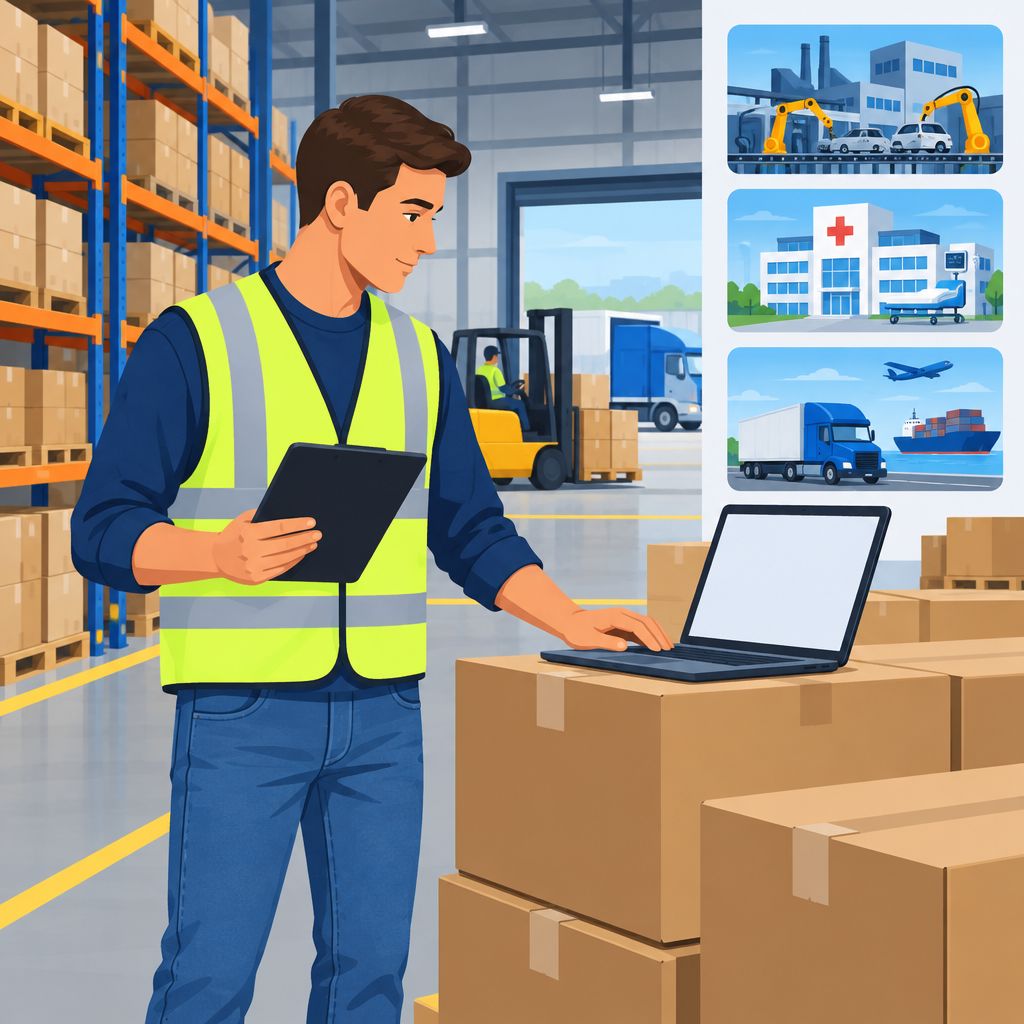
Logistics technicians support supply chain operations across many industries.
They coordinate transportation, inventory, and warehousing activities.
As a result, their work helps organizations maintain efficient logistics processes.
Logistics Support in Retail
Retail companies rely on logistics technicians to manage inventory levels.
They coordinate shipments and support timely deliveries to stores.
Therefore, their work helps retailers maintain smooth operations and meet customer demands.
Manufacturing Supply Chain Coordination
Manufacturers depend on logistics technicians to coordinate raw material transportation.
These professionals also manage inventory levels throughout production activities.
Consequently, they support timely product deliveries, streamlined processes, and lower costs.
Healthcare Resource Management
Healthcare organizations use logistics technicians to manage medical supplies and equipment.
They also coordinate pharmaceutical inventory for healthcare facilities.
Thus, their efforts help facilities maintain resources for quality patient care.
Transportation and Logistics Operations
Transportation companies rely on logistics technicians to coordinate shipments.
They optimize delivery routes and support on-time transportation services.
In turn, their work helps companies streamline operations and reduce transportation costs.
Food and Beverage Distribution
Food and beverage companies depend on logistics technicians to manage inventory levels.
They coordinate shipments and arrange timely deliveries of perishable goods.
By managing these activities, they help prevent spoilage and maintain quality standards.
Operational Value Across Industries
Logistics technicians optimize supply chain operations across diverse industries.
Their coordination supports efficient logistics processes and smoother daily operations.
Ultimately, they help organizations reduce costs and meet customer demands.
Logistics Technicians in Manufacturing
- Production inventory control
- Raw material and product movement
- Coordination with production teams
Logistics technicians help manufacturing companies maintain smooth production processes.
They manage inventory, storage, transportation, and delivery activities throughout the manufacturing workflow.
These professionals monitor raw materials and finished products to support consistent production.
They maintain accurate inventory records and apply efficient storage practices.
Consequently, production lines receive the resources needed for uninterrupted operations.
Logistics technicians also coordinate shipments with suppliers and transportation providers.
They arrange incoming materials for production facilities and outgoing goods for customers.
Furthermore, they optimize transportation routes and schedules to support delivery deadlines.
Production managers and logistics technicians work together to identify process improvements.
This collaboration can reduce waste, limit downtime, and improve operational efficiency.
Logistics technicians may recommend inventory system changes or production schedule adjustments.
These adjustments help manufacturing companies control costs and strengthen competitiveness.
Retail Industry
Logistics technicians manage inventory, coordinate shipments, and restock shelves throughout the retail industry.
- They maintain optimal stock levels, ensuring products remain available for purchase.
- They work closely with suppliers to secure timely deliveries and prevent stockouts or overstock situations.
- By monitoring sales trends and customer demand, they help retailers anticipate needs and adjust inventory levels.
- Furthermore, efficient inventory management reduces carrying costs and prevents losses from expired or obsolete products.
Importance of Logistics Technicians
Logistics technicians help retailers meet customer demands and maintain efficient operations.
- They ensure products reach customers when and where needed, enhancing satisfaction and loyalty.
- Additionally, they coordinate shipments effectively, minimizing delays and improving the customer experience.
- They streamline supply chain processes and reduce costs associated with inventory management.
- Finally, prompt restocking gives customers access to more products and increases retailers’ sales potential.
See Related Content: Day-to-Day Responsibilities of a Distribution Manager
E-commerce Industry
Logistics technicians support E-commerce operations by managing order fulfillment, shipment tracking, and customer returns.
They coordinate these activities to keep orders moving and maintain reliable service.
Their work also helps companies respond to delivery needs and customer concerns.
- Managing Order Fulfillment
- Tracking Shipments
- Coordinating Returns
Logistics technicians oversee customer orders from receipt through processing.
Transform Your Career Today
Unlock a personalized career strategy that drives real results. Get tailored advice and a roadmap designed just for you.
Start NowFirst, they ensure workers pick, pack, and ship each order accurately and on time.
This process helps E-commerce companies meet customer expectations.
They use tracking systems and software to monitor shipments from warehouses to customers.
Meanwhile, they watch delivery timelines, address delays, and provide customers with timely updates.
When customers return products, technicians manage the reverse logistics process.
They arrange pickups, inspect returned items, and process refunds or exchanges.
Afterward, they restock or dispose of returned items appropriately.
Through these responsibilities, logistics technicians support timely delivery and customer satisfaction.
They help E-commerce companies build trust and encourage customer retention.
- Timely Delivery
- Customer Satisfaction
By managing fulfillment and shipment tracking, logistics technicians help companies meet delivery timelines.
Consequently, customers receive products quickly, which helps build trust and loyalty.
They also support positive customer experiences through accurate tracking information and professional return handling.
Additionally, they resolve delivery issues promptly and help companies maintain customer satisfaction.
Delve into the Subject: Logistics Consultant: Navigating Industry Regulations
Logistics Technicians in Healthcare
Logistics technicians manage medical supplies, equipment, and pharmaceuticals throughout healthcare distribution.
They coordinate product movement between suppliers and healthcare facilities.
As a result, their work supports reliable access to essential healthcare products.
Healthcare Logistics Responsibilities
First, logistics technicians maintain inventory records for medical supplies, equipment, and pharmaceuticals.
They also coordinate shipments and deliveries for hospitals, clinics, and pharmacies.
Additionally, they monitor stock levels and reorder supplies when necessary.
- Manage inventory of medical supplies, equipment, and pharmaceuticals
- Coordinate shipments and deliveries to healthcare facilities
- Ensure proper storage and handling of sensitive medical products
- Monitor stock levels and reorder supplies as needed
Healthcare Distribution Support
Logistics technicians help distribute healthcare products safely and efficiently.
They ensure healthcare facilities receive necessary supplies on time and in good condition.
Moreover, their inventory and shipment work helps reduce delays in patient care.
Benefits of Efficient Healthcare Distribution
Efficient distribution helps healthcare facilities maintain dependable access to required products.
Accurate inventory tracking also supports cost-effective supply management.
Furthermore, proper control reduces waste and limits expired products.
- Enhance patient care through timely medical supply availability
- Support cost-effective inventory management through accurate tracking
- Streamline healthcare facility workflows with prompt deliveries
- Reduce waste and expired products through proper inventory control
Challenges in Healthcare Logistics
Healthcare logistics technicians handle products that require specific storage conditions.
They also manage varied supplies with different handling and storage requirements.
Meanwhile, urgent orders and regulatory requirements can create additional pressure.
- Handle temperature-sensitive pharmaceuticals and medical products
- Manage medical supplies with different storage requirements
- Meet tight delivery schedules and urgent orders
- Follow regulatory requirements for pharmaceutical distribution
Emerging Trends in Healthcare Distribution
Technology continues to change how healthcare organizations manage distribution.
Logistics technicians increasingly use digital tools to improve inventory control and order processing.
They also explore automated delivery methods and data analysis for supply chain management.
- Implement RFID tracking systems for enhanced inventory control
- Use automated packaging and labeling systems for faster processing
- Explore drones and autonomous vehicles for medical supply delivery
- Integrate data analytics for improved forecasting and supply chain management
Impact on Healthcare Operations
Logistics technicians connect healthcare facilities with the products they need.
Their work supports safe handling, accurate inventory, and dependable deliveries.
Consequently, effective healthcare logistics helps facilities maintain operations and support patient care.
You Might Also Like: How to Build a Strong Logistics Consulting Brand
Transportation Industry
Logistics technicians coordinate the movement of goods through trucking, rail, shipping, and air transportation.
They help products reach their destinations efficiently and on time.
Their transportation expertise supports smoother logistics operations and more reliable deliveries.
Coordinating the Movement of Goods
Technicians work with transportation companies to plan and execute shipments between locations.
Transform Your Career Today
Unlock a personalized career strategy that drives real results. Get tailored advice and a roadmap designed just for you.
Start NowThey coordinate schedules, track shipments, and direct products toward their intended destinations.
By overseeing transportation logistics, they streamline movement through the supply chain.
- Logistics technicians coordinate shipment plans with transportation companies.
- They monitor schedules and track goods during transit.
- They help ensure that products reach the correct destinations.
Optimizing Transportation Routes
Route optimization helps companies reduce shipping costs and improve delivery times.
Technicians compare routes by reviewing distance, traffic conditions, and fuel efficiency.
They select efficient transportation paths that support stronger cost control.
- Technicians analyze available routes before transportation begins.
- They consider distance, traffic conditions, and fuel efficiency during planning.
- Efficient routes help companies control transportation expenses.
Reducing Shipping Costs
Logistics technicians identify practical ways to lower shipping expenses.
They consolidate shipments and reduce empty backhauls whenever possible.
They also negotiate favorable rates with transportation carriers.
- Shipment consolidation helps reduce unnecessary transportation costs.
- Technicians minimize empty backhauls to improve resource utilization.
- They negotiate carrier rates that support lower shipping expenses.
Ensuring On-Time Deliveries
Timely deliveries support customer satisfaction and business success.
Technicians monitor transportation schedules and track shipments during transit.
They address delays and other issues before those problems disrupt delivery plans.
- Technicians maintain accurate delivery schedules for each shipment.
- They use shipment tracking to monitor transportation progress.
- They manage delays proactively to protect delivery commitments.
Explore Further: Impact of Logistics Technicians on Business Efficiency
Logistics Technicians in the Food and Beverage Industry
Food and beverage companies depend on logistics technicians to protect products throughout storage, transportation, and distribution.
Because many products spoil quickly, technicians coordinate conditions that preserve freshness and safety.
Their decisions also support dependable operations, regulatory compliance, and customer satisfaction.
Management of Perishable Goods
Logistics technicians monitor fruits, vegetables, dairy products, and meats during storage and transportation.
They maintain suitable temperatures and conditions to reduce spoilage risks.
Additionally, they track inventory, rotate stock, and support timely deliveries.
Product Quality Throughout the Supply Chain
They protect product quality across each stage of the supply chain.
Technicians monitor temperature controls, packaging integrity, and handling procedures.
Consequently, their careful work helps prevent contamination and preserve product condition.
Food Safety Regulatory Compliance
Food safety regulations require careful handling and transportation practices.
Logistics technicians follow requirements involving labeling, record-keeping, and sanitation.
Through consistent compliance, companies avoid costly fines and maintain consumer trust.
Waste Reduction Through Efficient Logistics
Efficient logistics management helps companies address food waste.
Technicians optimize inventory levels and streamline distribution processes.
Therefore, they reduce expiration risks while supporting stronger financial and sustainability results.
Operational Value for Food and Beverage Companies
Logistics technicians strengthen daily operations through careful coordination and product oversight.
Their expertise helps companies control costs while protecting product integrity.
As a result, businesses can deliver safe, fresh products and maintain customer satisfaction.
Cross-Industry Value of Logistics Technicians
Logistics technicians support supply chains in manufacturing, retail, transportation, and healthcare.
They coordinate goods, materials, inventory, shipments, equipment, pharmaceuticals, and supplies across these operating environments.
Manufacturers depend on them to align material movement with production schedules and manage finished products.
Retailers use their coordination skills to connect suppliers, warehouses, distribution centers, and stores.
Transportation companies rely on them to plan routes, track shipments, and maintain scheduled deliveries.
Healthcare providers depend on them to keep medical equipment, pharmaceuticals, and supplies available.
These responsibilities help organizations streamline operations, reduce costs, and deliver goods on time.
Continued industry demand creates promising career opportunities for logistics technicians.
Additional Resources
Bing search results for Top Industries Employing Logistics Technicians Transportation and Logistics
Transform Your Career Today
Unlock a personalized career strategy that drives real results. Get tailored advice and a roadmap designed just for you.
Start Now


