




Introduction
Define Sustainability in Transportation Urban Planning
Sustainability in transportation urban planning creates environmentally friendly and socially equitable systems.
These systems meet the community’s mobility needs.
Importance of Sustainable Transportation in Urban Planning
Sustainable transportation in urban planning reduces greenhouse gas emissions and alleviates traffic congestion.
Additionally, it promotes public health and improves quality of life in cities.
Benefits of Sustainable Transportation in Urban Planning
Sustainable transportation delivers practical benefits for communities and urban environments.
It also helps cities manage mobility while supporting healthier daily routines.
These advantages strengthen urban livability and guide more responsible planning decisions.
Lower Carbon Emissions and Air Pollution
Public transportation, cycling, walking, and carpooling can lower carbon emissions.
These options also reduce air pollution by limiting dependence on private vehicles.
Cleaner air supports environmental quality and residents’ health.
Healthier Communities Through Active Transportation
Walking and cycling encourage residents to include physical activity in daily travel.
Walkable neighborhoods and bike-friendly infrastructure can help reduce sedentary lifestyles.
Consequently, communities can support better health through ordinary transportation choices.
Reduced Congestion and Improved Mobility
Efficient public transportation can help cities reduce traffic congestion.
Pedestrian-friendly infrastructure and mixed land-use development can improve connectivity.
Together, these measures can expand equitable access and mobility for residents.
Cities can create more livable environments by prioritizing sustainable transportation options.
These practices also limit the negative effects associated with excessive vehicular traffic.
Urban planners can therefore support healthier communities and a more sustainable future.
Strategies for Promoting Sustainable Transportation
Cities can apply several strategies to make transportation more sustainable.
These strategies address public transit, active travel, shared rides, and cleaner vehicles.
Policymakers, planners, and communities can coordinate these efforts to improve transportation systems.
- Investing in public transportation infrastructure
- Implementing bike lanes and pedestrian-friendly infrastructure
- Encouraging carpooling and ridesharing programs
- Promoting electric vehicles and alternative fuel options
Investing in Public Transportation Infrastructure
Public transportation investment supports sustainable transportation within urban planning.
Efficient and reliable systems can reduce dependence on private vehicles.
Therefore, cities can fund new projects, improve existing systems, and strengthen connections between transportation modes.
Implementing Bike Lanes and Pedestrian-Friendly Infrastructure
Bike lanes and pedestrian infrastructure support active transportation.
Safe, accessible pathways can encourage cycling and walking for local trips.
Dedicated lanes, walkways, and shared spaces can prioritize non-motorized travel.
Encouraging Carpooling and Ridesharing Programs
Carpooling and ridesharing programs can reduce the number of vehicles using roads.
Shared rides can also address congestion and support cleaner urban air.
Cities can develop ride-matching services, carpooling platforms, and designated carpool lanes.
Promoting Electric Vehicles and Alternative Fuel Options
Electric vehicles and alternative fuels can support a cleaner transportation system.
Cities can encourage adoption through tax incentives, rebates, and purchase subsidies.
They can also expand charging stations and support renewable energy development.
Together, these measures can help cities create more efficient and environmentally responsible transportation systems.
Uncover the Details: Port Operations Manager: Role in Economic Development
Case Studies of Successful Sustainable Transportation Initiatives
Several cities worldwide demonstrate how sustainable transportation initiatives can improve urban mobility.
These examples show how cities can reduce emissions while creating more livable communities.
Transform Your Career Today
Unlock a personalized career strategy that drives real results. Get tailored advice and a roadmap designed just for you.
Start NowFurthermore, their approaches offer practical lessons for cities pursuing sustainable transportation systems.
Curitiba’s Bus Rapid Transit System
- Curitiba’s Bus Rapid Transit system demonstrates efficiency and sustainability.
- The city implemented dedicated bus lanes, prepaid boarding, and modern bus stations to streamline service.
- As a result, Curitiba’s BRT reduces traffic congestion and greenhouse gas emissions.
- By prioritizing public transportation, the city created a more walkable and bike-friendly urban environment.
Copenhagen’s Bicycle Infrastructure
- Copenhagen supports cycling through extensive infrastructure and a high rate of bicycling commuters.
- The city invested in bike lanes, bike parking facilities, and traffic signals designed for cyclists.
- With more than 200 miles of bike lanes, Copenhagen promotes sustainable transportation and healthy lifestyles.
- This focus on cycling reduces traffic congestion and improves air quality throughout the city.
Portland’s Public Transportation Network
- Portland’s public transportation system includes buses, light rail, streetcars, and commuter rail service.
- The city prioritizes public transportation as a key component of its sustainability efforts.
- Additionally, Portland integrates transit with cycling and walking paths to support multimodal transportation.
- Reliable and accessible transit options help Portland reduce car dependency and emissions.
These case studies show that sustainable transportation initiatives can improve urban mobility.
They can also reduce carbon footprints and create more livable cities for residents.
By adopting similar strategies and investing in sustainable transportation infrastructure, cities worldwide can achieve a more sustainable future.
They can also build greater resilience.
Explore Further: Freight Agent Communication Skills Importance
Challenges to Implementing Sustainable Transportation in Urban Planning
Cities face several challenges when they implement sustainable transportation through urban planning.
These obstacles can slow progress toward efficient and environmentally friendly transportation systems.
Therefore, planners must address industry opposition, funding shortages, and public resistance.
Opposition from Car-Centric Industries
Car-centric industries often oppose initiatives that promote alternative transportation modes.
Automakers and oil companies benefit from car-dependent infrastructure and may resist transportation changes.
Consequently, their influence can complicate policies that prioritize walking, cycling, and public transit.
- Automakers and oil companies often challenge initiatives supporting alternative transportation modes.
- These industries have strong interests in maintaining car-dependent infrastructure.
- Their influence can hinder policies that prioritize walking, cycling, and public transit.
Limited Funding for Infrastructure Improvements
Funding shortages create another significant barrier to sustainable transportation.
Cities need substantial investment to build bike lanes, pedestrian walkways, and public transit systems.
Without adequate resources, planners may struggle to prioritize sustainability during infrastructure decisions.
- Cities often lack adequate funding for sustainable transportation improvements.
- Bike lanes, pedestrian walkways, and public transit systems require significant investment.
- Funding difficulties can prevent cities from completing necessary infrastructure upgrades.
Resistance from Residents Accustomed to Traditional Transportation
Residents accustomed to traditional transportation may resist changes to established travel habits.
Many people feel comfortable driving everywhere and may hesitate to adopt different options.
For that reason, planners should educate residents and encourage their participation in transportation changes.
- Some residents remain accustomed to driving for nearly every trip.
- Changing established habits can prove difficult when residents prefer familiar systems.
- Planners must engage residents and explain the value of sustainable transportation options.
Addressing Barriers to Sustainable Transportation
Sustainable transportation remains essential for creating more livable and environmentally friendly cities.
However, cities must overcome industry opposition, infrastructure funding shortages, and resident resistance.
By navigating these barriers, planners can promote transportation systems that better support urban communities.
Find Out More: Handling Logistics Crises: Consultant Strategies
Public Involvement in Sustainable Transportation Planning
Public involvement supports sustainable transportation planning.
Community engagement helps decision-makers understand residents’ needs.
This process helps cities create inclusive and efficient transportation systems.
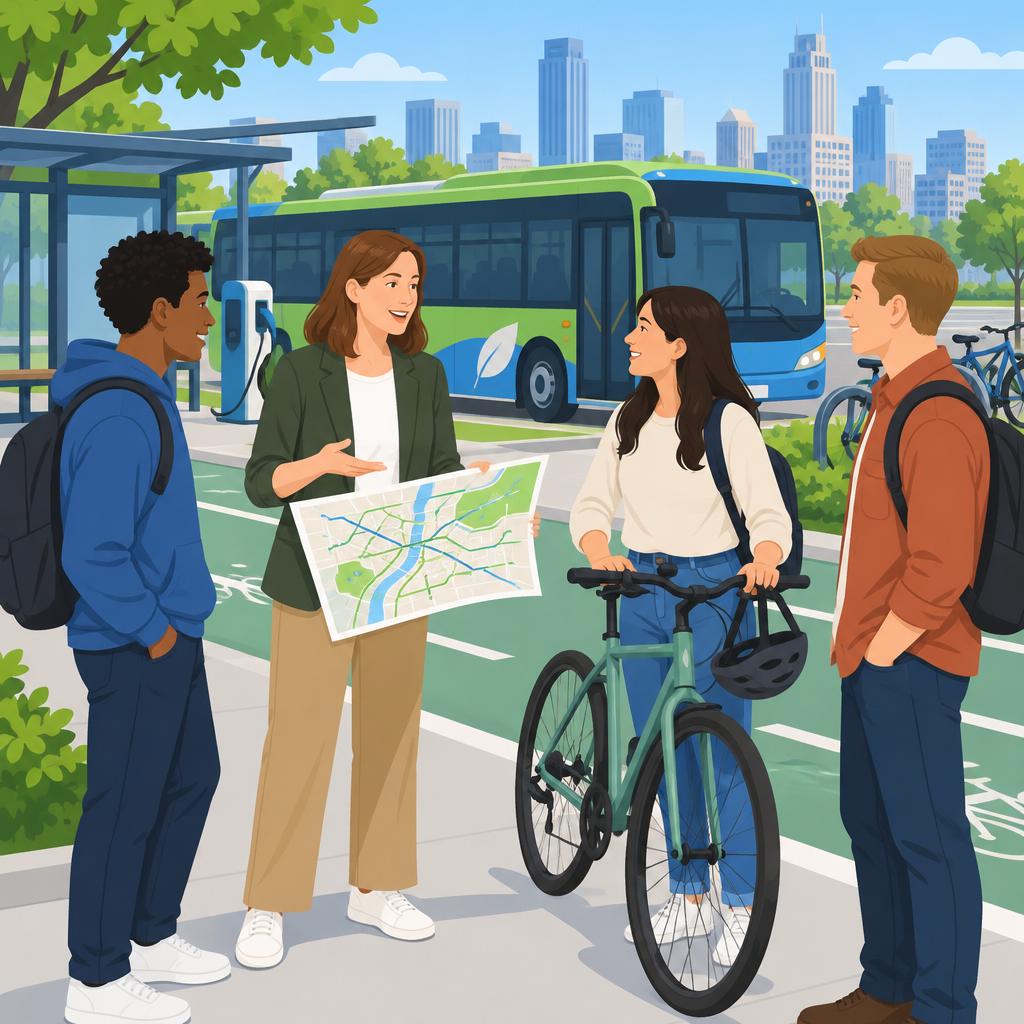
Community Participation in Transportation Decisions
Residents can shape transportation decisions through meetings, workshops, committees, online platforms, surveys, and polls.
These methods gather feedback from people with diverse perspectives.
Therefore, planners can better understand community preferences and transportation priorities.
- Organizers can hold public meetings and workshops to collect residents’ feedback and ideas.
- Community representatives can serve on advisory committees or task forces for transportation projects.
- Online platforms and social media can reach wider audiences and gather diverse perspectives.
- Surveys and polls can identify community preferences for sustainable transportation options.
Public Education About Sustainable Transportation
Education helps residents understand sustainable transportation options.
Events and workshops can explain environmental and health benefits.
Schools, informational materials, and resources can also highlight cost savings and convenience.
- Educational events can raise awareness about sustainable transportation’s environmental and health benefits.
- Schools and educational institutions can promote sustainable transportation practices among students and families.
- Informational materials can describe the cost savings and convenience of alternative transportation options.
Partnerships Supporting Sustainable Transportation
Partnerships extend public involvement beyond formal planning activities.
Employers, businesses, advocacy groups, and non-profit organizations can support sustainable transportation initiatives.
Community leaders and stakeholders can build support and momentum for transportation projects.
- Employers can offer incentives for public transportation, carpooling, or bicycling.
- Businesses can support bike-sharing programs or offer discounts to alternative transportation users.
- Advocacy groups and non-profit organizations can promote supportive transportation policies.
- Community leaders and stakeholders can strengthen support for sustainable transportation projects.
Community Outcomes from Public Participation
Public participation can help cities develop transportation systems that serve residents more effectively.
Collaboration can support inclusive, efficient, and environmentally friendly transportation networks.
These networks can promote sustainability while reducing congestion and emissions.
You Might Also Like: Distribution Manager's Role in Customer Satisfaction
Policy Recommendations for Sustainable Transportation Planning
Cities can use several policies to support sustainable transportation planning.
These policies can create transportation systems that serve residents efficiently.
Transform Your Career Today
Unlock a personalized career strategy that drives real results. Get tailored advice and a roadmap designed just for you.
Start NowThey can also support environmental goals while improving access to daily destinations.
Mixed-Use Development Through Zoning Regulations
Zoning regulations strongly influence how cities organize homes, businesses, and public spaces.
Mixed-use development places residential, commercial, and recreational spaces near one another.
As a result, residents may face fewer long commutes and find walking more convenient.
- Zoning regulations can encourage mixed-use development in suitable areas.
- Mixed-use communities can reduce dependence on cars for everyday trips.
- Integrated neighborhoods can support walkability and community activity.
- These developments can also help reduce traffic congestion.
Development Incentives Near Public Transportation Hubs
Cities can encourage developers to build near public transportation hubs.
This approach can improve residents’ access to transit and reduce reliance on cars.
Furthermore, transit-oriented development can attract people who value sustainable transportation options.
- Tax breaks can motivate developers to prioritize locations near transit hubs.
- Expedited permitting can provide another incentive for transit-oriented development.
- Transit proximity can increase property values and attract interested residents.
- New development near transit can support greater public transportation use.
Emission Reduction and Sustainable Transportation Targets
Cities should establish clear goals for reducing transportation-related carbon emissions.
They should also measure progress toward greater use of sustainable transportation options.
Regular benchmarks can help decision makers adjust policies when progress falls short.
- Set ambitious but achievable targets for reducing carbon emissions.
- Track the mode share of walking, biking, and public transit.
- Use benchmarks to evaluate progress across the transportation network.
- Maintain focus on creating a diverse and accessible transportation system.
These policies give cities practical tools for integrating sustainability into transportation planning.
They connect land use decisions, development activity, and transportation performance.
Together, these measures can support efficient and environmentally friendly transportation systems.
Sustainable transportation helps create vibrant urban environments.
It reduces emissions, improves air quality, and encourages healthier lifestyles.
Moreover, it increases accessibility and strengthens quality of life.
Therefore, prioritizing sustainable transportation helps cities become more livable, equitable, and resilient.
It also strengthens community connections, improves public spaces, and supports economic development.
Consequently, this approach can guide cities toward a more sustainable future.
Individuals should advocate for sustainable transportation within their communities.
For example, residents can support public transit, cycling infrastructure, and carpooling initiatives.
These actions can improve environmental conditions and support personal well-being.
Together, communities can create greener, healthier, and more inclusive urban spaces for future generations.
By working collectively, people can help build a more sustainable and vibrant future.
Additional Resources
Bing search results for Sustainability in Transportation Urban Planning Transportation and Logistics


