




Introduction
Structured training programs help new warehouse associates develop the skills and knowledge needed for their roles.
These programs reduce errors, improve productivity, and help associates meet safety standards.
They also help new hires understand their responsibilities and integrate into the company culture.
Proper training improves employee performance and strengthens warehouse efficiency.
Well-trained employees perform tasks confidently, which increases accuracy and speeds order fulfillment.
As a result, warehouses can improve customer satisfaction and encourage repeat business.
Assessment of Training Needs
- Discuss the importance of assessing the specific training needs of new warehouse associates.
- Mention methods for identifying areas where training is necessary.
- Emphasize individualized training plans based on each associate’s skill level and prior experience.
Assessing new warehouse associates’ training needs is crucial for designing an effective training program.
By identifying individual needs, trainers can address specific knowledge and skill gaps.
This approach makes training more relevant and supports stronger job performance.
One useful method involves conducting a skills assessment.
Trainers can test knowledge and abilities in inventory management, order picking, and equipment operation.
These results help trainers focus instruction on areas requiring improvement.
Additionally, supervisors and managers can provide valuable feedback about each associate’s performance.
Because they work closely with associates, these leaders can identify strengths and weaknesses.
Their observations help trainers address specific development needs.
Furthermore, involving stakeholders helps align training with associate and organizational needs.
Individual backgrounds and previous experiences also influence training requirements.
Associates may have different educational and professional backgrounds.
They may also possess varying levels of warehouse operations experience.
Therefore, trainers should consider each associate’s existing knowledge and skills.
Individualized training plans can then build on those existing capabilities.
These plans should match each associate’s skill level and prior experience.
As a result, targeted instruction can prepare associates more effectively for their warehouse roles.
Core Components of Warehouse Associate Training
Organizations should include several essential components when creating training programs for new warehouse associates.
These components provide the skills and knowledge associates need to perform their roles effectively.
Together, they support safe, accurate, and efficient warehouse operations.
- Associates learn proper lifting techniques, emergency procedures, and the importance of wearing personal protective equipment.
- Hands-on instruction teaches associates to operate forklifts, pallet jacks, and conveyor belts safely and effectively.
- Associates learn cycle counting, stock replenishment, and proper storage techniques for accurate inventory management.
- Associates practice picking, packing, and shipping orders while emphasizing accuracy, speed, and attention to detail.
Benefits of Hands-On Training and Simulations
Classroom learning introduces important concepts, but practical activities reinforce those lessons.
Additionally, simulations help associates apply knowledge within realistic warehouse scenarios.
- Controlled practice helps associates build confidence and proficiency in their assigned tasks.
- Simulations recreate real-world situations and encourage associates to use practical problem-solving skills.
- Hands-on methods can improve information retention compared with traditional classroom learning.
- Associates can make mistakes safely, learn from errors, and improve their skills without creating unnecessary risks.
A comprehensive program combines safety procedures, equipment operation, inventory management, and order fulfillment.
Therefore, practical exercises and simulations help associates apply these skills with greater confidence.
This approach supports associate success and improves warehouse efficiency.
See Related Content: Warehouse Associate Job Outlook and Trends for 2025
Training Program Implementation
The training program should address essential warehouse operations.
Managers should organize instruction around practical skills and workplace challenges.
They should also adjust delivery methods according to each trainee’s progress.
- Design a comprehensive curriculum tailored to warehouse operations.
- Schedule sessions so every new associate receives necessary instruction.
- Assign experienced trainers to lead hands-on practical training.
- Use multimedia resources and interactive modules to strengthen learning.
- Present real-world scenarios that simulate warehouse challenges.
- Monitor progress and adapt methods to individual learning needs.
Trainer and Supervisor Responsibilities
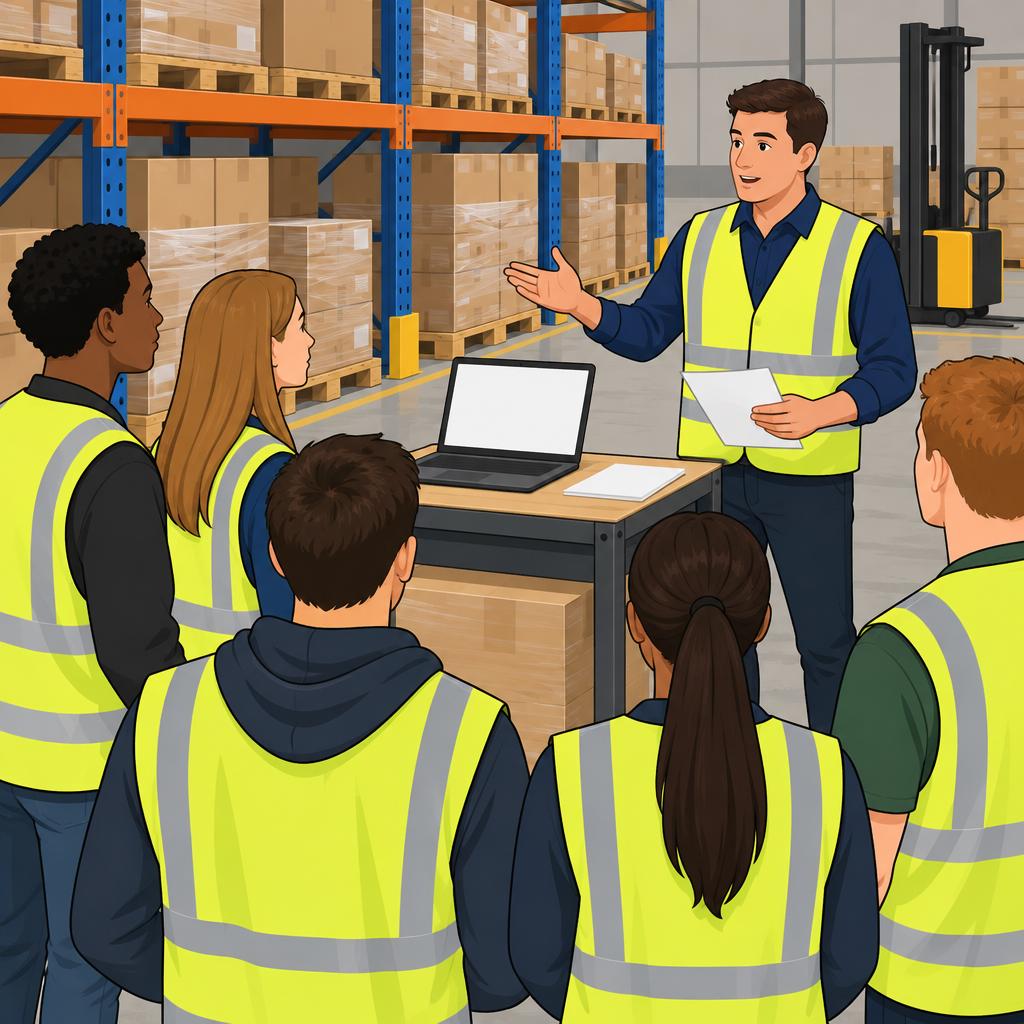
Trainers and supervisors each support effective training delivery.
Trainers provide process knowledge, demonstrations, and practical guidance.
Supervisors reinforce safety compliance while supporting the learning process.
- Trainers should understand warehouse processes and established best practices.
- Supervisors should oversee sessions and reinforce safety regulations.
- Trainers and supervisors must collaborate throughout the training experience.
- Trainers should demonstrate tasks and procedures clearly.
- Supervisors should offer guidance and support during instruction.
- Regular communication should guide consistent training delivery.
Feedback and Assessment Practices
Feedback helps trainees recognize improvement areas and track their progress.
Assessments show whether trainees have gained required skills and knowledge.
Transform Your Career Today
Unlock a personalized career strategy that drives real results. Get tailored advice and a roadmap designed just for you.
Start NowContinuous evaluation helps trainers refine the program and support better learning.
- Use feedback to identify improvement areas and monitor progress.
- Apply assessments to evaluate training effectiveness.
- Provide continuous feedback so trainees can adjust their learning approach.
- Assess whether trainees acquired necessary skills and knowledge.
- Use feedback and assessment to encourage continuous improvement.
Learn More: Top Industries Employing Material Handlers
Monitoring Progress and Adjusting Training
- Supervisors should monitor new warehouse associates to confirm that training supports learning and growth.
- Without monitoring, supervisors may miss areas where associates struggle or excel.
- Regular check-ins with supervisors or mentors help associates discuss their performance.
- Supportive feedback helps associates understand which skills require improvement.
- Managers should address performance gaps promptly to prevent problems from escalating.
- Additional support or training can help associates overcome challenges.
- Warehouse leaders should continuously evaluate and adjust the training program as workplace needs evolve.
- Updated materials and methods should reflect current warehouse practices and trends.
- Regular feedback sessions allow new associates to identify opportunities for training improvements.
- Their experiences can reveal which training methods work well and which need adjustment.
Delve into the Subject: Career Growth for Transportation Security Screeners
Integration with Company Culture
- Training should align with company values and culture to set clear expectations.
- Additionally, it reinforces safety, teamwork, and continuous improvement as core values.
- As a result, new associates feel connected and committed to organizational goals.
You Might Also Like: Becoming a Rail Yard Engineer: Skills You Need
Measuring the Impact of Training
Companies can evaluate training to determine whether programs benefit new warehouse associates.
This evaluation helps them judge whether the investment supports operational needs.
Several measures reveal how training affects workplace results.
Methods for Evaluating Training Effectiveness
Managers can review several indicators when measuring training effectiveness.
These indicators show changes in performance, productivity, accuracy, and satisfaction.
Together, they provide a broader view of program results.
- Employee performance: Managers can track task completion and target achievement to evaluate associate performance.
- Productivity levels: Companies can compare productivity before and after associates complete training.
- Error rates: Supervisors can monitor mistakes to determine whether training improves daily operations.
- Employee satisfaction: Surveys and interviews can reveal associates’ opinions about training benefits.
Value of Measuring Return on Investment
Companies also need to measure the return on investment of training programs.
ROI helps businesses compare training benefits with the costs of delivering instruction.
This comparison shows whether the program creates sufficient monetary value.
Companies calculate ROI by comparing financial benefits with training expenses.
Financial benefits may include increased productivity and fewer errors.
Training expenses may include instructor fees and materials.
ROI helps organizations make informed decisions about future employee development investments.
They can identify initiatives that deliver stronger returns.
Organizations can also find opportunities to improve training impact.
These measurements connect training with employee performance and operational efficiency.
Operational Benefits of Warehouse Training
Comprehensive training strengthens warehouse operations by preparing new associates for their responsibilities.
Effective programs combine onboarding, safety instruction, equipment operation, and clear communication.
Furthermore, adequate preparation protects associates while supporting consistent operational performance.
Companies can reduce accidents, errors, and inefficiencies by investing in structured training.
Consequently, these improvements can support cost savings and higher productivity.
Companies should prioritize effective training programs for warehouse associates.
This investment can foster a supportive workplace and strengthen employee retention.
A well-trained workforce remains a valuable asset for successful warehouse operations.
Additional Resources
Bing search results for Training Programs for New Warehouse Associates Transportation and Logistics


