




Introduction to Port Operations Management
A Port Operations Manager oversees all activities in a port.
This role supports smooth operations and efficiency.
Effective team management is crucial in port operations.
It supports seamless coordination, optimal productivity, and safe cargo handling.
Responsibilities and Duties of a Port Operations Manager
A Port Operations Manager oversees vessel scheduling, cargo handling, and port maintenance.
These responsibilities support efficient port operations and help prevent disruptions.
The manager also coordinates with shipping companies, port authorities, terminal operators, and customs officials.
Vessel Scheduling
The manager coordinates vessel arrivals and departures to maximize port productivity.
Effective scheduling requires cooperation with shipping companies, port authorities, and terminal operators.
This coordination helps minimize delays and supports smoother vessel movements.
Cargo Handling
The manager oversees safe and efficient cargo handling throughout the port.
These duties include managing loading and unloading operations and arranging proper goods storage.
Additionally, the manager coordinates with customs officials during cargo clearance.
Port Maintenance
The manager coordinates infrastructure and equipment maintenance across the port.
Maintenance teams address operational issues promptly under the manager’s direction.
Consequently, timely maintenance helps prevent disruptions to port activities.
Importance of the Role in Ensuring Smooth Port Operations
A Port Operations Manager supports the efficient functioning of the port.
The role helps meet the needs of shipping companies and other stakeholders.
Moreover, effective oversight connects daily port activities with broader operational goals.
Optimizing Resources
The manager coordinates schedules, cargo processes, and maintenance activities to optimize available resources.
This approach improves port efficiency without disrupting essential operations.
As a result, the port can manage its activities more effectively.
Minimizing Delays
Timely vessel scheduling helps reduce delays across port operations.
Efficient cargo handling also supports prompt goods delivery.
The manager prevents bottlenecks by streamlining processes and coordinating operational activities.
Ensuring Safety and Compliance
Port operations involve risks that require consistent safety management.
The manager implements safety protocols and coordinates emergency response plans.
Furthermore, the manager ensures adherence to port security measures and applicable regulations.
Building a Strong and Cohesive Team
Strong teams help port operations maintain effective communication and collaboration.
They also support productivity, efficiency, and shared success.
Furthermore, cohesive teams respond to operational challenges with greater confidence and coordination.
- Importance of team cohesion in port operations
- Strategies for building a strong team
Importance of Team Cohesion in Port Operations
Team cohesion strengthens communication and collaboration among people working in port operations.
As a result, cohesive teams improve productivity, efficiency, and operational success.
Moreover, team members work harmoniously when they share clear goals and responsibilities.
Cohesive teams often demonstrate stronger morale, satisfaction, and motivation.
These qualities contribute to a positive and supportive work environment.
In addition, collaboration improves team decision-making and problem-solving abilities.
During challenges or crises, cohesive teams handle obstacles more efficiently.
Strategies for Building a Strong Team
Port operations managers can strengthen teams by combining clear communication with shared objectives.
They can also encourage cooperation, trust, respect, and continuous development.
Transform Your Career Today
Unlock a personalized career strategy that drives real results. Get tailored advice and a roadmap designed just for you.
Start NowAdditionally, recognition, constructive conflict management, and team bonding can improve workplace relationships.
- Maintain open, transparent, and consistent communication among team members.
- Establish clear objectives that guide the team toward a common purpose.
- Encourage collaboration by welcoming ideas and shared effort.
- Promote trust and respect to create an inclusive team culture.
- Provide training programs that strengthen team skills and knowledge.
- Recognize individual and team achievements to support morale and motivation.
- Address conflicts promptly and manage disagreements constructively.
- Lead by example through behaviors that inspire and motivate others.
- Organize team-building activities that strengthen relationships and camaraderie.
- Support personal growth through development opportunities for team members.
Explore Further: Safety Protocols for Transportation Security Screeners
Setting Clear Goals and Expectations
Clear goals guide the team toward shared success.
They define the team’s direction and purpose.
Additionally, clear goals help everyone prioritize tasks and make informed decisions.
- Importance of setting clear goals for the team
- Effective communication of expectations to team members
Importance of Setting Clear Goals for the Team
Clear goals give team members direction and focus.
Without them, team members may feel lost, reducing motivation and productivity.
Furthermore, goals provide benchmarks for measuring progress and evaluating performance.
Effective Communication of Expectations to Team Members
Managers must communicate expectations clearly after establishing team goals.
This communication outlines roles, responsibilities, and performance standards for each team member.
Consequently, clear expectations reduce misunderstandings and encourage collaboration, feedback, and accountability.
Find Out More: Future of Packaging Engineering Careers
Providing Adequate Training and Development Opportunities
Port operations change constantly because market demands, regulations, and technology continue to evolve.
Team members need current skills and knowledge to remain competitive and support efficient operations.
Continuous learning prepares team members to handle new challenges and changing industry trends.
It also improves job satisfaction and motivates employees to perform at their best.
- Importance of continuous learning and skill development in port operations
Training Programs and Development Opportunities
Port Operations Managers should provide training opportunities that address each team member’s development needs.
Workshops, seminars, on-the-job training, and online courses can support skill development.
A comprehensive training plan can improve operational efficiency and effectiveness.
Employee training can also increase productivity, reduce errors, and strengthen decision-making.
- Training programs and opportunities for team members
Managers can encourage team members to attend industry conferences, seminars, and workshops.
These activities broaden knowledge and expose employees to new ideas and effective practices.
Networking with industry professionals can provide valuable insights and growth opportunities.
A culture of continuous learning encourages team members to share knowledge and experiences.
Knowledge sharing benefits individual employees and supports successful port operations.
By investing in development, managers help team members adapt to change and improve performance.
These opportunities empower employees to support operational excellence.
Explore Further: Top Certifications for Supply Chain Analysts
Effective Delegation and Empowerment
Delegation is a crucial part of effective team management.
It involves assigning tasks according to each team member’s strengths, skills, and expertise.
Therefore, Port Operations Managers can use these capabilities to improve team performance and productivity.
- Managers delegate tasks according to team members’ strengths, skills, and expertise.
- Managers empower team members to make decisions and take ownership of their work.
Delegation also distributes workloads evenly, which helps prevent burnout and supports timely completion.
Empowerment gives team members authority and autonomy over their responsibilities.
Consequently, they become more motivated, engaged, and accountable for their tasks.
Ownership also improves job satisfaction and overall performance.
Port Operations Managers should provide clear guidelines and support during decision-making.
This approach builds trust and accountability within the team.
Together, these practices help managers develop a capable and cohesive team.
Explore Further: Common Misconceptions About Warehouse Associate Jobs
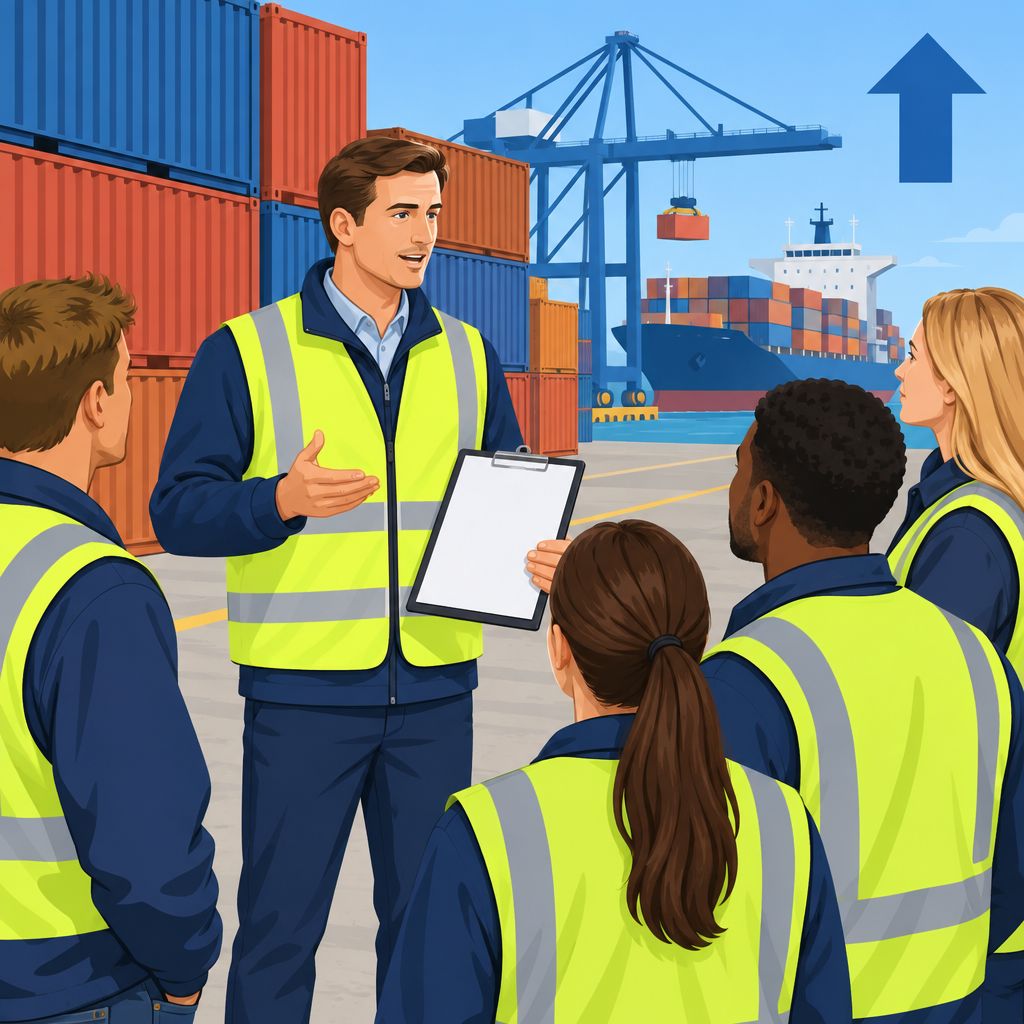
Encouraging Collaboration and Communication
Open communication and collaboration strengthen team management in port operations.
Transform Your Career Today
Unlock a personalized career strategy that drives real results. Get tailored advice and a roadmap designed just for you.
Start NowThese practices build trust, improve problem-solving, and support shared goals.
They also create a positive environment where team members exchange ideas freely.
Strategies for Promoting Teamwork in Port Operations
Port operations teams can use practical strategies to improve teamwork and collaboration.
Regular communication helps team members share updates, feedback, and operational ideas.
Additionally, shared projects encourage cooperation and joint problem-solving across the team.
- Teams can hold regular meetings to discuss projects and share updates.
- Team members should listen actively and provide constructive feedback.
- Collaborative tools can support communication and document sharing.
- Managers can assign projects that require cooperation and joint problem-solving.
- Leaders can recognize and reward teamwork to motivate team members.
This collaborative culture improves productivity and efficiency in port operations.
It also boosts morale and strengthens camaraderie among team members.
Handling Conflicts and Challenges Within the Team
Addressing conflicts and challenges promptly helps a port operations manager maintain a positive and productive team dynamic.
Unresolved disagreements can escalate quickly, disrupting workflow and weakening team morale.
Therefore, managers should create practical processes that help team members resolve issues constructively.
These practices also support trust, cooperation, and consistent performance during demanding port operations.
Importance of Prompt Conflict Resolution
Prompt action prevents small disagreements from becoming larger problems that disrupt team workflow.
Open resolution also encourages honest communication and gives team members opportunities to understand different perspectives.
Moreover, timely support helps preserve morale while strengthening the team’s ability to overcome challenges together.
- Prompt action prevents conflicts from snowballing into issues that affect productivity.
- Conflict resolution encourages open communication and supports a transparent work environment.
- Timely support helps team members feel valued while protecting team morale.
- Working through difficulties together can strengthen team cohesion and cooperation.
Strategies for Resolving Conflicts and Supporting Morale
Managers can resolve disagreements more effectively when they combine listening, analysis, collaboration, and follow-up.
Each approach should encourage respectful participation and focus attention on practical solutions.
Additionally, consistent support helps the team maintain morale while addressing operational challenges.
- Create a safe space where team members can express concerns and listen actively.
- Investigate underlying causes so solutions address core issues and reduce recurring challenges.
- Use clear protocols, such as mediation or team meetings, to guide conflict resolution.
- Encourage team members to collaborate when they develop solutions or complete projects.
- Build a supportive culture where people feel valued and respected.
- Offer conflict resolution workshops that develop constructive communication skills.
- Seek regular feedback to identify underlying concerns and improve team dynamics.
By applying these practices, a port operations manager can support a cohesive and productive team environment.
Monitoring Performance and Providing Feedback
Monitoring performance and providing feedback are crucial aspects of effective team management in port operations.
They help team members perform well and improve their work over time.
Regular monitoring shows how team members perform and where they need support.
Moreover, timely feedback encourages improvement and keeps daily efforts aligned with organizational goals.
Managers can then assign tasks according to each member’s strengths and weaknesses.
Benefits of Tracking Team Performance
- Identify areas that need improvement
- Boost team morale and motivation
- Enhance overall team effectiveness
- Maintain alignment with organizational goals
- Support timely intervention when performance issues arise
By tracking performance, the Port Operations Manager can promote continuous improvement within the department.
This approach also supports stronger productivity, efficiency, and operational success.
Strategies for Performance Evaluations and Constructive Feedback
The Port Operations Manager can use several practical strategies to evaluate performance fairly.
These methods create clear standards and give team members useful direction.
- Set clear performance expectations: Define goals and objectives for each team member.
- Use performance metrics: Establish key performance indicators (KPIs) for tracking results.
- Conduct regular performance reviews: Assess progress and discuss results periodically.
- Provide specific, actionable feedback: Focus discussions on improvement rather than criticism.
- Recognize achievements: Acknowledge accomplishments to strengthen morale and motivation.
- Offer development opportunities: Provide training that helps team members improve their skills.
Together, these strategies help team members reach their full potential.
This proactive approach can increase productivity, efficiency, and success in port operations.
Team Management Drives Port Operations Success
Effective team management in port operations centers on communication, delegation, collaboration, motivation, and support.
For a Port Operations Manager, these practices help maintain smooth operations and maximize efficiency.
Clear communication helps managers coordinate work and guide team members effectively.
Delegating tasks allows managers to align responsibilities with individual strengths.
Meanwhile, collaboration encourages employees to contribute toward shared operational goals.
Motivation and support can strengthen commitment, performance, and workplace cooperation.
Strong leadership, clear goals, and a positive environment can improve team performance and productivity.
Additionally, prompt conflict resolution helps preserve cooperation and maintain steady team dynamics.
Recognizing individual strengths enables managers to use team expertise more effectively.
Consequently, teamwork helps create a cohesive group that works toward shared goals.
Through strategic planning and continuous development, managers can empower teams to support organizational success.
Transform Your Career Today
Unlock a personalized career strategy that drives real results. Get tailored advice and a roadmap designed just for you.
Start Now


