




Warehouse Associate Jobs and Their Value
Warehouse associate jobs support the receiving, storage, and distribution of goods within a warehouse.
Although businesses depend on these roles, many people misunderstand their responsibilities and value.
These positions require practical skills and contribute directly to supply chain operations.
Skills Required for Warehouse Associate Jobs
Many people assume warehouse associates need minimal skills or experience.
However, employees must demonstrate attention to detail, strong organization, and efficient work habits.
These abilities help associates manage warehouse duties accurately and consistently.
Career Growth in Warehouse Operations
Some people believe warehouse associate jobs provide limited career advancement.
Yet many companies offer promotion opportunities and professional development within the warehouse industry.
Therefore, associates can build careers while gaining experience in essential operations.
Varied Responsibilities in Warehouse Work
Another misconception portrays warehouse work as repetitive and boring.
In practice, associates handle inventory management, order fulfillment, and other warehouse duties.
These responsibilities require problem-solving and critical thinking skills throughout the workday.
Compensation and Benefits for Warehouse Associates
People sometimes view warehouse associate jobs as low-paying positions.
Nevertheless, many companies offer competitive wages, benefits, and incentives for these essential roles.
These offerings help companies attract and retain warehouse talent.
Warehouse associates play a critical role in business success.
Their work requires a distinct skill set and can support professional growth.
Recognizing their value clarifies their importance within the supply chain industry.
Misconception: Warehouse Associate Jobs Are Low-Skilled and Unimportant
Many people believe warehouse associate jobs are menial and require little skill.
- Warehouse associates manage inventory, fulfill orders, and operate machinery.
- These roles require attention to detail, adaptability in fast-paced environments, and physical stamina.
- Additionally, warehouse associates support supply chains by efficiently receiving, storing, and shipping products.
- Their work keeps warehouses operating smoothly, directly affecting customer satisfaction and company success.
Warehouse Associate Pay Can Vary
Warehouse associate pay does not always remain low.
Salaries vary significantly by company, location, and experience.
Entry-level positions may pay minimum wage, while senior roles can exceed the national average.
- Warehouse positions range from entry-level roles at minimum wage to senior roles above the national average.
The Bureau of Labor Statistics reports median warehouse worker pay near $30,000 annually in the United States.
Growth and Advancement Opportunities
Warehouse work can provide meaningful opportunities for growth and advancement.
Many companies offer internal training programs that help employees develop new skills.
Dedicated associates can progress into supervisory or managerial positions with higher salaries and additional benefits.
- Internal training programs can help employees learn skills and advance within their organizations.
Warehouse workers can also use their experience to qualify for higher-paying roles in other industries.
For example, forklift operation and inventory management skills can support careers in logistics, manufacturing, or distribution.
These industries often offer higher salaries.
Explore Further: Required Certifications for Seamen and Sailors
Warehouse Safety and Physical Demands
Warehouse associate jobs can involve physical work, but safety measures help protect workers.
The work may seem dangerous because associates handle equipment and materials.
However, training and established procedures help them complete tasks safely.
Safety Measures in Warehouse Settings
Warehouses train associates to handle equipment and materials safely.
Regular inspections help teams identify and address potential hazards.
In addition, protective gear and emergency protocols reduce risks during warehouse operations.
- Associates receive training on safe equipment and material handling.
- Warehouses conduct regular safety inspections to identify potential hazards.
- Workers use helmets, gloves, and vests to minimize risks.
- Emergency protocols guide employees during accidents or other emergencies.
Technology and Equipment Improve Working Conditions
Technology has reduced some physical strain in warehouse work.
Automation handles certain processes, while mechanized equipment helps move heavy items.
Additionally, ergonomic designs and health monitoring systems support worker well-being.
- Automation reduces physical strain by handling certain warehouse processes.
- Forklifts, conveyor belts, and pallet jacks help move heavy items.
- Wearable technology can monitor worker health during shifts.
- Ergonomic warehouse designs help minimize physical strain and fatigue.
These advances have improved working conditions for warehouse associates.
Transform Your Career Today
Unlock a personalized career strategy that drives real results. Get tailored advice and a roadmap designed just for you.
Start NowThey also make warehouse work less physically demanding.
As a result, technology and equipment can support safer warehouse operations.
Discover More: Training Programs for Inventory Control Specialists
Warehouse Associate Career Growth Opportunities
Many people mistakenly view warehouse associate jobs as dead-end careers.
However, the warehouse industry offers several paths for advancement.
Dedicated employees can progress by demonstrating strong skills, commitment, and leadership.
Potential Career Paths Within the Warehouse Industry
Warehouse associates can pursue supervisory, inventory management, or logistics coordination roles.
Each path builds on warehouse knowledge while requiring additional skills and responsibilities.
Furthermore, employees can use their experience to qualify for leadership and coordination positions.
- Warehouse supervisors oversee daily operations and manage teams of employees.
- Inventory managers maintain records, manage stock levels, and oversee order fulfillment.
- Logistics coordinators organize transportation, distribution, and timely product delivery.
Success Stories From Warehouse Associates
Many warehouse associates begin in entry-level positions and gradually accept greater responsibility.
Their progress demonstrates how dedication and strong performance can create meaningful opportunities.
These examples also show how warehouse experience can support different professional goals.
- John began after high school and became a warehouse supervisor within several years.
- He now oversees a team of 20 employees.
- Sarah worked part-time while attending college and later became an inventory manager.
- She now helps optimize inventory processes and maintain accurate stock levels.
- Mike started as a temporary holiday worker before becoming a logistics coordinator.
- His problem-solving skills helped him earn a permanent position.
- He now helps maintain the smooth movement of goods through the supply chain.
Therefore, warehouse associate jobs can provide a foundation for successful and fulfilling careers.
Discover More: Importance of Data Analysis in Logistics Operations
Warehouse Associate Jobs Offer Varied Responsibilities
Many people view warehouse associate jobs as repetitive and uninteresting.
However, warehouse operations involve varied tasks that keep employees engaged and challenged.
Associates support smooth warehouse activity through attention to detail, efficiency, and precision.
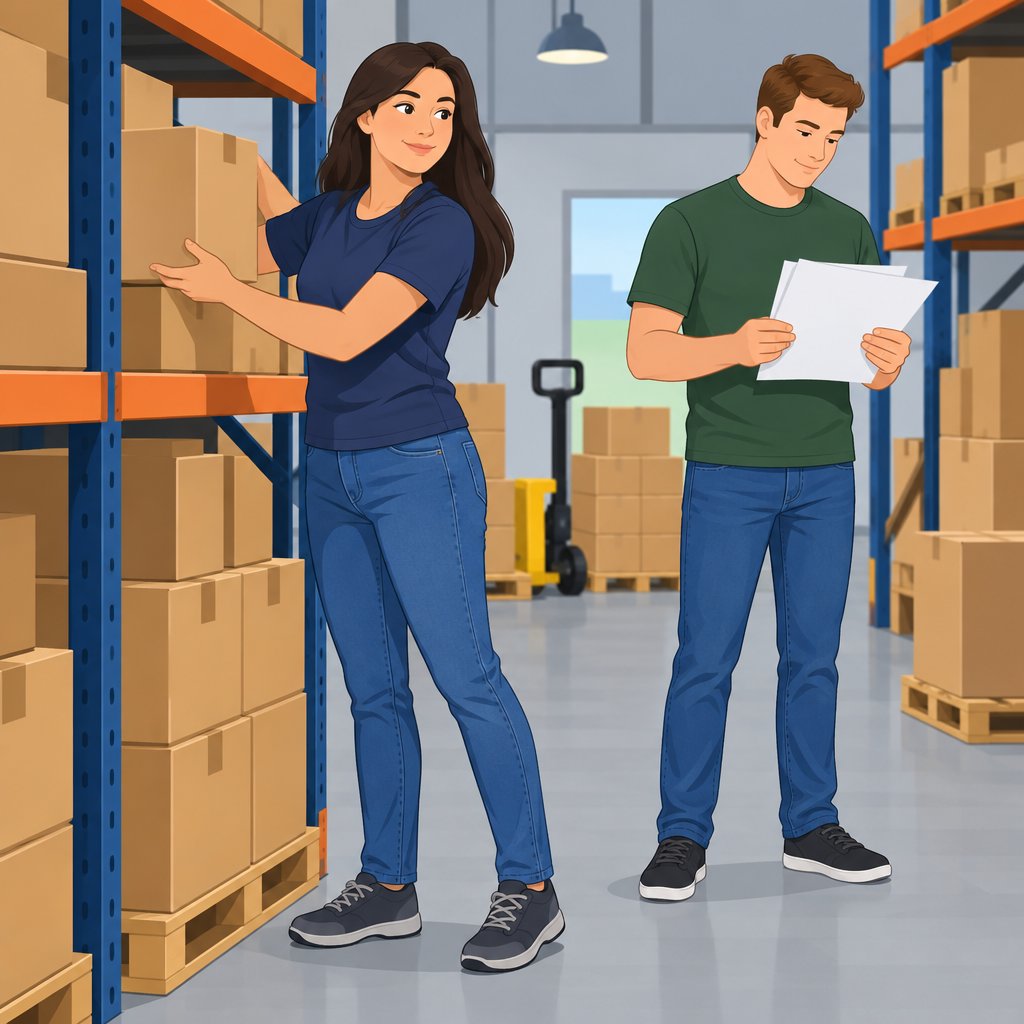
Tasks and Roles Within Warehouse Operations
Warehouse associates receive and inspect shipments before products enter storage.
They organize inventory, fulfill orders, and maintain accurate stock levels.
Additionally, associates operate equipment while supporting efficient warehouse operations.
- Receiving and inspecting incoming shipments
- Organizing and storing products in designated areas
- Picking and packing orders for shipment
- Managing inventory and replenishing stock
- Operating machinery and equipment
Developing Skills Through New Challenges
Warehouse associates can learn equipment operation and inventory management software.
Furthermore, different assignments help associates expand their operational knowledge.
Cross-training also builds adaptable skills across multiple warehouse departments.
- Learning to operate forklifts
- Using inventory management software
- Taking on different operational challenges
- Cross-training in different departments
These varied responsibilities make warehouse associate work dynamic rather than monotonous.
Associates can continue developing skills while contributing to successful warehouse operations.
Discover More: Global Impact of Port Operations Managers on Trade
Warehouse Associate Skills and Teamwork
Many people assume anyone can perform warehouse associate work.
However, successful associates develop specific abilities for accurate and dependable performance.
These abilities require training, practice, and continued improvement.
Skills Required for Warehouse Success
Physical fitness helps associates manage lifting, standing, and walking requirements.
Attention to detail supports accurate inventory management and order fulfillment.
Additionally, time management, organization, and problem-solving help associates meet operational demands.
- Warehouse work often requires physical fitness for lifting, standing, and walking.
- Attention to detail helps associates maintain accurate inventory records and orders.
- Time management helps associates prioritize tasks and meet deadlines.
- Organizational skills help associates track inventory and maintain orderly workspaces.
- Problem-solving skills help associates respond effectively when challenges arise.
Teamwork and Communication in Warehouse Operations
Warehouse teams coordinate tasks to complete work efficiently and accurately.
Clear communication keeps associates aligned and helps prevent errors.
Furthermore, mutual support encourages collective problem-solving and strengthens workplace morale.
- Collaboration helps teams complete tasks and improve productivity.
- Clear communication helps associates prevent mistakes and misunderstandings.
- Team support creates a workplace where associates can rely on one another.
- Collective problem-solving helps teams address challenges more effectively.
- Cooperation can strengthen morale and encourage a positive warehouse culture.
Teamwork can improve productivity while creating a supportive work environment.
Therefore, warehouse associate success depends on developed skills, dedication, and cooperation.
Recognizing these requirements highlights the expertise associates bring to warehouse operations.
Clarifying Misconceptions About Warehouse Associate Work
Many people view warehouse associates as box movers, yet these roles demand skill and precision.
Moreover, associates support the supply chain and logistics industry.
Transform Your Career Today
Unlock a personalized career strategy that drives real results. Get tailored advice and a roadmap designed just for you.
Start NowTheir work helps businesses maintain efficient operations.
Some observers call the position low-skilled and replaceable.
However, careful attention to detail remains necessary.
Others assume limited career growth opportunities remain available.
With dedication, associates can pursue higher positions.
Likewise, people often describe the work as mundane and repetitive.
Instead, warehouse associates handle varied responsibilities throughout dynamic operations.
Another myth suggests the job does not require any education or training.
Many employers value relevant certifications and previous experience.
Therefore, preparation can strengthen a candidate’s qualifications.
Why Warehouse Associates Matter to Business Operations
Warehouse associates contribute to smooth business operations.
Their work brings value and efficiency to business processes.
For that reason, businesses should not underestimate their contribution.


