




Definition of Maritime Pilots
Maritime pilots are experienced navigators who guide ships through hazardous waters.
They are highly skilled individuals responsible for guiding ships through challenging waterways.
They board vessels to provide expertise in navigating safely to and from ports.
Role of Communication Skills in Maritime Piloting
Communication skills help maritime pilots coordinate effectively with crew members.
Pilots give clear instructions to ship crew during navigation.
Effective communication supports safe passage through busy shipping lanes.
It helps pilots convey navigational challenges and changing weather conditions.
Open communication enables pilots to respond quickly during emergencies.
Communication Between Pilots and Crew Members
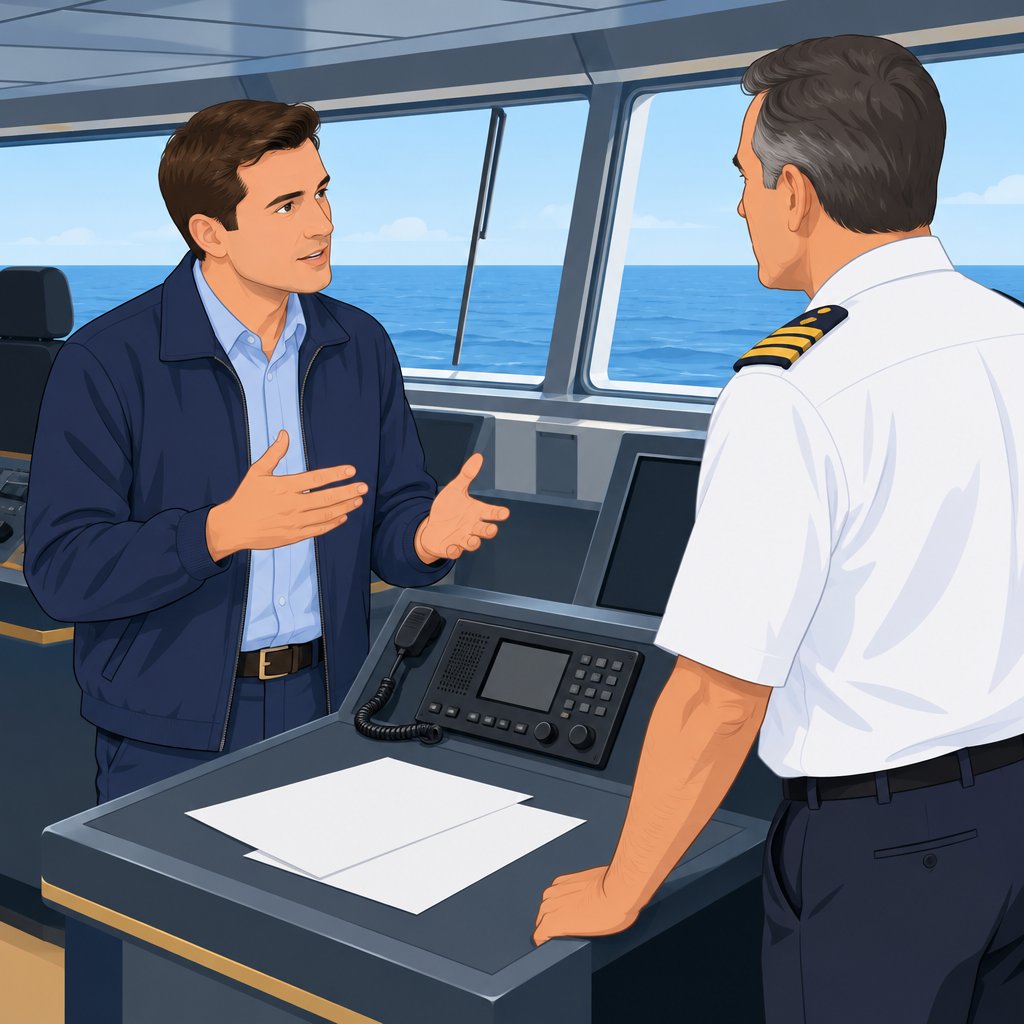
Effective communication between maritime pilots and crew members is crucial for safe vessel navigation.
Pilots must clearly convey navigation plans and instructions to the crew.
This approach keeps everyone informed and supports safe voyage operations.
Crew members should also report concerns or observations clearly and promptly.
Communication with Port Authorities and Other Vessels
Pilots must maintain communication with port authorities and nearby vessels.
This practice keeps them aware of hazards, traffic, and changing weather conditions.
They can then make informed decisions and take necessary precautions.
Clear, timely exchanges also support smooth vessel traffic in busy ports.
Importance of Clear and Precise Instructions
Clear, precise instructions help pilots coordinate with every stakeholder.
Pilots must communicate concisely and accurately with crews, authorities, and vessels.
Ambiguous instructions can cause confusion, delays, or accidents.
Therefore, precise communication improves efficiency, reduces risks, and strengthens maritime safety.
Communication for Safe Navigation in Challenging Conditions
Communication helps maritime pilots navigate safely through difficult weather and congested waterways.
Clear exchanges with control centers support timely decisions during vessel movements.
Pilots combine spoken and nonverbal signals to maintain shared awareness of changing conditions.
Communication for Collision and Accident Prevention
Accurate communication helps vessels avoid collisions and other accidents at sea.
Pilots exchange information about nearby vessels’ positions, speeds, and intentions.
This information helps them identify risks and choose safer maneuvers.
Communication Tools and Navigation Technologies
Maritime pilots use several tools to improve safety and operational efficiency.
VHF radios enable communication with vessels, port authorities, and navigational aids.
Radar systems help pilots monitor surrounding vessels and changing traffic conditions.
AIS and GPS devices provide real-time information about vessel movements and locations.
These technologies support informed decisions during challenging navigation.
Clear communication practices help pilots reduce risks and prevent accidents.
They also improve the efficiency and productivity of maritime operations.
Consequently, effective communication supports safer vessel passage through demanding conditions.
See Related Content: Real-World Applications of Supply Chain Analysis
Emergency Situations
Emergency response at sea requires maritime pilots to communicate clearly.
Effective communication helps protect the vessel, crew, and cargo during critical events.
Moreover, precise messages help everyone respond quickly and reduce confusion.
Communication During Emergency Response
During an emergency, the pilot gives the crew clear instructions.
The pilot also communicates with nearby vessels to prevent collisions.
Transform Your Career Today
Unlock a personalized career strategy that drives real results. Get tailored advice and a roadmap designed just for you.
Start NowAdditionally, the pilot shares essential details with rescue teams.
- Direct the crew toward necessary emergency actions.
- Alert nearby vessels and coordinate assistance.
- Provide rescue teams with vital information.
Coordination With Rescue Teams and Other Vessels
Maritime pilots coordinate closely with rescue teams during emergencies.
They update responders about the vessel and crew’s current condition.
Meanwhile, they organize communication among everyone involved in the response.
- Report the vessel’s status to rescue teams.
- Establish a communication plan for all participants.
- Share available vessel resources for rescue operations.
Calm and Clear Communication Under Pressure
High-pressure situations can quickly create confusion and panic.
Therefore, maritime pilots must remain composed while directing the response.
A calm approach supports sound decisions and decisive action.
- Remain composed while giving emergency instructions.
- Assess conditions before selecting the best response.
- Keep every message clear and concise.
Discover More: Day in the Life of a Rail Yard Engineer
Efficient Operations
- Communication for efficient docking and maneuvering
- Coordination with tugboats and other support vessels
- Impact of effective communication on operational efficiency
Communication skills support efficient operations for maritime pilots within ports and harbors.
Clear exchanges help pilots manage docking and maneuvering procedures effectively.
Pilots convey precise instructions while guiding vessels into restricted spaces.
Consequently, coordinated movements help vessels reach their destinations safely and efficiently.
Pilots also communicate with tugboat operators and other support vessels.
These teams coordinate their actions during docking and departure procedures.
Furthermore, consistent communication streamlines support activities around the vessel.
Timely information helps pilots make informed operational decisions.
Those decisions can improve resource use and reduce unnecessary delays.
As a result, effective communication strengthens productivity within the port environment.
It also supports safer maneuvering and more consistent operational performance.
Explore Further: The Importance of Dock Workers in Maritime Transport
Crisis Management
Effective communication skills help maritime pilots manage crises.
Clear messages help teams understand changing conditions and coordinate responses.
Pilots use concise, accurate instructions to support timely decisions.
Communication Skills During Crises
During emergencies, clear communication helps everyone understand the situation.
Maritime pilots convey information accurately to coordinate responses and reduce risks.
Strong communication enables pilots to make quick decisions and issue effective instructions.
Communication During Unexpected Situations
When unexpected challenges arise, maritime pilots communicate clearly with crew members and other stakeholders.
This approach establishes shared understanding and helps teams develop practical solutions.
Meanwhile, calm communication helps pilots maintain control and guide others through difficult circumstances.
Quick and Accurate Crisis Communication
During a crisis, every second matters, so prompt communication can prevent escalation and save lives.
Maritime pilots relay information quickly and accurately to support timely emergency responses.
Regular communication practice helps pilots manage crises and protect everyone aboard.
Communication skills therefore support the safety of the vessel, crew, and cargo.
Furthermore, clear exchanges help pilots handle unexpected situations and make timely decisions.
Maritime pilots should continuously improve these skills to navigate crises successfully.
Discover More: Maximizing Efficiency with Freight Management Software
Training and Skill Development
Maritime pilots need strong communication skills for their professional responsibilities.
These abilities help them exchange information with vessel crew, port authorities, and other stakeholders.
Regular training and deliberate practice can strengthen communication during maritime operations.
Communication Skills Training for Maritime Pilots
Regular training sessions can develop pilots’ communication abilities.
Transform Your Career Today
Unlock a personalized career strategy that drives real results. Get tailored advice and a roadmap designed just for you.
Start NowTraining programs should address verbal communication, non-verbal communication, active listening, and conflict resolution.
Consequently, pilots can communicate more effectively with vessel crews, port authorities, and other stakeholders.
Continuous Improvement in Communication Abilities
Communication skills require constant improvement and regular practice.
Pilots should seek feedback from peers and supervisors to identify areas requiring improvement.
Through self-reflection, pilots can apply feedback and refine their communication abilities over time.
Communication Exercises in Pilot Training Programs
Communication exercises should form an integral part of pilot training programs.
These exercises can simulate real-life situations that pilots may encounter while working.
By practicing in controlled environments, pilots can build confidence and convey crucial information effectively.
Effective communication supports safety and efficiency during vessel operations.
Therefore, communication training helps pilots strengthen their abilities and support a safer maritime industry.
Communication Skills Support Maritime Piloting
Strong communication skills support safe navigation and efficient operations in maritime piloting.
Consequently, pilots should continuously practice and develop these abilities.
Clear communication helps pilots perform their responsibilities effectively during maritime operations.


