




Railroad Engineer Responsibilities
Railroad engineers operate locomotives that transport passengers or freight.
Their decisions support safe and efficient train operations.
Understanding their duties shows their importance within transportation.
Core Operating Duties
Engineers operate locomotives according to schedules and established safety protocols.
They also communicate with dispatchers during train movements.
This combination of control and coordination supports reliable transportation.
Safe and Efficient Train Operations
Engineers need thorough knowledge of railroad operations, signals, and routes.
They monitor track conditions and control locomotive speed.
Therefore, timely decisions help prevent accidents.
Communication and Coordination
Engineers work closely with conductors and yardmasters.
Clear communication helps crews coordinate train operations.
Moreover, prompt exchanges support emergency responses.
Maintenance and Inspections
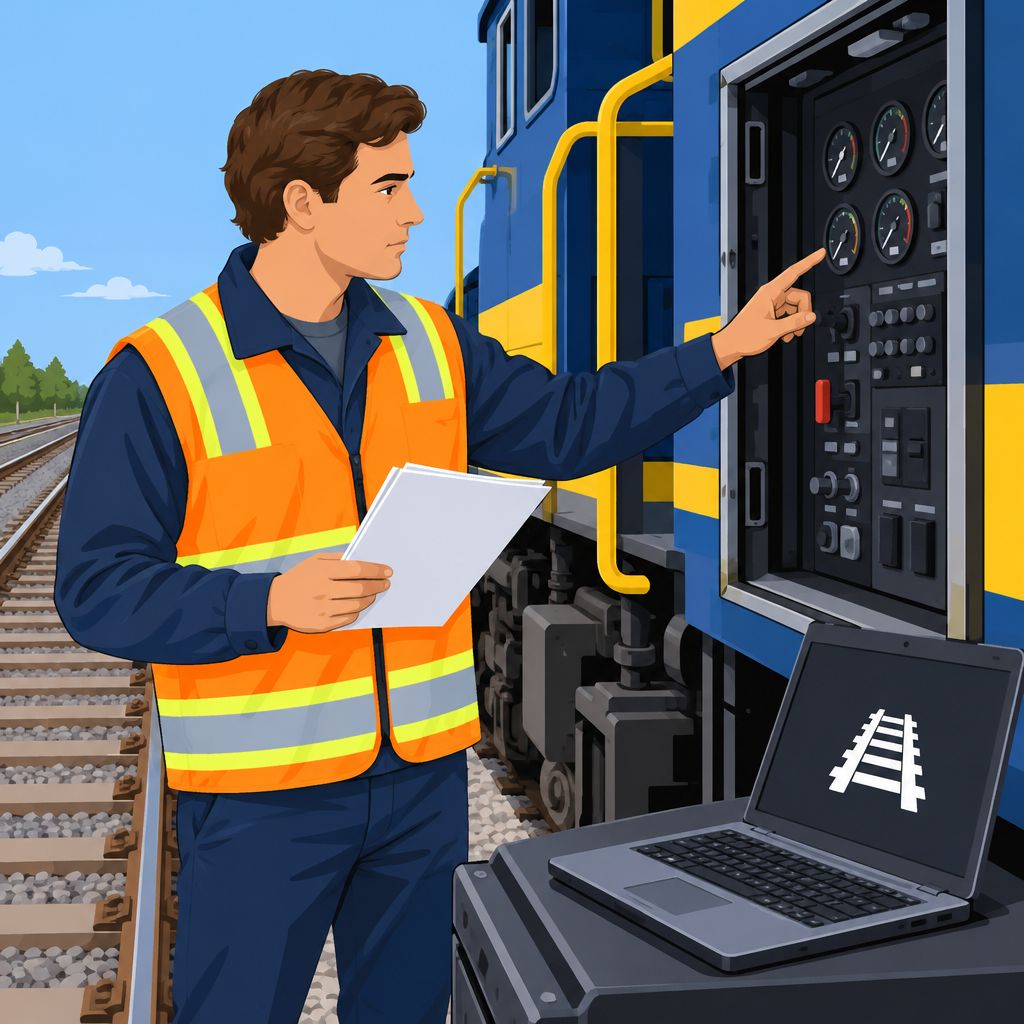
Before each trip, engineers inspect the locomotive and train condition.
They report mechanical issues when they find them.
Routine maintenance checks help confirm proper working condition.
Emergency Response Duties
When signals malfunction or tracks become obstructed, engineers act quickly.
They mitigate risks and protect passengers and crew.
Their decisive actions help manage crisis situations.
Importance in Transportation
Railroad engineers combine operational knowledge with safety awareness.
Their skills and dedication support efficient train movement.
As a result, they remain essential professionals in transportation.
Qualifications and Requirements
Railroad engineers need education, certification, experience, and technical abilities.
These qualifications help candidates meet workplace expectations.
Employers may also assess safety awareness and communication skills.
Education and Training for Railroad Engineers
A high school diploma or GED provides the basic educational foundation.
Some employers require a bachelor’s degree in engineering or a related field.
Strong math and science skills support success in this role.
Certifications and Licenses
Railroad engineers must obtain certification from the Federal Railroad Administration.
They also need a valid driver’s license and must pass a background check.
Additionally, some companies require safety and operations certifications.
Experience and Skills for Success
Employers value experience within the railroad industry.
Engineers use strong mechanical and technical skills when working with locomotives.
They also communicate clearly and solve problems alongside other crew members.
Job Responsibilities
Railroad engineers manage several duties during train operations.
They combine careful control, safety awareness, equipment checks, and clear communication.
These responsibilities help engineers support reliable train journeys.
- Operating locomotives and trains safely and efficiently
- Following all safety protocols and regulations
- Inspecting equipment and performing maintenance tasks
- Communicating with dispatchers and other team members
Safe and Efficient Train Operation
Engineers control locomotives and trains with attention to safety and efficiency.
They understand locomotive controls and know how to start and stop trains smoothly.
They also watch for obstacles and potential hazards along the tracks.
Safety Protocols and Regulations
Engineers follow company rules and established safety procedures during operations.
Transform Your Career Today
Unlock a personalized career strategy that drives real results. Get tailored advice and a roadmap designed just for you.
Start NowThey obey speed limits, signaling procedures, and other applicable requirements.
Furthermore, engineers learn emergency procedures and respond quickly when emergencies occur.
Equipment Inspection and Maintenance
Engineers inspect locomotives and trains regularly for damage, wear, or malfunction.
When they identify problems, they perform maintenance tasks or repairs.
Regular inspections help prevent breakdowns and accidents on the tracks.
Communication with Railway Teams
Engineers communicate with dispatchers to coordinate train movements effectively.
They share route plans, schedules, and potential issues with dispatchers.
They also coordinate with conductors and maintenance workers during the journey.
See Related Content: Interview Tips for Aspiring Logistics Technicians
Work Environment
As a railroad engineer, you may work in various settings, depending on your railroad line.
These settings include freight lines, passenger lines, and commuter routes.
Each setting creates different working conditions and daily experiences.
Different Work Settings
Some railroad engineers work on freight lines, transporting goods and materials across long distances.
Others work on passenger lines, ensuring safe and efficient travel between destinations.
Commuter-line engineers operate trains for daily travelers heading to work or school.
Challenges and Obstacles
Railroad engineers often face long working hours.
Because schedules can change unpredictably, the job may disrupt personal lives.
They also manage pressure while protecting passengers and cargo during train operations.
Benefits and Advantages
Despite these challenges, railroad engineering offers several career benefits.
The work can provide opportunities to visit different locations and view the country uniquely.
Additionally, engineers often receive job stability and competitive salaries.
Gain More Insights: Key Responsibilities of an Inventory Control Specialist
Career Growth and Opportunities
Railroad engineering offers significant opportunities for career growth.
The field supports professional advancement through experience and skill development.
Engineers can pursue growth within the railway industry.
Advancement Possibilities for Railroad Engineers
Railroad engineers can advance by taking on additional responsibilities.
They may also pursue leadership roles as they gain experience.
Higher positions can include lead engineer and project manager.
Continuing Education and Training Options
Railroad engineers can use continuing education and training programs to support career growth.
These programs help engineers stay current with industry trends and technology advancements.
They also help engineers understand regulatory changes and strengthen their expertise.
Salary Range and Financial Stability
Railroad engineers typically earn competitive salaries.
Their earning potential can increase as they gain experience and advance professionally.
Railway employers may offer retirement plans, health insurance, and other benefits.
These benefits can contribute to financial security and long-term stability.
By gaining experience and investing in education, engineers can build fulfilling railway careers.
Discover More: Understanding Dock Worker Union Membership
Railroad Engineering Career Prospects
Railroad engineers operate trains and help protect passengers and cargo.
They rely on knowledge of train operations, signals, and regulations.
A career in railroad engineering can provide exciting and rewarding professional opportunities.
Transform Your Career Today
Unlock a personalized career strategy that drives real results. Get tailored advice and a roadmap designed just for you.
Start NowEngineers may travel, use cutting-edge technology, and influence transportation systems.
If trains interest you and you notice details, consider pursuing railroad engineering.
Research training programs and available jobs to begin exploring this profession.
Additional Resources
Google search results for Understanding Railroad Engineer Job Duties Transportation and Logistics
Bing search results for Understanding Railroad Engineer Job Duties Transportation and Logistics


