




Choosing Safe Tools for Power Line Work
Choosing the right tools for power line work improves safety and efficiency.
Workers must use proper equipment to help prevent accidents and injuries.
Power line work involves high voltage electricity, which can cause fatal injuries.
Electric shocks, burns, and falls remain potential risks during power line work.
Therefore, selecting suitable tools helps workers reduce risks and complete projects successfully.
Understanding the Different Types of Power Line Work
Power line work falls into several categories.
Height and location help distinguish these categories.
Voltage also influences the equipment used for each type of work.
- Overhead Line Work
- Underground Line Work
- Substation Work
- Transmission Line Work
Tools Used for Different Power Line Work
Each work category requires equipment suited to its conditions.
Workers use specialized tools to support their assigned tasks.
The following sections identify tools associated with each category.
Tools for Overhead Line Work
Overhead line work takes place above ground.
Bucket trucks help workers reach elevated work areas.
Protective equipment and climbing gear support work in these areas.
- Bucket Trucks
- Insulated Gloves
- Hard Hats
- Climbing Gear
Tools for Underground Line Work
Underground line work requires equipment that supports excavation and cable handling.
Trenchers create access for underground line work.
Locator devices help workers identify underground cable locations.
- Trenchers
- Cable Pullers
- Grounding Equipment
- Locator Devices
Tools for Substation Work
Substation work uses tools for electrical access and measurement.
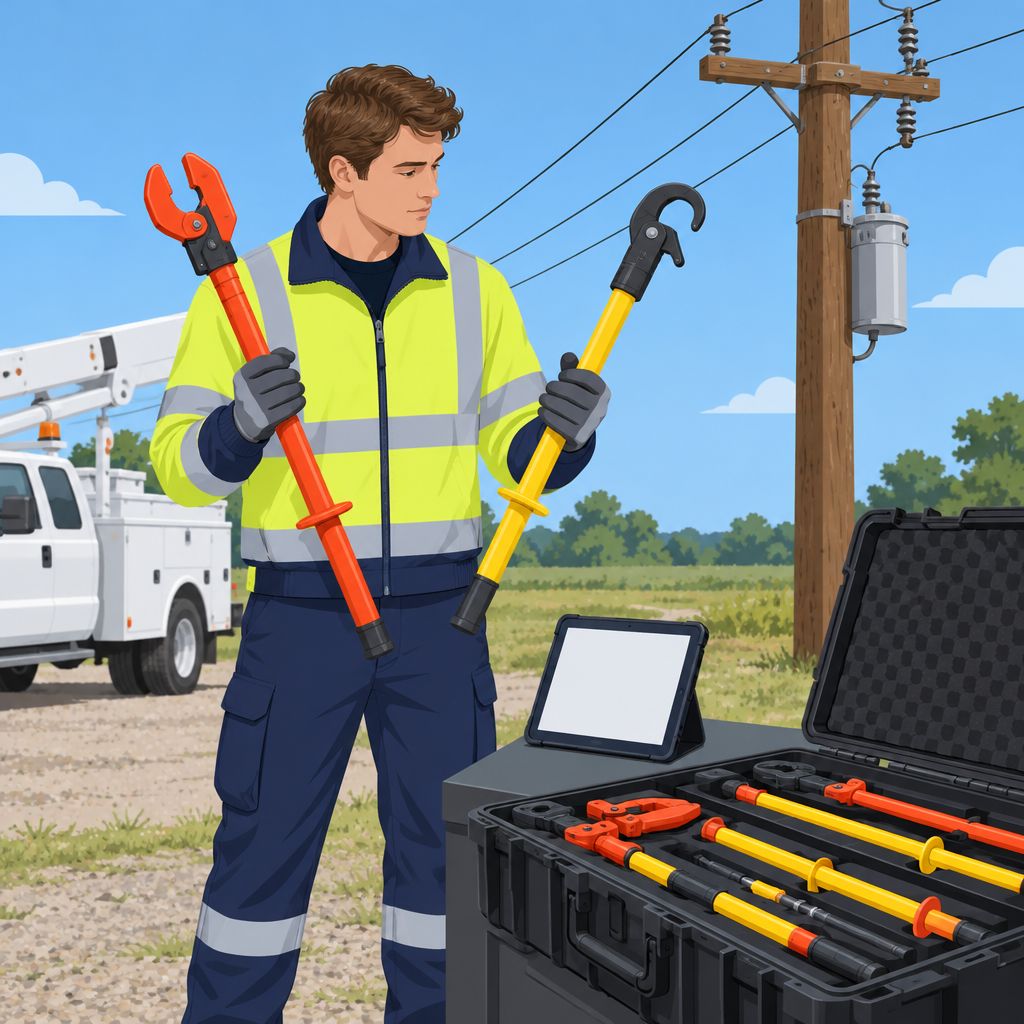
Hot sticks and disconnect tools support work around electrical equipment.
Insulating blankets and volt meters provide additional work support.
- Hot Sticks
- Insulating Blankets
- Volt Meters
- Disconnect Tools
Tools for Transmission Line Work
Transmission line work requires equipment for conductor movement and support.
Tension stringing equipment manages conductor installation activities.
Stringing blocks, grips, sleeves, and guards support the line work.
- Tension Stringing Equipment
- Conductor Grips
- Stringing Blocks
- Sleeves and Line Guards
Understanding these categories helps teams match equipment to specific power line tasks.
This approach supports worker safety and project efficiency.
Researching and Assessing Individual Needs
Power line teams should begin by identifying the demands of each assignment.
This assessment clarifies the work scope, operating conditions, and potential hazards.
Consequently, workers can match equipment choices to the actual demands of the job.
Assessing Specific Job Requirements
Start by reviewing the specific requirements of the planned work.
Consider the project scope, the tasks involved, and hazards that may arise.
Also, examine line height, terrain, and weather conditions before selecting equipment.
These factors help workers identify tools suited to the working environment.
Matching Tools to Job Criteria
Next, match each tool to the criteria identified during the assessment.
Select equipment designed for power line work and applicable safety standards.
Possible equipment includes insulated gloves, safety harnesses, voltage detectors, and wire cutters.
Workers should choose durable tools that can withstand demanding job conditions.
Moreover, users need training and practical expertise before operating this equipment.
Proper instruction supports safe tool use and effective task completion.
Delve into the Subject: Pipelayer Job Satisfaction: Insights and Statistics
Importance of Quality and Durability
Investing in durable, high-quality tools supports safe and efficient power line work.
Transform Your Career Today
Unlock a personalized career strategy that drives real results. Get tailored advice and a roadmap designed just for you.
Start NowThese tools withstand demanding work conditions and reduce failures during critical tasks.
Moreover, quality materials help workers rely on their equipment throughout each assignment.
- Durable tools made with high-quality materials
Inferior tools can reduce work quality and create serious safety risks.
A tool may break or malfunction while workers perform power line tasks.
As a result, accidents and injuries can occur.
Workers can protect themselves and support successful job completion by using durable, high-quality tools.
Discover More: Importance of Data Analytics in Warehouse Operations
Safety Standards for Power Line Tools
Safety should remain the first priority during power line work.
Workers need tools that meet safety standards for demanding electrical conditions.
These standards help companies support reliable work and follow industry requirements.
- Choose tools that meet established safety standards.
- Wear hard hats, gloves, and safety glasses.
Protective Gear for Electrical Work
Safety gear protects workers from hazards encountered during power line assignments.
Hard hats protect workers from falling objects and other head injuries.
Gloves help shield hands from cuts, burns, and electrical shocks.
Safety glasses help prevent eye injuries from debris or flying objects.
Secure Practices for Elevated Work
Safety harnesses secure workers and help prevent falls from heights.
Workers should attach harnesses securely to the structures they inspect or maintain.
Suitable tools and protective gear help companies protect workers from accidents.
You Might Also Like: Mining Apprenticeships: What You Need to Know
Cost-effectiveness
Selecting tools for power line work requires careful attention to cost-effectiveness.
Budget decisions should preserve essential tool quality and support efficient work.
Therefore, teams should compare project needs with available financial resources.
Balancing Tool Quality With Budget Constraints
Teams must balance tool quality against available budget constraints.
Quality tools support worker safety and efficient task completion.
However, higher-quality equipment often requires greater financial investment.
Therefore, evaluate each project’s needs before accepting compromises.
Only reduce spending where safety and work quality remain protected.
Comparing Rental and Purchase Options
Renting equipment can reduce upfront costs for short-term projects.
It also provides access to high-quality tools without requiring full ownership.
Moreover, rental arrangements suit equipment needed only occasionally.
Purchasing may cost less over time when teams use tools frequently.
Compare rental and purchase costs against project duration and expected use.
This comparison helps teams select equipment while respecting budget limits.
Learn More: Effective Budgeting Strategies for Construction Projects
Training and Education
Proper training is crucial when workers use power line tools.
Without adequate knowledge and skills, workers face increased risks of accidents and injuries.
Training gives workers the foundation for safer and more effective tool use.
Importance of Proper Training
- Training teaches workers to use tools safely and effectively.
- It also helps workers identify hazards and reduce related risks.
- Proper training can prevent accidents and reduce injury-related downtime.
Availability of Training Programs
- Vocational schools and training centers offer programs for power line work.
- These programs cover tool operation, safety procedures, and maintenance.
- Workers can earn certifications that demonstrate their power line tool expertise.
Benefits of Certification
- Certifications can strengthen a worker’s credibility and marketability.
- Employers often prefer certified workers who have demonstrated tool proficiency.
- Certification can support better job opportunities and higher pay.
Investing in power line training supports worker safety and professional development.
Education can also improve workers’ chances of success in the industry.
Maintaining Safe and Effective Power Line Equipment
Power line workers rely on suitable equipment to support safe and efficient field operations.
Therefore, teams should prioritize equipment quality instead of choosing tools solely because they cost less.
Transform Your Career Today
Unlock a personalized career strategy that drives real results. Get tailored advice and a roadmap designed just for you.
Start NowLow-quality tools can increase accident risks and cause delays during essential tasks.
Insulated gloves, safety harnesses, voltage testers, and pole climbers each support worker safety and productivity.
Furthermore, regular maintenance helps workers keep their equipment reliable during field tasks.
By combining appropriate tools with consistent care, workers can reduce risks and complete assignments more effectively.
Additional Resources
Google search results for Choosing the Right Tools for Power Line Work Construction and Manual Labor
Bing search results for Choosing the Right Tools for Power Line Work Construction and Manual Labor


