




Introduction
Power line installers help ensure reliable electricity supplies for homes and businesses.
They connect power lines to homes, buildings, and other structures.
They also maintain and repair infrastructure to help prevent power outages.
However, installers can make mistakes that affect safety and performance.
Lack of Proper Training
Power line installers need comprehensive training in safety protocols and technical skills.
Without adequate preparation, they may produce poor installations and weaken safety standards.
Therefore, companies should establish training programs before assigning installers to field work.
- Power line installers must complete comprehensive training in safety protocols and technical knowledge.
- Improper training can produce poor installations and compromise safety standards.
Importance of Comprehensive Training
Proper training gives installers the skills and knowledge required for safe, effective work.
Moreover, instruction helps them follow safety protocols, technical specifications, and established installation practices.
Comprehensive programs address electrical safety, equipment operation, blueprints, schematics, and work at heights.
They also emphasize personal protective equipment and secure worksite practices.
Consequences of Inadequate Training
Inadequate training can reduce installation quality and threaten overall safety.
Poorly installed power lines may experience faults, outages, and other service disruptions.
These problems can also create risks for public safety.
Furthermore, untrained installers may take unnecessary risks, cut corners, or overlook essential procedures.
Such actions can expose workers and others to serious injury or death.
Inadequate preparation can also cause costly mistakes, project delays, and property or equipment damage.
Ongoing Training Requirements
Companies can reduce these risks by investing in comprehensive installer training.
Effective programs develop the skills, knowledge, and mindset necessary for safe performance.
Companies should update training regularly to reflect technological, regulatory, and industry changes.
Consistent instruction can improve performance while protecting workers and the public.
Safety Procedures for Power Line Installers
Power line installers can face serious hazards when they neglect established safety procedures.
That negligence can cause preventable accidents, injuries, and fatalities.
Therefore, installers must prioritize safety to protect themselves and their colleagues.
- Installers must wear helmets, gloves, and safety harnesses to reduce injury risks.
- Installers should follow established safety protocols and guidelines during every task.
- Installers should avoid power line work during storms or high winds.
- Workers must secure tools and materials so falling objects do not harm people below.
Installers must recognize workplace hazards and take proactive measures to reduce risks.
These precautions help create safer working conditions for installers and their colleagues.
Explore Further: DIY Insulation Tips from Professional Insulation Workers
Equipment Maintenance Supports Safe Installations
- Regular maintenance keeps tools and equipment reliable for power line installers.
- Well-maintained tools improve installation efficiency and accuracy.
- Routine inspections identify minor issues before they become serious problems.
- However, damaged equipment can reduce installation quality.
- It can also create serious safety risks for installation workers.
- For example, a worn-out insulation tester can produce inaccurate readings.
- Consequently, faulty readings may cause poor connections, power outages, and safety hazards.
Find Out More: The Importance of Teamwork Among Ironworkers
Importance of Power Line Inspections
Inspections help installers meet industry standards and identify potential hazards.
They also verify proper installation techniques before installers energize the line.
Therefore, installers can prevent dangers and support reliable power line performance.
- Ensures compliance with industry standards
- Identifies potential problems or hazards
- Verifies proper installation techniques
- Minimizes the risk of future failures
Consequences of Overlooking Inspections
Skipping inspections can reduce efficiency and weaken power line performance.
Moreover, rushed inspections increase the risk of accidents and system failures.
Such negligence can shorten power line lifespans and create regulatory concerns.
- Reduced efficiency and performance
- Increased risk of accidents or failures
- Shortened lifespan of power lines
- Non-compliance with regulations
When installers skip inspections, they compromise the quality and reliability of power lines.
Consequently, system failures and safety hazards may require costly repairs.
Installers should prioritize inspections throughout the installation process.
Proper inspection protocols support the safety, efficiency, and longevity of power lines.
Discover More: Networking Tips for Aspiring Drywall Installers
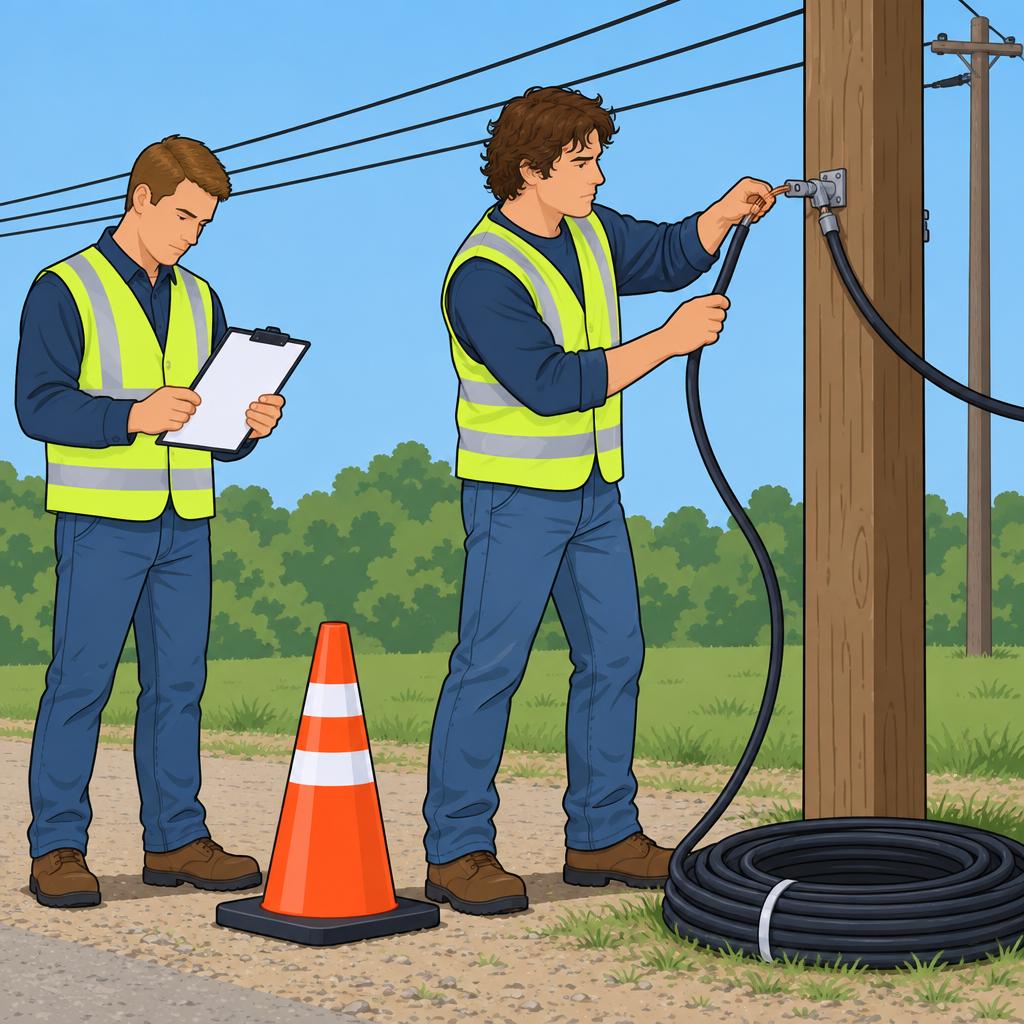
Weather Conditions Affect Power Line Installation
Ignoring weather conditions can create serious risks during power line installation.
Transform Your Career Today
Unlock a personalized career strategy that drives real results. Get tailored advice and a roadmap designed just for you.
Start NowTherefore, installers should assess current conditions before beginning any work.
This assessment helps identify hazards caused by rain, wind, heat, cold, or lightning.
Working without proper precautions can cause accidents, injuries, or fatalities.
Weather Factors That Affect Installation
Extreme temperatures can affect wires, insulators, and other installation materials.
Cold temperatures may make materials brittle, while heat can cause overheating and potential fires.
Meanwhile, wind can make elevated work more dangerous and complicate secure line placement.
- Temperature: Installers should consider how extreme temperatures affect materials and equipment.
- Wind: Strong winds can sway power lines and increase falling or balance risks.
- Rain: Rain creates slippery surfaces and can damage equipment or increase electrical hazards.
- Lightning: Installers should avoid thunderstorms because lightning threatens workers and equipment.
Installers should check weather forecasts before starting work.
Additionally, they should protect themselves and their equipment from changing conditions.
These precautions support safer and more successful power line installations.
Find Out More: How to Improve Warehouse Productivity and Performance
Communication During Power Line Installations
- Effective team communication supports successful power line installations.
- Miscommunication can cause inaccuracies and inefficiencies during the installation process.
Communication helps teams complete power line installations smoothly and avoid major problems.
However, poor communication remains a common mistake among power line installers.
When team members fail to communicate, misunderstandings, errors, and installation delays may occur.
Effective communication requires teams to share relevant information and provide progress updates.
Team members should also ask questions and clarify uncertain instructions.
These practices keep everyone aligned and focused on the same goal.
Without clear communication, the likelihood of installation mistakes increases significantly.
For example, misunderstood instructions can produce faulty connections or improper power line alignment.
Additionally, missed information can reduce installation accuracy and disrupt team coordination.
Miscommunication can also delay project completion when teams must correct avoidable mistakes.
Consequently, delays can reduce efficiency, increase costs, and frustrate clients.
Power line installers should therefore promote open and transparent team communication.
They should encourage questions, clarification, and regular progress updates.
Furthermore, two-way radios can support immediate communication among team members.
Project management software can also provide real-time installation updates.
These tools help teams communicate efficiently and monitor installation progress.
By practicing effective communication, installers can reduce errors and improve project efficiency.
Clear communication also helps teams deliver successful installations for clients.
Common Improper Installation Techniques
Proper installation techniques improve power line longevity and efficiency.
However, incorrect methods can cause costly repairs and safety hazards.
Therefore, installers must follow established methods during every installation.
- Using incorrect tools can damage power lines and create improper connections.
- Improper wire splicing can create weak connections and cause power outages.
- Insufficient support structures can leave power lines sagging and vulnerable to weather conditions.
- Inadequate grounding can cause electrical faults and threaten personnel and equipment.
- Incorrect conductor placement can cause power loss and inefficient energy transmission.
- Environmental factors, including soil conditions and weather patterns, can cause premature power line degradation.
By correcting these mistakes, installers can improve power distribution reliability and safety.
Common Installation Errors
Inadequate preparation can undermine power line installation quality.
Installers may also misuse equipment, reducing efficiency and weakening safety standards.
Poor team communication can create misunderstandings and installation errors.
Environmental factors can shorten power line lifespan and reduce efficiency.
Improper grounding can create electrical hazards and operational problems.
Inaccurate measurements may cause misalignment and structural weaknesses.
Therefore, installers must address these risks throughout the installation process.
Reliable Power Line Installation
Power line installers must avoid these errors to protect safety and reliability.
Transform Your Career Today
Unlock a personalized career strategy that drives real results. Get tailored advice and a roadmap designed just for you.
Start NowFollowing established protocols helps prevent accidents.
Furthermore, careful practices support efficient operations.
Additional Resources
Google search results for Common Mistakes by Power Line Installers Construction and Manual Labor
Bing search results for Common Mistakes by Power Line Installers Construction and Manual Labor


