




Power Line Work and Technology
Power line work involves installing, maintaining, and repairing electrical transmission lines.
Workers rely on technology to improve efficiency throughout power line operations.
Additionally, technology helps workers perform demanding tasks more safely.
Technology That Improves Efficiency
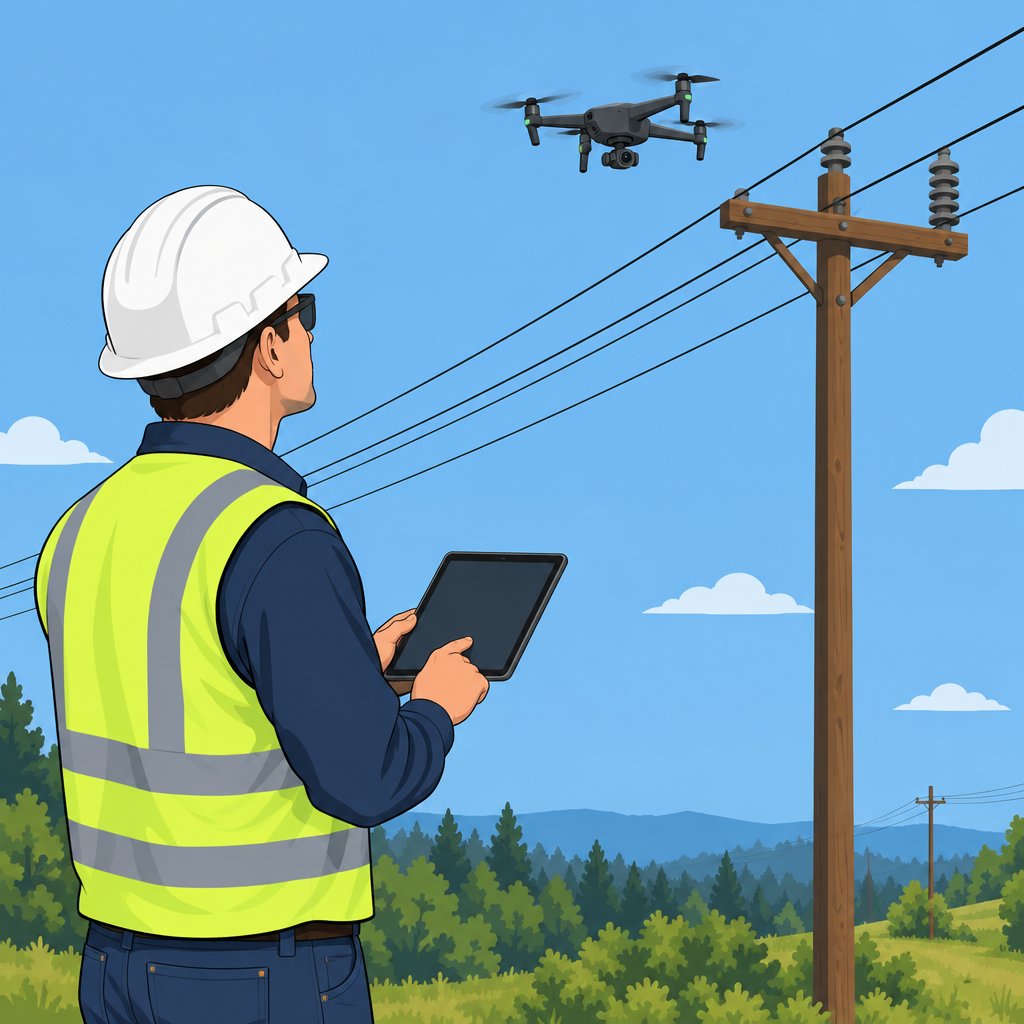
Drones with cameras inspect power lines while saving time and resources.
Meanwhile, smart sensors detect power line faults and support quick responses.
Mobile apps enable real-time communication between workers and supervisors.
As a result, teams coordinate their activities more effectively.
Automated systems also streamline inventory management and equipment maintenance.
Technology That Strengthens Worker Safety
Virtual reality programs let workers practice hazardous scenarios without risking their lives.
Smart helmets and vests monitor vital signs and detect hazardous conditions.
Furthermore, GPS devices provide real-time location data for workers in remote locations.
Advanced robotics assist with dangerous tasks and reduce injury risks.
Technology’s Role in Power Line Operations
Technology has transformed power line work by improving efficiency and strengthening safety.
These tools help workers coordinate tasks, identify problems, and manage hazards.
Therefore, power line organizations should embrace technological advancements for more productive operations.
Evolution of Technology in Power Line Work
Technology has transformed power line work across many years.
Early workers relied on manual labor and basic tools for installation and maintenance.
Today, digital tools support safer, faster, and more effective power line operations.
Historical Advances in Power Line Technology
- Early power line workers relied on ropes, poles, and hooks for installation and maintenance.
- Mechanical devices later introduced bucket trucks and hydraulic lifts for safer line access.
- Insulated gloves and tools reduced the risk of electrical shocks for power line workers.
- Sensors and drones now help technicians detect power line faults remotely.
- Augmented reality provides workers with real-time information while they complete field tasks.
Effects on Efficiency and Worker Safety
- Advanced tools and equipment help workers complete tasks in less time.
- Automated systems streamline processes, reduce errors, and improve worker safety.
- Technology helps power companies monitor and control the grid more effectively.
- Improved grid management helps minimize downtime and power outages.
- Remote monitoring systems help technicians respond quickly to emergencies and prevent accidents.
- Virtual reality simulations strengthen worker training for complex field situations.
These developments have improved both efficiency and safety across the industry.
Technology continues to shape how power line workers perform demanding tasks.
Drone Use in Power Line Inspection
Drones have changed how utility companies inspect power lines.
They provide a safer, faster, and more cost-effective inspection option.
Additionally, drones help teams collect detailed information about power infrastructure.
Benefits of Aerial Drone Inspections
Drones reduce inspection costs by eliminating the need for expensive helicopters.
They also cover large distances quickly, which significantly reduces inspection time.
Furthermore, drone inspections help workers avoid dangerous climbs and reduce accident risks.
- Drones reduce inspection costs by eliminating the need for expensive helicopters.
- Drones cover large distances quickly and shorten inspection periods.
- Workers avoid dangerous climbs because drones inspect power lines from the air.
- Cameras and sensors provide detailed data for further analysis.
- Real-time monitoring helps teams identify power line issues quickly.
Utility Companies Using Drones
Several utility companies have integrated drones into their power line maintenance activities.
These companies use aerial inspections to improve efficiency, safety, and infrastructure monitoring.
Their examples demonstrate how drones support modern power line inspection workflows.
- PG&E uses drones to inspect power lines in California.
- Duke Energy integrates drone technology into its maintenance workflow.
- Southern Company uses drones to inspect its power infrastructure.
- Dominion Energy uses drones for power line inspections and maintenance support.
As a result, drones give utility companies a safer and more efficient way to maintain power infrastructure.
Gain More Insights: Expert Tips for Painting New Construction Homes
Augmented Reality Simulations for Power Line Training
Augmented reality overlays digital information onto the physical world through a headset or another device.
Power line workers can practice repairs within a safe virtual environment.
Additionally, realistic simulations help workers understand complex situations before they encounter them.
- Training modules can mimic specific situations workers may encounter during their duties.
- Workers can interact with virtual objects while practicing important procedures.
- Virtual practice allows workers to improve skills without facing real-world risks.
Skill Development Through Augmented Reality
Interactive AR experiences engage workers and strengthen training effectiveness.
Furthermore, instant feedback helps workers identify mistakes and improve continuously.
Workers can repeat simulations, reinforcing learning and developing muscle memory.
- AR simulations can reduce training costs by limiting the need for expensive physical equipment.
- Workers can practice safety measures through simulations that demonstrate hazardous situations.
- Remote training reduces the need to travel to specialized training facilities.
- Virtual scenarios can help workers diagnose and troubleshoot technical issues.
Discover More: Common Challenges Faced by Surveyors on the Job
Remote Monitoring Systems for Power Lines
- How Remote Monitoring Systems Work
- Importance of Real-Time Data in Preventing Power Line Failures
Remote monitoring systems provide power line workers with continuous operational information.
These systems use sensors placed along power lines to gather important measurements.
Transform Your Career Today
Unlock a personalized career strategy that drives real results. Get tailored advice and a roadmap designed just for you.
Start NowThe sensors monitor parameters such as temperature, voltage, and current.
Next, the system transmits collected data wirelessly to a central monitoring station.
There, technicians analyze the information in real time.
Real-time data helps technicians prevent power line failures and maintain grid reliability.
Continuous monitoring reveals changes in power line health and performance.
Therefore, technicians can identify potential issues before they become major problems.
For example, a sudden temperature increase may indicate a possible fault or overload.
Similarly, a voltage drop can signal a developing problem.
These warnings allow technicians to intervene promptly and help prevent outages or equipment damage.
Learn More: Ironworker Industry Trends and Future Outlook
Communication Technology in Power Line Work
Effective communication helps power line teams coordinate operations and maintain workplace safety.
Communication technology connects workers, supervisors, and other project stakeholders during ongoing activities.
These tools support collaboration, faster responses, and better organization throughout each project.
Communication Devices for Coordinating Work Activities
Team members use communication devices to share information in real time.
Moreover, these devices help workers respond quickly to emergencies or changing circumstances.
They also improve efficiency, productivity, and safety across the job site.
- Communication devices facilitate real-time contact between team members.
- Workers can respond quickly to emergencies or changing circumstances.
- Teams can improve efficiency and productivity during field activities.
- Connected workers receive important safety information promptly.
Communication Technologies Used by Power Line Workers
Power line workers use several technologies to stay connected and organized.
These tools help teams communicate with supervisors and other project stakeholders.
Additionally, workers can access, share, and update important project information while working.
- Two-way radios provide instant communication between team members across distances and physical barriers.
- Cell phones support calls, text messages, and access to important information.
- GPS tracking systems help supervisors monitor team locations and optimize work routes.
- Tablets and laptops provide access to project plans, diagrams, and other information.
By using these technologies, teams can streamline operations and minimize downtime.
Furthermore, reliable communication helps workers remain informed during fast-paced activities.
Effective communication supports safer coordination throughout power line projects.
Learn More: Benefits of Becoming a Certified Machinist
Integration of Robotics in Power Line Maintenance
Robots support power line maintenance by handling high-risk tasks.
They help teams work efficiently while reducing direct exposure to hazards.
In addition, robotic systems support inspection, maintenance, fault response, and debris removal.
High-Risk Tasks Performed by Robots
Robots inspect power lines for faults and damage in hard-to-reach areas.
They also perform live-line maintenance without exposing human workers to unnecessary risks.
Furthermore, robots identify and repair faults within power distribution systems.
- Robots inspect power lines for faults and damage in hard-to-reach areas.
- They perform live-line maintenance without putting human workers at risk.
- Robots identify and repair faults in power distribution systems.
- They remove debris or obstacles from power lines without disrupting service.
Benefits of Robotic Maintenance Systems
Robotic systems improve worker safety by reducing human intervention in hazardous environments.
They increase maintenance efficiency through automation and precise movements.
Additionally, advanced sensors improve fault detection and repair accuracy.
- Robots improve worker safety in hazardous environments.
- Automation increases efficiency during maintenance tasks.
- Robotic systems can reduce downtime and accident-related costs.
- Advanced sensors enhance fault detection and repair accuracy.
- Robots can operate in adverse weather and challenging terrain.
Robotic maintenance makes power line operations more efficient and cost-effective.
It also reduces risks for workers performing demanding maintenance activities.
Consequently, robotics supports safer maintenance across challenging power line environments.
Implementing technology in power line work creates several challenges.
Teams can address these obstacles through focused planning and practical support.
Obstacles to Technology Adoption in Power Line Work
Limited budgets can delay investments in new technology.
Additionally, traditional workers may resist unfamiliar tools and changing work practices.
Organizations may also struggle to find skilled users and integrate new systems.
Transform Your Career Today
Unlock a personalized career strategy that drives real results. Get tailored advice and a roadmap designed just for you.
Start Now- Limited budgets can restrict investments in new technology.
- Traditional workers may feel uncomfortable with changes to established practices.
- Organizations may struggle to find workers skilled in using new technologies.
- New technology can prove difficult to integrate with existing systems and processes.
- Teams may question the reliability and safety of unfamiliar technology.
Strategies for Effective Technology Implementation
Dedicated funding can support research, development, and technology implementation.
Furthermore, training can help existing employees use new tools confidently.
Testing and evaluation can reveal safety issues and measure implementation benefits.
- Allocate a dedicated budget for research, development, and technology implementation.
- Provide training and upskilling opportunities for existing employees.
- Collaborate with technology providers and industry experts on integration challenges.
- Conduct thorough testing and quality assurance procedures for reliability and safety.
- Monitor implementation results and make necessary adjustments.
By addressing these challenges, power line teams can improve efficiency, safety, and overall performance.
Technology Supports Safer Power Line Work
Technology strengthens efficiency and safety in power line work.
These advances help professionals pursue better outcomes during demanding field activities.
As a result, professionals should embrace suitable advancements and use current tools responsibly.
Doing so can improve productivity, accuracy, and safety across daily practices.
Moreover, technology has become a necessary part of modern power line work.
Teams can stay prepared by learning about relevant innovations and applying them carefully.
Through this commitment, power line professionals can build a safer, more efficient industry.
Additional Resources
Google search results for The Role of Technology in Power Line Work Construction and Manual Labor
Bing search results for The Role of Technology in Power Line Work Construction and Manual Labor


