




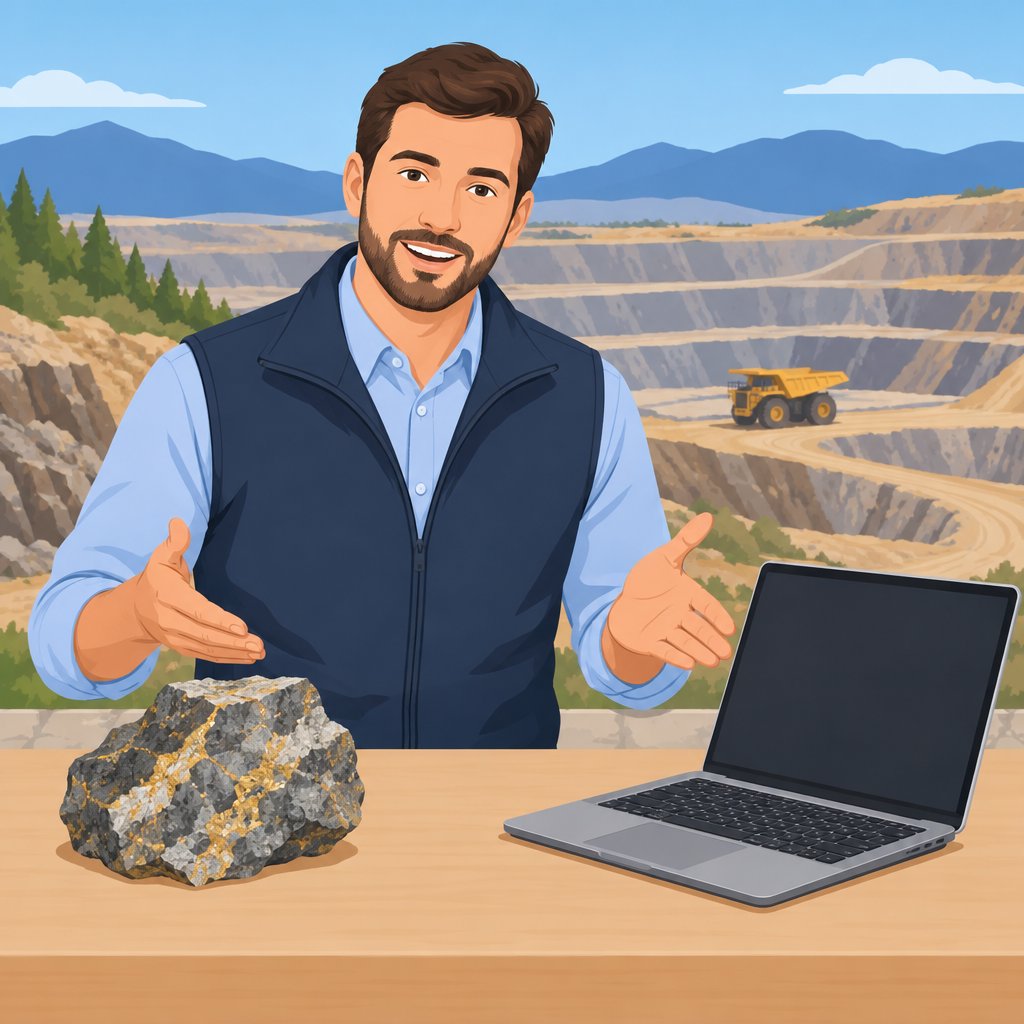
Mining misconceptions often create misunderstandings about the industry.
They can also contribute to negative stereotypes about mining professionals.
Accurate information presents a clearer view of mining and its workforce.
Modern Mining Prioritizes Safety and Sustainability
Many people view mining as a dirty and dangerous occupation.
However, modern mining operations prioritize safety and environmental sustainability.
Furthermore, regulations and technology have reduced risks and environmental impacts.
Mining Offers Diverse Career Opportunities
Some people believe mining professionals have limited career opportunities.
In reality, mining supports careers in engineering, geology, environmental sciences, and technology.
Therefore, professionals can pursue diverse and rewarding paths within the mining sector.
Responsible Mining Supports Environmental Stewardship
Mining activities can affect the environment, which contributes to concerns about the industry.
Responsible mining companies work to minimize their environmental footprint.
Additionally, many operations reclaim and restore land after mining ends.
Mining Professionals Receive Extensive Training
Another misconception suggests that mining professionals lack education and training.
Mining professionals complete rigorous training and education for their responsibilities.
Many also hold advanced degrees and professional certifications.
Mining Promotes Greater Diversity and Inclusion
Historically, the mining industry included more men than women and underrepresented groups.
Nevertheless, the industry now makes significant efforts to promote diversity and inclusion.
More women and underrepresented groups contribute to the profession’s continued success.
Addressing these misconceptions helps people understand the realities of mining.
It also highlights the industry’s role in economic growth and innovation.
Clearer information can support a more accurate view of mining professionals.
Many people mistakenly view mining as an inherently dangerous profession.
Safety Measures in the Mining Industry
- Mining safety statistics show improvement over the years.
- Recently, the industry has implemented stricter safety regulations.
- Training programs and safety protocols protect miners during their work.
Technological Advances That Improve Mining Safety
- Mining operations now use technologies such as drones and robots.
- Remote-controlled machines reduce miners’ exposure to accident risks.
- Sensors and monitoring systems detect potential hazards inside mines.
Evidence That Challenges Mining Safety Misconceptions
- Many miners describe positive experiences with workplace safety practices.
- Personal accounts emphasize how safety training supports miners’ well-being.
- Miners frequently stress that following safety protocols helps prevent accidents.
Mining remains challenging, but evidence shows stronger safety than many people assume.
The industry combines safety practices and technology to protect miners.
Environmental Safeguards in Mining
Mining can affect the environment, but it is not inherently damaging.
Governments have established regulations and laws to protect the environment during mining operations.
These requirements address waste management, water usage, and emission control.
- Regulatory safeguards: Governments require mining companies to follow rules that reduce environmental impacts.
- Environmental impact assessments: Companies assess potential risks before starting mining activities.
- Technology advancements: Automated equipment can reduce fuel consumption and greenhouse gas emissions.
Mining Companies That Prioritize Sustainability
Some mining companies prioritize sustainability and environmentally responsible practices.
These companies may exceed regulatory requirements to reduce their environmental footprints.
Their initiatives address emissions, water consumption, biodiversity, land restoration, and waste reduction.
- Newmont: The gold mining company operates programs that reduce greenhouse gas emissions and water consumption.
- Rio Tinto: The company supports biodiversity protection, land restoration, and waste reduction initiatives.
- BHP: The resources company has committed to reducing carbon emissions and investing in renewable energy projects.
Rehabilitating Mined Land
Mining companies increasingly invest in reclamation projects after mining activities end.
These projects aim to restore mined land and support healthier ecosystems.
Companies also engage local communities when developing reclamation plans.
- Revegetation: Companies replant native vegetation to help prevent soil erosion and provide wildlife habitats.
- Water management: Companies treat water for reuse and work to restore waterways.
- Community engagement: Companies consider local concerns when planning restoration activities.
Mining can create environmental impacts, yet regulations and technology can help reduce those effects.
Sustainable operating practices can further limit the industry’s environmental footprint.
Reclamation efforts can help restore mined land and support community interests.
Discover More: Construction Manager's Guide to Green Building
Mining Requires Technical Skills and Professional Training
Mining requires specialized knowledge, practical training, and careful decision-making.
Professionals apply technical skills across exploration, equipment maintenance, processing, and daily operations.
Therefore, mining offers skilled career paths for people who pursue education and industry experience.
Transform Your Career Today
Unlock a personalized career strategy that drives real results. Get tailored advice and a roadmap designed just for you.
Start NowTechnical Skills Required for Various Mining Roles
Each mining role requires specific knowledge and responsibilities.
Workers must combine technical ability with careful attention to operating procedures.
Moreover, different roles support exploration, production, maintenance, and mineral processing.
- Geologist: Understanding of earth sciences, mapping, and mineral identification
- Mechanical engineer: Knowledge of heavy machinery, maintenance, and repair
- Electrical engineer: Expertise in power systems, automation, and safety protocols
- Chemical engineer: Understanding of mineral processing, extraction techniques, and environmental regulations
- Driller: Precision drilling techniques, knowledge of explosives, and safety procedures
Insights from Mining Professionals
Professionals in different mining roles describe education and experience as important career foundations.
Sarah, a geologist with more than 10 years of experience, values geology education, fieldwork, and laboratory experience.
She explains, “A solid educational background in geology is crucial, along with fieldwork and lab experience.”
Mike, a mechanical engineer, emphasizes mechanical engineering principles and experience with mining equipment.
Emily, an electrical engineer, highlights power systems, automation, and mining safety standards.
Education and Training for Mining Careers
Most mining professionals hold at least a bachelor’s degree in geology, engineering, or mining technology.
These programs provide foundational knowledge for technical responsibilities within mining operations.
Additionally, continuing education and certifications help workers maintain current industry knowledge.
Career Progression Across Mining Roles
Mining careers can develop through increasing responsibility, experience, and additional training.
Entry-level workers can build practical knowledge before moving into specialized or supervisory positions.
Senior roles require broad expertise and responsibility for important mining functions.
- Entry-level roles: Sampling technician, mining laborer, and equipment operator
- Mid-level roles: Geologist, mining engineer, and mine supervisor
- Senior-level roles: Mine manager, chief engineer, and environmental compliance officer
With experience and further training, workers can pursue higher-paying positions with greater responsibilities.
Learn More: Balancing Multiple Maintenance Projects Effectively
Mining’s Growing Gender Diversity
Despite common beliefs, mining has welcomed more gender diversity in recent years.
This change challenges assumptions about who can build a mining career.
Women now contribute valuable skills and perspectives across the mining sector.
Increasing Gender Diversity in Mining
- Statistics show a gradual increase in women entering the mining workforce.
- The World Bank reports that women’s participation in mining rose from 11 percent in 2000 to 20 percent in 2019.
- This trend shows growing recognition of women’s valuable contributions to the sector.
Successful Female Miners and Industry Leaders
- Successful female miners and leaders can challenge stereotypes and inspire more women to enter mining.
- Examples include Cynthia Carroll, former CEO of Anglo American, and Lisa Wilkinson, a renowned geologist.
- These women have advanced their careers, broken barriers, and challenged assumptions about gender in mining.
Programs Supporting Women in Mining
- Various initiatives encourage more women to pursue careers in mining.
- Women in Mining provides networking opportunities and support for women across the industry.
- Other programs provide mentorship, skills development, and more inclusive working environments.
A More Inclusive Future for Mining
Women’s growing presence is changing how people understand careers in mining.
Support programs can help attract and retain female talent.
Together, these developments point toward a more diverse and inclusive mining industry.
Explore Further: Role of Surveyors in Urban Planning and Development
Mining’s Continuing Role in the Global Economy
Mining remains an active industry with significant growth potential.
Global populations and developing economies continue increasing demand for essential minerals and resources.
Construction, technology, and renewable energy industries all depend on reliable mineral supplies.
Mineral Demand Supports Mining Activity
Demand for copper, silver, and gold continues to intensify across multiple industries.
According to the World Bank, global mineral production has more than doubled during the last two decades.
This growth demonstrates the mining industry’s continuing importance to global economic development.
Technology Advances Mining Operations
Technological innovation continues transforming how mining companies explore and extract resources.
Autonomous vehicles, drones, and big data analytics support the sector’s digital transformation.
These tools improve efficiency, strengthen safety, and enable more precise mineral exploration.
Exploration Creates New Opportunities
Many people assume that mining has exhausted all major mineral deposits.
However, improved exploration techniques continue helping geologists identify new ore bodies.
Geophysical mapping and remote sensing reveal potential resources that earlier methods could not locate.
Minerals for an Evolving Economy
Changing economic priorities continue creating new opportunities throughout the mining industry.
Electric vehicles and renewable energy systems require minerals such as lithium, cobalt, and rare earth elements.
By embracing innovation, exploration, and sustainability, mining can support the world’s future.
Find Out More: The Importance of Geology in Mining Operations
Mining benefits more than large corporations.
Transform Your Career Today
Unlock a personalized career strategy that drives real results. Get tailored advice and a roadmap designed just for you.
Start NowIts effects reach local communities, small-scale miners, and artisanal operations.
Economic Contributions of Mining Communities
Mining supports economic development in many communities around the world.
It creates employment opportunities and encourages infrastructure development.
Additionally, mining generates revenue for local governments.
Small-scale miners and artisanal operations also contribute significantly to local economies.
Experiences of Small-Scale Miners
Many small-scale miners have improved their living conditions through mining work.
These miners often maintain a deep connection to the land.
Furthermore, some commit themselves to sustainable mining practices.
However, limited technology and financial resources create continuing challenges.
They respond with resilience and creativity while supporting themselves and their families.
Corporate Responsibility in Mining
Mining companies increasingly recognize their responsibility toward communities and the environment.
Many large corporations now implement initiatives supporting community development.
They also promote environmental conservation and protect worker health and safety.
Consequently, these practices can benefit communities where companies operate.
They can also strengthen the mining industry’s public image.
Mining therefore affects local economies, individual livelihoods, and community development.
Responsible practices can help the industry support sustainable development.
Mining Operations Depend on Collaboration
Many people perceive mining as solitary work in isolated environments.
However, mining operations require cooperation among workers and other stakeholders.
Therefore, teams coordinate their skills and responsibilities throughout each operation.
Importance of Teamwork in Mining
- Mining teams combine different skills to manage complex processes effectively.
- Furthermore, workers rely on one another to support safe and efficient operations.
- Consequently, teamwork helps employees coordinate tasks and respond to operational needs.
Communication Supports Mining Operations
- Effective communication keeps team members aligned with shared goals.
- Clear instructions help workers prevent accidents and reduce operational errors.
- Additionally, miners share knowledge and best practices through regular communication.
Community and Camaraderie Among Miners
- Miners often form close-knit communities despite challenging working conditions.
- Moreover, workers develop strong bonds through shared responsibilities and experiences.
- This camaraderie creates a supportive environment where miners offer help and encouragement.
Understanding Mining Careers Through Accurate Information
Mining offers diverse career opportunities for skilled professionals.
Therefore, accurate information can replace outdated assumptions about the profession.
Prospective workers can evaluate mining careers using facts about safety, skills, and sustainability.
The key misconceptions addressed in this section include the following:
- Mining is a dangerous and unsafe profession.
- Mining jobs suit only unskilled workers.
- Mining harms the environment.
However, the industry continues developing stronger safety and sustainability practices.
Readers should seek reliable information before forming opinions about mining careers.
Exploring mining roles can reveal opportunities for professional growth and innovation.


