




Importance of Effective Communication Skills
Effective communication skills are essential for maintenance workers.
Communication supports successful teamwork during maintenance tasks.
Consequently, clear communication helps improve efficiency and productivity.
Communication Skills for Maintenance Workers
Maintenance workers use several communication methods during daily interactions.
Each method helps workers share information with team members and supervisors.
Workers can select the appropriate method for each message.
Verbal Communication
Verbal communication allows maintenance workers to explain thoughts, ideas, and concerns aloud.
Clear wording helps listeners understand instructions and reported issues.
Workers should speak directly and clarify details when confusion arises.
Non-verbal Communication
Non-verbal communication includes body language, facial expressions, and gestures.
These signals can express emotions, attitudes, and intentions during workplace interactions.
Therefore, workers should monitor their cues when maintaining relationships or addressing conflict.
Written Communication
Written communication includes emails, reports, and maintenance documentation.
Workers should present information clearly and accurately in every written message.
Concise records keep important details organized for later review.
Active Listening Skills
Active listening requires workers to engage fully with the speaker’s message.
Workers can show attention by asking clarifying questions and offering relevant feedback.
This approach supports trust, problem-solving, and clearer understanding.
Regular practice helps workers adjust their messages for different workplace situations.
Together, these methods provide a practical foundation for workplace communication.
Clear Communication in Maintenance Work
Maintenance teams rely on precise messages when tasks involve machinery, procedures, and changing work conditions.
Specific wording helps workers interpret responsibilities and complete assigned work correctly.
Moreover, accurate updates support safer decisions and more consistent service for clients.
- Prevent misunderstandings: State the task, required steps, and expected result clearly.
- Reduce errors: Confirm instructions before workers handle complex machinery or processes.
- Support efficient workflows: Give team members timely and concise information.
- Communicate safety protocols: Explain procedures clearly to reduce risks during maintenance activities.
- Build customer satisfaction: Explain timelines, costs, and service expectations accurately.
Practical Methods for Clearer Maintenance Messages
Workers can improve clarity by adjusting their language and checking how others receive each message.
These habits make instructions easier to follow during routine and complex tasks.
Visual support and direct feedback can also strengthen shared understanding.
- Use simple language: Avoid technical jargon when explaining instructions or tasks.
- Ask for clarification: Seek explanation whenever a message or requirement seems unclear.
- Give specific instructions: Identify what workers need to complete.
- Add visual aids: Use diagrams, charts, or images when visual details support explanations.
- Confirm understanding: Request feedback or a brief summary of the instructions.
Learn More: How to Market Your Services as a Freelance Mover
Maintenance workers build rapport with team members and supervisors through respectful, consistent communication.
Strong working relationships help teams coordinate tasks and pursue shared goals.
Effective communication also supports a productive and cohesive maintenance environment.
Benefits of Strong Working Relationships
Clear exchanges help team members understand responsibilities and respond to workplace concerns.
Furthermore, respectful communication encourages cooperation between maintenance workers and supervisors.
These relationships can improve morale, efficiency, and teamwork during maintenance tasks.
- Effective communication builds trust and encourages collaboration during problem-solving and decision-making.
- Open exchanges can improve morale and job satisfaction among team members and supervisors.
- Clear messages reduce misunderstandings and support efficient maintenance work.
- Regular communication strengthens team unity and promotes cooperation among maintenance workers.
Techniques for Building Rapport and Teamwork
Maintenance workers can use practical communication habits to strengthen daily working relationships.
These habits encourage respectful exchanges and help teammates support shared objectives.
Supervisors and team members can apply these techniques during routine maintenance interactions.
- Listen actively to team members and supervisors when they share ideas, concerns, or feedback.
- Encourage honest communication by creating a safe space for everyone to express opinions.
- Show respect and empathy by considering different perspectives and valuing contributions.
- Explain roles, responsibilities, and expectations clearly to prevent confusion.
- Provide timely, constructive feedback that helps team members improve their performance.
- Promote collaboration so team members work together and support one another.
- Recognize achievements and milestones to strengthen team spirit and encourage morale.
- Address conflicts promptly so misunderstandings do not escalate within the team.
Applying these techniques can help maintenance workers create a more cohesive work environment.
Stronger relationships can support improved job satisfaction, productivity, and cooperation.
Consistent rapport-building also helps teams work toward successful maintenance outcomes.
Find Out More: Impact of Drones on Power Line Maintenance
Transform Your Career Today
Unlock a personalized career strategy that drives real results. Get tailored advice and a roadmap designed just for you.
Start NowHandling Difficult Situations in Maintenance Work
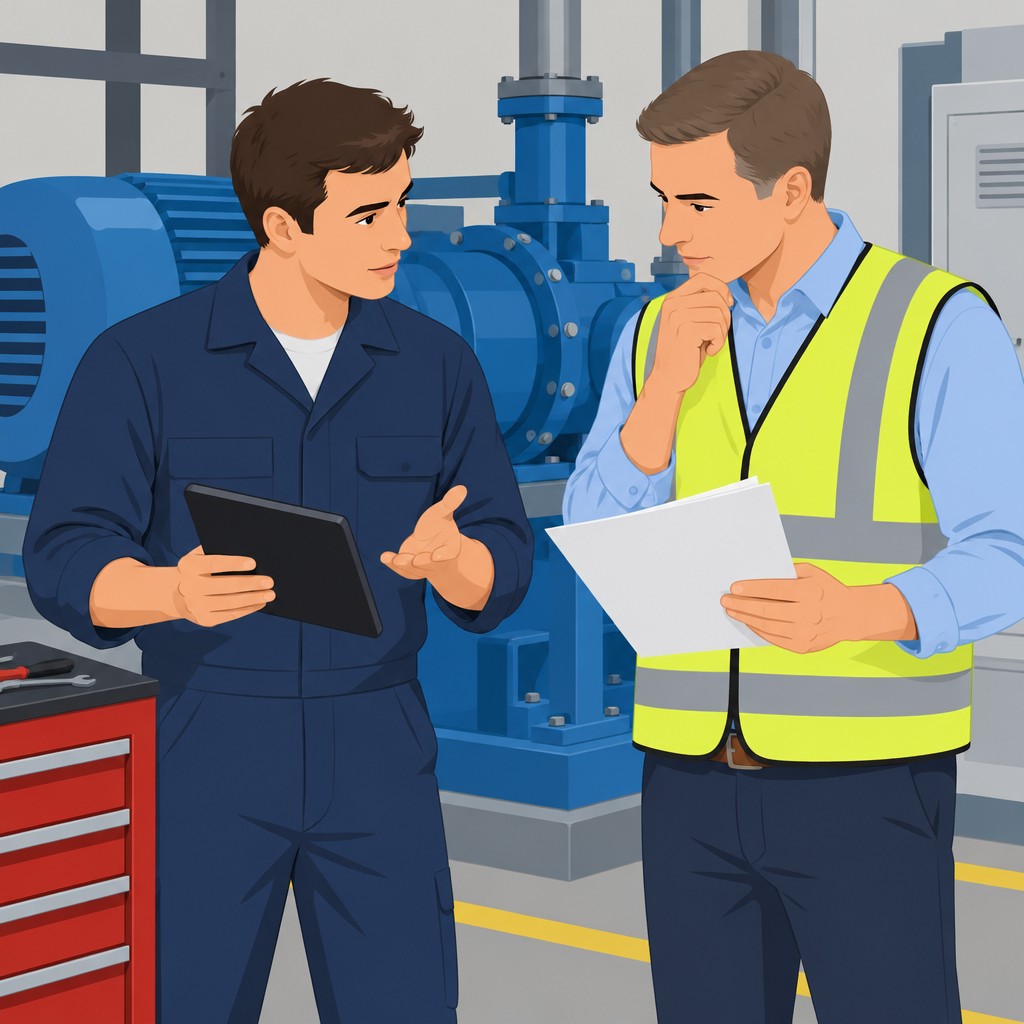
Conflicts and challenging situations can arise in the maintenance industry.
Workers can manage these situations through respectful communication and careful problem-solving.
These strategies help workers address disagreements with greater respect and efficiency.
Active Listening and Clarification
Active listening requires giving the other person your full attention.
It also involves understanding their perspective and responding appropriately.
When confusion arises, ask questions to clarify the situation.
Clear questions help everyone develop a shared understanding of the issue.
Collaborative Problem-Solving and Professionalism
Workers should approach conflicts with a cooperative attitude rather than a combative one.
They can work together to find solutions that benefit both parties.
Furthermore, collaboration can support a more positive outcome.
Workers must maintain professionalism even when discussions become heated.
They should avoid personal remarks and other unprofessional behavior.
Constructive Communication During Conflict
Use “I” statements when expressing thoughts or feelings.
These statements help speakers take ownership of their emotions.
They can also reduce the chance of making someone defensive.
If tensions escalate, both parties may need a short break.
A break allows everyone to cool off before continuing the discussion.
Afterward, participants can approach the situation with clearer perspectives.
Solution-Focused Conflict Resolution
Focus discussions on finding solutions instead of dwelling on the problem.
This approach directs attention toward a mutually beneficial outcome.
When direct communication fails, a neutral third party can provide mediation.
Mediation can support constructive dialogue between the people involved.
It can also help the parties find a suitable resolution.
Discover More: How to Paint Cabinets and Furniture for a Fresh Look
Effective communication supports success in multicultural work environments.
Maintenance workers can improve teamwork by respecting different cultural perspectives.
Understanding Cultural Differences
Cultural differences shape communication styles.
Open-minded listening helps team members understand diverse viewpoints.
Respectful workers avoid assumptions based on stereotypes or biases.
- Recognize that cultural differences influence communication styles.
- Remain open-minded and respectful toward different cultural practices and beliefs.
- Listen actively to understand viewpoints from diverse cultural backgrounds.
- Avoid making assumptions based on stereotypes or biases.
Adapting Communication Styles
Teams can improve communication by learning how different cultures express information.
Workers should adjust tone, language, and gestures when cultural norms require flexibility.
Clear, simple language helps every team member understand shared messages.
- Learn about communication styles that different cultures commonly use.
- Adjust tone, language, and gestures to align with cultural norms.
- Use simple and clear language to support understanding among team members.
- Remain flexible and accommodate different communication preferences.
Promoting Inclusivity and Understanding
Open dialogue gives team members opportunities to exchange ideas.
Safe spaces help individuals express themselves comfortably.
Cultural awareness training and diversity celebrations strengthen understanding.
- Encourage open dialogue and the exchange of ideas among team members.
- Create a safe space where individuals can express themselves comfortably.
- Provide cultural awareness and sensitivity training to all employees.
- Celebrate diversity by recognizing different cultural backgrounds.
Enhanced communication helps maintenance workers foster a positive, collaborative atmosphere.
It can also improve productivity and job satisfaction.
Find Out More: Lumberjack Salaries: What to Expect in the US
Emergency Communication During Maintenance Emergencies
During emergencies, effective communication protects maintenance workers and supports a swift response.
Clear messages reduce confusion and prevent the misinterpretation of instructions.
Transform Your Career Today
Unlock a personalized career strategy that drives real results. Get tailored advice and a roadmap designed just for you.
Start NowConcise updates help teams act quickly and accurately.
- Clear communication helps avoid confusion and misinterpretation of instructions.
- Concise communication ensures that messages arrive quickly and accurately.
- Effective communication can prevent accidents and further damage during emergencies.
- Proper communication helps coordinate team efforts during a cohesive response.
Communication Practices for Safe Emergency Resolution
Workers should remain calm and composed when delivering emergency instructions.
Simple, direct language helps team members understand important information without ambiguity.
Active listening allows workers to address questions and concerns promptly.
- Stay calm and composed to deliver instructions in a clear and authoritative manner.
- Use simple and direct language to convey important information without ambiguity.
- Repeat key instructions to ensure that team members understand and follow them correctly.
- Listen actively to feedback and questions from team members to address concerns promptly.
- Encourage open communication among team members to share updates and collaborate effectively.
These strategies help maintenance workers navigate emergencies safely.
They also support a swift resolution of the issue.
Communication Skills and Professional Growth
Maintenance workers succeed when they explain information clearly and listen actively.
These habits prevent misunderstandings and help workers complete tasks efficiently.
Additionally, strong communication creates a positive work environment and encourages teamwork.
It also increases productivity while promoting transparency and accountability within the maintenance department.
Therefore, maintenance workers should strengthen communication through practice, training, and feedback.
This ongoing effort helps them build relationships with colleagues, supervisors, and customers.
Those relationships can increase job satisfaction and create opportunities for career advancement.
Moreover, communication mastery requires continued dedication throughout a worker’s career.
This valuable skill benefits maintenance workers in their current roles and future field opportunities.
Consistent improvement can help workers perform more effectively over time.


