




Drones in Power Line Maintenance
Drones have transformed power line maintenance by reaching difficult areas efficiently.
They help companies maintain power lines and support uninterrupted electricity supplies.
Furthermore, drones improve access during inspections and maintenance activities.
Benefits of Drone Inspections
Drones equipped with cameras provide technicians with an aerial view of power lines.
Technicians can identify problems quickly without completing every inspection manually.
As a result, inspection teams save time while reviewing extensive power line networks.
Enhanced Safety During Maintenance
Drones reduce the need for workers to climb poles during inspections.
They also reduce reliance on helicopters for accessing dangerous or remote areas.
Therefore, drone inspections help lower risks associated with traditional maintenance methods.
Cost Effective Inspection Solutions
Drones provide a cost effective alternative to extensive inspection equipment and manpower.
They cover large distances in less time, which helps teams optimize resources.
Consequently, companies can manage inspection work more efficiently and economically.
Improved Efficiency and Accuracy
Drones collect detailed power line data with considerable precision.
Their cameras can help technicians detect faults, damage, and other potential issues.
Early detection supports proactive maintenance and helps prevent possible outages.
Environmental Advantages of Drone Use
Drones can help power companies reduce the carbon footprint of inspection activities.
They offer an eco friendly alternative to traditional power line inspection methods.
Moreover, their use supports broader sustainability efforts within power line maintenance.
Reliable Electricity Through Drone Technology
Drones strengthen power line maintenance through flexible and efficient inspection capabilities.
Their safety and cost benefits make them valuable tools for maintenance teams.
Ultimately, these advantages help support reliable electricity supplies and improved maintenance practices.
History of Power Line Maintenance
Traditional maintenance relied on manual inspections and repairs.
Workers faced hazards while working at heights and in remote areas.
Then, drones changed established power line maintenance practices.
Benefits of Using Drones in Power Line Maintenance
Drones reduce workers’ exposure to hazardous inspection conditions.
They survey extensive distances quickly, reducing inspection time and costs.
Additionally, drones reach inaccessible locations and support efficient maintenance.
Technological Advancements in Drone Technology
High-resolution cameras capture detailed conditions along power lines.
Thermal imaging cameras reveal potential issues in power lines.
Meanwhile, artificial intelligence analyzes data collected by drones.
Challenges with Implementing Drones in Power Line Maintenance
Regulators impose operating constraints and compliance requirements.
Utilities must train workers to operate drones and interpret collected data.
They also need cybersecurity and data privacy safeguards.
Future Directions for Drone-Based Power Line Maintenance
Advancing drone technology will expand maintenance capabilities.
Predictive analytics can support proactive maintenance planning.
Industry stakeholders can collaborate to establish drone operation standards.
Advantages of Drones for Power Line Maintenance
Drones provide practical advantages for power line maintenance activities.
They support safer inspections, easier access, and more efficient use of maintenance resources.
These capabilities can improve how crews inspect and maintain power infrastructure.
- Increased safety for maintenance crews.
- Access to hard-to-reach areas.
- Cost-effective inspections.
Improved Safety for Maintenance Crews
They also limit exposure to falls and other hazards associated with elevated work.
Transform Your Career Today
Unlock a personalized career strategy that drives real results. Get tailored advice and a roadmap designed just for you.
Start NowAs a result, remote inspections can reduce workplace risks for maintenance personnel.
Access to Difficult Inspection Areas
Power lines can cross rugged terrain, forests, and bodies of water.
Drones can fly across these environments while carrying cameras and sensors.
This capability allows crews to inspect locations that remain difficult to reach physically.
Cost-Effective Inspection Operations
Traditional inspections may require substantial equipment, labor, and time.
Drones can cover large areas more quickly than manual inspection teams.
Consequently, operators can reduce labor demands and equipment expenses during inspections.
High-resolution images and sensor data can also support detailed inspection analysis.
These records help maintenance teams examine power lines with greater precision.
Furthermore, advancing drone technology may strengthen future power infrastructure maintenance practices.
Learn More: How to Paint Cabinets and Furniture for a Fresh Look
Applications of Drones in Power Line Maintenance
Drones support power line maintenance through aerial inspections, thermal imaging, and real-time monitoring.
These applications help maintenance teams collect information from areas that remain difficult to reach.
They also help crews identify potential problems before those issues affect power line performance.
Aerial Inspections of Power Lines
Drones equipped with cameras inspect power lines from the air.
They can reach difficult areas without requiring direct human access.
Consequently, maintenance teams can review more sections during inspection activities.
Thermal Imaging for Detecting Issues
Drones can use thermal imaging technology to examine power line components.
Infrared images reveal hotspots that may indicate electrical problems.
Therefore, crews can investigate unusual heat patterns during maintenance inspections.
Real-Time Monitoring of Power Line Health
Drones capture live video footage and inspection data during operations.
Maintenance teams can review this information while monitoring power line conditions.
As a result, crews can respond promptly and address developing concerns.
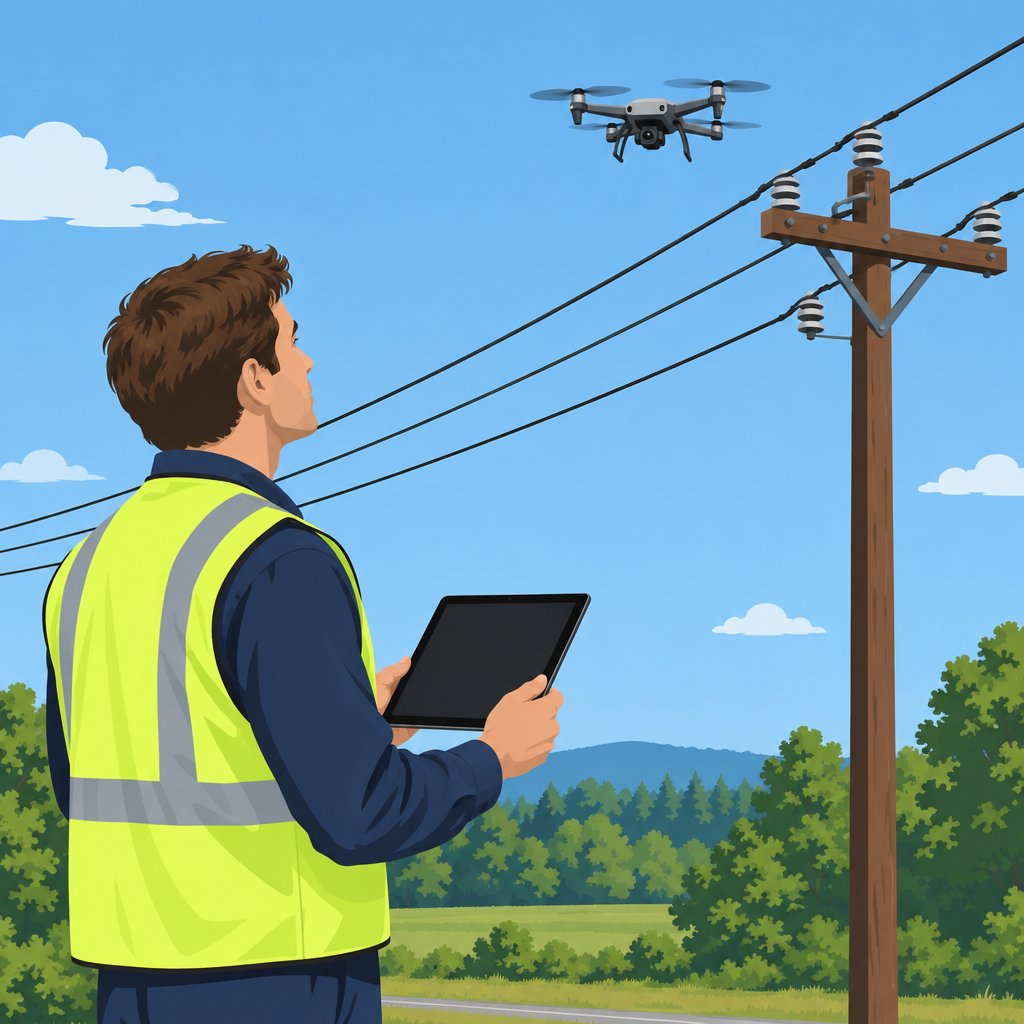
Operational Effects of Drone-Based Maintenance
Drone applications influence safety, resource use, inspection speed, and environmental impact.
They allow maintenance teams to gather useful information with fewer physical interventions.
Furthermore, drones support maintenance activities across large distances and challenging terrain.
- Drones reduce the need for technicians to climb poles or towers.
- They can lower inspection costs by reducing resource requirements and downtime.
- Drones cover large distances and difficult terrain quickly.
- They can reduce reliance on ground vehicles and helicopters.
Future Role of Drones in Power Line Maintenance
Drones continue to support more organized power line inspection and monitoring processes.
Their capabilities can help maintenance teams manage information from aerial operations.
As drone technology advances, these systems may assume an increasingly important maintenance role.
Delve into the Subject: Lumberjack Salaries: What to Expect in the US
Improved Efficiency with Drone Technology
Drone technology improves power line maintenance efficiency in several important ways.
It reduces maintenance downtime and helps teams identify problems sooner.
Additionally, drones support detailed data collection for informed operational decisions.
- Reduced downtime for maintenance work
- Faster detection and resolution of issues
- Enhanced data collection for better decision-making
Reduced Downtime for Maintenance Work
Traditional methods often require power lines to shut down during inspections and repairs.
That process can disrupt power supplies and inconvenience consumers.
By contrast, drones allow inspections without powering down the lines, which minimizes downtime.
Faster Detection and Resolution of Issues
Drones help maintenance teams detect and address power line issues more quickly.
High-resolution cameras and sensors can reveal vegetation overgrowth, damaged insulators, and loose fittings.
Early detection lets crews address problems before they become more serious or costly.
Enhanced Data Collection for Better Decision-Making
Drones collect detailed images and videos of power line structures.
Transform Your Career Today
Unlock a personalized career strategy that drives real results. Get tailored advice and a roadmap designed just for you.
Start NowMaintenance teams can use this information to assess structural conditions accurately.
Consequently, teams can improve maintenance schedules, task priorities, and resource allocation.
These capabilities streamline maintenance processes and support more consistent power line operations.
Furthermore, teams can use updated information to optimize their workflows.
Ultimately, efficient maintenance supports a more reliable and uninterrupted power supply for consumers.
Gain More Insights: Best Training Programs for Aspiring Dockworkers
Challenges with Integrating Drones in Power Line Maintenance
Integrating drones into power line maintenance presents several operational challenges.
Utilities must manage compliance, training, and equipment performance carefully.
Addressing these areas helps teams use drone technology responsibly and consistently.
- Regulations and compliance requirements
- Need for specialized training
- Reliability and durability of drone technology
Regulations and Compliance Requirements
Commercial drone operations for power line maintenance must follow strict regulations.
Operators must coordinate compliance with aviation authorities to support safe, legal flights.
These requirements govern flight restrictions, altitude limits, and licensing.
Violations can result in substantial fines and legal repercussions.
Specialized Training Requirements
Power line maintenance requires specialized drone training.
Pilots need flight skills and knowledge of inspection and maintenance tasks.
Training also covers emergency procedures, data collection, and analysis.
Operators need continued education and certification as technology and practices evolve.
Reliability and Durability of Drone Technology
Drone reliability and durability directly affect maintenance operations.
Equipment must withstand harsh environmental conditions and heavy workloads.
Teams should perform regular maintenance and inspections to support reliable performance.
High-quality, rugged drones can reduce downtime during maintenance tasks.
Utilities can address these challenges by combining compliance, training, and dependable equipment.
This approach supports safer and more consistent drone operations.
Find Out More: Innovations Making Mining Safer and More Efficient
Case Studies of Successful Drone Use in Power Line Maintenance
Many companies in power line maintenance now use drones to improve operational efficiency and safety.
These companies apply drone technology during inspections and routine maintenance activities.
The following examples describe how different companies benefit from drone implementation.
- Utility provider drone implementation
- Mid-sized maintenance company adoption
- Startup operational improvements
Utility Provider Drone Implementation
A leading utility provider integrated drones into its power line maintenance processes.
The company used drones to inspect power lines more quickly and accurately than manual methods.
This approach produced significant time and cost savings for the company.
Mid-Sized Maintenance Company Adoption
A mid-sized power line maintenance company also adopted drone technology.
Its drones helped workers identify potential power line issues before those issues became major problems.
This proactive approach reduced power outages and improved the company’s safety records.
Startup Operational Improvements
A startup used drones to streamline its power line maintenance operations.
Routine drone inspections helped the company detect power line defects at an early stage.
Early detection prevented costly future repairs and supported the company’s reputation for reliability.
Effects on Maintenance Costs and Safety Records
Drone-based aerial inspections help companies identify potential issues before those issues become major problems.
Early identification reduces the need for costly repairs and minimizes operational downtime.
Drones also reach difficult areas without exposing workers to unnecessary risks.
Consequently, companies can improve their maintenance practices and safety records.
Transform Your Career Today
Unlock a personalized career strategy that drives real results. Get tailored advice and a roadmap designed just for you.
Start NowLessons from Drone Implementation
These experiences demonstrate the value of incorporating drones into power line maintenance operations.
Companies should invest in high-quality drones and provide adequate training for their operators.
They should also use drone-collected data to guide informed maintenance decisions.
- Invest in high-quality drones
- Provide adequate operator training
- Use collected data to inform maintenance strategies
Future Trends in Drone Technology for Power Line Maintenance
Drone technology continues to advance, creating new possibilities for power line maintenance.
These developments include stronger inspection tools, artificial intelligence, and autonomous flight capabilities.
Together, these trends may change how utility companies manage power infrastructure.
Advancements in Drone Capabilities
Drone technology now supports detailed power line inspections.
High-resolution cameras capture clear images of lines and related equipment.
Additionally, advanced sensors can reveal conditions that ordinary images might miss.
Thermal imaging identifies hotspots and inefficient areas within the power grid.
Consequently, utility companies can address potential issues before they develop into major problems.
This early information can help companies save time and reduce costs.
Artificial Intelligence for Predictive Maintenance
Artificial intelligence is reshaping power line maintenance through predictive analysis.
Drones can collect inspection data and support real-time analysis.
Meanwhile, AI can help identify patterns that indicate possible maintenance needs.
This proactive approach may help utilities prevent outages and support grid reliability.
By combining drones with AI, utility companies can streamline maintenance processes.
They can also use available information to improve operational efficiency.
Potential for Autonomous Drone Operations
Autonomous drone operations represent another promising development.
These drones can follow predefined routes and complete inspections without continuous human control.
As a result, utilities may reduce manual involvement in routine inspection work.
Moreover, autonomous drones can reach hazardous or difficult areas.
Their operation can improve safety for maintenance workers in those environments.
This capability may also make power line maintenance more efficient.
Future Direction of Power Line Maintenance
These developments may transform how utility companies manage and maintain power infrastructure.
Advanced drones, AI, and autonomous operations can support more informed maintenance decisions.
Ultimately, these technologies may contribute to a more reliable and efficient power grid.
Operational Value of Drone-Based Power Line Maintenance
Drones can conduct aerial inspections, which has changed how companies approach power line maintenance.
Improved Efficiency: First, crews can identify damaged components quickly and reduce repair-related downtime.
Enhanced Safety: Moreover, drones help workers avoid climbing poles or crossing hazardous terrain.
Consequently, companies can improve safety during maintenance operations.
Cost-Effective: Drone use can also reduce operational costs for power sector companies.
Increased Accuracy: Additionally, detailed images help teams pinpoint the exact locations of problems.
Therefore, drone technology supports more informed maintenance decisions.
Furthermore, adopting drones supports infrastructure development through more capable maintenance practices.
Companies that invest in drones can strengthen their position in maintenance practices.
Call to Action: Power sector companies should explore drone technology to improve their maintenance practices.
Additional Resources
Google search results for Impact of Drones on Power Line Maintenance Construction and Manual Labor
Bing search results for Impact of Drones on Power Line Maintenance Construction and Manual Labor


