




Pipelaying Career Foundations
Becoming a pipelayer offers stability and growth opportunities within the construction industry.
Increasing infrastructure development creates strong demand for skilled pipelayers.
Developing essential skills supports quality work and improves job satisfaction.
Technical Skills for Pipelayers
Understanding different pipe types and fittings helps pipelayers complete installation tasks correctly.
Knowledge of excavation techniques and pipe laying methods supports efficient project work.
Additionally, pipelayers must read and interpret blueprints and construction plans.
They also need proficiency with levels, lasers, pipe cutters, and other tools.
Problem-Solving Skills on Construction Sites
Pipelayers face jobsite challenges that require quick thinking and practical problem-solving.
Effective workers troubleshoot obstacles and develop solutions efficiently.
Moreover, adaptability helps pipelayers respond to changing environments and unexpected situations.
Clear communication enables teams to address issues and maintain project progress.
Physical Fitness for Pipelaying Work
Pipelaying requires physical strength, stamina, and consistent endurance.
The work includes lifting heavy pipes, digging trenches, and handling demanding tasks.
Pipelayers also work in various weather conditions.
Regular exercise and a healthy lifestyle help workers maintain the fitness required for efficient performance.
Safety Awareness and Jobsite Protection
Safety remains a top priority for pipelayers and other construction professionals.
Workers must understand safety protocols, regulations, and jobsite requirements.
They should use personal protective equipment and follow established safety guidelines.
Remaining alert helps pipelayers recognize hazards and prevent accidents.
Teamwork in Pipelaying Projects
Pipelayers commonly work with coworkers and other tradespeople on construction projects.
Successful collaboration requires effective communication, careful coordination, and reliable support.
Workers must follow instructions and coordinate tasks with their teammates.
Positive working relationships help teams achieve shared project goals.
Technical Skills
- Workers must read blueprints for precise installation.
- They operate heavy machinery, such as excavators and bulldozers.
- They understand pipe materials, including PVC, steel, and concrete.
Proficiency with tools and equipment remains crucial for effective pipelaying work.
- It ensures the proper assembly and connection of pipes.
- Additionally, it increases the efficiency of the pipelaying process.
- It also reduces the risk of accidents and injuries on site.
Hands-on training provides opportunities to develop these technical skills.
- Internships with construction companies provide practical experience.
- Apprenticeships offer guidance from experienced pipelayers.
- Workshops and training programs support continued skill development.
Physical Fitness
Being a pipelayer requires strength, endurance, and agility.
Workers use these abilities to handle demanding tasks efficiently and safely.
Physical preparation helps pipelayers manage daily responsibilities and maintain consistent performance.
Physical Demands of Pipelaying
Pipelayers regularly move heavy materials while completing installation tasks.
They also navigate restricted work areas that require flexibility and controlled movement.
Additionally, long periods of standing and walking require dependable physical endurance.
- Pipelayers move and position pipes weighing 50 to 100 pounds, requiring upper-body strength and safe lifting techniques.
- Confined trenches and underground utilities require flexibility and agility during work.
- Extended standing and walking across uneven terrain demand stamina throughout the workday.
Benefits of Maintaining Physical Fitness
Maintaining physical fitness helps pipelayers handle job demands with greater control.
Regular conditioning can also reduce the risk of common physical injuries.
Furthermore, fitness supports productivity, quality work, and long-term well-being.
- Regular exercise and strength training build muscle, improve flexibility, and reduce injury risks.
- Physical fitness supports efficient performance, consistent productivity, and dependable work quality.
Strategies for Improving Physical Fitness
Pipelayers can improve their readiness by combining exercise, nutrition, hydration, and recovery.
A balanced routine supports stamina, muscle recovery, and sustained energy during demanding tasks.
Workers should also recognize fatigue and respond before discomfort becomes an injury.
- Regular cardiovascular, strength, and flexibility exercises improve stamina and physical capability.
- A balanced diet with lean proteins, fruits, vegetables, whole grains, and water supports recovery.
- Sufficient sleep and rest help muscles recover and support mental clarity.
- Regular hydration helps maintain energy and physical performance during strenuous work.
- Paying attention to fatigue, soreness, and discomfort helps prevent overexertion.
Prioritizing physical fitness helps pipelayers perform demanding duties more safely and effectively.
Consistent fitness habits can support physical capability, injury prevention, and career longevity.
Find Out More: Lumberjack Techniques: Felling Trees Safely
Transform Your Career Today
Unlock a personalized career strategy that drives real results. Get tailored advice and a roadmap designed just for you.
Start NowProblem-Solving Skills
- Pipelayers quickly solve unexpected challenges, including difficult terrain and changing weather conditions.
- For example, unforeseen underground obstacles may require creative solutions that prevent costly delays.
- On-the-job training and experience help pipelayers develop effective problem-solving skills.
- Proactive planning, clear communication, and teamwork support effective problem-solving strategies.
- Pipelayers think critically and adapt to new situations quickly and efficiently.
- When unexpected issues arise, workers troubleshoot problems and identify practical solutions.
- Furthermore, flexibility and creativity help pipelayers respond to changing circumstances.
- Strong problem-solving skills help teams complete pipeline projects on time and within budget.
- Pipelayers analyze situations and implement solutions quickly in the field.
- They also identify potential problems early and address them before they escalate.
- Ultimately, developing these skills helps pipelayers overcome obstacles and achieve project goals.
Discover More: How to Maintain Quality Standards as an Assembler
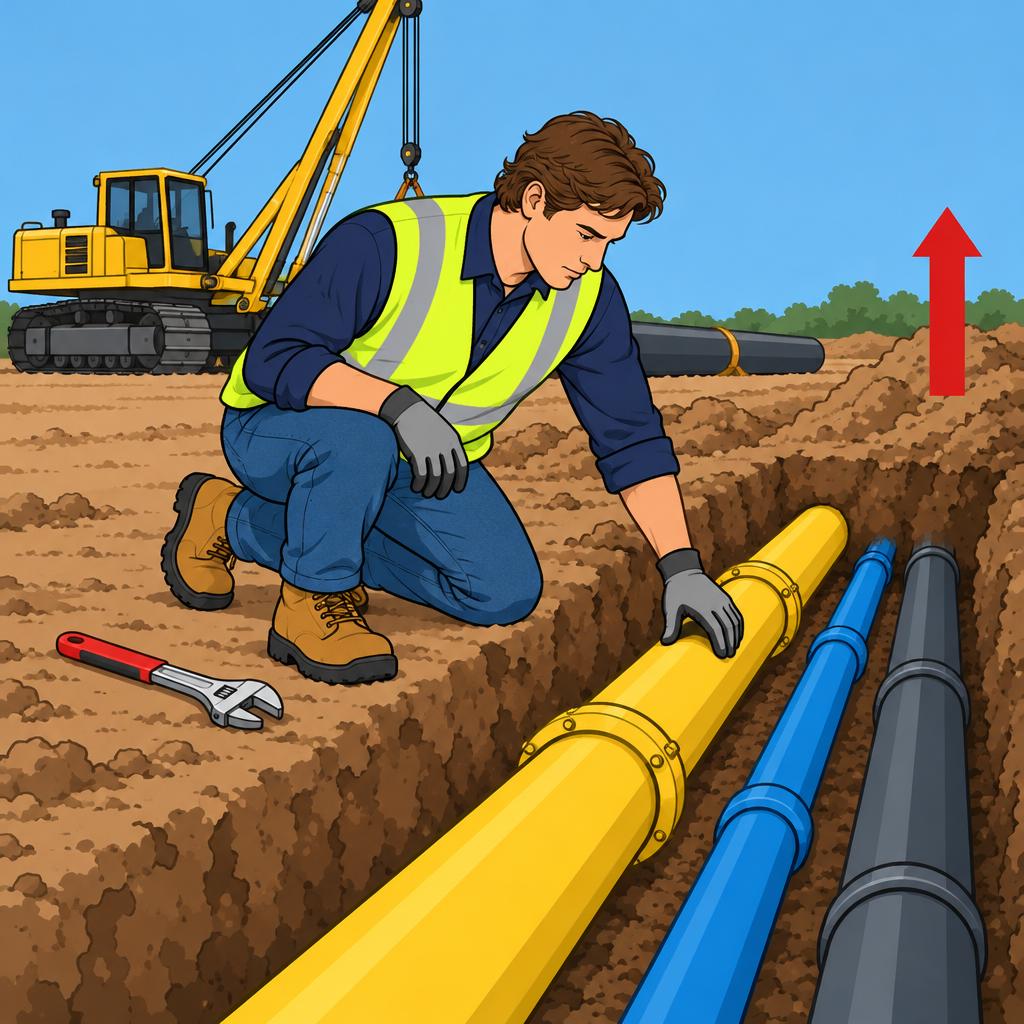
Communication Skills
Effective communication helps pipelayers coordinate tasks and collaborate with team members.
Clear discussions with supervisors help workers perform tasks correctly and efficiently.
Furthermore, communication with other contractors helps prevent conflicts and delays on the job site.
- Effective communication with team members supports coordination and collaboration.
- Clear communication with supervisors helps workers complete assigned tasks correctly.
- Communication with other contractors helps teams avoid conflicts and job site delays.
Importance of Effective Communication
Effective communication strengthens safety by helping everyone understand and follow required protocols.
It also improves efficiency by reducing errors and misunderstandings during task assignments.
As a result, strong communication supports project success, smooth workflow, and timely completion.
- Effective communication enhances safety when workers follow shared safety protocols.
- Clear instructions promote efficiency by reducing errors and misunderstandings.
- Strong communication contributes to project success by supporting smooth workflow and deadlines.
Communication for Safety, Efficiency, and Project Success
Clear communication helps workers identify potential hazards and take preventive measures.
It ensures that team members understand safety procedures and emergency protocols.
Additionally, efficient communication supports faster decision-making and problem-solving on-site.
- Clear communication helps teams identify hazards and take preventive measures.
- Team members receive important information about safety procedures and emergency protocols.
- Efficient communication supports quicker decision-making and problem-solving on-site.
- Project success depends on communication that supports timely completion and quality work.
Ways to Improve Communication Skills
Workers can improve communication by listening carefully and confirming important information.
They can also ask questions whenever instructions or information remain unclear.
Moreover, clear instructions and helpful non-verbal signals can reduce confusion during task execution.
- Practice active listening by giving the speaker full attention without interruptions.
- Ask clarifying questions to confirm instructions and information.
- Provide clear, concise instructions to reduce confusion and execution errors.
- Use gestures and facial expressions to reinforce spoken messages effectively.
See Related Content: Day in the Life of a Waste Management Worker
A career as a pipelayer requires essential skills for success in the field.
Safety awareness remains crucial for maintaining secure worksites and preventing accidents or injuries.
Safety Awareness
- Pipelayers must prioritize job site safety to prevent accidents and injuries.
- Following safety protocols, wearing protective gear, and identifying hazards support a safe work environment.
- Safety training and certifications help workers uphold industry standards and demonstrate competence.
By emphasizing safety awareness, pipelayers can establish a culture that benefits workers and project success.
Furthermore, workers should remain vigilant and proactively identify hazards throughout each project.
Consistently following safety measures supports a successful career as a pipelayer.
You Might Also Like: Apprenticeship Programs for Aspiring Boilermakers
Attention to Detail
Precise work helps pipelayers place and align pipes according to project requirements.
Even minor oversights can create serious problems later.
Therefore, careful checking supports reliable pipe installation.
Importance of Precise Pipe Alignment
Correct pipe positions protect the integrity and functionality of the entire system.
Misaligned pipes can cause leaks, blockages, or system failure.
Additionally, accurate alignment helps water, sewage, and other substances flow efficiently.
Consequences of Missed Details
Small measurement errors can produce misaligned pipes and require extensive repairs.
Furthermore, inaccurate placement can weaken the system and increase failure risks.
Minor alignment problems may also reduce flow efficiency and disrupt service.
Strategies for Improving Accuracy
Pipelayers can strengthen attention to detail through consistent checking and documentation.
They can also use accurate tools and maintain clear communication.
These practices help identify discrepancies before they affect the project.
- Double-check every measurement before beginning installation to catch errors early.
- Inspect completed work regularly to identify mistakes before they cause further problems.
- Use precision tools, including laser levels or digital measuring devices, to improve accuracy.
- Communicate project requirements and discrepancies clearly with team members.
- Document each pipelaying step to track progress and support accurate completion.
Teamwork in a Pipelayer Career
Teamwork remains an essential skill for a successful pipelayer career.
Pipelaying projects require individuals to work effectively with colleagues and other tradespeople.
Furthermore, collaboration helps teams achieve successful project outcomes.
Benefits of Strong Teamwork
- Increased productivity
- Enhanced morale on the job site
Strong teamwork supports the smooth and efficient completion of projects.
By fostering collaboration, pipelayers can overcome challenges and maintain project progress.
Consequently, teams can deliver high-quality work within specified timelines.
Ways to Build Strong Teamwork Skills
Pipelayers can strengthen teamwork by practicing flexibility, respect, and support.
- Be flexible: Adapt to changes and remain open to new ideas and approaches.
- Be respectful: Treat team members with courtesy and professionalism.
- Be supportive: Offer help and encouragement to colleagues when needed.
These practices help pipelayers establish strong relationships with their team members.
Transform Your Career Today
Unlock a personalized career strategy that drives real results. Get tailored advice and a roadmap designed just for you.
Start NowThey also help create a positive work environment.
Ultimately, teamwork can support improved project outcomes and long-term career success.
Adaptability in Pipelaying Projects
- Pipelaying projects may require adjustments to schedules, budgets, and project requirements.
- Adaptable workers remain open to learning new techniques and technologies.
- Successful pipelayers demonstrate flexibility when projects introduce unexpected challenges.
Pipelaying projects change frequently because weather, delays, budgets, and specifications can affect construction plans.
Therefore, pipelayers must adjust quickly while maintaining safe and efficient work practices.
Adaptable workers respond flexibly when unexpected challenges affect construction activities.
They assess changing conditions and develop practical responses that support project progress.
For example, inclement weather can shift a project’s timeline and require teams to rearrange schedules and resources.
Open-minded pipelayers also welcome new techniques that improve efficiency and safety on job sites.
As technology advances, workers encounter tools and methods that can change established procedures.
Learning these approaches helps pipelayers remain competitive and prepared for evolving project requirements.
John Smith demonstrates adaptability through extensive work across various pipelaying projects.
He responds to changing circumstances and develops innovative solutions for complex problems.
Similarly, Sarah Johnson quickly established herself as a valuable team member despite limited industry experience.
She learned new skills and techniques while adapting confidently to unfamiliar challenges.
Consequently, her willingness to learn helped her excel among her peers.
Adaptability enables pipelayers to manage unpredictable conditions and support successful project completion.
By embracing change, workers can develop into capable professionals with lasting careers in pipelaying.
Skills That Support Long Term Pipelaying Success
Successful pipelayers combine practical knowledge with sound judgment on every assignment.
Ongoing training helps workers keep pace with new technologies and current industry practices.
Certifications and further education can help pipelayers remain competitive in the field.
Aspiring pipelayers should cultivate the skills needed to perform consistently in demanding work environments.
They can strengthen their professional effectiveness by practicing communication, teamwork, and adaptability.
These abilities help workers respond effectively as responsibilities and project expectations change.
By refining their abilities, pipelayers can build confidence and support reliable career progress.
Additional Resources
Bing search results for Essential Skills Needed for a Pipelayer Career Construction and Manual Labor


