




The Role of Sheet Metal Workers
Sheet metal workers fabricate and install products made from thin metal sheets.
They create ductwork, roofing, gutters, and other essential construction components.
Their precision and skill support successful construction projects.
Daily Preparation and Precision
Each day begins early when the sheet metal worker reports to the job site.
First, the worker reviews plans and measurements before starting any task.
Next, specialized tools help measure and cut metal sheets according to project specifications.
Shaping and Installing Metal Components
After cutting the metal, the worker shapes it into the required components.
This process may involve bending, folding, or rolling the metal.
Once prepared, the worker installs each component using welding, riveting, or adhesives.
Quality Control and Trade Collaboration
Throughout the day, the worker checks each component against industry standards.
These inspections also confirm that the work meets project requirements.
Meanwhile, sheet metal workers collaborate with plumbers and electricians on the job site.
Preparing for the Next Workday
At the end of the day, the worker cleans the work area.
Then, the worker returns tools to their proper places.
Finally, the worker prepares for the next day’s tasks.
Sheet Metal Worker Job Description
Sheet metal workers support construction projects through skilled fabrication, installation, repair, and maintenance.
They work with metal materials, specialized tools, construction plans, and project teams.
Their work requires accuracy, physical ability, technical knowledge, and practical problem-solving.
Duties and Responsibilities of a Sheet Metal Worker
A sheet metal worker typically begins the day at an assigned construction site.
One primary responsibility involves fabricating and installing metal roofs, siding, and gutters.
These projects may serve residential and commercial buildings.
Workers use shears, press brakes, and welding equipment to cut and shape metal.
They follow project specifications while preparing each metal component.
Additionally, sheet metal workers collaborate with construction teams during HVAC installations.
They create sheet metal ductwork that supports ventilation and air distribution.
Precision remains essential because installation errors can reduce HVAC system efficiency.
Workers also repair and maintain existing sheet metal structures.
They may fix metal roof leaks, replace damaged gutters, or repair dented siding.
Careful inspection helps them complete repairs correctly and effectively.
Furthermore, sheet metal workers interpret blueprints and design plans.
They apply measurements and layout techniques to cut and install components accurately.
Effective communication helps the project team resolve uncertainties and maintain progress.
Skills and Qualifications Required for the Job
Successful sheet metal workers demonstrate strong craftsmanship and consistent attention to detail.
They measure materials accurately and use tools carefully to achieve precise fits.
Physical strength and stamina help workers lift materials and reach confined spaces.
Good hand-eye coordination supports safe and accurate tool operation.
Problem-solving skills help workers troubleshoot challenges during fabrication and installation.
They also use critical thinking to develop practical solutions.
Adaptability helps workers respond to projects with different complexities and requirements.
Employers typically require a high school diploma or equivalent qualification.
Transform Your Career Today
Unlock a personalized career strategy that drives real results. Get tailored advice and a roadmap designed just for you.
Start NowVocational training and apprenticeship programs provide practical experience and professional mentorship.
Welding or HVAC certifications may strengthen a worker’s qualifications in specialized areas.
These combined abilities help sheet metal workers perform construction and maintenance duties effectively.
A Typical Day for a Sheet Metal Worker
A sheet metal worker often begins the day early, around six or seven in the morning.
The worker reviews assigned work orders before collecting materials and tools for scheduled tasks.
A morning team meeting clarifies assignments, priorities, and daily expectations.
Morning Preparation and Team Coordination
After the meeting, workers move to their designated areas and begin their assigned responsibilities.
Supervisors and team members discuss the day’s tasks and coordinate work before activities begin.
This preparation helps workers understand project requirements and organize their time effectively.
- Start work around six or seven in the morning
- Review the day’s work orders
- Gather necessary materials and tools
- Attend a morning team meeting
- Discuss assignments and daily priorities
Work Assignments and Project Activities
Workers may support HVAC projects, ductwork installation, or metal roofing activities.
They may also assist with welding and cutting metal pieces during construction work.
Each assignment requires workers to follow project plans while coordinating with their teammates.
- Work on HVAC systems
- Fabricate and install ductwork
- Repair and maintain metal roofing
- Assist with welding and cutting metal pieces
Measurements, Cutting, and Assembly
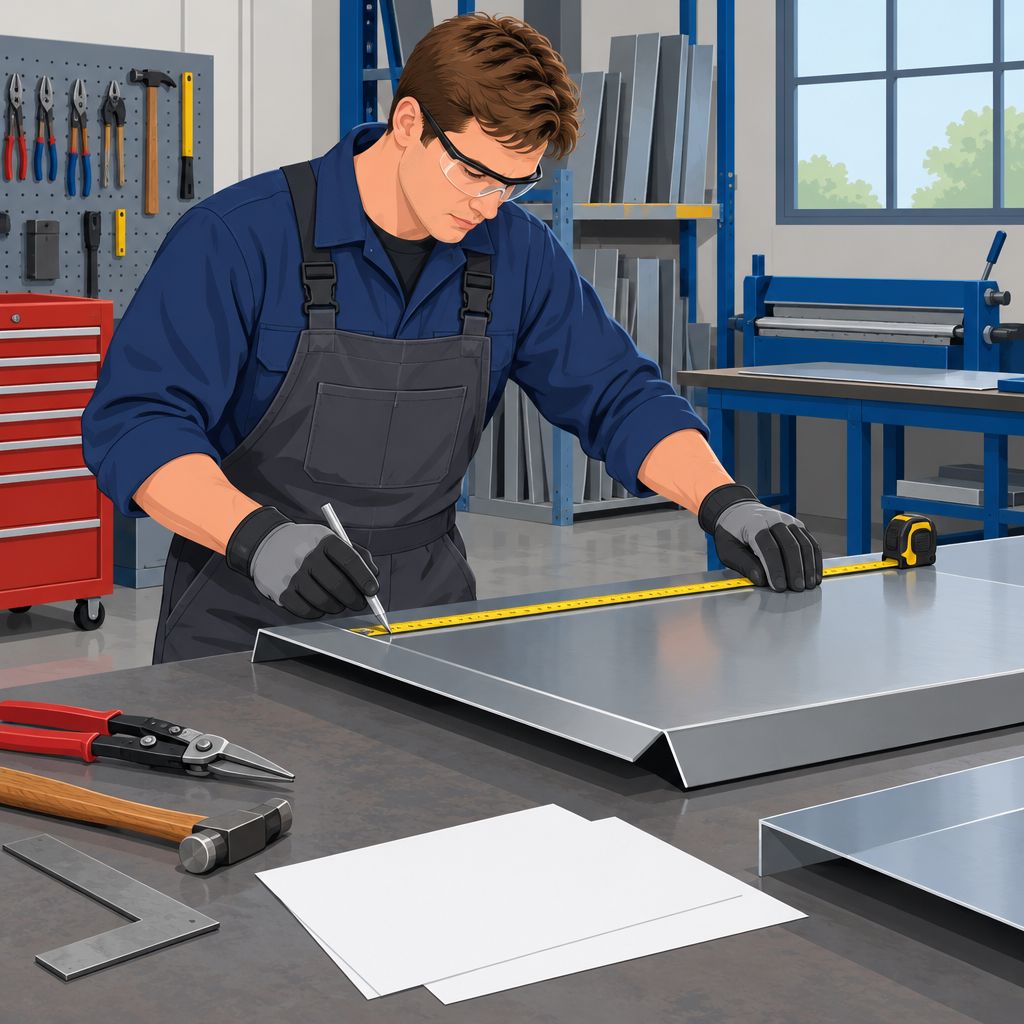
Throughout the day, workers measure metal sheets and mark them for accurate cutting.
They assemble the cut pieces according to blueprints and project specifications.
Careful measurements and detailed work help maintain accuracy during construction and inspections.
- Take measurements for each assigned task
- Cut metal sheets to specified dimensions
- Assemble metal pieces using project plans
- Maintain precision throughout the work
- Assist with quality control inspections
Problem Solving and Workplace Collaboration
Project conditions can change, so workers must respond thoughtfully to new challenges.
They use problem-solving skills and quick thinking when obstacles affect their assigned work.
Clear communication helps colleagues and supervisors address concerns and maintain project progress.
- Adapt to changes in project scope
- Collaborate with teammates on challenges
- Use problem-solving skills to overcome obstacles
- Communicate clearly with colleagues and supervisors
End-of-Day Organization and Project Review
At the end of the shift, workers clean their areas and organize their tools.
They review project progress and identify tasks that require attention the following day.
Workers also discuss outstanding concerns with teammates before preparing for the next shift.
- Clean the work area
- Organize tools and materials
- Review project progress
- Prepare materials and tools for tomorrow
- Discuss outstanding tasks and concerns
The workday combines practical tasks, teamwork, problem solving, and careful attention to project requirements.
Workers can take satisfaction from completing assignments and seeing project progress firsthand.
Their daily effort supports construction teams and helps move projects toward completion.
Uncover the Details: Common Mistakes by Power Line Installers
Tools and Equipment
Sheet metal workers use many tools and machines during fabrication tasks.
These tools help workers cut, shape, bend, join, and measure metal sheets.
Proper training improves accuracy while helping workers follow essential safety procedures.
Tin Snips
Tin snips cut straight lines and curves in thin metal sheets.
Workers select suitable snips for different cutting directions and shapes.
Therefore, proper training helps workers handle snips safely and achieve accurate cuts.
Hand Seamers
Hand seamers bend and fold metal sheets during fabrication.
Different shapes and sizes allow workers to create various angles and forms.
Workers should use these tools carefully to reduce the risk of injuries.
Sheet Metal Brakes
A sheet metal brake bends and shapes larger metal sheets.
It helps workers create consistent bends with greater precision.
Consequently, proper operating training supports safe use and quality results.
Power Tools
Electric shears, grinders, and drills support cutting, shaping, and fastening tasks.
These tools can increase efficiency and productivity during metalworking tasks.
However, workers must follow safety procedures whenever they operate power tools.
Transform Your Career Today
Unlock a personalized career strategy that drives real results. Get tailored advice and a roadmap designed just for you.
Start NowWelding Equipment
Welding machines and torches join metal sheets together.
Protective gear helps workers manage hazards associated with welding activities.
Proper welding training supports safe techniques and strong, durable joints.
Measuring Tools
Rulers, squares, and calipers help workers measure metal sheets accurately.
Accurate measurements support precise cuts and correctly positioned bends.
As a result, careful measurement reduces errors during fabrication.
Safety Gear
Sheet metal work can expose workers to sharp edges, heavy materials, and high temperatures.
Gloves, goggles, helmets, and steel-toed boots help protect workers from injuries.
Training helps workers use safety gear correctly and maintain a safer workplace.
Safe and Accurate Metalwork
Each tool supports a specific stage of shaping, cutting, measuring, or joining metal.
Workers combine these tools to produce accurate and consistent metal products.
Following training and safety procedures protects workers while supporting reliable fabrication work.
See Related Content: DIY Insulation Tips from Professional Insulation Workers
Work Environments
Sheet metal workers move between several settings based on assigned fabrication, installation, maintenance, or repair duties.
Each workplace presents different conditions that influence how workers organize tasks and protect themselves.
Therefore, workers must adapt their methods while maintaining careful attention to workplace requirements.
Construction Sites
Construction sites often require workers to install ductwork and other metal components during building projects.
Noise, dust, and nearby hazards can make these locations challenging.
Workers must coordinate their activities while maintaining awareness of changing site conditions.
Factories
Factories employ sheet metal workers who fabricate metal parts and products.
Heavy machinery can create crowded, noisy conditions around production areas.
Consequently, workers may use earplugs, safety goggles, and other protective gear.
Commercial Buildings
Commercial buildings may require workers to maintain or repair HVAC systems.
They may also install metal roofing or complete related work in offices and retail spaces.
Tight spaces and elevated work areas require workers to remain comfortable and attentive.
Challenges and Hazards
Sheet metal work offers rewarding responsibilities, yet workers face several physical and environmental challenges.
These challenges can affect comfort, concentration, and personal safety.
For that reason, workers must follow safety practices throughout each assignment.
Physical Strain
Workers may lift heavy materials, climb ladders, and hold awkward positions.
These demands can cause strains or injuries when workers ignore safe practices.
Proper lifting techniques and attention to physical limits help workers reduce injury risks.
Exposure to Hazards
Workers may encounter sharp edges, fumes, toxins, and machinery noise.
Protective gloves, masks, and hearing protection can reduce exposure to these hazards.
Workers should select protective gear that matches the task and surrounding conditions.
Worksite Safety
Construction sites and factories can expose workers to falls, slips, and other accidents.
Workers should wear hard hats, use fall protection, and follow lockout/tagout procedures.
Remaining alert and following safety protocols helps workers reduce accident and injury risks.
Adapting to Workplace Conditions
Sheet metal workers encounter different conditions across construction sites, factories, and commercial buildings.
Recognizing each setting’s hazards helps them choose appropriate precautions before beginning work.
This preparation supports safer and more productive work for workers and colleagues.
Transform Your Career Today
Unlock a personalized career strategy that drives real results. Get tailored advice and a roadmap designed just for you.
Start NowUncover the Details: The Importance of Teamwork Among Ironworkers
Teamwork and Collaboration
Sheet metal workers rely on teamwork to complete construction projects efficiently.
They coordinate with professionals who manage design, installation, and related trade activities.
This cooperation helps teams address site challenges while maintaining project requirements.
Interaction with Other Professionals on Site
On construction sites, sheet metal workers communicate with contractors, architects, engineers, and other tradespeople.
These conversations coordinate work activities and help teams share important project information.
Workers also discuss emerging challenges before those issues disrupt construction progress.
When installing HVAC ductwork, they work with mechanical engineers to confirm proper system design and installation.
They coordinate with electricians when electrical components must fit within the ductwork system.
During roofing projects, sheet metal workers collaborate with roofers and waterproofing specialists.
Together, these professionals help seal and protect the roof from weather conditions.
This cooperation helps the team complete each construction responsibility to high standards.
Communication and Collaboration in Project Delivery
Effective communication helps sheet metal workers support safe, timely, and cost-conscious project delivery.
Clear discussions align goals, clarify responsibilities, and help resolve conflicts.
Workers communicate with team members, supervisors, and clients throughout construction activities.
Furthermore, collaboration allows different trades to combine their skills when challenges arise.
Consequently, coordinated work helps each project element meet expected quality standards.
Strong professional relationships help sheet metal workers contribute to efficient construction projects.
You Might Also Like: Networking Tips for Aspiring Drywall Installers
Common Challenges for Sheet Metal Workers
Sheet metal workers face several challenges while completing their work.
Inaccurate measurements can produce flawed final products.
Machinery breakdowns, material defects, and worksite hazards can disrupt tasks and threaten safety.
- Incorrect measurements can lead to flawed final products.
- Machinery breakdowns can halt production and cause delays.
- Warped or bent materials can reduce the quality of finished products.
- Sharp edges, heavy materials, and high temperatures can create worksite hazards.
Troubleshooting Common Sheet Metal Problems
Effective troubleshooting helps workers address these issues efficiently.
Workers verify measurements, maintain equipment, inspect materials, and follow safety protocols.
These practices support accurate, safe, and efficient work.
- Double-check measurements to ensure precision and accuracy.
- Perform regular equipment maintenance to prevent machinery breakdowns.
- Inspect materials thoroughly and select high-quality materials before starting projects.
- Follow safety protocols, wear protective gear, and stay alert while working.
Sheet metal workers have many opportunities for career growth.
Their skills and experience can help them pursue advancement.
Higher positions may also provide higher-paying work.
Advancement Opportunities for Sheet Metal Workers
- Skilled sheet metal workers can advance to higher positions within their companies.
- They may become supervisors or managers who oversee projects and lead worker teams.
- Company size, structure, experience, and expertise influence available advancement opportunities.
- Some workers start businesses and become self-employed contractors offering custom metalwork services.
Certifications and Specialized Training
- Additional certifications and specialized training can improve a worker’s advancement opportunities.
- Welding or sheet metal fabrication certifications can lead to higher-paying and more challenging work.
- Workers may specialize in architectural metalwork, HVAC systems, or custom metal furniture.
- Specialized expertise helps workers distinguish themselves and potentially command higher salaries.
Career opportunities remain promising for workers who improve their skills and expand their knowledge.
With dedication and the right mindset, workers can build fulfilling careers in this in-demand field.
Personal Satisfaction
Sheet metal work offers personal fulfillment through practical, hands-on tasks.
Workers use their skills to create tangible products from start to finish.
They can take pride in completing work that serves a practical purpose.
Fulfillment
Each day, sheet metal workers can see the results of their completed projects.
Every task contributes to the final product, from constructing ductwork to shaping metal sheets.
The finished work can support buildings or machinery through its practical purpose.
- Workers see the fruits of their labor in completed projects.
- They contribute to final products by constructing ductwork and shaping metal sheets.
- Their work serves practical purposes in buildings and machinery.
Pride in Craftsmanship
Sheet metal workers take pride in their craftsmanship and attention to detail.
A finished piece shows the worker’s important role in its creation.
Work that withstands time and the elements reflects skill and dedication.
- Workers value their craftsmanship and attention to detail.
- A completed piece can demonstrate each worker’s contribution.
- Durable work can reflect a worker’s skill and dedication.
Perspectives from Sheet Metal Workers
Sheet metal workers describe their craft as challenging, collaborative, and rewarding.
Transform Your Career Today
Unlock a personalized career strategy that drives real results. Get tailored advice and a roadmap designed just for you.
Start NowTheir experiences highlight problem-solving, teamwork, and satisfaction with completed work.
These perspectives show the dedication they bring to their projects.
“I love being a sheet metal worker because every day is a new challenge.”
“I apply my skills to solve complex problems and create functional pieces that make a difference.”
– John, Sheet Metal Worker
“The camaraderie among fellow sheet metal workers is unbeatable.”
“We support each other and share knowledge to deliver the best results for our clients.”
– Sarah, Sheet Metal Worker
“There is a sense of accomplishment when a project develops from a sheet of metal.”
“The transformation process is truly rewarding.”
– David, Sheet Metal Worker
The Value of Sheet Metal Work
Sheet metal workers use precision cutting, shaping, and assembly to create metal products for many industries.
They operate various tools and machines throughout each project.
Furthermore, these professionals demonstrate skills that help maintain the quality and durability of metal structures.
Their expertise supports buildings, machinery, and other practical applications.
Moreover, sheet metal workers strengthen construction and manufacturing through innovative and efficient solutions.
Their craftsmanship and attention to detail help projects achieve successful results.
When you see a metal structure or product, remember the workers who helped create it.
Their dedication supports modern life and deserves recognition.
Additional Resources
Google search results for Day in the Life of a Sheet Metal Worker Construction and Manual Labor
Bing search results for Day in the Life of a Sheet Metal Worker Construction and Manual Labor


