




Ironworking Technology and Its Continued Development
Ironworking technology has shaped civilizations and industries across the world.
Recent advances have improved efficiency and quality in ironworking processes.
This article examines current innovations in ironworking technology and tools.
The Importance of Ironworking Technology
Ironworking technology has supported human progress since the Iron Age.
It enables construction of infrastructure, tools, and machinery needed for development.
Consequently, improvements in this field continue to influence industries worldwide.
The Transformation of Ironworking Processes
Ironworking technology has transformed how industries extract, process, and use iron ore.
Ancient smelting techniques eventually developed into sophisticated modern methods.
These changes have increased productivity and improved product quality.
Recent Advances in Ironworking Technology and Tools
Recent years have introduced innovative technologies and tools across the ironworking industry.
Advanced machinery, including 3D printing and robotic automation, has changed traditional manufacturing processes.
These systems make production faster, more precise, and more cost-effective.
New materials and coatings improve tool durability and performance.
As a result, ironworking tools last longer and operate more efficiently.
Digital design software and simulation tools help engineers optimize production processes.
These tools support higher quality products and reduce waste.
IoT devices enable real-time monitoring and data analysis across ironworking equipment.
Therefore, operators can optimize maintenance schedules and improve operational efficiency.
These advances continue to expand ironworking capabilities and create new possibilities for the industry.
History and Importance of Ironworking
- Ironworking has ancient roots and influenced technological progress.
- Iron supported tools, weapons, infrastructure, and transportation.
Ironworking has shaped human civilization for thousands of years.
Its development improved societies’ capabilities and encouraged technological advancement.
Societies valued iron because it combined versatility with durability.
Ironworking in Ancient Civilizations
The Hittites and Egyptians practiced some of the earliest known forms of ironworking.
These early peoples extracted iron from ore and shaped it into tools and weapons.
Their achievements helped open the Iron Age and expanded human capabilities.
Ironworkers used heat, force, and careful control to create useful objects.
Early Ironworking Techniques and Tools
Early ironworkers used small bloomery furnaces to smelt ore.
They heated iron ore with charcoal and collected the resulting bloom.
This process remained inefficient, labor-intensive, and dependent on skilled craftsmen.
Workers monitored temperature and carbon content to produce quality iron.
Hammers, chisels, tongs, and anvils helped workers forge and shape iron.
Drills, saws, and files supported detailed work on iron objects.
Industrial Advances in Iron and Steel
Ironworking methods improved as societies demanded larger quantities of metal.
The blast furnace enabled larger-scale production of cast iron during the Middle Ages.
This development supported the growth of the iron industry.
During the nineteenth century, the Bessemer process made steel production more efficient.
It also reduced costs and made steel more accessible.
Modern Ironworking and Societal Impact
Modern facilities use electric arc furnaces, induction furnaces, and oxygen converters.
These methods produce steels with specific properties and applications.
Computer-aided design and manufacturing now support precise, complex shapes.
Transform Your Career Today
Unlock a personalized career strategy that drives real results. Get tailored advice and a roadmap designed just for you.
Start NowImproved iron and steel production strengthens structures and transportation systems.
These materials also support efficient industrial processes.
Iron and steel have encouraged innovation in construction, automotive, and aerospace industries.
The evolution of ironworking reflects human ingenuity and technological progress.
Modern Ironworking Techniques
Modern ironworking uses casting, forging, and welding to produce various iron goods.
These methods help producers shape, strengthen, and join iron products efficiently.
Each technique suits different production needs, designs, and repair tasks.
Casting Processes and Benefits
Casting pours molten iron into a mold to create a specific shape.
This process supports intricate designs that other methods may not easily produce.
Manufacturers can also use casting to create prototypes for further production.
- It produces detailed and intricate iron pieces.
- The process offers flexibility in product design and shape.
- It supports prototype development for later production.
Forging for Strength and Durability
Forging shapes iron by applying compressive forces.
Workers often use this technique to create strong and durable tools and parts.
Additionally, forging improves the mechanical properties of iron products.
- Forging produces iron goods with superior strength and durability.
- The process enhances the mechanical properties of iron.
- Workers can create custom-made iron products through forging.
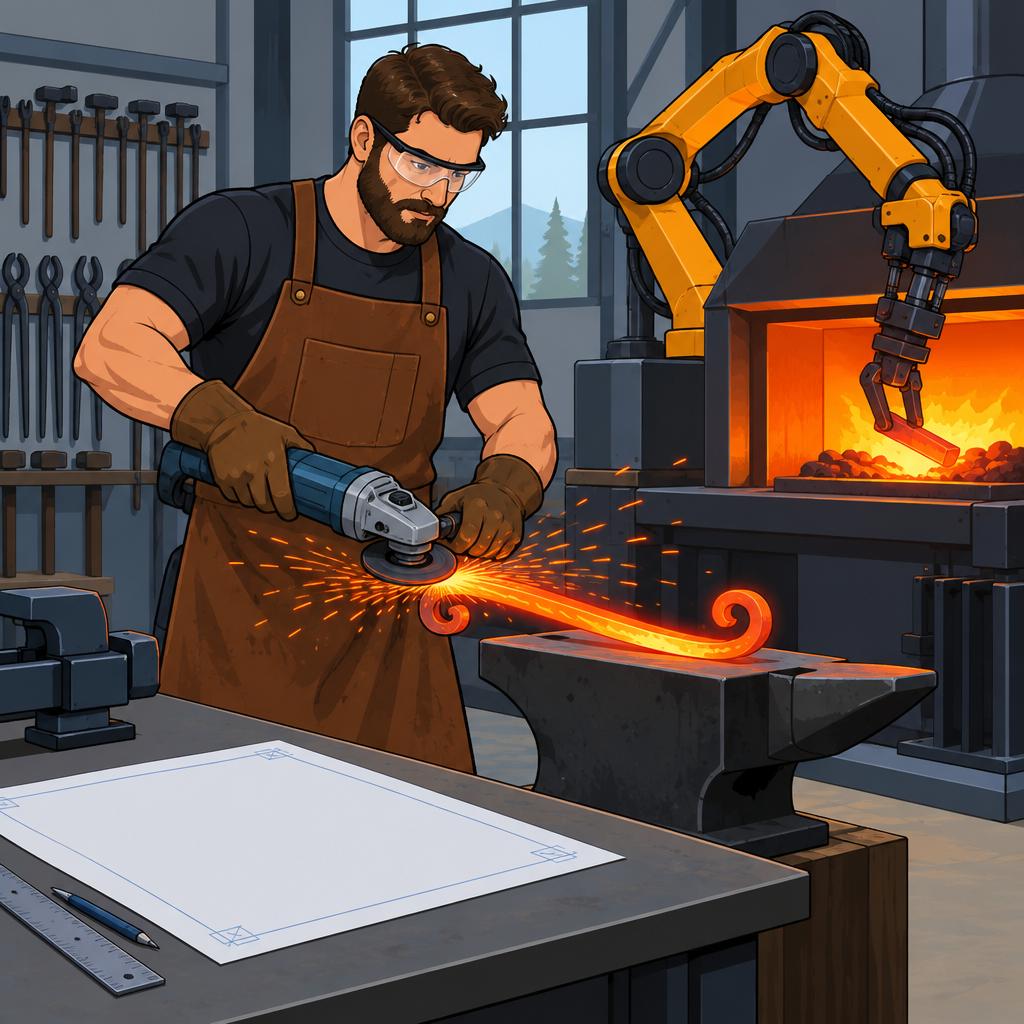
Welding for Joining Iron Components
Welding joins two or more iron pieces using heat and pressure.
Construction and manufacturing industries widely use this joining method.
Welding also helps workers repair or modify existing iron products.
- Welding creates strong and seamless joints between iron pieces.
- The technique supports repairs and modifications of iron products.
- It increases the efficiency and speed of ironworking processes.
Selecting an Ironworking Technique
Ironworkers can select a method according to each project’s specific requirements.
Casting supports intricate forms, while forging prioritizes strength and durability.
Welding connects iron components and supports efficient repairs or modifications.
Find Out More: Residential vs. Commercial Pest Control Jobs
Recent Technological Advancements in Ironworking
New technologies are changing how ironworkers design, produce, and finish iron products.
Two important developments include three-dimensional printing and robotic automation.
These tools improve production efficiency, accuracy, customization, and workplace safety.
- Three-dimensional printing creates complex designs that traditional methods could not easily produce.
- Robotic automation handles repetitive tasks, including cutting, welding, and finishing.
- Both technologies help ironworking companies improve precision and production speed.
Three-Dimensional Printing in Ironworking
Three-dimensional printing builds iron products layer by layer according to precise digital designs.
This approach supports intricate shapes while reducing the need for traditional casting methods.
It also gives clients more options for customized structures and unique product designs.
- Three-dimensional printing creates complex and intricate designs that were previously difficult to produce.
- The process reduces material waste by using only the required amount of iron.
- It increases production speed by reducing reliance on traditional casting methods.
- The technology expands customization options through unique shapes and structures.
- Precise dimensions improve the quality and consistency of finished iron products.
Robotic Automation in Ironworking
Robotic automation performs repeated production tasks with consistent movements and controlled precision.
It allows workers to focus less on hazardous activities and more on supervised production tasks.
Furthermore, automated systems can maintain production activity continuously without regular breaks.
- Robots automate cutting, welding, and finishing tasks to increase productivity.
- Consistent robotic movements reduce human error during manufacturing.
- Robots handle dangerous tasks, which improves worker safety.
- Automated workflows streamline production and reduce downtime.
- Robotic systems can operate continuously, maximizing output capabilities.
Industry Effects of Advanced Ironworking Technologies
These technologies help companies complete projects faster while maintaining accurate production standards.
They also reduce waste and improve workflow efficiency across manufacturing operations.
As a result, ironworking companies can offer clients more innovative and precise solutions.
- Faster production can reduce project lead times.
- Greater accuracy supports higher-quality finished products.
- Innovative production methods strengthen companies’ competitive position.
- Reduced waste and efficient operations can lower overall costs.
- Advanced technologies are transforming traditional ironworking processes.
Delve into the Subject: How Climate Change Affects Commercial Fishing
Advanced Tools Used in Ironworking
Ironworking now uses advanced tools that improve cutting, shaping, drilling, and surface detailing.
These tools expand the range of designs that ironworkers can produce.
Together, they support faster production and more consistent results.
Plasma Cutters
Plasma cutters transfer energy from a power supply to conductive metal.
They use electrically conductive gas to create clean and precise cuts.
As a result, ironworkers can cut thick metal sheets quickly and accurately.
CNC Machines
CNC machines use computer programming to control cutting, shaping, and drilling operations.
Transform Your Career Today
Unlock a personalized career strategy that drives real results. Get tailored advice and a roadmap designed just for you.
Start NowThey produce metal parts with consistent measurements and precise details.
Therefore, these machines support reliable production across many ironworking projects.
Laser Engravers
Laser engravers direct powerful beams onto metal surfaces.
They etch designs, patterns, text, and logos with exceptional detail.
Consequently, ironworkers can add distinctive decorative features to finished pieces.
Productivity and Quality Improvements
Advanced tools have changed how ironworkers plan and complete fabrication projects.
Their accuracy reduces mistakes while their speed supports quicker project completion.
Additionally, their flexibility helps workshops manage different fabrication and finishing tasks.
- Plasma cutters, CNC machines, and laser engravers help ironworkers create precise shapes and intricate designs.
- These tools shorten production times compared with many traditional methods.
- Reduced waste and fewer errors can lower long-term project costs.
- Their versatility supports cutting, shaping, drilling, engraving, and other ironworking tasks.
Learn More: How to Excel in a Construction Management Career
Technology’s Impact on Ironworking
Technology has transformed ironworking from the ground up.
New tools and techniques help ironworkers complete tasks more efficiently and effectively.
Consequently, modern equipment supports faster and more consistent project work.
- Modern tools and technology significantly improve project efficiency.
- Automated machinery can complete tasks within hours instead of days.
- Streamlined processes and reduced manual labor lower ironworking project costs.
- Lower costs allow companies to manage larger projects and expand operations.
- Precision tools and sophisticated machinery improve the quality of ironworking projects.
- Greater accuracy and consistency produce stronger, more durable structures.
Benefits of More Efficient Ironworking Projects
These advancements affect the industry in several important ways.
They help workers and companies manage projects more effectively.
They also support safer and more sustainable ironworking practices.
- Faster, more accurate work enables ironworkers to complete additional projects.
- Higher productivity supports individual workers and contributes to industry growth.
- Companies using current technology can gain an advantage through faster, lower-cost, higher-quality services.
- Advanced safety features help reduce workplace injuries among ironworkers.
- Improved safety allows workers to focus on tasks with fewer traditional risks.
- Eco-friendly materials and sustainable practices help reduce waste and environmental impact.
- These practices support a more sustainable future for the ironworking industry.
Ultimately, technological advancements have established higher standards for ironworking projects.
They combine efficiency, cost-effectiveness, quality, safety, and sustainability across the industry.
Delve into the Subject: Maintenance Worker: Salary Expectations and Job Outlook
Challenges and Future Trends in Ironworking
As ironworking technologies evolve, businesses must manage adoption challenges while preparing for emerging tools.
Careful planning can help organizations introduce innovations without disrupting established workflows.
Meanwhile, automation, artificial intelligence, data analytics, and 3D printing may influence future operations.
- Businesses must address challenges when adopting new ironworking technologies.
- Industry leaders should monitor future trends in ironworking technology and tools.
Challenges in Adopting New Technologies
Advanced equipment often requires substantial initial investment.
Consequently, some businesses may hesitate before upgrading their existing tools.
Workers may need specialized training to operate and maintain advanced equipment.
Moreover, organizations must integrate new systems into established workflows carefully.
Some workers may resist changes because traditional methods feel familiar.
Therefore, leaders should encourage innovation while supporting employees through transitions.
Emerging Trends in Ironworking Technology
Automation and robotics will likely expand across ironworking processes.
These systems can increase efficiency, reduce human error, and improve productivity.
Artificial intelligence and data analytics may optimize processes and improve operational decisions.
They can also help predict maintenance needs and support decision-making.
Additionally, 3D printing may enable rapid production of complex metal parts.
This approach can support customized designs and create new production possibilities.
Preparing for Future Ironworking Operations
Despite these challenges, ironworking businesses can pursue growth by addressing obstacles directly.
Training, planning, and openness to innovation can support smoother technology adoption.
As new tools develop, the industry may gain more efficient and flexible production options.
The Role of Technological Progress in Ironworking
Ironworking technology now supports more efficient and productive industry operations.
Improved tools and techniques enable ironworkers to create intricate designs and structures once considered impossible.
Moreover, faster cutting tools and automated welding systems can improve precision and production speed.
Therefore, ironworkers must follow technological developments to remain competitive and deliver high-quality work.
Transform Your Career Today
Unlock a personalized career strategy that drives real results. Get tailored advice and a roadmap designed just for you.
Start Now


