




Understanding Pest Control Services
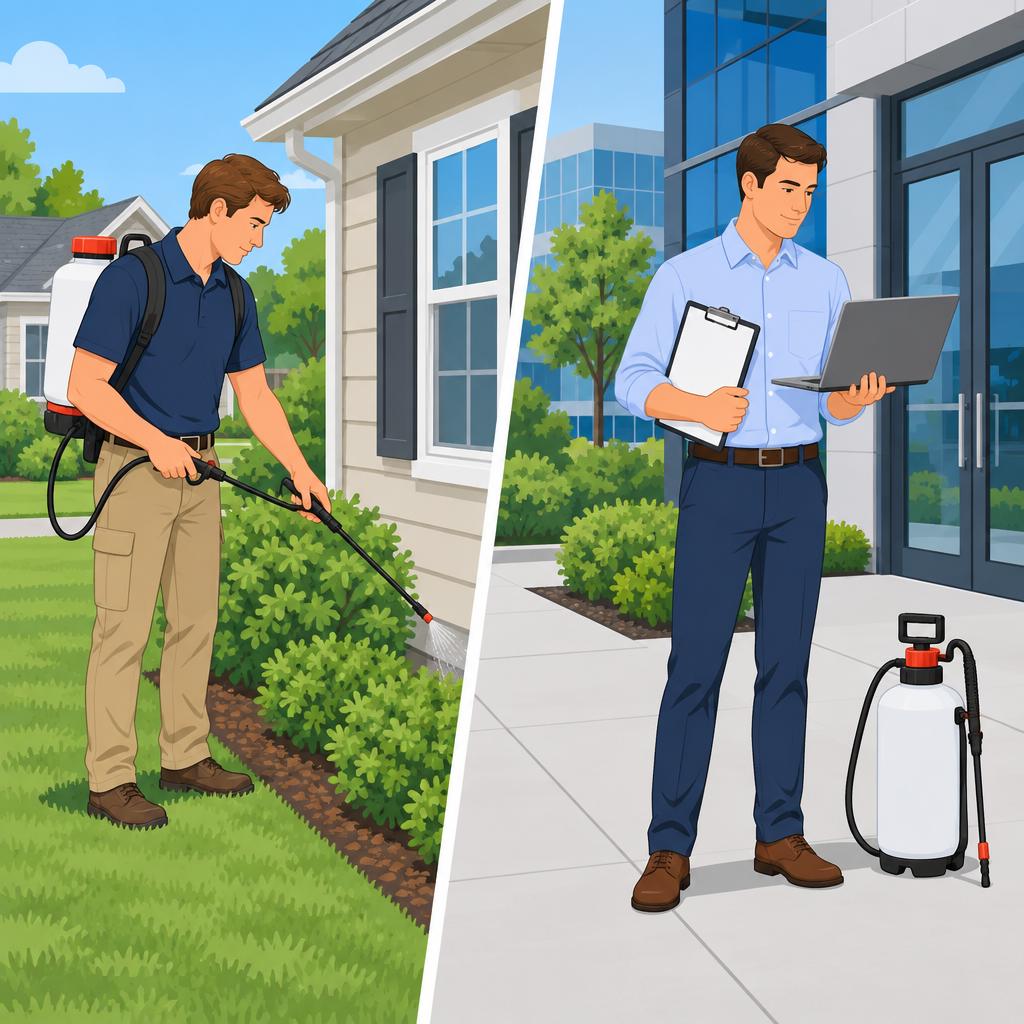
Residential pest control jobs involve servicing homes and apartments to remove insects and rodents.
Commercial pest control jobs address infestations in businesses, restaurants, hotels, and other commercial establishments.
Both services protect people, property, and daily operations from pest threats.
Residential Pest Control Services
Residential pest control technicians work closely with homeowners to identify and eliminate pest problems effectively.
They often use environmentally friendly methods to protect residents and their pets.
Common residential targets include ants, cockroaches, rodents, bed bugs, and termites.
Additionally, pest control experts provide prevention strategies that reduce the risk of future infestations.
Commercial Pest Control Services
Commercial pest control technicians serve offices, food processing plants, and other business facilities.
They conduct thorough inspections to locate pest entry points and assess infestation conditions.
Afterward, technicians create customized treatment plans for each commercial setting.
Business owners use these services to maintain healthy and safe environments for employees and customers.
These professionals handle large-scale infestations and implement long-term solutions.
Protecting Healthy, Pest-Free Environments
Residential services focus on individual homes, while commercial services address larger establishments.
Each setting presents different challenges that require an appropriate pest control approach.
Ultimately, pest control technicians protect public health and property from pest threats.
Differences Between Residential and Commercial Pest Control Jobs
Residential and commercial pest control jobs serve different property types.
They also involve different pest concerns, treatment methods, and work scales.
Technicians adjust their approach according to each property’s needs.
Residential Pest Control Work
Residential technicians typically service individual homes and apartments.
They commonly address ants, cockroaches, rodents, termites, bed bugs, spiders, and mosquitoes.
These jobs often use bait stations, sprays, and traps to manage infestations.
Commercial Pest Control Work
Commercial technicians work in office buildings, restaurants, and warehouses.
Because these properties cover larger areas, technicians perform thorough inspections.
They also create treatment plans suited to the property’s size and pest concerns.
Common Pests in Each Setting
Homes frequently experience infestations involving termites, bed bugs, spiders, mosquitoes, ants, cockroaches, and rodents.
Commercial properties often encounter flies, rodents, and stored product pests.
Therefore, technicians identify the setting and pest type before selecting treatment methods.
Tools and Treatment Techniques
Residential technicians may use bait stations, sprays, and traps during treatment.
Commercial pest control can involve advanced methods, including fumigation and heat treatments.
These techniques help technicians address infestations across larger commercial spaces.
Residential Pest Control Challenges
Technicians face several obstacles during residential pest control jobs.
Homeowner cooperation, limited access, and tight spaces can complicate treatment.
Therefore, professionals must communicate clearly and adapt their methods.
Homeowner Cooperation and Communication
Technicians must earn homeowners’ trust before treatment can succeed.
Some homeowners may misunderstand the problem’s extent or minimize its seriousness.
Clear explanations help residents understand treatment steps and their responsibilities.
Limited Access Within Residential Properties
Cluttered or inaccessible areas can prevent technicians from treating every affected location.
Such conditions make complete pest eradication more difficult.
Therefore, technicians must find alternative methods that address problems and prevent pest spread.
Working in Tight Residential Spaces
Attics, crawlspaces, and basements can restrict movement during treatment.
Transform Your Career Today
Unlock a personalized career strategy that drives real results. Get tailored advice and a roadmap designed just for you.
Start NowClutter may make these areas even harder to navigate effectively.
Skilled professionals use suitable tools and equipment while maintaining treatment quality.
Find Out More: How Climate Change Affects Commercial Fishing
Commercial Infestation Management
Commercial pest control jobs present challenges that require careful planning and professional expertise.
Professionals often manage infestations across larger areas than residential properties.
These expansive spaces require strategic planning and thorough treatment.
Professionals must address the entire affected area to eliminate infestations completely.
Coordinating Multiple Commercial Units
Large office buildings, apartment complexes, and hotels may contain many separate units.
Pests can spread from one unit to another, complicating treatment efforts.
Technicians must address each unit while limiting movement into surrounding areas.
Protecting Sensitive Food Areas
Restaurants and food processing plants contain sensitive kitchen and food-handling areas.
Pests can contaminate food and create serious health risks for employees and customers.
Professionals therefore need suitable knowledge and tools to remove pests safely and effectively.
Delve into the Subject: How to Excel in a Construction Management Career
Importance of Proper Training for Chemical and Trap Handling
Proper training helps technicians handle chemicals and traps safely while protecting residents.
Training programs teach technicians to use pesticides effectively while minimizing risks to humans and pets.
They also explain pest types, behaviors, and effective control methods.
Furthermore, correct handling prevents accidents and protects the environment.
Certifications for Residential Pest Control Work
Technicians need certifications before performing residential pest control work.
A Structural Pest Control license commonly permits technicians to treat homes.
Depending on the region, technicians may need certifications for bed bug or termite control.
They may also require credentials for fumigation or heat treatments.
These certifications demonstrate expertise and support compliance with state regulations.
Explore Further: Maintenance Worker: Salary Expectations and Job Outlook
Training and Certification Requirements for Commercial Pest Control Jobs
Commercial pest control work demands specialized preparation for larger equipment and complex pest problems.
It also requires technicians to adapt their methods to varied business environments.
Training and certification help workers manage these responsibilities safely and effectively.
Specialized Training for Commercial Pest Control
Technicians learn to handle industrial-grade sprayers, traps, and insecticides.
Programs also explain pest identification, inspection techniques, treatment methods, and safety protocols.
Additionally, technicians develop customized pest management plans for commercial clients.
- Technicians may work in warehouses, office buildings, restaurants, and other businesses.
- They tailor management plans to each client’s specific needs.
Certifications for Commercial Pest Control Technicians
State or regional rules determine which credentials commercial technicians must obtain.
A Commercial Pest Control Operator license commonly confirms required training and experience.
Facility needs may also require food handling, integrated pest management, or wildlife management credentials.
- Some technicians need credentials from the National Pest Management Association or state pesticide agencies.
- Food handling, integrated pest management, and wildlife management certifications depend on facility requirements.
These requirements help technicians deliver safe and effective pest management solutions for commercial clients.
Proper credentials also demonstrate readiness to address the specialized demands of commercial facilities.
Find Out More: Masonry Projects: DIY vs. Hiring a Professional
Pros and Cons of Residential Pest Control Jobs
Residential pest control jobs offer several advantages and disadvantages.
These roles differ from commercial pest control work in daily responsibilities and client interactions.
Technicians should weigh these factors against their career goals and preferences.
Benefits of Residential Pest Control Work
Residential work can provide flexibility, variety, and direct contact with homeowners.
Transform Your Career Today
Unlock a personalized career strategy that drives real results. Get tailored advice and a roadmap designed just for you.
Start NowIt can also create opportunities for personal satisfaction and specialized training.
-
Flexible scheduling can benefit technicians and homeowners.
Technicians can often arrange appointments around homeowner availability.
-
Direct homeowner interaction can make the work rewarding.
Personalized service can support client relationships, repeat business, and referrals.
-
Residential assignments provide varied work environments.
Technicians may work in single-family homes and apartments.
-
Helping homeowners can increase job satisfaction.
Technicians can see the direct results of their work.
-
Residential roles may support specialized training.
Technicians can develop expertise in pests commonly found inside homes.
Challenges of Residential Pest Control Work
Residential pest control also presents financial, physical, and scheduling challenges.
Technicians must manage customer expectations while protecting their own health and work-life balance.
Careful preparation can help technicians respond to these demands responsibly.
-
Residential work may offer limited earning potential.
Homeowners may have tighter budgets, which can limit service prices.
-
Customer relationships can require emotional effort.
Difficult clients or sensitive situations may leave technicians emotionally drained.
-
Residential treatment can place physical demands on technicians.
They may crawl into tight spaces, lift equipment, and work in changing weather.
-
Pesticide exposure can create health risks.
Improper precautions may contribute to respiratory issues, skin irritation, and other concerns.
-
Residential schedules may remain unpredictable.
Evening and weekend appointments can make work-life balance more difficult.
Residential pest control work combines personal service with practical challenges.
Technicians should consider the benefits and demands before choosing this career path.
Pros and Cons of Commercial Pest Control Jobs
Commercial pest control careers offer potential benefits and challenges for technicians.
These roles can influence earnings, advancement opportunities, schedules, and workplace conditions.
Therefore, candidates should compare these factors before choosing a career path.
Opportunities for Higher Earnings and Career Advancement
Commercial pest control jobs often pay higher wages than residential positions.
Additionally, commercial clients can create more opportunities for professional advancement.
These potential benefits may attract technicians seeking stronger financial and career prospects.
- Commercial pest control jobs often pay higher wages than residential jobs.
- Commercial clients can provide more opportunities for career advancement.
Long Hours and Challenging Work Environments
Commercial pest control jobs may require longer hours to accommodate business schedules.
Moreover, commercial settings can present complex pest control issues.
Technicians should weigh these demands against the potential benefits of commercial work.
- Commercial pest control jobs may require longer hours for business schedules.
- Commercial settings can present more challenging pest control issues.
Commercial pest control work can provide higher earnings and career growth.
However, longer hours and difficult environments may create significant drawbacks.
Choosing Between Residential and Commercial Pest Control Careers
Residential pest control jobs focus on smaller infestations in homes.
Commercial pest control jobs address larger properties, including restaurants and hotels.
Choose the path that matches your preferences and career goals.
If you enjoy individual clients and varied pest issues, residential work may suit you.
However, commercial pest control may better fit people who prefer structured environments and larger properties.
Therefore, consider your strengths and interests before choosing either career path.
Both options offer distinct challenges and opportunities for professional growth.
Property scale and client type distinguish these careers.
Additional Resources
Google search results for Residential vs. Commercial Pest Control Jobs Construction and Manual Labor
Bing search results for Residential vs. Commercial Pest Control Jobs Construction and Manual Labor


