




Construction Management Essentials
Construction managers rely on practical tools to complete tasks efficiently.
The right equipment improves productivity across construction projects.
These resources also support safer, more organized job sites.
Essential Tools for Project Coordination
Construction management software supports planning, scheduling, budgeting, and resource allocation.
Measuring tools help managers maintain accurate dimensions throughout construction work.
Communication devices keep team members connected across the job site.
- Construction management software: Managers use it for project planning, scheduling, budgeting, and resource allocation.
- Measuring tools: Tape measures, laser levels, and digital calipers provide accurate measurements.
- Communication devices: Walkie-talkies and smartphones support seamless communication between team members.
- Surveying equipment: Total stations and GPS systems support accurate land surveys and construction layouts.
Safety and Site Execution
Safety gear helps protect workers from hazards during construction activities.
Power tools increase work speed while supporting precision on construction projects.
Heavy equipment enables managers to coordinate demanding tasks across the site.
- Safety gear: Helmets, gloves, and goggles help protect workers during construction activities.
- Power tools: Drills, saws, and nail guns speed up tasks and improve construction precision.
- Heavy equipment: Excavators, cranes, and bulldozers support various construction tasks.
- Personal protective equipment: Safety vests, boots, and masks protect workers from job-site hazards.
Safety Equipment for Construction Sites
Construction projects involve serious hazards.
Therefore, safety equipment remains essential for protecting workers.
Managers must prioritize worker well-being throughout each project.
- Hard hats protect workers from falling objects and debris, reducing head injury risks.
- Gloves protect workers’ hands from cuts, burns, and other hazards.
- Safety glasses prevent eye injuries caused by flying debris or dust.
- High-visibility vests help workers remain visible on busy construction sites.
Additionally, proper equipment demonstrates a construction manager’s commitment to team protection.
Prioritizing safety helps prevent accidents and supports a secure work environment.
Measuring Tools
Accurate measurements are crucial in construction projects.
They help construction teams maintain precision and quality throughout their work.
Additionally, accurate measurements support better material cost and project timeline estimates.
Importance of Accurate Measurements
- Accurate measurements provide the foundation for successful construction projects.
- They help materials fit together seamlessly while reducing errors and rework.
- Proper measurements also improve estimates for material costs and project timelines.
Essential Measuring Tools
Construction managers need several essential measuring tools in their toolkits.
Each tool supports accurate work during different construction tasks.
Therefore, managers should select tools that match project measurement requirements.
- Tape measures: These tools measure distances and dimensions accurately.
- Levels: They help ensure surfaces remain flat and elements align correctly.
- Laser distance measurers: These tools provide precise measurements over long distances using laser technology.
How Measuring Tools Support Construction Managers
- Measuring tools help managers ensure that project elements meet required specifications.
- They enable managers to identify deviations from plans at an early stage.
- Managers can then make necessary adjustments before measurement issues affect other work.
Consequently, measuring tools help managers maintain precision and quality standards throughout construction projects.
You Might Also Like: How to Read and Interpret Machinist Blueprints
Power Tools
Power tools help construction managers complete demanding tasks more quickly.
They also improve precision and accuracy throughout construction projects.
Additionally, these tools help workers handle materials and fasteners efficiently.
Common Power Tools
- Electric drills create holes in wood, metal, and concrete.
- Circular saws, reciprocating saws, and jigsaws cut construction materials precisely.
- Pneumatic nail guns drive nails quickly and reduce manual hammering.
Improving Construction Efficiency
Power tools help workers complete construction tasks in less time.
Consequently, they can accelerate progress across the entire construction process.
For example, a power drill fastens screws faster than manual installation.
Selecting Reliable Power Tools
Construction managers should invest in high-quality power tools for demanding jobsite conditions.
Although quality tools cost more initially, their durability supports long-term value.
Cheaper tools may fail under pressure and cause delays or replacement costs.
Therefore, managers should prioritize reputable brands known for quality and performance.
Regular maintenance can extend tool life and preserve efficient operation.
Proper storage also protects power tools between construction tasks.
Ultimately, suitable power tools can increase productivity and reduce project downtime.
You Might Also Like: Construction Manager's Guide to Risk Management
Communication Tools
Effective communication is crucial on construction sites.
It keeps everyone informed, reduces errors, and improves overall efficiency.
Clear communication prevents delays, misunderstandings, and potential safety hazards.
Two-Way Radios
Two-way radios give construction managers instant communication with onsite team members.
Transform Your Career Today
Unlock a personalized career strategy that drives real results. Get tailored advice and a roadmap designed just for you.
Start NowThey remain durable and reliable, even in noisy environments.
Managers use these radios to give instructions, coordinate tasks, and address issues promptly.
Moreover, radios support immediate communication during emergencies or urgent situations.
Smartphones
Smartphones provide construction managers with calls, texts, emails, and instant messaging.
They keep managers connected with team members, subcontractors, suppliers, and clients from any location.
Additionally, managers can access project information, create schedules, and send updates while working.
These devices streamline communication, organize tasks, and keep everyone informed in real time.
Project Management Software
Project management software helps construction managers streamline communication and manage project tasks.
It also helps them track progress and collaborate effectively with team members.
These platforms centralize schedules, budgets, documents, and communication logs.
Managers can assign tasks, set deadlines, monitor progress, and communicate within one platform.
Consequently, team members receive updates about project developments, changes, and requirements in real time.
The software fosters transparency, accountability, and collaboration, improving efficiency and productivity on construction sites.
Discover More: Painting Tools 101: Brushes, Rollers, and Sprayers
Planning Tools
Proper planning supports efficiency and success throughout construction projects.
Without a solid plan, projects can experience delays, cost overruns, and other difficulties.
Construction managers use planning methods to keep project activities organized and aligned.
Significance of Proper Planning
Effective planning helps construction managers identify potential risks before project activities begin.
It also helps managers allocate resources efficiently and establish clear project milestones.
Furthermore, managers can anticipate challenges and develop strategies to address them.
Essential Planning Tools
Construction managers can use specialized tools to support the planning process.
Construction scheduling software and Building Information Modeling tools provide valuable planning support.
These tools help managers organize project information and coordinate important activities.
Construction Scheduling Software
Construction scheduling software helps managers create detailed project schedules and track progress.
Examples include Primavera P6 and Microsoft Project.
Managers can allocate tasks, set deadlines, and monitor project timelines using these tools.
Building Information Modeling Tools
Building Information Modeling tools help managers create three-dimensional models of building projects.
Examples include Autodesk Revit and ArchiCAD.
These models help managers visualize outcomes and identify potential design clashes or conflicts.
Streamlining Processes and Optimizing Project Timelines
Scheduling software and BIM tools help construction managers streamline project processes.
They also improve collaboration and communication among project team members.
Additionally, these tools help managers identify bottlenecks and address issues proactively.
As a result, managers can support smoother project execution and optimize project timelines.
You Might Also Like: How to Start a Career as a Roofer: Step-by-Step Guide
Inspection Tools
Quality control and inspections help construction teams meet required standards and regulations.
Inspectors review work at various stages to identify errors and support prompt corrections.
Regular inspections also help managers protect site safety, maintain quality, and prevent avoidable project delays.
- Quality control confirms that construction materials meet required standards.
- Inspections verify compliance with building codes and safety regulations.
- Regular inspections can prevent costly rework and project delays.
Essential Inspection Tools
Construction managers use several tools to perform thorough inspections and quality control checks.
These tools reveal conditions that visual reviews may not detect easily.
Managers can then respond quickly when inspections identify defects or unsafe conditions.
Transform Your Career Today
Unlock a personalized career strategy that drives real results. Get tailored advice and a roadmap designed just for you.
Start Now- Moisture Meters: These devices measure moisture in wood, drywall, and concrete.
- Thermal Cameras: These cameras identify temperature differences, leaks, insulation issues, and electrical problems.
- Inspection Mirrors: These mirrors help managers view ceilings, spaces behind walls, and other difficult areas.
Benefits for Construction Managers
Inspection tools help construction managers find potential issues before those problems require expensive repairs.
They also support compliance by revealing safety concerns that require attention.
Furthermore, consistent inspections help managers maintain quality throughout the construction process.
- Early Detection of Issues: Managers can identify problems early and take corrective measures promptly.
- Safety Compliance: Regular inspections help managers address safety concerns before they escalate.
- Quality Assurance: Managers can maintain quality standards and support client satisfaction through consistent inspections.
Inspection tools support successful construction projects by helping managers maintain quality, safety, and regulatory compliance.
Material Handling Equipment
Efficient material handling supports smooth construction operations.
Managers need suitable equipment to move, store, and control materials.
These tools can reduce delays, safety risks, and productivity problems.
Importance of Efficient Material Handling
Material handling influences how materials move through each construction project.
It also affects labor use, workplace safety, and task scheduling.
Therefore, organized handling helps teams complete work on time.
Essential Material Handling Equipment
Construction managers select equipment according to material weight, location, and movement needs.
Each tool serves a different purpose on the worksite.
Together, these options support controlled and efficient material flow.
- Forklifts: Forklifts lift and transport heavy materials across construction sites.
- Cranes: Cranes lift and position materials that forklifts cannot handle.
- Pallet Jacks: Pallet jacks move palletized materials around construction sites.
Benefits of Using Material Handling Equipment
Managers can use these tools to improve project performance.
Additionally, proper equipment reduces physical demands during material movement.
The following benefits support safer and more efficient operations.
- Increased Productivity: Forklifts and cranes help teams move materials more quickly.
- Enhanced Safety: Equipment provides controlled methods for moving heavy materials.
- Cost-Effectiveness: Efficient equipment can reduce labor costs and improve operations.
- Improved Workflow: Proper tools help deliver materials where teams need them.
How Material Handling Equipment Helps Construction Managers
Construction managers can apply these tools in several practical ways.
They can coordinate material movement while using available resources more effectively.
Moreover, suitable equipment supports timely tasks and safer site operations.
- Efficient Resource Utilization: Equipment helps managers organize resources and streamline material movement.
- Timely Project Completion: Prompt material delivery helps teams meet project deadlines.
- Enhanced Site Safety: Equipment reduces manual handling and related injury risks.
- Improved Communication: Proper equipment use supports coordination among team members.
Managers should match equipment choices with project requirements and train employees in proper use.
This approach supports efficient operations, safer work practices, and successful project outcomes.
Essential Tools for Construction Managers
Construction managers rely on practical tools to coordinate work and monitor project progress.
These resources support accurate work, organized operations, and effective documentation.
Managers should select tools that match their responsibilities and daily site requirements.
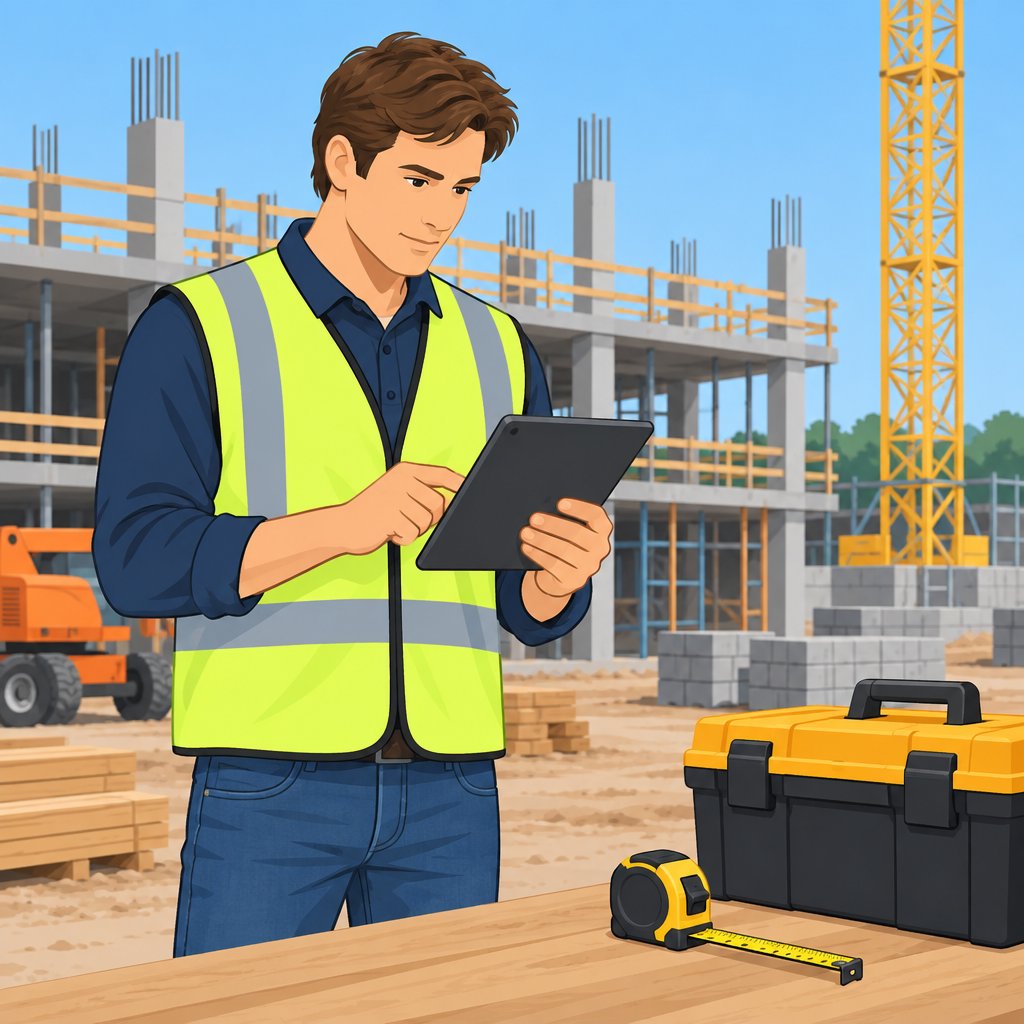
Project management software helps managers plan activities and track progress efficiently.
A laser level supports precise measurements during construction work.
Safety gear helps managers protect team members while they work on site.
A reliable tool belt keeps necessary tools accessible during site activities.
A digital camera documents progress, issues, and completed solutions.
Additionally, a versatile multitool supports cutting, sanding, and screwing in tight spaces.
A sturdy work light improves visibility in dimly lit or confined areas.
A dependable tape measure helps managers check dimensions and fit.
Finally, a toolbox or tool chest keeps equipment organized and transportable.
Coordinating Tools Across Construction Projects
Managers can combine these tools to support planning, site work, and project documentation.
Furthermore, organized equipment helps managers access resources when different job sites require them.
Selecting suitable tools strengthens daily performance and supports successful project completion.
Additional Resources
Google search results for Top Tools Every Construction Manager Needs Construction and Manual Labor
Bing search results for Top Tools Every Construction Manager Needs Construction and Manual Labor


