




Multimedia Arts in Game Development
The video game industry has changed significantly in recent years.
As technology advances, multimedia artists play increasingly vital roles.
They help create immersive gaming experiences through visuals and soundscapes.
Their contributions include striking graphics and captivating audio.
Visuals and audio enhance gameplay in important ways.
High-quality graphics draw players into game worlds and increase engagement.
Likewise, sound effects and music amplify a game’s emotional impact.
Together, these elements create a more complete gaming experience.
This section explores multimedia artists’ roles in game development.
It examines their responsibilities and the skills they bring.
Moreover, it considers how they collaborate with other team members.
Finally, it highlights future trends shaping multimedia arts in gaming.
Multimedia Artists in Video Game Development
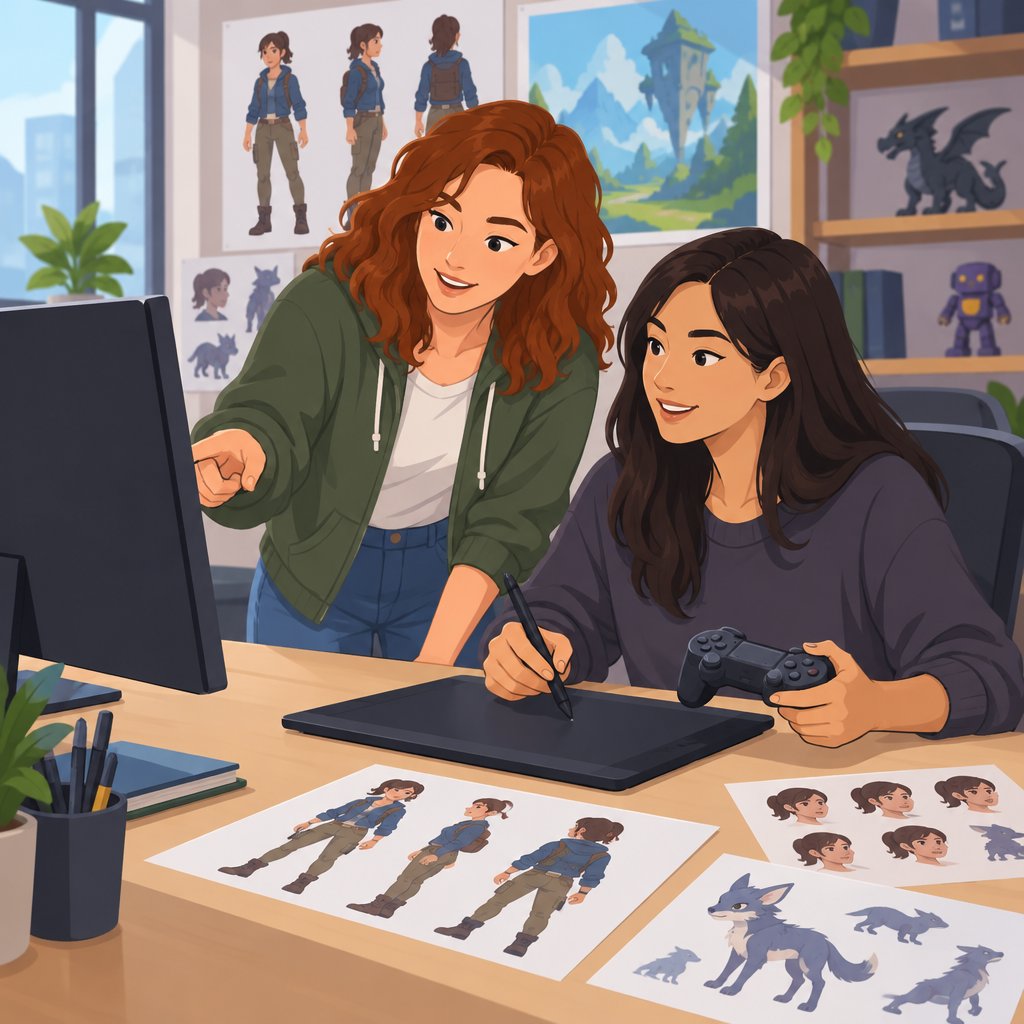
Multimedia artists combine different media forms to create engaging video game experiences.
Their work integrates two-dimensional art, three-dimensional models, animation, audio, and visual effects.
This integration strengthens gameplay and increases narrative immersion.
Moreover, multimedia artists align visual and auditory elements with the project’s creative direction.
Unlike programmers, they focus primarily on the player’s visual experience.
They also bridge artistic goals and technical requirements throughout development.
- Two-Dimensional Art: Artists create character designs, backgrounds, and interface elements.
- Three-Dimensional Models: Artists build models, environments, and props for game worlds.
- Animation: Artists animate characters and objects to create convincing movement.
- Sound Design: Artists collaborate with sound designers to support immersive auditory experiences.
- Visual Effects: Artists add dynamic effects that strengthen visual storytelling.
The Creative Process of Multimedia Artists
The creative process begins with concept development.
Artists collaborate with game designers and concept artists during this early stage.
They brainstorm ideas and produce sketches that establish the game’s visual direction.
Next, artists refine designs through detailed mock-ups and style guides.
These guides maintain visual consistency across characters, environments, and other assets.
Artists may use Adobe Photoshop and Illustrator for two-dimensional elements.
For three-dimensional models, they may use Autodesk Maya or Blender.
Animation adds fluidity and strengthens player engagement during gameplay.
Artists carefully manage movement, timing, and character expressions.
Well-animated characters can encourage emotional responses from players.
Rigging techniques help artists create realistic and manageable movements.
Collaboration Across Game Development Departments
Multimedia artists rarely work alone because collaboration supports consistent production.
They communicate with programmers, designers, and sound designers throughout development.
This communication keeps artistic decisions aligned with technical and gameplay objectives.
When artists work with programmers, they learn about technical limitations.
They also consider optimization so artwork performs effectively inside the game.
For example, programmers may provide guidance about polygon counts for three-dimensional models.
Such guidance helps prevent graphics from slowing performance or increasing loading times.
Meanwhile, sound designers help artists synchronize visual and auditory elements.
A character’s action becomes more impactful when appropriate sound effects accompany it.
As a result, coordinated media can deepen the emotional quality of gameplay.
Feedback and Iterative Artistic Development
Feedback and iteration guide multimedia artists toward stronger results.
Transform Your Career Today
Unlock a personalized career strategy that drives real results. Get tailored advice and a roadmap designed just for you.
Start NowArtists present their work to team members during playtesting sessions.
These sessions reveal how effectively visuals support player engagement.
Team feedback helps artists identify weaknesses and improve visual decisions.
Artists frequently revisit designs several times before completing them.
This process keeps aesthetics aligned with gameplay mechanics and narrative flow.
Furthermore, collaboration encourages creative problem-solving across the development team.
New Directions in Multimedia Art
Technological advances continue to change the responsibilities of multimedia artists.
New tools and techniques regularly influence game production.
For instance, virtual reality and augmented reality create new artistic demands.
Artists must adapt their skills to produce immersive experiences in these formats.
Additionally, independent games create opportunities for artists to support distinctive projects.
These projects can encourage experimentation beyond conventional development practices.
Independent artists often explore new creative approaches within smaller teams.
Industry standards also change as technologies and artistic expectations develop.
Therefore, artists must monitor trends and update their skills regularly.
Workshops and online courses can support their continuing professional growth.
Skills and Qualifications for Multimedia Artists
Multimedia artists need artistic ability and technical knowledge to succeed.
They also need communication skills for effective teamwork.
Strong attention to detail helps artists produce polished and consistent work.
Animation knowledge further improves the quality of movement and interaction.
- Artistic Talent: A strong foundation in art principles supports creative work.
- Technical Proficiency: Familiarity with industry-standard software remains essential.
- Animation Skills: Knowledge of animation tools improves visual experiences.
- Attention to Detail: Careful observation supports high-quality artwork.
- Collaboration: Clear communication helps artists contribute effectively within teams.
A formal degree in fine arts or graphic design can provide useful preparation.
However, many artists demonstrate their abilities through portfolios.
In many cases, industry experience proves more valuable than formal education.
Artists can strengthen their professional reputation by completing varied projects.
Multimedia Art’s Influence on Player Experience
Multimedia artists combine creativity, technical skill, and collaboration in every project.
Their visual and auditory contributions shape how players experience games.
They help connect gameplay systems with visual storytelling and emotional expression.
As development practices evolve, their opportunities and responsibilities will continue changing.
Their work remains central to engaging games and richer interactive narratives.
The Importance of Visual Design in Video Games
Visual design shapes a player’s first impression and establishes a game’s overall tone.
Moreover, aesthetics influence how players understand and experience gameplay.
A game’s appearance can strongly affect its reception in the market.
Therefore, developers must treat visual design as a central part of game development.
How Aesthetics Attract Players
High-quality visuals create environments that encourage players to explore further.
Additionally, distinctive aesthetics help games stand out among numerous available options.
Visual appeal can influence whether players invest their time and money.
- First Impressions: Striking graphics can capture attention immediately.
- Unique Art Styles: Distinctive approaches can make games memorable.
- Immersion: Attractive visuals can draw players into fictional worlds.
- Brand Identity: Recognizable aesthetics can become closely associated with franchises.
When players compare game options, visual appeal can encourage them to investigate a title.
Furthermore, an effective cover can persuade players to choose one game over another.
Distinctive Art Styles in Successful Games
Several games demonstrate how artistic direction can strengthen a title’s identity.
Each example uses a different visual approach to support its atmosphere and presentation.
Transform Your Career Today
Unlock a personalized career strategy that drives real results. Get tailored advice and a roadmap designed just for you.
Start NowConsequently, these games show how style can distinguish a title from its competitors.
- Journey: Its minimalist art style supports emotional storytelling.
- Celeste: Its pixel art complements platforming mechanics and nostalgic appeal.
- Borderlands: Its cel-shaded graphics create a distinctive comic book appearance.
- Gris: Its watercolor palette supports a visually poetic adventure.
- Hollow Knight: Its hand-drawn art creates a haunting, atmospheric world.
Players can form emotional connections with visual styles that communicate a clear identity.
As a result, strong artistic direction can improve both recognition and player engagement.
These examples also show that visual originality can support a game’s marketability.
Visual Storytelling and Player Engagement
Visual storytelling lets developers communicate meaning through artistic choices and environmental details.
It can guide player interpretation without depending entirely on dialogue.
In addition, visual cues can deepen emotional responses during gameplay.
- Environmental Design: Settings can communicate narrative and emotional undertones.
- Character Design: Visual traits can suggest personalities and backgrounds.
- Cinematics: Cutscenes can combine visuals and music to evoke emotion.
- Color Schemes: Warm or cool tones can influence emotional reactions.
- Symbolism: Visual symbols can represent deeper narrative themes.
Inside demonstrates how atmosphere can communicate isolation and fear.
The game encourages players to rely on visual cues instead of extensive dialogue.
Moreover, memorable visual moments can deepen investment in the characters’ experiences.
Visual Design’s Lasting Influence on Gaming
Visual design remains a fundamental component of video game development.
Unique art styles can strengthen identity and create lasting impressions.
As the industry evolves, developers will continue refining their artistic approaches.
Ultimately, captivating visuals will remain essential for creating memorable gaming experiences.
Delve into the Subject: The Importance of Post-Processing in Photography
Creating Character Models and Animation
Character models support modern video games.
Multimedia artists transform concepts into compelling digital characters.
They begin by sketching traits, costumes, and personalities.
These sketches help artists develop a cohesive narrative for every character.
Designing Characters from Concepts to 3D Models
Character creation follows several connected stages.
Artists refine ideas before building, detailing, and animating digital models.
Throughout the process, collaboration helps preserve each character’s intended role.
- Concept Art: Artists first create concept art showing characters in multiple poses and expressions.
- 3D Modeling: After approving designs, artists build mesh structures using Maya or Blender.
- Texturing: Artists apply surface details for skin, clothing, and other characteristics with tools such as Substance Painter.
- Rigging: Artists add skeletal structures that let characters move and interact with environments.
- Animation: Artists create movement cycles and expressions that bring characters to life.
Each stage demands careful attention to detail.
Moreover, a successful character must support the game’s narrative purpose.
Artists collaborate with designers and writers to maintain accurate character representation.
Animation’s Role in Character Personality and Style
Animation reveals personality through movement.
For example, a character’s walk can communicate confidence or awkwardness.
Consequently, movement choices strengthen emotional storytelling throughout the game.
- Body Language: Subtle movements can reveal characters’ thoughts and feelings.
- Facial Expressions: Carefully animated faces can evoke laughter, tears, or tension.
- Movement Style: Each character can use a distinct movement style that reflects personality.
- Interaction: Believable movements should reflect the surrounding environment.
Animation challenges multimedia artists to extend their creative boundaries.
They must develop technical abilities alongside artistic judgment.
As artists refine their methods, they can improve the gaming experience.
Iconic Characters and Their Design Evolution
Iconic characters demonstrate how game design and technology develop over time.
Their models, textures, animations, and personalities can change across successive games.
These changes show how artists preserve recognizable traits while expanding character expression.
Mario
Mario first appeared in 1981 as a 2D pixel character.
Later, artists developed him into a 3D model with improved textures and animations.
His expressive jumps and runs reinforce his upbeat nature.
Lara Croft
Lara Croft began with a blocky and simplistic model.
Later designs introduced greater detail, realistic movements, and expressive features.
Her expanding personality and backstory also shaped her character development.
Transform Your Career Today
Unlock a personalized career strategy that drives real results. Get tailored advice and a roadmap designed just for you.
Start NowSonic the Hedgehog
Sonic’s design emphasizes speed and attitude.
His early animations focused on communicating velocity.
Although later models pursued realism, Sonic retained his energetic demeanor.
Creative Impact and Future Potential
Multimedia artists shape characters that remain recognizable across generations.
They transform concepts into digital personas that tell stories and evoke emotions.
As technology evolves, their creativity and innovation will continue influencing game development.
Players connect with characters through narratives woven into their gaming experiences.
Therefore, artists’ contributions will remain increasingly important to interactive storytelling.
You Might Also Like: How to Manage Stress as an Event Planner
Environments and World-Building
Multimedia artists help design immersive game environments.
They combine creativity and technical skills to strengthen player engagement.
Additionally, every detail contributes to a game’s authenticity and appeal.
Multimedia Artists and Immersive Game Environments
Multimedia artists create vast and intricate game worlds.
They translate concepts into visuals that resonate with players.
Their responsibilities include several specialized tasks.
- Concept Art: Artists develop illustrations that reflect the game’s themes and guide its visual style.
- 3D Modeling: Artists convert 2D sketches into three-dimensional models that fit the environment.
- Texture Creation: Artists define surfaces with detailed textures for buildings, landscapes, and characters.
- Lighting Design: Artists plan lighting to establish moods and influence gameplay.
- Environment Animation: Artists animate wind, water, and other elements to add realism.
This diverse skill set shapes many aspects of game environments.
Moreover, artists collaborate with level designers and writers to support narratives through visual storytelling.
Techniques for Building Detailed Game Worlds
Creating immersive worlds requires several advanced techniques.
Artists combine these methods to improve realism, atmosphere, and performance.
As a result, players can feel transported into the game world.
- Texture Mapping: Artists apply two-dimensional textures to three-dimensional models and align them with geometry.
- Normal Mapping: Artists simulate surface depth without adding complex geometry.
- Lighting Techniques: Ambient, directional, and point lights create depth and atmosphere.
- Environmental Effects: Fog, rain, and snow change visibility and ambiance.
- Level of Detail Management: Artists create model versions that preserve performance and visual quality.
- Terrain Sculpting: Artists shape hills, valleys, and other geographical features with sculpting tools.
These techniques strengthen the immersive gaming experience.
Furthermore, carefully crafted environments can evoke emotions and encourage engagement.
Game Worlds That Encourage Exploration
Several games demonstrate the value of detailed environment design.
These worlds combine striking visuals with rich narratives.
Their designs encourage players to explore unfamiliar spaces.
- The Legend of Zelda: Breath of the Wild: Distinct biomes and detailed landscapes invite exploration.
- Horizon Zero Dawn: Nature and technology create a vibrant post-apocalyptic environment.
- The Witcher 3: Wild Hunt: Cities, forests, and villages display historical and cultural depth.
- Red Dead Redemption 2: Mountains, rivers, valleys, and ecosystems create expansive landscapes.
- Dark Souls series: Atmospheric designs create distinctive and interconnected worlds.
These examples reveal the creativity required for memorable game environments.
Consequently, artists can create experiences that remain meaningful after gameplay ends.
How Immersive Environments Shape Player Engagement
Immersive environments strengthen players’ connections with game worlds.
When players feel present, their emotional investment often deepens.
Artists support this immersion through careful attention to detail.
- Storytelling through Space: Visual cues can communicate stories without dialogue.
- Player Agency: Interactive environments let players explore, discover, and influence their surroundings.
- Emotional Resonance: Design choices can evoke feelings ranging from serenity to fear.
- Exploration and Discovery: Compelling spaces encourage players to investigate every area.
These qualities sustain engagement throughout the player’s journey.
Ultimately, a well-crafted world can create lasting memories and brand loyalty.
The Lasting Value of Crafted Game Worlds
Multimedia artists significantly shape video game environments.
Their dedication enriches gameplay through immersive world-building.
Texture mapping, lighting, and other techniques add depth and realism.
Ultimately, these efforts transform games into memorable experiences.
Explore Further: Role of Media Research Analysts in Crisis Communication
User Interface (UI) and User Experience (UX) Design
Multimedia artists play a crucial role in video game UI and UX design.
Their artistic skills shape the visual elements that players regularly interact with.
Consequently, intuitive UI and UX design can strongly influence a game’s success.
Transform Your Career Today
Unlock a personalized career strategy that drives real results. Get tailored advice and a roadmap designed just for you.
Start NowMultimedia Artists and Intuitive UI and UX Design
Multimedia artists combine creativity and technical skills when developing UI and UX designs.
They create graphic elements that guide players through the game world.
These choices help artists strengthen the player’s experience during gameplay.
- Visual Consistency: Artists establish a consistent visual style through coordinated colors, icons, and typography.
- Interactive Elements: They create functional buttons, sliders, and menus that also appear visually appealing.
- Animation and Feedback: Artists add animations to button presses and transitions, giving players clear feedback.
- User-Centric Design: Artists study player interactions to create interfaces that feel intuitive and easy to navigate.
- Accessibility Features: They include screen readers and high-contrast modes to support players with different abilities.
Seamless Navigational Elements in Games
Seamless navigation transforms the player’s experience.
Players move more easily between game elements when interfaces remain clear and responsive.
Therefore, thoughtful navigation supports engagement, immersion, storytelling, and continued exploration.
- Enhanced Engagement: Seamless navigation keeps players engaged by simplifying controls and actions.
- Immersive Experience: Effective navigation helps players remain focused on the game world.
- Effective Storytelling: Intuitive navigation lets players focus on narrative development rather than mechanical frustrations.
- Pace and Continuity: Simple navigation supports fast-paced action without unnecessary interruptions.
- Retention Rates: Intuitive interfaces encourage players to return and continue exploring the game.
Player Feedback and Iterative Design
Player feedback provides an important foundation for improving game interfaces.
Multimedia artists use player input to refine UI and UX design.
As a result, iterative development supports continuous improvements across the gaming experience.
- Testing Phases: Developers conduct playtests to identify navigation and accessibility issues early.
- Prototyping: Artists create prototypes and revise them according to player interactions.
- Preference Sampling: Artists present design options to discover which approaches resonate with players.
- Adjustments Based on Data: Developers analyze usage metrics to improve UI responsiveness.
- Community Involvement: Forums and social media groups allow players to share ongoing insights.
Multimedia artists remain essential to video game UI and UX design.
Their work creates engaging interfaces that improve player enjoyment.
Furthermore, player feedback encourages ongoing improvements across art, design, and gameplay.
Uncover the Details: How to Develop a Social Media Policy for Businesses
Integration of Sound and Music
Multimedia artists help shape the auditory experiences within video games.
They contribute to sound design, music integration, and gameplay immersion.
Their work connects audio with the game’s world, actions, and story.
The Role of Multimedia Artists in Sound Design
Multimedia artists collaborate with designers, composers, and sound engineers.
They create, implement, and balance audio elements throughout the game.
This teamwork produces a cohesive auditory experience for players.
- Creating Sound Effects: Artists record, script, and manipulate sounds for a unique audio palette.
- Implementing Audio: Artists connect sounds to gameplay events and player actions.
- Balancing Audio Levels: Artists maintain consistent volume levels throughout the game.
- Collaborating with Composers: Artists coordinate music with sound effects and gameplay.
Sound Effects, Music, and Gameplay Immersion
Sound effects and music strongly influence how players experience a game.
Music can intensify excitement, fear, joy, and other emotional responses.
Sound cues can also guide attention and communicate important gameplay events.
- Enhancing Emotional Impact: Music amplifies the emotions created by gameplay situations.
- Signaling Events: Creaking doors can build suspense, while victory sounds reward success.
- Creating Atmosphere: Background music establishes tension, nostalgia, or other moods.
- Building Character and World: Distinctive soundscapes give characters and settings greater identity.
Games With Exceptional Audio Design
Several games demonstrate how sound design and music can strengthen player engagement.
Each example uses audio to support exploration, action, emotion, or progression.
Together, these games illustrate the creative value of carefully integrated audio.
- The Legend of Zelda: Breath of the Wild: Serene themes complement exploration, while dynamic effects support combat.
- Celeste: Its emotional soundtrack enhances gameplay and adapts to player actions.
- DOOM (2016): Heavy metal music energizes battles, while effects intensify fast-paced action.
- Journey: Its haunting score evolves during progression and strengthens emotional impact.
Audio Design and Player Engagement
Effective audio integration makes game worlds more engaging and emotionally resonant.
Multimedia artists shape soundscapes that connect players with characters, settings, and stories.
Through collaboration, artists, composers, and engineers create seamless auditory experiences.
Multimedia artists help shape a game’s visual appeal and atmosphere.
Their graphics and animations enhance the player’s experience.
However, successful video games require cooperation among many professional roles.
Understanding these interactions supports a productive development workflow.
Collaboration Between Multimedia Artists and Programmers
Multimedia artists regularly collaborate with programmers throughout game development.
This cooperation helps artistic assets integrate smoothly with game mechanics.
Artists and programmers coordinate several technical and creative responsibilities.
- Asset Creation: Artists design characters, environments, and user interface elements for programmers to deploy.
- Technical Constraints: Artists follow engine limitations involving file sizes, polygon counts, and texture resolutions.
- Animation Integration: Artists create animations, while programmers ensure they function correctly inside the game.
- Performance Optimization: Both roles balance visual quality with reliable game performance.
This synergy improves visual authenticity and strengthens the player’s experience.
Artists express creativity while respecting technological limitations.
Clear communication keeps this partnership productive throughout development.
Collaboration Between Multimedia Artists and Writers
Writers establish the narrative framework for video games.
Multimedia artists bring those stories to life through visual work.
Transform Your Career Today
Unlock a personalized career strategy that drives real results. Get tailored advice and a roadmap designed just for you.
Start NowTogether, they connect narrative ideas with engaging visual experiences.
- Storyboarding: Artists visualize narrative structures through storyboards and conceptual artwork.
- Character Development: Artists design characters from writers’ descriptions, including personalities and visual styles.
- Dialogue Presentation: Artists create interface elements that present dialogue clearly and consistently.
- World-Building: Writers and artists create environments that reflect narrative tones and themes.
This partnership adds depth to the story and strengthens visual engagement.
Close coordination helps narrative and visual elements work harmoniously.
Consequently, players receive a more cohesive game experience.
Collaboration Between Multimedia Artists and Game Designers
Game designers shape mechanics and gameplay elements.
Multimedia artists support those systems with clear and engaging visual assets.
Their partnership connects functional design with immersive presentation.
- Gameplay Mechanics: Designers explain required visual representations, while artists create supportive assets.
- Level Design: Designers outline layouts, and artists add immersive visual elements.
- Visual Feedback: Artists create animations and effects that respond to player actions.
- Art Style Consistency: Both roles maintain an art style that supports the game’s vision.
This collaboration keeps gameplay engaging and visually appealing.
It also helps players understand actions, mechanics, and interactive elements.
As a result, coordinated design improves the overall player experience.
Teamwork Across the Development Pipeline
Teamwork supports successful video game development.
Every role contributes toward a shared project goal.
Effective cooperation allows different perspectives to strengthen the final game.
- Unified Vision: Collaboration helps every role support a consistent creative direction.
- Problem-Solving: Group discussions encourage solutions that individuals might overlook.
- Resource Sharing: Team members exchange resources, ideas, and constructive feedback.
- Time Efficiency: Defined responsibilities reduce duplicated work and unnecessary revisions.
Effective teamwork improves creativity and productivity throughout development.
Furthermore, each member’s contribution remains valuable to the project’s success.
Shared responsibility helps the team address creative and technical challenges.
Best Practices for Effective Collaboration
Teams can improve their workflow by adopting clear collaboration practices.
These practices keep members aligned, informed, and focused.
They also encourage consistent progress across the development process.
- Regular Meetings: Teams schedule meetings to discuss progress and share updates.
- Clear Communication: Open communication reduces misunderstandings and confusion.
- Defined Roles: Clear responsibilities help members focus their efforts effectively.
- Feedback Systems: Constructive feedback helps teams refine ideas and improve quality.
- Collaborative Tools: Project management tools streamline workflows and improve coordination.
By using these practices, multicultural teams can develop strong working relationships.
That synergy supports engaging and visually compelling video games.
Through collaboration, multimedia artists and other professionals can reach their full potential.
Technology continues to expand opportunities for multimedia artists in video game development.
Emerging tools will reshape interactive experiences across multiple gaming platforms.
Artists must adapt their creative methods to remain relevant in this changing field.
These developments will influence how creators design visuals, characters, environments, and interactive experiences.
Emerging Technologies in Gaming
Virtual reality and augmented reality are changing how players interact with digital worlds.
These technologies increasingly connect realistic surroundings with imaginative game experiences.
Consequently, multimedia artists must understand new technical requirements and creative possibilities.
- Virtual Reality (VR): VR systems transport players into immersive environments that require convincing spaces and characters.
- Augmented Reality (AR): AR places digital content within physical surroundings, requiring seamless visual integration.
- Artificial Intelligence (AI): AI can make non-playable character interactions more dynamic and responsive.
- Cloud Gaming: Cloud gaming streams high-quality experiences, so artists must optimize assets for different internet speeds.
Therefore, artists will develop content for increasingly diverse devices and platforms.
They will also balance artistic ambition with performance requirements and technical limitations.
Game developers should encourage experimentation with these evolving technologies.
Evolution of Art Styles
Video game art has moved from simple pixel designs toward increasingly detailed graphics.
However, future creators will continue combining established techniques with original visual approaches.
Distinctive styles can help games communicate their identities and connect with audiences.
- Stylized Graphics: Vibrant colors and whimsical designs can help games stand apart from competitors.
- Realism and Expressionism: Artists will balance realistic details with expressive techniques that support deeper storytelling.
- Minimalism: Minimalist designs will emphasize essential elements while supporting gameplay and visual clarity.
- Retro Aesthetics: Modern tools will help artists recreate classic gaming visuals for nostalgic experiences.
Meanwhile, artists must respond to changing player preferences without sacrificing originality.
This balance can encourage fresh experiences that remain visually memorable.
As a result, multimedia artists will continue testing different methods of visual expression.
New Roles and Skills for Multimedia Artists
The gaming industry will create new opportunities for artists with flexible and varied abilities.
Technical knowledge will increasingly complement traditional artistic training.
Transform Your Career Today
Unlock a personalized career strategy that drives real results. Get tailored advice and a roadmap designed just for you.
Start NowContinuous learning will help artists respond effectively to changing production needs.
- VR and AR Environment Designers: These artists will create immersive worlds using advanced three-dimensional design tools.
- Character Animation Specialists: These specialists will use expressive movement to strengthen player engagement.
- Game UI and UX Designers: These designers will create intuitive controls and visual guides for players.
- Cinematic Artists: These artists will produce cutscenes, trailers, and other narrative video elements.
- Technical Artists: These professionals will connect artistic production with programming and technical development.
Furthermore, artists can strengthen their expertise through workshops, online courses, and collaborative projects.
Cross-disciplinary experience will help them communicate with other development professionals.
These combined skills can support creative problem-solving throughout game production.
Preparing for the Future
Multimedia artists can prepare for future opportunities by remaining curious and adaptable.
They should combine regular learning with practical experimentation.
Active participation in professional communities can also expand their knowledge and connections.
- Stay Informed: Follow industry news, blogs, podcasts, and social media discussions.
- Network: Attend conferences, workshops, and meetups to exchange ideas with other professionals.
- Experiment: Explore VR, AR, and AI through practical projects and hands-on learning.
- Develop a Portfolio: Update portfolios regularly and present work across diverse styles and genres.
- Collaborate: Work with artists and developers to encourage new ideas and shared learning.
These actions can help artists build confidence while exploring unfamiliar tools and techniques.
Moreover, varied portfolios can demonstrate readiness for different genres and audiences.
Through adaptation and steady growth, multimedia artists can influence the next generation of video games.
Professional Adaptability in Game Development
Multimedia artists strengthen video game development through focused visual contributions.
They shape characters, environments, and animations that support cohesive player experiences.
Consequently, their visual decisions help games feel more engaging and immersive.
Moreover, artists combine creative judgment with technical software skills.
They use specialized tools to build three dimensional models and realistic textures.
Therefore, technical fluency helps them bring interactive game worlds to life.
Emerging Creative Opportunities
Meanwhile, the gaming landscape continues to evolve across platforms and technologies.
Virtual reality and augmented reality provide artists with new creative spaces.
These mediums require fresh approaches that challenge familiar design methods.
As a result, adaptable artists can help advance interactive entertainment.
Building a Career in Interactive Art
Aspiring multimedia artists can develop their abilities by experimenting with varied styles and techniques.
Additionally, networking with other creators can support future collaboration opportunities.
Game jams offer practical settings where artists can present their talents.
Sharing completed work online may help artists reach employers and interested audiences.
With passion and dedication, they can pursue distinctive roles within gaming.
Additional Resources
Bing search results for Role of Multimedia Artists in Video Game Development Media and Communication


