




Airport Security Through TSA Screening
TSA officers play a crucial role in national security by ensuring airport safety.
They screen passengers and luggage to help prevent potential threats.
Additionally, training helps officers detect suspicious items and behaviors that could risk air travel.
Without these officers, airports would face greater vulnerability to security breaches and potential terrorist attacks.
Therefore, TSA officers help maintain safety and security for all passengers.
TSA Officer Roles and Qualifications
TSA officers support airport security and assist travelers during screening.
Their work combines passenger screening, equipment operation, incident response, and coordination.
They also need specific qualifications, training, certification, and continuing professional development.
Responsibilities and Duties of TSA Officers at Airports
TSA officers screen passengers and luggage for prohibited items.
They operate x-ray machines and metal detectors during airport screening.
Additionally, officers respond to security incidents and work with other law enforcement agencies.
- Screen passengers and luggage for prohibited items
- Operate x-ray machines and metal detectors
- Conduct pat-down searches when necessary
- Respond to security incidents and threats
- Assist travelers with special needs
- Work collaboratively with other law enforcement agencies
Training and Qualifications for TSA Officers
Applicants need a high school diploma or GED to become TSA officers.
They must pass a background check and drug screening before appointment.
Furthermore, officers complete training, earn certification, and continue professional development.
- Hold a high school diploma or GED
- Pass a background check and drug screening
- Complete a three-week training program at the Federal Law Enforcement Training Center
- Obtain certification in security screening procedures
- Participate in ongoing training and professional development programs
Screening Processes at Security Checkpoints
TSA officers screen passengers and luggage before passengers board flights.
They use advanced imaging technology, metal detectors, and X-ray machines during screening.
These procedures help officers identify prohibited items and potential security threats.
Passenger and Baggage Screening Procedures
Passengers remove shoes, jackets, and belts before placing electronic devices in screening bins.
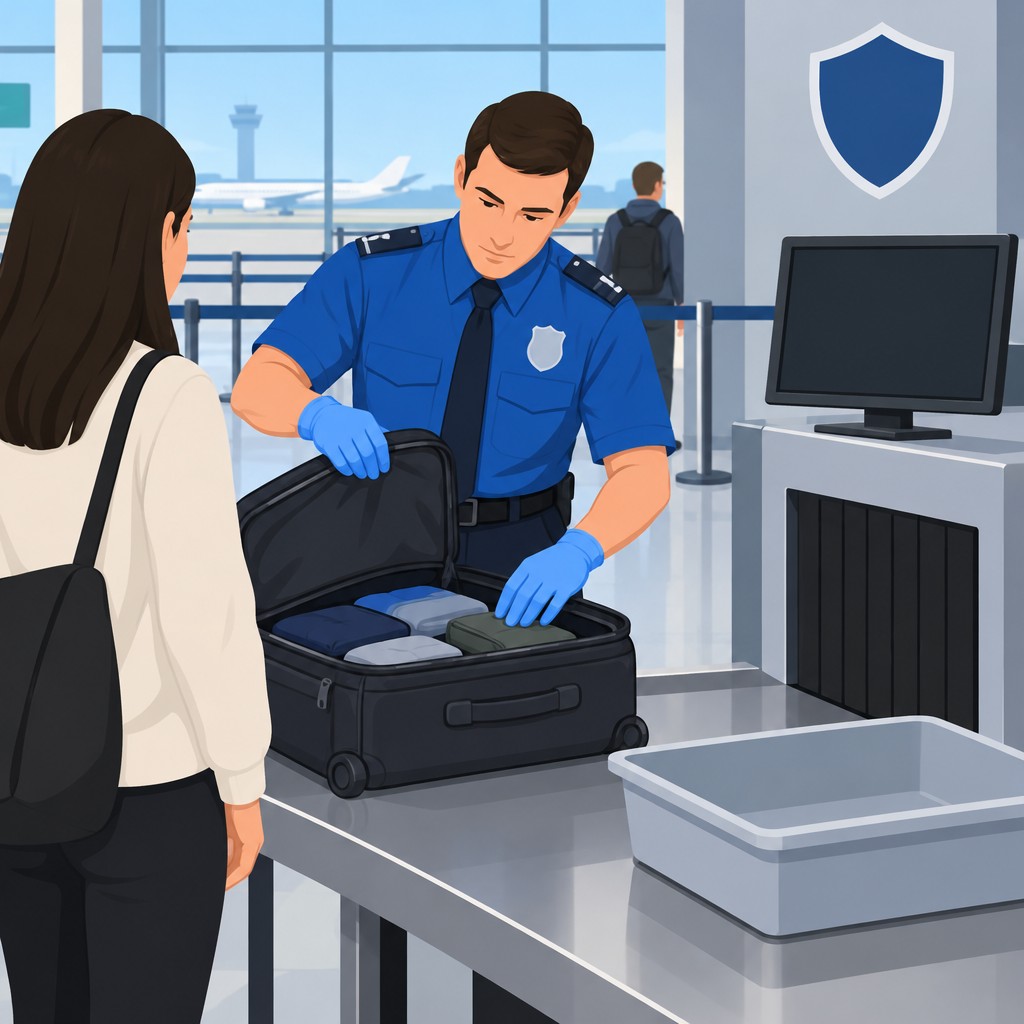
Officers examine hand luggage to detect prohibited items and other potential threats.
When screening triggers an alarm, officers may conduct an additional pat-down search.
- Officers may take flagged passengers aside for further investigation.
- Baggage screening equipment detects traces of explosives and other dangerous materials.
- Canine teams assist airport personnel by screening for explosives and other security threats.
Additional screening allows officers to investigate alarms and flagged passengers more closely.
Explosive trace detection equipment supports baggage inspections during the security process.
Canine teams provide another screening resource for identifying explosives and other threats.
Importance of Thorough Airport Screening
Thorough screening helps prevent dangerous weapons and explosives from reaching aircraft.
It also helps deter and detect potential terrorist attacks or acts of sabotage.
Effective procedures strengthen security throughout airports and the aviation industry.
- Officers help protect passengers and airline crew members from security threats.
- Screening supports national security by detecting and intercepting dangerous materials.
- Regular procedures help identify evolving threats and improve airport security measures.
- Training and technology advancements help officers adapt to changing security threats.
Uncover the Details: Skills Needed to Succeed as a Forensic Scientist
Detection of Prohibited Items
TSA officers detect prohibited items during airport screening.
They receive extensive training to identify and confiscate items that could threaten national security.
Their work helps prevent prohibited items from entering aircraft.
How Officers Identify and Confiscate Prohibited Items
Officers use X-ray machines, metal detectors, and pat-down searches to identify prohibited items.
They also recognize suspicious behavior and conduct thorough bag checks.
Additionally, officers follow regularly updated guidelines that define prohibited items and reflect current security threats.
When officers identify a prohibited item, they follow a specific confiscation protocol.
They take the item from the passenger and dispose of it properly.
This process helps prevent the item from causing harm.
Common Prohibited Items Found During Screenings
Screenings commonly uncover weapons, explosives, oversized liquids, sharp objects, and sporting goods.
These categories include items that may threaten passenger safety or violate carry-on rules.
The following examples summarize common prohibited items.
- Firearms, knives, and martial arts weapons remain prohibited in carry-on luggage.
- Fireworks, flares, and gunpowder cannot travel on flights because they could cause harm.
- TSA regulations restrict liquids exceeding 3.4 ounces in carry-on luggage.
- Scissors, box cutters, and razors qualify as dangerous sharp objects and may be confiscated.
- Baseball bats, golf clubs, and hockey sticks cannot travel in carry-on luggage.
Find Out More: U.S. Marshal Equipment and Gear Overview
Transform Your Career Today
Unlock a personalized career strategy that drives real results. Get tailored advice and a roadmap designed just for you.
Start NowSecurity Incident Response Procedures
When security threats or breaches arise, TSA officers follow specific steps to protect passengers and airport personnel.
- TSA officers immediately assess the situation and determine the security incident’s nature and severity.
- They quickly contain the threat and prevent the situation from escalating further.
- Meanwhile, officers relay vital information to other agencies and airport staff.
- This communication helps coordinate an effective response.
- Officers also collaborate with law enforcement agencies during security incidents.
- They provide support and assistance as law enforcement carries out its duties.
Together, TSA officers and law enforcement agencies present a united response to security threats and breaches.
Consequently, they can neutralize threats and minimize effects on airport operations and traveler safety.
You Might Also Like: Top Challenges Facing Cybersecurity Specialists Today
Passenger Interactions
- Positive communication helps TSA officers ensure a smooth screening process.
- Customer service skills help create a positive experience for passengers.
- TSA officers should remain courteous, respectful, and approachable when interacting with travelers.
- Officers assist passengers with directions, answer questions, and provide guidance during daily operations.
- Promptly addressing concerns and resolving issues supports a safe, efficient screening environment.
- TSA officers prioritize passenger comfort and understanding throughout the screening process.
- Clear communication reduces passenger anxiety and confusion at security checkpoints.
- Proactive attention to passenger needs supports a positive travel experience.
- TSA officers represent national security while providing customer service to travelers.
- Building trust and rapport encourages cooperation and compliance with security protocols.
Learn More: ICE Agent Training: What to Expect and Requirements
Technology supports TSA officers’ security work.
Officers use specialized tools to examine travelers and luggage.
These systems help strengthen security measures at airports.
Advanced Screening Technologies and Equipment
TSA officers use several technologies to detect hidden objects and potential threats.
Each tool supports the screening process in a different way.
Together, these technologies help officers examine passengers and carry-on luggage.
- Body scanners use advanced imaging technology to detect hidden objects on a passenger’s body.
- Explosive trace detection machines test luggage and passengers for trace amounts of explosives.
- X-ray machines scan carry-on luggage for prohibited items.
- Advanced imaging technology machines use millimeter waves to create detailed passenger images.
- Walk-through metal detectors identify metal objects as passengers enter screening areas.
Technology’s Role in Airport Security
Technology allows officers to screen passengers more quickly and accurately.
Furthermore, advanced tools can detect threats that traditional methods might miss.
These systems also help reduce human error during security procedures.
- Technology increases screening efficiency and can reduce traveler wait times.
- Advanced equipment improves detection capabilities during airport screening.
- Automated tools support greater accuracy during security procedures.
- Data analysis helps officers identify patterns and potential threats.
- Integrated systems help create a seamless airport screening process.
By using advanced technology, TSA officers strengthen airport security and help protect passengers and staff.
Training and Continuous Education
Ongoing training helps TSA officers stay current as security threats evolve.
Regular practice strengthens their ability to apply techniques and respond to security scenarios.
Professional development also helps officers adapt to changing protocols and technology.
- Importance of ongoing training and professional development for TSA officers
- Ways in which TSA officers stay updated on security protocols and procedures
Importance of Ongoing Training and Professional Development
Regular training sessions help officers learn new techniques and practice essential drills.
Furthermore, professional development equips TSA officers to handle different security scenarios effectively.
Ongoing education prepares officers to respond to security challenges encountered during their duties.
Continuous training helps officers adapt to changing security protocols and technology advancements.
Through continuous education, TSA officers can enhance their capabilities and better protect the traveling public.
Ways TSA Officers Stay Updated
TSA officers participate in regular training programs covering various security topics and scenarios.
These sessions combine hands-on exercises, classroom instruction, and simulated security threat scenarios.
Additionally, officers receive protocol updates through newsletters, memos, and official communications.
Specialized training may address explosives detection, passenger screening, and behavioral detection.
Online courses and webinars supplement in-person training and explain the latest security procedures.
By staying informed, TSA officers perform their duties with precision and efficiency.
Impact of TSA Officers on National Security
TSA officers help protect national security by securing travelers and transportation hubs.
They enforce security protocols that reduce opportunities for dangerous items to reach aircraft.
Through this work, officers support broader efforts to prevent attacks and protect passengers and crew members.
- TSA officers contribute to overall national security efforts.
- Successful security measures demonstrate how officers reduce security risks.
Successful Security Measures by TSA Officers
TSA officers have intercepted firearms, explosive devices, knives, and other dangerous items.
In 2019, TSA officers discovered over 4,000 firearms in carry-on bags.
Confiscating these weapons helped prevent their potential use during flights or criminal activities.
- Firearms represented one category of intercepted threats at security checkpoints.
- Explosive devices and knives also appeared among intercepted dangerous items.
- These interventions helped protect passengers and crew members from potential harm.
Behavioral Assessment and Threat Prevention
Officers also observe behavior when assessing possible risks.
They may consider body language, facial expressions, and other indicators.
This approach allows officers to take appropriate action before a potential threat escalates.
By combining observation with established security procedures, TSA officers strengthen national security efforts.
TSA Officers and National Security
TSA officers protect the nation’s transportation systems.
Transform Your Career Today
Unlock a personalized career strategy that drives real results. Get tailored advice and a roadmap designed just for you.
Start NowThey help keep passengers safe by examining luggage and individuals.
Their duties support efforts to prevent threats from entering airports and aircraft.
Training prepares officers to recognize suspicious behavior and objects.
They also enforce security protocols and procedures established by the TSA.
Why Their Work Matters
Global terrorism has increased the importance of TSA officers.
As a result, these officers serve as an important defense against threats to national security.
Their professional response to security concerns helps maintain a safe travel environment.
Additionally, their presence can discourage criminal activity during travel.
Recognizing the Value of TSA Service
Their dedication contributes to protecting passengers and transportation systems.
Through daily service, TSA officers help uphold established security measures.
Passengers and the public can acknowledge their efforts to support transportation security.
Additional Resources
Google search results for TSA Officer Role in National Security Explained Protective Services
Bing search results for TSA Officer Role in National Security Explained Protective Services


