




TSA Officers and Aviation Security
TSA officers play a crucial role in ensuring aviation security through airport screenings and inspections.
Their presence helps protect passengers and staff from potential security threats.
These officers receive training to detect and prevent potential threats.
Additionally, technological advancements provide sophisticated tools and resources that improve their detection capabilities.
History of TSA Officer Roles
- Evolution of TSA officer roles since the agency’s establishment
- Introduction of new security protocols and procedures
- Increased responsibilities and training requirements for TSA officers
Since its establishment, the TSA has adapted officer roles to address changing aviation security demands.
Initially, officers focused on screening passengers and luggage for prohibited items.
Over time, their work expanded alongside new procedures, technologies, and training expectations.
Evolution of TSA Officer Roles
Early assignments centered on checkpoint screening and baggage inspection.
Later, officers also supported checkpoint operations, behavioral observation, and security personnel training.
These expanded duties required officers to respond consistently as airport security practices changed.
Introduction of New Security Protocols
The TSA introduced Advanced Imaging Technology scanners to identify metallic and non-metallic threats.
Meanwhile, the PreCheck initiative created expedited screening for passengers who completed background checks.
These measures helped officers focus attention on passengers requiring closer assessment while supporting smoother checkpoints.
Expanded Responsibilities and Training Requirements
Today, officers identify suspicious behavior and potential threats during screening activities.
They also receive training for appropriate responses during emergency situations.
Additionally, ongoing education covers updated procedures, technologies, and security screening practices.
These requirements prepare officers to manage responsibilities beyond traditional screening.
As aviation threats evolve, TSA officer roles will continue adapting through updated procedures and technologies.
Current Responsibilities of TSA Officers
- Screening passengers and baggage for prohibited items.
- Conducting security checks at checkpoints.
- Responding to security threats and emergencies.
- Providing customer service to travelers.
As guardians of aviation security, TSA officers protect the traveling public from potential threats.
Their responsibilities are multifaceted and demanding.
These duties require vigilance, attention to detail, and professionalism.
Screening Passengers and Baggage
One primary duty involves screening passengers and their belongings for prohibited items.
Officers use X-ray machines and metal detectors to detect weapons, explosives, and other dangerous materials.
By blocking prohibited items from aircraft, they help prevent potential security incidents.
These screening efforts also help keep travelers safe.
Security Checks at Airport Checkpoints
TSA officers conduct thorough security checks at airport checkpoints.
They verify traveler identification and check boarding passes during the process.
Officers also screen individuals and carry-on luggage for prohibited items.
Meanwhile, their presence encourages passengers to follow security regulations.
Responses to Security Threats and Emergencies
TSA officers receive training to respond quickly during security threats and emergencies.
They implement emergency protocols to protect passengers and airport personnel.
They also coordinate with other security agencies when incidents occur.
Prepared responses help maintain security across aviation operations.
Customer Service for Travelers
Beyond security duties, TSA officers assist travelers at airport checkpoints.
They answer questions and provide guidance during the screening process.
Friendly, professional assistance helps streamline checkpoint procedures.
Consequently, customer service supports efficient airport security operations.
Uncover the Details: Cultural Awareness in Personal Protection
Technology advances continue to reshape aviation security.
Airports now use emerging tools to improve screening.
Transform Your Career Today
Unlock a personalized career strategy that drives real results. Get tailored advice and a roadmap designed just for you.
Start NowThese tools also support more efficient security operations.
Body Scanners and Advanced Imaging Technology
- Body scanners are becoming more common in airports worldwide.
- These scanners create detailed images that help officers detect hidden objects.
- Advanced imaging technology lets officers identify concealed items without violating passenger privacy.
- As a result, these technologies improve the detection of hidden weapons and explosives.
- They therefore strengthen airport security procedures.
Biometric Screening for Passengers
- Biometric screening uses unique biological traits to identify passengers.
- Passengers can verify their identities with fingerprints, facial recognition, or iris scans.
- This technology verifies passenger identities quickly and efficiently.
- Furthermore, biometric screening streamlines checkpoints and reduces passenger waiting times.
- Airports can strengthen their security measures by implementing biometric screening.
Automation of Airport Security Procedures
- Automation makes many security procedures more efficient.
- Automated systems can verify passports and screen baggage.
- By handling routine tasks, these systems let security officers focus on critical duties.
- Automation also reduces the likelihood of human error during screening.
- Consequently, streamlined procedures contribute to a safer airport environment.
Emerging technologies are transforming airport security practices.
They enhance security measures while improving the efficiency of screening operations.
Learn More: Correctional Officer Continuing Education
Impact of Automation on TSA Officer Roles
As technology advances, automation will significantly reshape TSA officer roles in aviation security.
These changes will affect officers’ responsibilities and daily duties.
Consequently, officers will need to adapt as security systems become more automated.
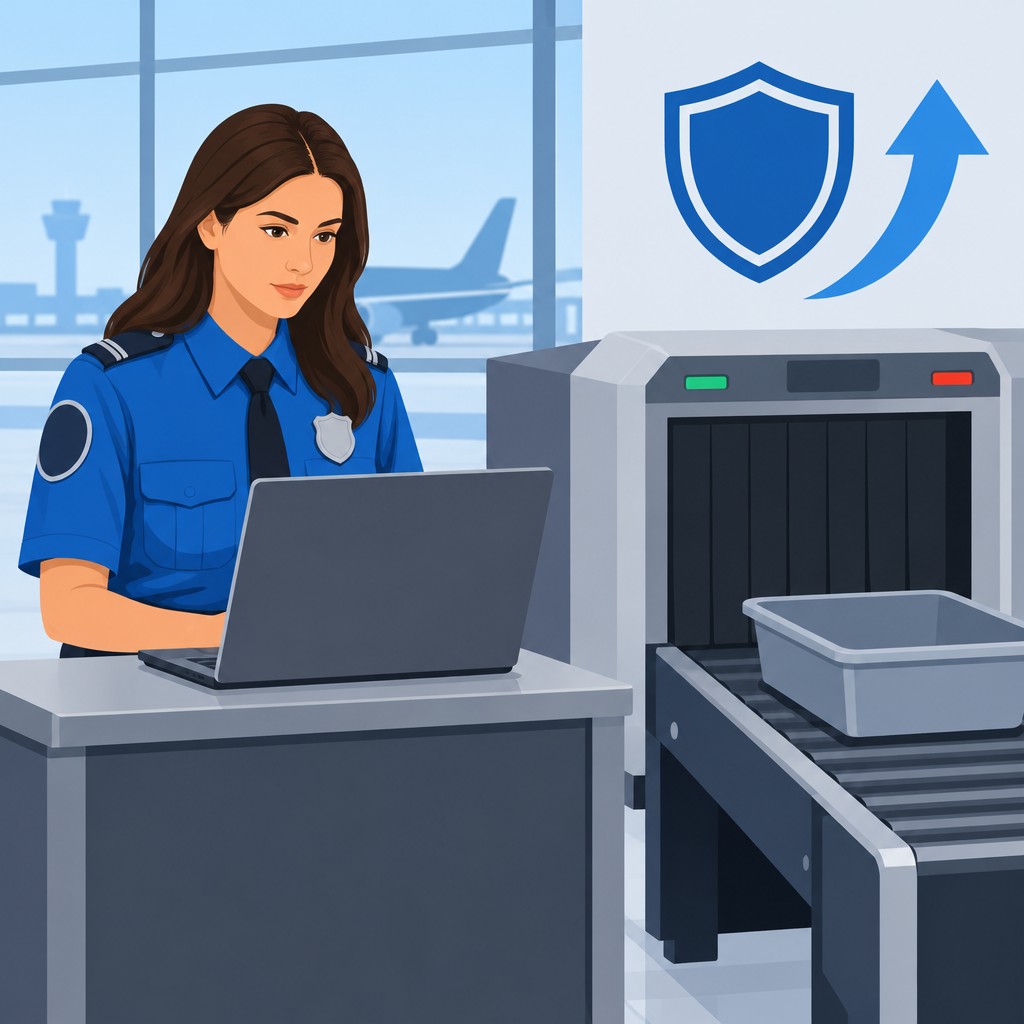
Automation and Screening Responsibilities
Advanced scanning technologies can streamline screening and reduce manual checks.
Automated systems may handle routine tasks during passenger screening.
As a result, TSA officers can focus more closely on high-risk individuals and situations.
Efficiency and Accuracy Improvements
Automation can improve screening efficiency by completing security checks quickly.
Machines can also perform tasks consistently, reducing some human errors.
Therefore, faster and more accurate screening may strengthen overall security outcomes.
Human Oversight in Security Decisions
However, automated systems still require human oversight during security operations.
TSA officers must assess threats and make decisions in complex or ambiguous situations.
Moreover, human intuition, empathy, and problem-solving skills remain valuable during evolving security challenges.
Officers can use these abilities while automated tools support the screening process.
See Related Content: Physical Fitness Tips for Wildland Firefighters
Training and Skill Development for TSA Officers
The future of TSA officer roles will depend heavily on training and skill development.
Continuous preparation helps officers address changing challenges in aviation security.
These efforts can strengthen officers’ ability to protect passengers and crew members.
Ongoing Training and Professional Development
Continuous training keeps TSA officers informed about emerging security threats and updated techniques.
Regular development prepares officers to handle potential security risks more effectively.
As threats evolve, ongoing instruction helps officers adapt to new aviation security challenges.
Critical Thinking and Decision-Making Skills
Modern threats require TSA officers to apply more than traditional security measures.
Critical thinking helps officers identify and respond to complex security issues.
Strong decision-making skills support quick, effective judgments during high-pressure situations.
Collaboration Across Aviation Security Agencies
Collaboration with other agencies and international partners can strengthen aviation security.
Shared expertise and resources help TSA officers address interconnected security challenges.
Partners can exchange best practices, emerging threat information, and effective security measures.
Preparing Officers for Future Security Challenges
Investment in training will help TSA officers prepare for evolving aviation security demands.
Emphasizing critical thinking can improve responses to unfamiliar or complex situations.
Meanwhile, collaboration can support stronger and more coordinated aviation security efforts.
Explore Further: Legal and Ethical Issues in Probation Officer Work
Future Challenges and Opportunities
TSA officers will face new challenges and opportunities as aviation security continues to change.
They must adapt their methods while supporting effective security operations.
These responsibilities will require flexibility, preparation, and coordination.
Adapting to Evolving Security Threats
Security threats will continue to evolve, requiring TSA officers to adjust their responses.
Officers must identify emerging threats and use available technology for detection.
Additionally, continuous training can help officers respond quickly and effectively during security incidents.
Transform Your Career Today
Unlock a personalized career strategy that drives real results. Get tailored advice and a roadmap designed just for you.
Start Now- Keeping up with new and emerging threats
- Utilizing advanced technology for threat detection
- Continuously training to stay ahead of evolving tactics
- Responding quickly and effectively to security incidents
Prepared officers can adapt their actions as threats and security needs change.
Expanded Roles in Intelligence and Cybersecurity
TSA officers may take on broader roles in intelligence gathering and cybersecurity.
They can share intelligence, analyze data, and identify potential security threats.
Furthermore, collaboration with law enforcement agencies can support shared security initiatives.
- Participating in intelligence sharing with other agencies
- Developing expertise in cybersecurity measures
- Collecting and analyzing data to identify potential threats
- Collaborating with law enforcement agencies on security initiatives
These opportunities can help officers contribute to a broader approach to aviation safety.
Balancing Security Measures and Passenger Experience
TSA officers must balance rigorous security measures with a positive passenger experience.
Efficient protocols can strengthen security while minimizing disruptions during travel.
Clear communication can also help passengers understand security procedures and expectations.
- Implementing efficient security protocols
- Enhancing passenger communication and education
- Minimizing disruptions to the travel experience
- Ensuring security without compromising convenience
By prioritizing efficiency and communication, officers can support safer and more pleasant travel environments.
Sustaining Support for TSA Officers
The future of TSA officer roles remains essential to maintaining safety in aviation security.
Moreover, TSA officers continue to hold a crucial position in protecting airport security.
Therefore, continued support and recognition can reinforce their efforts to safeguard passengers.
Finally, appreciating their hard work highlights their ongoing contribution to secure airports.
Additional Resources
Google search results for Future of TSA Officer Roles in Aviation Security Protective Services
Bing search results for Future of TSA Officer Roles in Aviation Security Protective Services


