




Transportation Security Screeners
Transportation security screeners help protect passengers and goods during travel.
They identify and prevent threats that could endanger people or disrupt transportation systems.
Their work supports safer journeys for everyone.
Without their vigilance, security breaches and incidents would pose greater risks.
Moreover, thorough screening processes help protect the traveling public.
This section examines their responsibilities, challenges, and importance in transportation security.
Transportation Security Screener Responsibilities
Transportation security screeners review passengers and belongings during travel.
They apply established procedures to support orderly and secure transportation operations.
Their duties require attention, consistency, and professional communication.
Types of Transportation Security Screeners
Transportation security screeners work in several transportation settings.
Airport TSA agents screen travelers and their belongings.
Train station security screeners perform comparable screening duties.
- TSA agents at airports
- Security screeners at train stations
Key Responsibilities of Transportation Security Screeners
Screeners examine passengers and luggage according to security requirements.
They also use specialized equipment and communicate with passengers and colleagues.
When incidents occur, screeners follow procedures for responding to emergencies.
- Conduct security screenings of passengers and luggage
- Operate X-ray machines and other security equipment
- Enforce security policies and procedures
- Respond to security incidents and emergencies
- Communicate effectively with passengers and colleagues
Training and Qualifications for Transportation Security Screeners
Transportation security screeners complete training before performing their duties.
Their instruction covers security protocols, equipment operation, and threat identification.
Depending on their duties, screeners may also need specific certifications or licenses.
TSA agents at airports complete the Transportation Security Administration training program.
They must also pass a background check.
Challenges in Transportation Security Screening
Screeners may work long hours in stressful conditions.
They must remain vigilant throughout each shift.
At the same time, they balance thorough screening with efficient passenger movement.
Their training and diligence support safer travel environments for passengers and staff.
Professional conduct helps screeners manage security duties while serving travelers effectively.
Training and qualifications help transportation security screeners perform their work effectively.
These requirements support safe and secure transportation systems.
They also help agencies select candidates who can handle security duties responsibly.
Educational Requirements and Background Checks
First, candidates must meet education requirements before entering the screening profession.
Most transportation security agencies require a high school diploma or equivalent education.
Additionally, agencies conduct background checks to evaluate candidates’ trustworthiness and reliability.
- High School Diploma or Equivalent: Candidates usually need a high school diploma or equivalent education.
- Background Checks: Candidates undergo criminal history reviews and employment verification.
Training Programs and Certification Process
After meeting the initial requirements, candidates complete specialized training.
These programs teach security procedures, threat recognition, and customer service skills.
Finally, candidates pass a certification exam to demonstrate their knowledge and competency.
- Training Programs: Agencies teach security procedures, threat recognition, and customer service skills.
- Certification Process: Candidates pass an exam after completing the training program.
These qualifications prepare screeners to support the safety and security of travelers.
They also help maintain the integrity of transportation systems.
See Related Content: Port Operations Manager: Role in Customs Clearance
X-ray Screening for Carry-on Luggage
Screeners use X-ray machines to examine carry-on luggage for prohibited items.
These scans can reveal weapons, explosives, and liquids inside passengers’ bags.
Therefore, X-ray screening helps identify potentially dangerous contents before passengers enter secure areas.
Transform Your Career Today
Unlock a personalized career strategy that drives real results. Get tailored advice and a roadmap designed just for you.
Start Now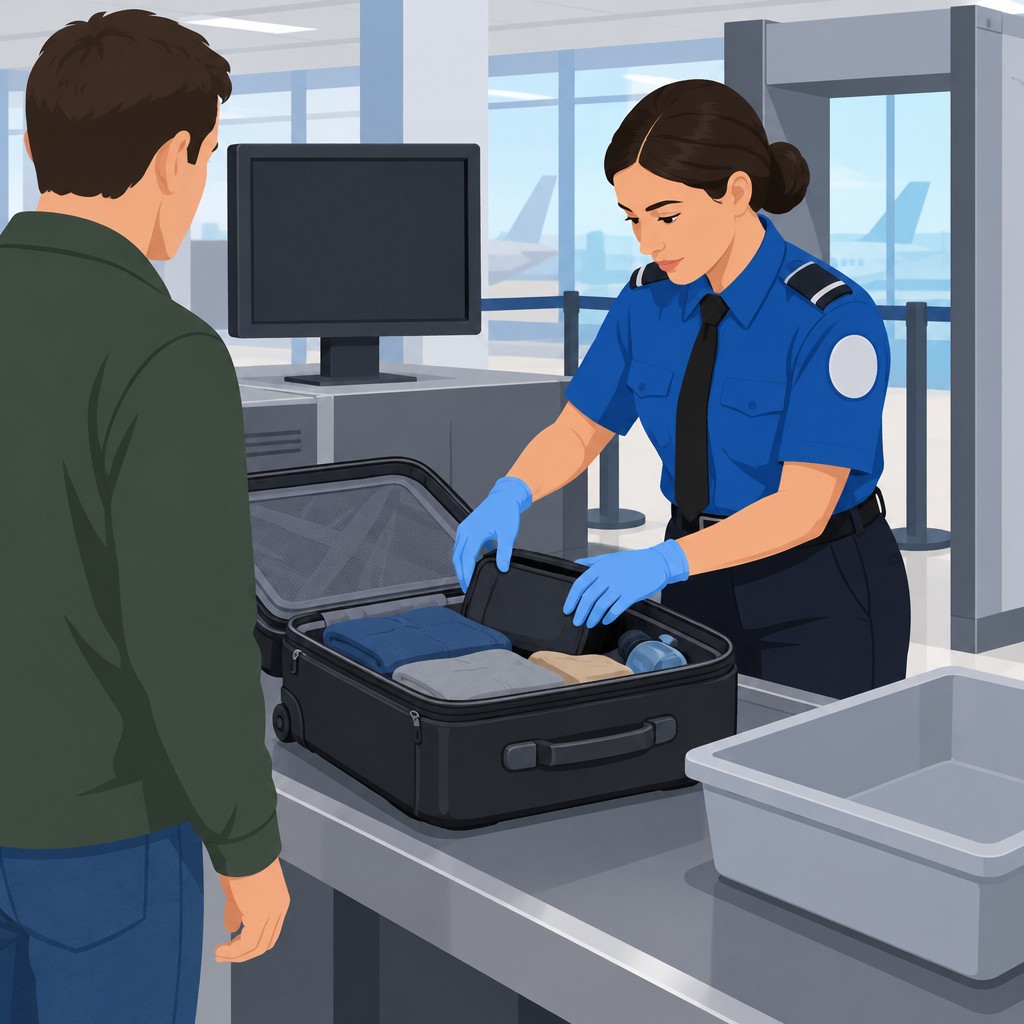
Metal Detection During Passenger Screening
Metal detectors identify metallic objects that passengers may carry.
They can alert screeners to weapons or other dangerous items.
Additionally, this technology supports consistent checks during passenger screening.
Additional Screening Equipment
Screeners also use hand-held scanners during security checks.
Explosive trace detection tools provide another method for examining potential threats.
Together, these tools extend screening beyond standard X-ray and metal detector checks.
Advanced Technology in Security Screening
Advanced technology strengthens screening processes by helping screeners detect potential threats.
Millimeter wave scanners can detect hidden objects on a person’s body.
Consequently, they provide an added layer of security beyond metal detectors.
Automated tray return systems return empty bins to the front of the line.
These systems streamline screening, reduce wait times, and improve efficiency.
Biometric technology, including facial recognition systems, can verify passengers’ identities.
It can also help prevent unauthorized individuals from entering secure areas.
Together, these technologies support security for passengers and staff at transportation facilities.
Learn More: Top US Companies Hiring Rail Yard Engineers
Procedures Followed by Transportation Security Screeners
Transportation security screeners follow strict protocols during security operations.
They screen baggage and passengers before aircraft loading and boarding.
Additionally, screeners respond to potential threats through established procedures.
Baggage Screening Process
Transportation security screeners follow strict protocols when screening baggage.
They use X-ray machines to scan luggage for prohibited items.
Meanwhile, screeners flag suspicious items for further inspection.
Trained baggage screeners identify potential threats quickly and efficiently.
They ensure that all luggage receives screening before aircraft loading.
This process helps prevent dangerous items from reaching aircraft cabins.
Passenger Screening Process
Passenger screening provides an essential part of transportation security.
Passengers walk through metal detectors or body scanners.
Screeners monitor alarms and anomalies during each screening.
If an alarm sounds, screeners conduct a secondary screening.
Pat-downs and additional searches may help ensure passenger safety.
Throughout the process, screeners remain vigilant and attentive.
Protocols for Responding to Potential Threats
Transportation security screeners train to respond quickly to potential threats.
When they identify a suspicious item or individual, screeners follow established protocols.
They may contact law enforcement or other security agencies for assistance.
During security incidents, screeners maintain a calm and controlled environment.
Effective communication and coordination support responses among team members.
These actions help protect passengers and crew members.
Discover More: Work-Life Balance Tips for Delivery Drivers
Challenges Faced by Transportation Security Screeners
Transportation security screeners help maintain safety at airports and other transportation hubs.
However, they face several challenges while performing their security duties.
These challenges require focus, adaptability, and careful judgment during daily operations.
Transform Your Career Today
Unlock a personalized career strategy that drives real results. Get tailored advice and a roadmap designed just for you.
Start NowManaging High Passenger and Baggage Volumes
- Screeners often process many passengers and bags within limited periods.
- Consequently, heavy traffic increases pressure to complete thorough checks efficiently.
- They must remain focused and vigilant while processing large passenger flows.
Recognizing and Addressing Security Risks
- Screeners identify potential threats, including prohibited items and suspicious behavior.
- They rely on rigorous training to recognize and address security risks promptly.
- Additionally, screeners monitor evolving threats and adjust their procedures when necessary.
Balancing Security with Passenger Convenience
- Screeners apply strict security measures without creating unnecessary passenger delays.
- Therefore, they balance detailed inspections with efficient screening processes.
- They also reduce inconvenience while keeping passenger safety as the priority.
Supporting Safe and Efficient Transportation
These challenges make transportation security screening demanding and highly attentive work.
Screeners must uphold security standards while supporting a smooth travel experience.
Their dedication and expertise remain essential to safer transportation systems.
You Might Also Like: The Role of Experience in Dock Worker Careers
Communication and Collaboration in Transportation Security
Effective communication and collaboration strengthen security work across transportation settings.
Screeners coordinate with law enforcement agencies and security personnel to share information and support consistent responses.
They also communicate with passengers to explain procedures, encourage cooperation, and maintain orderly screening.
Collaboration With Law Enforcement Agencies
Screeners often work with the TSA, FBI, and local police departments during security activities.
Through regular communication, these partners share intelligence and coordinate responses to potential threats.
Additionally, collaboration lets screeners use other agencies’ expertise and resources to strengthen security measures.
- Screeners share intelligence with the TSA, FBI, and local police departments.
- Partner agencies coordinate efforts when potential threats arise.
- Screeners draw on external expertise and resources to improve security measures.
- Regular coordination creates a connected security network across transportation operations.
Communication With Passengers During Screening
During screening, screeners give passengers clear instructions about security protocols.
Clear explanations can reduce concerns and encourage cooperation.
Moreover, calm professional communication helps screeners de-escalate challenging interactions and maintain order.
- Screeners provide clear guidelines that help passengers follow security procedures.
- Effective explanations help passengers understand the screening process.
- Professional communication supports cooperation during passenger screening.
- Calm responses help screeners manage difficult situations and preserve order.
Career Opportunities and Advancement for Transportation Security Screeners
Transportation security screeners have several opportunities for career advancement.
These paths include promotion, specialization, continuing education, and professional development.
The following sections describe these opportunities within the security screening field.
Career Advancement and Specialization
- As a transportation security screener, you can progress through promotions to higher-level positions.
- These positions may include supervisory, team lead, or managerial roles within security screening departments.
- Specialization opportunities also exist in specific screening techniques or technologies.
- Specializing in behavior detection or x-ray screening can enhance your skills and value.
- Demonstrating expertise in specific areas can help you establish a niche within the field.
Continuing Education and Professional Development
- Continuing education helps transportation security screeners stay current with security practices and technologies.
- Many organizations offer training programs, workshops, and certifications to strengthen screeners’ skills and knowledge.
- Advanced certifications, such as Certified Aviation Security Professional or Certified Homeland Protection Professional, may support career growth.
- Attending conferences or seminars can broaden professional networks and introduce new industry trends.
- Continuous learning helps screeners advance their careers in a dynamic field.
Transportation security screeners can pursue multiple paths for professional growth.
Promotion, specialization, education, and professional development can expand their skills and knowledge.
These opportunities can support continued progress within the security screening industry.
Recognizing Their Essential Contribution
Transportation security screeners help maintain safety and security across transportation systems.
They screen passengers and luggage for prohibited items and potential threats.
Moreover, these professionals work diligently to protect travelers and prevent security breaches.
Their efforts help preserve the integrity of transportation networks.
As security challenges evolve, continued appreciation for their work remains important.
Recognizing their dedication supports a safer transportation environment for everyone.


