




Introduction
Bus driving jobs involve transporting passengers safely from one location to another.
Technology has advanced rapidly across various industries, revolutionizing how people perform tasks.
Today, we will explore technology’s impact on bus driving jobs and its influence on this profession.
Evolution of Bus Driving Technology
Advancements in technology have transformed the bus driving industry.
Moreover, GPS, automatic braking systems, and cameras now support daily bus operations.
These tools improve safety and efficiency for bus drivers and passengers.
Technology Advancements for Buses
GPS technology helps drivers navigate routes more efficiently.
Additionally, automatic braking systems help prevent collisions and protect passengers.
Cameras provide drivers with a 360-degree view of surrounding areas.
Technology’s Impact on Safety and Efficiency
GPS reduces navigation errors and supports improved on-time performance.
Meanwhile, automatic braking systems help drivers respond quickly to potential road dangers.
Cameras discourage misconduct and provide evidence after accidents.
Future of Bus Driving Technology
Technology has significantly improved bus driving operations.
These advancements enhance safety while increasing operational efficiency.
Therefore, bus driving jobs must embrace technological changes for future success.
Automated driving systems have changed how people think about transportation.
Companies such as Tesla, Waymo, and Uber continue developing self-driving technology for public transportation.
Autonomous Bus Technology
Autonomous buses use sensors, cameras, and artificial intelligence to navigate roads without human intervention.
These vehicles detect obstacles and make driving decisions using real-time information.
They combine GPS data, mapping systems, and sensor inputs to transport passengers safely.
Together, these technologies support automated movement between passenger pickup and drop-off points.
Effects on Bus Driving Jobs
Self-driving technology creates both opportunities and challenges for bus drivers.
Automated systems could improve safety, reduce congestion, and increase public transportation efficiency.
Consequently, transit providers may need workers with robotics, artificial intelligence, and machine learning skills.
However, reliable autonomous buses could reduce demand for traditional driving positions.
Transit agencies may replace human drivers with automated systems to reduce costs and improve operations.
This transition could create economic uncertainty for bus drivers and related workers.
Benefits and Challenges of Automated Bus Transportation
Automated buses offer important advantages, including safer travel, cleaner transportation, and broader mobility.
Nevertheless, technical, regulatory, and social concerns require careful attention before wider adoption.
Transportation agencies must balance innovation with public safety and workforce protection.
- Benefits:
- Autonomous buses can reduce accidents caused by human error.
- Self-driving systems can lower fuel consumption and air pollution.
- Automated operations can optimize routes, schedules, and vehicle maintenance.
- Autonomous buses can reduce accidents caused by human error.
- Challenges:
- Governments must create policies governing autonomous buses on public roads.
- Current systems may not handle every driving situation reliably.
- Automation could displace bus drivers and affect related industries.
- Governments must create policies governing autonomous buses on public roads.
Autonomous buses could transform public transportation while reshaping employment.
Careful planning can help communities capture technological benefits while addressing workforce concerns.
Thoughtful policies can support a sustainable and equitable transportation system.
Gain More Insights: Career Paths for Logistics Technicians in the USA
Technology Adaptation for Bus Drivers
Technology continues advancing across the bus industry.
Therefore, bus drivers must adapt to new tools and systems.
This adaptation helps drivers remain competitive while supporting effective passenger service.
- Bus drivers must understand GPS systems for navigation.
- They need to operate automatic doors and wheelchair ramps correctly.
- Drivers must understand onboard computers that track schedules and passenger information.
- They also need knowledge of safety features, including collision avoidance systems.
Training Programs for Bus Drivers
Training programs help drivers stay current with the latest technologies.
They also prepare drivers to use new equipment and software confidently.
Regular instruction strengthens safety, efficiency, and professional development.
Transform Your Career Today
Unlock a personalized career strategy that drives real results. Get tailored advice and a roadmap designed just for you.
Start Now- Training keeps bus drivers updated on changing technologies.
- Programs equip drivers to handle new equipment and software.
- Instruction improves safety and efficiency during bus operations.
- Regular training encourages continuous learning and professional growth.
Skills Required for Technology-Based Bus Driving
Technology has expanded the skills required for bus driving jobs.
Drivers now combine driving ability with technical awareness and customer service.
As systems evolve, drivers must remain adaptable and willing to learn.
- Bus drivers need basic computer literacy skills.
- They must troubleshoot minor technical issues onboard.
- Interactive technology increases the importance of customer service skills.
- Drivers need openness toward new technologies as they develop.
Continuous learning helps bus drivers respond effectively to technological changes.
Moreover, developing technical skills can improve daily performance.
These efforts support better service for passengers and stronger bus operations.
See Related Content: Job Outlook for Port Operations Managers in 2025
Job Opportunities and Job Security
Technology has created new job opportunities across the transportation industry.
It has also introduced transportation roles that previously did not exist.
Meanwhile, automation raises important questions about job security for bus drivers.
- Innovative transportation solutions require skilled workers to operate and maintain autonomous vehicles and electric buses.
- Growing demand for sustainable transportation increases the need for technology-focused transportation professionals.
However, self-driving buses could reduce traditional bus driving positions as automation becomes more widespread.
Therefore, drivers may need training in new technologies to remain relevant.
Some drivers could transition into roles that support automated systems.
How Automation May Reshape Bus Driver Roles
Automation may threaten some driving positions, but it can also create specialized opportunities.
For example, bus drivers could develop expertise in technology maintenance and data analysis.
They could also support route optimization within increasingly automated transportation networks.
- Drivers may train in new technologies or move into roles that complement automated systems.
- Technology maintenance, data analysis, and route optimization could provide alternative career paths.
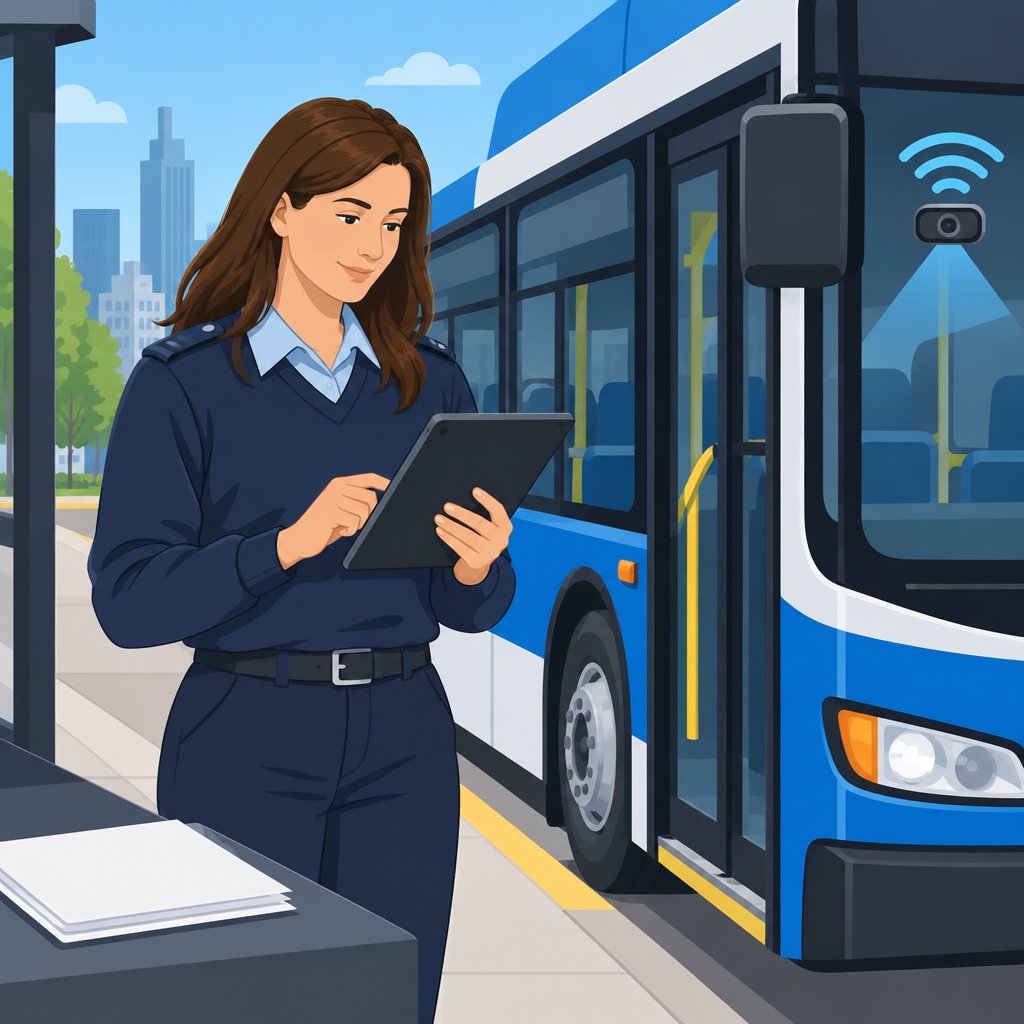
Future Responsibilities and Specialization
Bus driving jobs will likely evolve as transportation companies adopt more advanced technologies.
Drivers may manage complex systems instead of focusing only on vehicle operation.
They may monitor automated systems, protect passenger safety, and provide effective customer service.
- These responsibilities require technical knowledge and strong interpersonal skills.
- Drivers may specialize in electric vehicle operation, smart transportation systems, or digital infrastructure management.
Ultimately, drivers can strengthen their job security by adapting their skills and embracing emerging technologies.
You Might Also Like: Procurement Specialist Career Path Guide
Sustainability and Environmental Impact
Technology now supports more sustainable bus transportation.
Modern systems can reduce fuel use and limit environmental harm.
Several developments continue to improve bus efficiency and sustainability.
Fuel Efficiency
Advancements in technology have improved fuel efficiency for buses.
New engines and propulsion systems can reduce fuel consumption.
Additionally, route optimization software can help buses follow more efficient routes.
- Newer buses use more efficient engines and propulsion systems.
- Efficient systems reduce the fuel buses require during operation.
- Route planning software helps minimize unnecessary fuel usage.
Electric and Hybrid Buses
Electric and hybrid buses provide cleaner alternatives to conventional buses.
Electric buses use electric power and produce zero emissions during operation.
Meanwhile, hybrid buses combine electric propulsion with traditional diesel engines.
- Electric buses can reduce air pollution by producing zero emissions during operation.
- Hybrid buses can reduce fuel consumption through electric propulsion.
- Both technologies offer cleaner options for bus transportation.
Future Sustainability Improvements
Technology continues to create opportunities for greater sustainability.
Researchers are developing better batteries for electric buses.
These improvements could increase battery range and operating efficiency.
- Improved batteries could extend the range of electric buses.
- More efficient batteries could support longer bus journeys.
- Solar panels on buses could reduce emissions and fossil fuel reliance.
These innovations make bus transportation more environmentally friendly.
Continued development can further reduce emissions and support cleaner transportation.
Learn More: Key Challenges Faced by Warehouse Supervisors
Customer Experience and Passenger Safety
Technology has improved bus travel by adding Wi-Fi, entertainment, tracking, and contactless payment options.
These tools help passengers stay informed, connected, and comfortable throughout their journeys.
They also support faster transactions and safer interactions between passengers and drivers.
Enhanced Passenger Experience
Passengers can now use onboard Wi-Fi to stay connected, complete work, or enjoy streaming entertainment.
Transform Your Career Today
Unlock a personalized career strategy that drives real results. Get tailored advice and a roadmap designed just for you.
Start NowMeanwhile, journey screens show route information, upcoming stops, and points of interest.
These displays make travel more informative and enjoyable for passengers.
Additionally, charging ports help passengers keep devices powered throughout the journey.
Improved Passenger Safety
Real-time tracking systems show passengers the current location of their bus.
Consequently, passengers can plan journeys more effectively and reduce waiting time at bus stops.
During emergencies or breakdowns, authorities can respond more quickly when tracking information remains available.
Furthermore, contactless payments reduce physical contact between passengers and drivers.
This approach lowers the risk of spreading germs and viruses during bus travel.
Therefore, contactless transactions support a healthier environment for passengers and drivers.
Transformation of Bus Travel
These innovations have made bus travel more convenient, efficient, and secure for passengers.
As technology advances, passengers may experience smoother journeys through continued improvements in bus services.
Bus drivers will continue adapting their service while maintaining safety and operational efficiency.
Technology Challenges in Bus Driving Jobs
Technology introduces important challenges for bus companies and drivers.
Connected systems can expose passenger information to unauthorized access.
Automation can also change driving responsibilities and affect employment opportunities.
- Passenger data may become compromised as buses use more connected technology.
- Automated systems and Internet of Things devices can create cybersecurity risks.
- Automating driving tasks could reduce some opportunities for bus drivers.
Passenger Data Privacy
Bus companies must protect passenger information throughout its collection and storage.
Encryption can secure data during transmission and while stored.
Regular security audits can help companies identify weaknesses before they cause harm.
- Companies should establish strict protocols for handling passenger information.
- Encryption methods should protect information during transmission and storage.
- Staff training should reinforce responsible data protection practices.
Cybersecurity for Bus Systems
Automated systems and connected devices require strong protection against cyber threats.
Bus companies should update software regularly to address emerging security weaknesses.
Employees can support security by recognizing and reporting suspicious activities.
- Intrusion detection systems can help identify unauthorized system activity.
- Regular software updates can strengthen automated systems and connected devices.
- Cybersecurity training can prepare employees to respond to suspicious activities.
Changing Responsibilities for Bus Drivers
Automation may reduce some traditional driving tasks.
However, drivers can support technology through system monitoring and safety checks.
Retraining programs can help drivers develop skills for changing transportation roles.
- Drivers can monitor automated systems during bus operations.
- Drivers can conduct safety checks that support reliable service.
- Drivers can provide passenger assistance alongside automated technology.
Positive Effects of Responsible Technology Use
Responsible technology use can strengthen safety and operational efficiency.
Drivers can combine technical skills with passenger assistance and safety awareness.
Careful planning can help technology support bus workers and passengers.
Technology’s Continuing Influence on Bus Driving Jobs
Technology has significantly impacted bus driving jobs by introducing automation and enhancing safety measures.
Despite concerns about job displacement, technological advancements have improved efficiency and passenger experience in transportation.
Therefore, embracing technology helps professionals stay competitive and adapt to changing bus driving jobs.
Looking ahead, further exploration of technology’s effects on bus driving jobs remains crucial.
Industry professionals and policymakers can guide this ongoing examination.
Understanding technology’s implications for transportation can guide innovation and progress in the field.
Additional Resources
Google search results for The Impact of Technology on Bus Driving Jobs Transportation and Logistics
Bing search results for The Impact of Technology on Bus Driving Jobs Transportation and Logistics


