




Teamwork in the Seaman Profession
Seamen work aboard ships at sea, handling varied tasks and supporting smooth onboard operations.
Teamwork unites crew members as they pursue shared goals and responsibilities.
Furthermore, cooperation helps crews navigate safely and complete shipboard duties efficiently.
Benefits of Teamwork in Seafaring
Clear communication helps crew members coordinate effectively, especially during emergencies.
Moreover, unity and camaraderie create belonging and mutual support among crew members.
Crews increase efficiency by assigning tasks according to individual strengths and skills.
Consequently, cooperation boosts morale, motivation, job satisfaction, and performance.
Continuous monitoring and assistance from teammates also strengthen safety standards during operations.
Challenges Affecting Teamwork at Sea
Cultural differences and language barriers can cause miscommunication and misunderstandings among crew members.
Additionally, long hours and isolation at sea can create fatigue and stress.
Hierarchical ship structures may also restrict open communication and collaboration.
Operational Value of Crew Cooperation
Teamwork supports safety, efficiency, and harmonious relationships among crew members.
By cooperating, crews help ships operate smoothly and address challenges at sea.
Therefore, a shared spirit of unity strengthens successful navigation and daily shipboard operations.
Clear Communication During Shipboard Operations
Clear communication helps seafarers coordinate duties and maintain safe operations aboard a vessel.
Teamwork ensures that each crew member understands responsibilities and receives essential updates.
Consequently, shared information reduces misunderstandings during routine work and changing conditions.
- Crew members remain informed about their duties and current shipboard conditions.
- Effective teamwork keeps everyone aligned during important vessel operations.
- Clear instructions help prevent accidents, confusion, and other mishaps at sea.
During a maneuver, the captain, officers, and deckhands can confirm tasks through direct communication.
This coordination limits confusion and helps the crew avoid accidents at sea.
In an emergency, crew members can relay information quickly and follow established protocols.
Storms and engine failures require coordinated responses that prevent situations from escalating.
Additionally, respectful communication supports morale and encourages crew members to remain productive.
Therefore, clear communication strengthens teamwork and supports a safer voyage.
Importance of Teamwork in the Seaman Profession
Teamwork strengthens safety and success for seafarers working in the maritime industry.
Maritime work involves significant risks and challenges that require crews to support one another.
By cooperating effectively, seafarers can protect their colleagues and support successful voyages.
Teamwork Enhances Safety
Teamwork strengthens safety by helping seafarers support one another during demanding shipboard tasks.
Each crew member can recognize hazards and assist colleagues before risks become more serious.
This shared support helps crews maintain a safer work environment.
Rapid and Coordinated Emergency Responses
During an emergency at sea, time becomes critical.
Therefore, trained teams can act quickly and coordinate their assigned responsibilities.
Such preparation helps crews manage fires, collisions, and man overboard situations.
Successful Rescue Missions Through Teamwork
Successful rescue missions show how coordinated seafarer actions can protect lives.
In one example, a crew member fell overboard during a storm.
The team responded quickly, coordinated its efforts, and rescued the crew member.
Another cargo ship suffered engine failure in rough seas.
The crew worked together to navigate the vessel to safety.
These examples demonstrate how teamwork helps seafarers overcome serious challenges at sea.
Trusting one another’s skills also supports the efficient operation of a ship.
Gain More Insights: Challenges and Rewards of Aviation Maintenance Careers
Transform Your Career Today
Unlock a personalized career strategy that drives real results. Get tailored advice and a roadmap designed just for you.
Start NowOperational Efficiency Through Coordinated Teamwork
Teamwork promotes efficiency across maritime operations by dividing labor and coordinating crew responsibilities.
For instance, crews coordinate mooring tasks to secure vessels efficiently in port.
Deck members handle lines, communicate with the bridge, and confirm the vessel’s position.
As a result, coordinated work shortens mooring time and reduces port delays.
During anchoring, crew members handle the anchor and chain while monitoring vessel position.
Meanwhile, bridge personnel guide the operation and receive timely updates from the deck.
This cooperation helps crews drop the anchor safely and avoid operational delays.
Cargo operations also depend on coordinated efforts among crew members.
They load and discharge cargo, operate machinery, and follow applicable safety requirements.
Consequently, teamwork supports faster cargo handling and shorter port turnaround times.
At sea, crews also coordinate navigation, maintenance, repairs, and emergency responses.
By sharing duties effectively, seafarers complete scheduled tasks within demanding time limits.
Thus, teamwork helps the vessel meet operational deadlines and maintain efficient performance.
Explore Further: Port Operations Manager: Role in Port Development
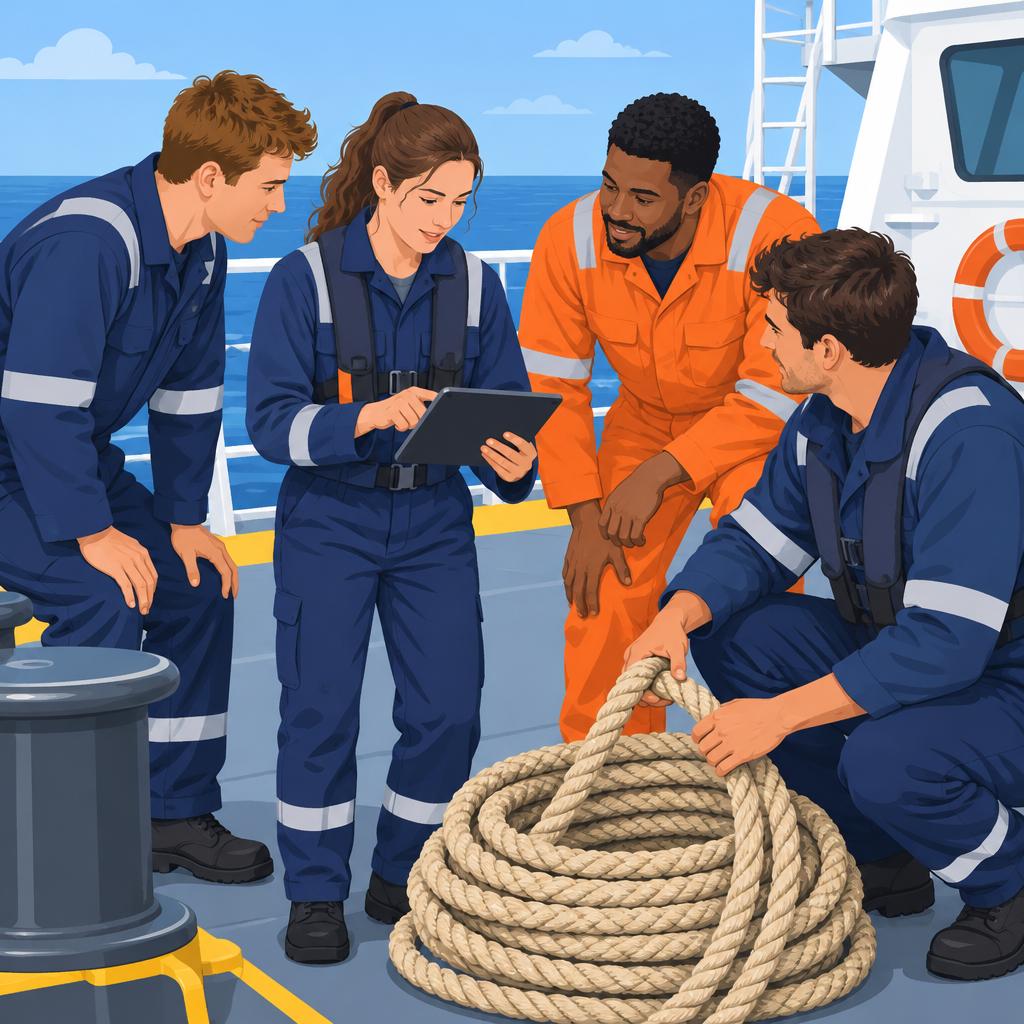
Crew Camaraderie and Morale at Sea
- Crew cohesion and morale support strong overall performance.
- Teamwork creates belonging and support among seafarers.
- Strong team spirit helps crew members overcome challenges together.
Working as a seaman demands seamless cooperation to protect safety and maintain efficient maritime operations.
Therefore, teamwork fosters camaraderie and creates a cohesive, supportive environment for success at sea.
Crew cohesion and morale strongly influence a ship’s overall performance.
When crewmates trust and support one another, they communicate effectively and collaborate efficiently.
They also make decisions that benefit the entire crew.
Consequently, camaraderie raises motivation, increases job satisfaction, and improves onboard work quality.
During long voyages far from home, teamwork gives seafarers belonging, companionship, and emotional support.
Moreover, crew members depend on professional expertise and encouragement during difficult periods.
This bond reduces isolation and loneliness while promoting mental well-being and resilience.
A strong team spirit helps crew members overcome challenges collectively.
During adverse weather, technical malfunctions, or emergencies, a cohesive crew can address problems efficiently.
By sharing responsibilities, pooling resources, and using individual strengths, seafarers can adapt to changing circumstances.
For example, a severe storm may require coordinated efforts to secure cargo, adjust course, and protect the vessel.
In that situation, crew members support one another while reducing risks and safeguarding everyone onboard.
Thus, teamwork involves more than completing tasks; it also protects each person’s safety and well-being.
Strong camaraderie helps seafarers improve performance, job satisfaction, and mutual support at sea.
Emphasizing team spirit can create safer, more efficient, and more rewarding maritime experiences.
Learn More: Port Operations Manager: Leading Sustainability Efforts
Trust Among Seafarers
Trust among seafarers strengthens cooperation during shipboard duties.
Each crew member relies on others to complete assigned responsibilities efficiently.
When crew members trust one another, they coordinate their efforts more smoothly.
Mutual respect and reliance support stronger problem-solving among the crew.
Moreover, trust encourages crew members to communicate openly and coordinate effectively.
Appreciating each other’s efforts can also strengthen working relationships.
Additionally, shared goals give seafarers a stronger sense of purpose.
Team-building activities and training sessions can further strengthen bonds among crew members.
Transform Your Career Today
Unlock a personalized career strategy that drives real results. Get tailored advice and a roadmap designed just for you.
Start NowThese practices help create unity and support successful voyages.
Explore Further: Common Mistakes Supply Chain Managers Should Avoid
Teamwork Supports Maritime Success
Teamwork helps seafarers respond to changing demands during maritime duties.
Crew members combine practical abilities and experience when unexpected problems arise.
As a result, shared effort encourages flexible solutions and supports successful task completion.
- Crew members approach challenges through joint effort.
- Different skills encourage practical and creative solutions.
- Coordinated contributions help the crew complete duties effectively.
Shared Accountability During Maritime Duties
Maritime duties require crew members to depend on one another.
Assigned responsibilities become clearer when seafarers contribute to a common work process.
Furthermore, shared accountability encourages dependable performance during routine and demanding duties.
- Cooperation helps seafarers complete assigned responsibilities reliably.
- Clear ownership encourages each crew member to support collective duties.
- Responsible participation strengthens consistency across maritime work.
Respect for Every Crew Member’s Contribution
Each seafarer’s contribution can strengthen the crew’s collective capabilities.
When colleagues value those contributions, cooperation becomes more constructive.
Shared objectives also encourage individuals to apply their skills with greater purpose.
- Respect encourages seafarers to contribute their abilities confidently.
- Valued contributions support a more cooperative working environment.
- Common objectives give individual efforts meaningful direction.
Building Stronger Teamwork Practices
Seafarers can strengthen teamwork by treating collaboration as a daily professional practice.
They can build productive working relationships through respect, participation, and dependable support.
Regularly improving teamwork skills helps crews respond more effectively to future duties.
- Embrace teamwork as a core professional value.
- Develop supportive relationships with fellow seafarers.
- Seek regular opportunities to improve collaborative skills.
Teamwork as a Core Professional Value
Teamwork plays a crucial role in the seaman profession.
Moreover, collaborative efforts support smooth sailing and efficient operations at sea.
Therefore, strong communication helps seafarers navigate the challenges of life at sea.
Seafarers should embrace teamwork as a core value throughout their professional lives.
Additional Resources
Bing search results for Importance of Teamwork in the Seaman Profession Transportation and Logistics


