




Port Operations Manager Responsibilities
A Port Operations Manager plays a crucial role in port development.
The manager oversees daily activities, ensures efficiency, and maximizes productivity.
Responsibilities include managing port resources, implementing safety measures, and optimizing operational processes.
Additionally, the manager coordinates vessel arrivals and departures.
The manager maintains port infrastructure and ensures compliance with regulations.
This role drives growth, improves operational performance, and enhances overall port efficiency.
Port Operations Management Priorities
A Port Operations Manager coordinates activities that keep the port organized and productive.
The role combines operational oversight, regulatory compliance, financial control, and interdepartmental cooperation.
These responsibilities support consistent performance while protecting workers, resources, and the surrounding environment.
- Oversee cargo handling, vessel scheduling, and staff management.
- Maintain compliance with safety regulations and environmental standards.
- Manage budgets and resources to improve operational efficiency.
- Collaborate with departments to streamline processes and strengthen port performance.
First, the manager directs daily cargo movements, vessel schedules, and workforce assignments.
Effective coordination helps each operational activity proceed smoothly and efficiently.
The manager also applies policies that address safety risks and environmental responsibilities.
By enforcing these requirements, the manager supports a safer and more sustainable workplace.
Financial oversight requires careful allocation of funds across operational needs.
Additionally, the manager monitors expenses and uses available resources responsibly.
This approach improves efficiency without weakening quality or safety standards.
Finally, the manager works with other departments to identify process improvements.
Open communication enables teams to implement practical solutions and improve port performance.
Through these combined duties, the manager supports continued port growth and operational excellence.
Strategic Planning for Port Growth
As a Port Operations Manager, you create strategic plans that guide port growth and facility expansion.
These plans establish the direction and goals for future port development.
They also support the long-term development of port facilities.
Innovative Technologies for Operational Capability
Competitive ports require innovative technologies and operational practices.
You implement these advancements to strengthen operational capabilities.
These advancements enhance operational capabilities across port activities.
Business Development and Market Expansion
You identify opportunities for business development and market expansion.
Market research helps you examine trends and explore new avenues for growth.
This work supports informed decisions about the port’s future direction.
Stakeholder Partnerships and Infrastructure Investment
You work with government agencies, shipping companies, and port users.
Those relationships help foster partnerships around port development.
They can also attract investment in port infrastructure.
Sustaining Port Competitiveness
Your combined efforts shape the future of port operations.
Effective execution supports sustainable port development.
It also strengthens port competitiveness in the global trade landscape.
Explore Further: Port Operations Manager: Leading Sustainability Efforts
Importance of Effective Communication
Effective communication supports successful port operations and development.
It helps the Operations Manager address challenges, explain requirements, and coordinate activities.
Moreover, clear communication strengthens teamwork, compliance, relationships, and operational efficiency.
- The Operations Manager communicates with port authorities, government agencies, and industry partners.
- The manager provides clear guidance and instructions to port staff.
- The manager promotes collaboration and teamwork to achieve shared objectives.
Efficient Problem-Solving
Clear communication helps the Operations Manager identify operational challenges promptly.
Additionally, open discussions allow stakeholders to share information and offer useful insights.
Transform Your Career Today
Unlock a personalized career strategy that drives real results. Get tailored advice and a roadmap designed just for you.
Start NowThese exchanges support collaborative solutions and improve the problem-solving process.
Regulatory Compliance
Effective communication enables the manager to explain procedures and policies clearly.
Consequently, port staff understand their responsibilities and follow established requirements.
Clear instructions also support adherence to regulations and relevant operational standards.
Collaboration Across Port Teams
Communication connects departments and individuals around shared goals.
Furthermore, consistent information helps employees coordinate their efforts effectively.
This approach encourages unity, cooperation, and teamwork throughout the port environment.
Strong Stakeholder Relationships
Regular communication helps the Operations Manager build relationships with important stakeholders.
Transparent discussions can strengthen partnerships and establish trust among participating organizations.
Over time, these relationships support mutually beneficial port development.
Operational Efficiency
Clear communication keeps information moving smoothly throughout port operations.
It reduces misunderstandings, delays, and errors between departments.
As a result, stronger communication improves coordination and overall operational efficiency.
You Might Also Like: Common Mistakes Supply Chain Managers Should Avoid
Economic Impact of Port Development
Port development can increase trade and commerce when operations move goods efficiently.
As trade expands, businesses gain opportunities to provide shipping, logistics, warehousing, and related services.
These activities can increase regional revenue and contribute positively to GDP.
- Efficient operations can improve port infrastructure and connectivity.
- Port expansion can increase revenue and support new local businesses.
- Higher trade volumes can contribute positively to GDP.
- Improved connectivity can strengthen transportation networks around the port.
- Expanded port activity can support wider economic development.
Investment and Infrastructure Benefits
Efficient port services can attract domestic and international investors seeking dependable cargo movement.
Investors often value reliable infrastructure, advanced technology, and quick vessel turnaround.
Consequently, effective operations can strengthen the port’s position as an investment destination.
Employment and Local Business Growth
Port expansion can create jobs in shipping, logistics, warehousing, and related industries.
New activity can encourage businesses to serve port users and nearby communities.
Moreover, local employment can support broader economic development.
Community Benefits and Sustainable Development
Port development can improve infrastructure and connectivity around surrounding areas.
Better transportation networks can support residents and businesses.
The Port Operations Manager can engage stakeholders and address concerns during development projects.
Long-Term Economic Value of Efficient Port Operations
Efficient cargo handling, vessel scheduling, and facility maintenance can help ports use capacity effectively.
That efficiency supports steadier movement of goods and services through trade networks.
Therefore, port authorities can strengthen economic performance by developing skilled professional workforces.
Gain More Insights: Salary Expectations for Packaging Engineers
Sustainability and Environmental Stewardship in Port Operations
Port Operations Managers promote sustainability by reducing environmental impacts and supporting responsible, long-term port operations.
They implement practical measures that address pollution, resource use, and environmental responsibility.
These efforts also support regulatory compliance and healthier communities.
- Port teams address sustainable practices that minimize environmental impacts.
- Port teams implement waste management programs and energy-efficient technologies.
- Port teams monitor activities and evaluate their ecological footprint.
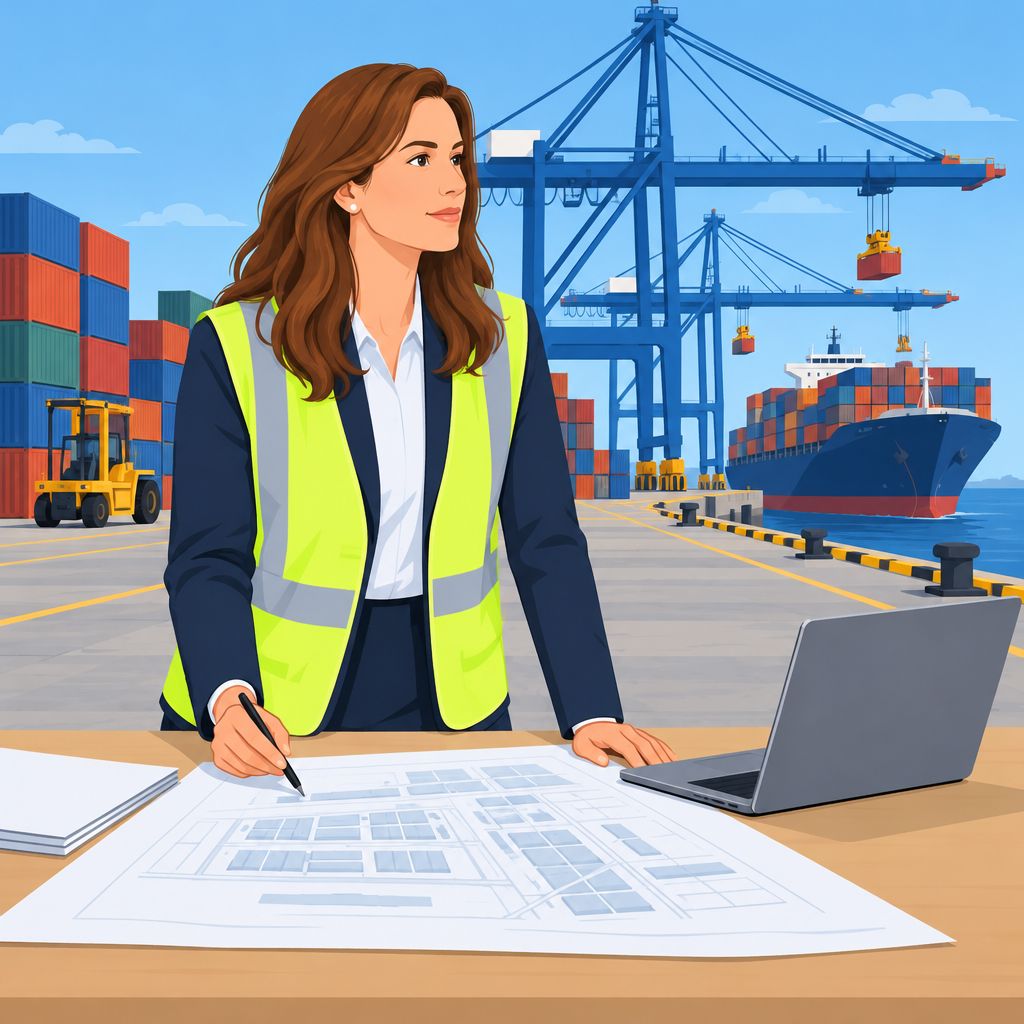
Importance of Sustainable Port Operations
Sustainable practices help ports reduce air pollution, water pollution, habitat destruction, and carbon emissions.
Port activities can affect the environment when teams overlook these risks.
Therefore, managers use responsible methods to protect environmental quality and meet regulatory requirements.
Green Initiatives for Port Activities
Port Operations Managers can introduce initiatives that reduce waste and energy use.
Waste management programs help teams control waste generated by port activities.
Energy-efficient technologies can lower energy consumption and greenhouse gas emissions.
Monitoring the Ecological Footprint
Managers monitor and evaluate the ecological footprint of port activities.
Transform Your Career Today
Unlock a personalized career strategy that drives real results. Get tailored advice and a roadmap designed just for you.
Start NowThey assess operational impacts and identify areas that require improvement.
Regular evaluations help managers reduce negative environmental effects and support sustainable operations.
These practices strengthen responsible business operations and support long-term environmental stewardship.
Delve into the Subject: Job Satisfaction Among Transportation Security Screeners
Challenges Faced by Port Operations Managers
Port operations managers face several obstacles that can disrupt facility activities.
Labor disputes, equipment breakdowns, and supply chain disruptions create different operational pressures.
Proactive planning and crisis management help managers respond quickly when unexpected problems arise.
- Labor disputes can interrupt port work and delay shipments of goods.
- Equipment breakdowns can delay cargo loading and unloading activities.
- Supply chain disruptions can affect the movement of goods through the port.
Managing Labor Disputes
Labor disputes can interrupt port work and delay shipments of goods.
Such delays can increase costs and complicate operational scheduling.
Managers must handle negotiations effectively while supporting workforce productivity.
Preventing Equipment Breakdowns
Equipment breakdowns can significantly delay cargo loading and unloading.
Malfunctioning cranes, forklifts, and other machinery can interrupt essential port activities.
Regular maintenance helps managers reduce equipment-related risks.
Responding to Supply Chain Disruptions
Supply chain disruptions can affect the flow of goods through the port.
Natural disasters, geopolitical events, and pandemics can create serious operational challenges.
Managers must work closely with stakeholders to manage supply chain risks.
Strengthening Risk Mitigation and Crisis Management
Managers can reduce risks by maintaining equipment and preparing emergency contingency plans.
They should coordinate with stakeholders when disruptions affect the movement of goods.
These actions help limit interruptions and support smooth port facility operations.
Supporting Reliable Port Operations
Port operations managers must anticipate potential obstacles before they affect daily activities.
Robust contingency plans enable faster responses to unforeseen operational problems.
Effective risk management helps managers maintain efficient port operations during challenging conditions.
Professional Qualifications and Skills Required
Port Operations Managers help ports function efficiently and effectively.
Success in this role requires education, industry experience, and specialized professional skills.
These qualifications help managers support reliable port operations and contribute to organizational growth.
Educational Background
A relevant degree provides essential knowledge for managing port activities.
Employers may also value advanced study and specialized maritime training.
Such preparation strengthens understanding of logistics, business, and maritime operations.
- A Bachelor’s degree in maritime studies, logistics, business administration, or a related field is typically required.
- Some employers may prefer a Master’s degree in a relevant discipline.
- Specialized courses in port management, supply chain management, or maritime law can provide additional benefits.
Industry Experience
Practical experience helps managers understand port operations and logistical requirements.
Supervisory responsibilities also demonstrate the ability to guide teams and coordinate activities.
Furthermore, regulatory knowledge supports accurate handling of international trade and customs procedures.
- Several years of experience in port operations, logistics, or maritime management are usually necessary.
- Experience in a supervisory or managerial role is often preferred.
- Knowledge of international trade regulations and customs procedures is a valuable asset.
Leadership, Problem-Solving, and Decision-Making Skills
Leadership enables managers to guide diverse personnel and coordinate port activities.
Strong problem-solving skills help them identify and address operational challenges promptly.
Meanwhile, sound decision-making supports smooth operations when managers must respond quickly.
Relevant Certifications and Training Programs
Professional certifications can strengthen credibility and demonstrate specialized port management expertise.
Industry training programs provide insights into established practices and current industry trends.
Continuous development also helps managers maintain relevant knowledge throughout their careers.
- Certifications such as Certified Port Executive (CPE) or Certified Marine Port Manager (CMPM) can enhance professional credibility.
- Training programs from the International Association of Ports and Harbors (IAPH) provide valuable industry insights.
- Seminars, workshops, and networking events help managers stay updated with field developments.
By developing these qualifications, Port Operations Managers can perform their roles more effectively.
They can also support the continued development and growth of ports.
Future Priorities for Port Development
Port operations managers connect daily performance with the broader direction of port development.
Transform Your Career Today
Unlock a personalized career strategy that drives real results. Get tailored advice and a roadmap designed just for you.
Start NowBy refining workflows, they can improve service consistency and strengthen customer satisfaction.
Meanwhile, research helps ports respond to changing trade patterns and supply chain demands.
Emerging technologies can support faster decisions, better coordination, and more reliable operational outcomes.
Furthermore, managers can evaluate best practices before applying them to evolving port environments.
As global trade evolves, port leaders must continue examining new approaches to operations and management.
Such exploration can prepare ports for emerging demands across global trade and supply chains.
These efforts help ports remain competitive while adapting to future market pressures.
Successful development also supports employment opportunities and strengthens relationships with local communities.
Therefore, continued attention to innovation can reinforce the port’s long-term viability.
Port management ultimately influences how effectively ports serve commerce and society.


