




Importance of Irrigation and Sustainable Farming
Irrigation provides crops with a consistent water supply.
Consequently, reliable watering can support better agricultural yields.
Sustainable farming also protects the environment and supports long-term productivity.
Efficient Water Management
Farmers can manage water efficiently through drip and sprinkler irrigation systems.
These methods help farmers direct water toward crops and reduce unnecessary waste.
Moreover, efficient water use can conserve resources and lower operational costs.
Choosing Suitable Irrigation Systems
Farmers should select irrigation systems according to soil type, crop needs, and climate conditions.
This approach allows each system to match the farm’s specific requirements.
As a result, tailored irrigation can distribute water effectively and limit losses.
Water-Saving Farming Techniques
Mulching helps farmers reduce water consumption in agricultural fields.
Rainwater harvesting provides another method for using available water resources efficiently.
Additionally, farmers can schedule irrigation according to plant needs.
Monitoring and Maintaining Irrigation Systems
Farmers should regularly inspect irrigation systems for leaks, clogs, and malfunctions.
Routine maintenance keeps equipment functioning properly and prevents avoidable water waste.
Timely repairs can improve water efficiency and support farm productivity.
Technology for Precision Irrigation
Soil moisture sensors help farmers determine when crops need water.
Automated irrigation systems can then apply water precisely where and when necessary.
Therefore, precision irrigation can improve efficiency, support crop yields, and reduce environmental impact.
Water Requirements of Different Crops
Different crops require different amounts of water.
Farmers can match irrigation schedules to those needs and conserve available water.
Crop-specific planning also helps reduce unnecessary watering.
- Rice and sugarcane need substantial water because they are water-intensive crops.
- Growers typically place these crops where water sources or irrigation systems provide reliable access.
- Tomatoes, lettuce, and peppers need moderate watering and can suffer from overwatering.
- Sorghum, millet, and some bean varieties need less water and suit areas with limited availability.
- These crop differences help farmers design irrigation plans that avoid unnecessary water use.
Irrigation Methods for Different Crop Types
Farmers should choose irrigation methods according to each crop’s water requirements.
A single method can overwater some plants while underwatering others.
Therefore, suitable irrigation supports plant growth without unnecessary water loss.
- Drip irrigation supplies water directly to plant roots and limits evaporation and runoff.
- Vegetables and fruits often suit drip irrigation because it targets their root areas.
- Sprinkler irrigation suits leafy vegetables and crops with shallow root systems.
- Sprinklers may not suit plants that respond poorly to excess water.
- Flood irrigation supports rice by covering fields with water during cultivation.
- Flood irrigation may not suit crops with lower water requirements.
Matching irrigation methods to crop requirements improves water efficiency.
Farmers can reduce waste while supporting productive and sustainable agriculture.
Choosing the Right Irrigation System
Farmers should compare irrigation systems according to water efficiency, crop yield, cost, and environmental effects.
Drip, sprinkler, and flood systems offer different benefits for sustainable farm management.
Water availability, soil conditions, crop type, and budget should guide the final decision.
Drip Irrigation
Drip irrigation delivers water directly to plant roots.
This approach limits evaporation, runoff, and soil erosion.
Although installation costs more, water savings can support stronger crop yields over time.
- Drip irrigation provides high water efficiency through targeted delivery.
- It reduces water wastage and minimizes soil erosion.
- Initial installation can require a substantial investment.
- Regular maintenance helps prevent emitter clogging.
This system suits farms with limited water supplies.
It also benefits crops that need precise watering.
Farmers can balance higher installation costs against long-term water savings.
Sprinkler Irrigation
Sprinkler irrigation distributes water across large areas.
Farmers can automate the system to simplify daily operations.
However, wind and evaporation can reduce its water efficiency.
- Sprinklers cover extensive areas efficiently.
- Automation can make operation easier.
- Sprinklers use water less efficiently than drip systems.
- Wind drift and evaporation can cause water losses.
This option works well when farms need broad field coverage.
It can help farmers balance operational convenience with irrigation performance.
Transform Your Career Today
Unlock a personalized career strategy that drives real results. Get tailored advice and a roadmap designed just for you.
Start NowFarmers should manage wind drift and evaporation to improve water savings.
Flood Irrigation
Flood irrigation spreads water across the field surface.
Water then seeps into the soil and reaches plant roots.
The method remains simple and affordable to implement.
- Flood irrigation offers a simple and cost-effective setup.
- It suits crops that can tolerate waterlogged conditions.
- Flood irrigation provides the lowest water efficiency among these systems.
- It can increase soil erosion and nutrient leaching.
Farmers should assess crop tolerance before choosing this method.
They should also consider possible water wastage and soil damage.
Flood irrigation may suit farms that prioritize low implementation costs.
Each system affects water use, crop performance, operating demands, and environmental conditions differently.
Drip irrigation emphasizes precision, while sprinkler irrigation emphasizes coverage and automation.
Flood irrigation emphasizes simplicity, but it generally creates greater water losses.
Discover More: Finding Agricultural Labor Jobs: Tips and Resources
Timing and Frequency of Irrigation
Proper irrigation timing and frequency help farmers manage water efficiently.
Farmers can adjust watering schedules according to crop needs and changing field conditions.
Regular soil moisture checks can guide irrigation decisions throughout crop production.
Scheduling Irrigation During the Day
Early morning irrigation limits evaporation and gives plants access to water during the day.
Late evening irrigation also reduces evaporation, although wet leaves may remain vulnerable to fungal diseases.
Farmers should avoid peak sunlight hours because intense heat can increase water loss.
- Early morning and late evening generally provide the most efficient irrigation conditions.
- Peak sunlight hours can cause unnecessary evaporation from exposed soil and plant surfaces.
- Night watering may encourage fungal diseases when moisture remains on leaves for extended periods.
- Well-timed irrigation helps plants absorb water and nutrients more effectively.
Factors That Determine Irrigation Frequency
Soil type affects how quickly water drains and how often crops require irrigation.
Crop water needs can change during different growth stages.
Weather conditions, root depth, and system efficiency also influence irrigation frequency.
- Sandy soil drains quickly, so it may require more frequent watering than clay soil.
- Some crops need additional water during specific stages of development.
- Hot, dry weather can increase crop water requirements.
- Drip irrigation can conserve water and reduce frequent watering needs.
- Deep-rooted plants can reach water stored in lower soil layers.
Farmers can improve irrigation decisions by monitoring soil moisture levels regularly.
This monitoring helps them adapt watering schedules to crop conditions and available soil moisture.
Uncover the Details: Creating Engaging Content for Farm Product Marketing
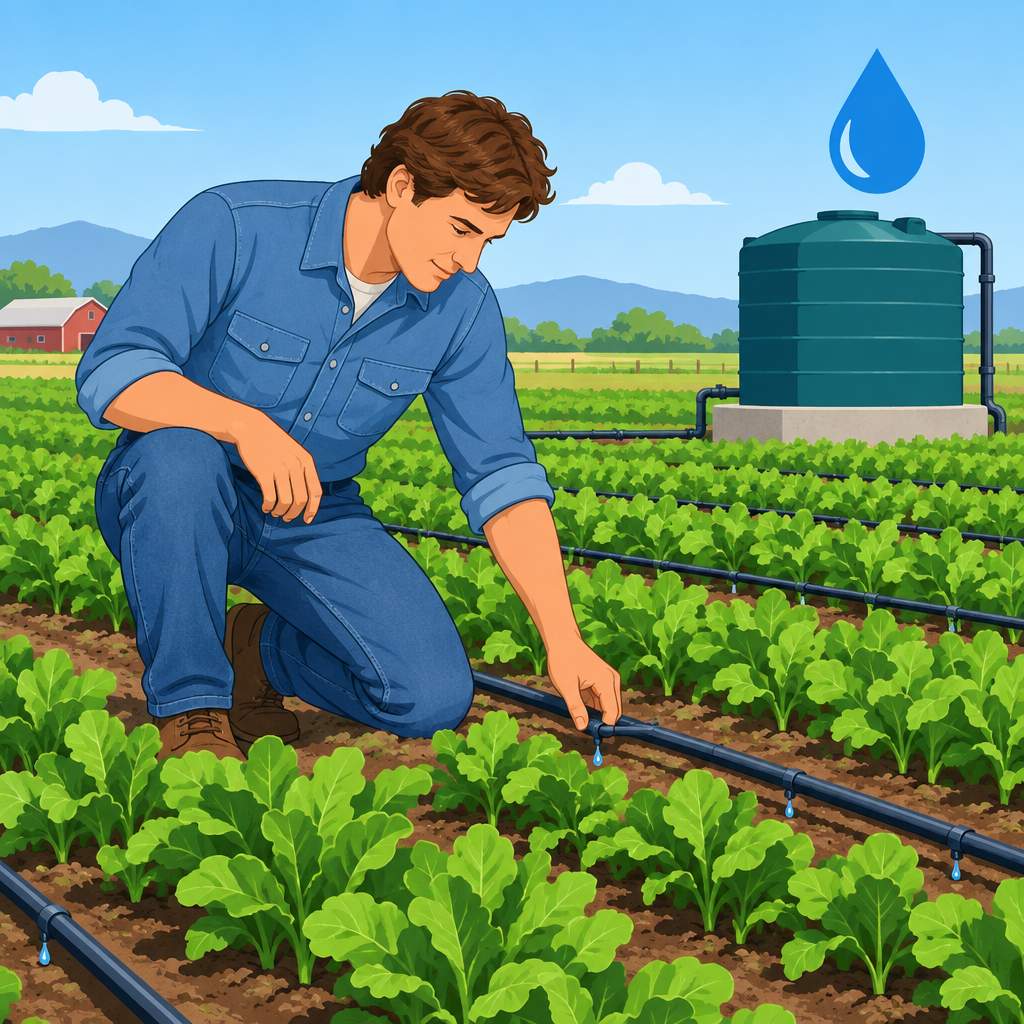
Soil Moisture Monitoring
Monitoring soil moisture helps farmers manage irrigation more precisely.
It ensures efficient water use and helps prevent over-irrigation.
Additionally, suitable moisture levels promote plant health and maximize crop yield.
- Efficient water use
- Prevention of over-irrigation
- Improved plant health
- Maximized crop yield
Farmers can use several methods to measure soil moisture and guide irrigation decisions.
- Tensiometers measure soil tension and indicate when irrigation should begin.
- Moisture sensors provide real-time data about soil moisture levels.
- Time Domain Reflectometry measures soil moisture content using electromagnetic waves.
- The gravimetric method weighs soil samples before and after drying.
These methods help farmers decide when to irrigate and how much water to apply.
Consequently, soil moisture measurements help optimize water use during irrigation.
See Related Content: How to Apply for an Agricultural Loan
Water Conservation Techniques
Water remains a precious resource, especially because agriculture depends on it for crop cultivation.
Farmers can conserve water by collecting rainwater and using treated reclaimed water.
These practices reduce freshwater use while helping farmers maintain crop productivity.
- Farmers can collect rainwater from rooftops, store it in tanks, and use it for irrigation.
- Farmers can treat wastewater and use the reclaimed water for field irrigation.
Rainwater harvesting reduces reliance on groundwater sources.
Furthermore, recycled water conserves freshwater resources and helps prevent pollution in natural water bodies.
Treating wastewater removes impurities before farmers apply the reclaimed water to crops.
By combining these methods, farmers can reduce water consumption across their farming operations.
Moreover, stored rainwater and reclaimed water can provide supplies throughout the year.
This dependable access benefits farms in areas affected by water scarcity or drought conditions.
Consequently, conservation practices support sustainable water management and help protect the environment for future generations.
Transform Your Career Today
Unlock a personalized career strategy that drives real results. Get tailored advice and a roadmap designed just for you.
Start NowDelve into the Subject: Innovations in Agricultural Loan Services
Sustainable farming requires farmers to use irrigation water wisely.
Therefore, efficient practices help farmers manage water resources effectively.
Strategies for Maximizing Irrigation Efficiency
Farmers can improve irrigation efficiency by maintaining equipment and controlling water delivery.
Regular inspections reveal leaks before they waste water.
Additionally, careful management helps farmers provide crops with appropriate amounts of water.
- Inspect and repair irrigation leaks regularly to prevent unnecessary water loss.
- Invest in high-quality irrigation equipment and maintain it for reliable performance.
- Use soil moisture sensors to monitor water levels and avoid overwatering crops.
- Schedule irrigation carefully so crops receive suitable amounts of water at appropriate times.
- Consider drip irrigation because it can use water more efficiently than traditional sprinklers.
By applying these strategies, farmers can conserve water while supporting productive crop cultivation.
Moreover, efficient irrigation can help farmers reduce operating costs.
Managing Salinity and Water Quality
Salinity and poor water quality can significantly reduce crop yields.
High soil salt levels can inhibit plant growth and limit productive fields.
Meanwhile, contaminated irrigation water can introduce harmful substances that affect crop health.
- Salinity can reduce crop yields significantly.
- High soil salt levels can inhibit plant growth.
- Poor water quality can contain contaminants that affect crop health.
Impact of Salinity and Poor Water Quality on Crop Production
Increased salinity creates osmotic stress that makes it harder for plants to absorb water.
Excessive salt levels can also hinder nutrient uptake and weaken crop development.
Additionally, poor water quality can introduce toxins or pollutants into the soil.
- Increased salinity can cause osmotic stress in plants.
- Excessive salt levels can hinder nutrient uptake in crops.
- Poor water quality can introduce toxins or pollutants into the soil.
- Salinity and poor water quality can affect crop taste and quality.
Mitigating Salinity Through Proper Irrigation Practices
Farmers can reduce salinity risks by monitoring soil conditions and selecting suitable irrigation practices.
Efficient water delivery limits unnecessary moisture and helps control salt buildup.
Furthermore, drainage and crop rotation can support healthier soil conditions over time.
- Conduct regular soil tests to monitor salinity and water quality.
- Use drip irrigation to deliver water directly to plant roots.
- Choose high-quality irrigation water sources to prevent contamination.
- Apply gypsum to improve soil structure and reduce salinity levels.
- Use crop rotation to reduce salinity impacts on crops.
- Install drainage systems to prevent waterlogging and salt accumulation.
- Manage irrigation schedules to avoid overwatering and reduce salt buildup.
Water Use Regulations in Agriculture
Government regulations help farmers manage water resources sustainably.
These rules prevent excessive withdrawals and support efficient agricultural water management.
Farmers may face limits on water drawn from rivers, lakes, or groundwater sources.
Additionally, authorities may restrict irrigation during periods of peak water demand.
Measures for Regulatory Compliance
Farmers can comply by using water-saving systems, including drip irrigation and sprinkler systems.
These technologies reduce water waste while supporting crop irrigation.
Furthermore, farmers should follow permitted withdrawal amounts and approved irrigation schedules.
Compliance helps protect water supplies, improve water quality, and preserve surrounding ecosystems.
Authorities may impose fines, penalties, or suspended farming activities for violations.
Government Incentives for Sustainable Irrigation
Government programs encourage farmers to adopt sustainable irrigation practices.
These programs support water-efficient technologies, conservation measures, and responsible farming methods.
Financial assistance may include grants, subsidies, or tax credits for water-saving irrigation systems.
Moreover, farmers may receive technical assistance, training, and practical resources.
Program availability and eligibility can vary by region or country.
Benefits of Sustainable Irrigation Programs
Participating farmers can reduce water bills through more efficient irrigation practices.
They may also increase crop yields and improve soil health.
These practices can help farms manage drought risks and changing climate conditions.
In addition, sustainable methods can strengthen the resilience of agricultural operations.
Farmers may gain market advantages by presenting products as sustainably produced.
Therefore, farmers should monitor regulations and available support programs carefully.
Sustainable Irrigation Benefits for Farms
Adopting best irrigation practices supports sustainable farming.
By using efficient watering techniques and technologies, farmers can minimize water wastage.
Consequently, they can conserve this precious resource for future generations.
Transform Your Career Today
Unlock a personalized career strategy that drives real results. Get tailored advice and a roadmap designed just for you.
Start NowFarmers should prioritize drip irrigation, rainwater harvesting, and soil moisture monitoring.
These practices promote optimal water usage while benefiting the environment.
Additionally, sustainable irrigation can improve crop yields and overall farm profitability.
Farmers play a key role in safeguarding water resources.
Therefore, informed irrigation decisions can support a more sustainable agricultural sector.
Additional Resources
Google search results for Best Irrigation Practices for Sustainable Farming Agricultural
Bing search results for Best Irrigation Practices for Sustainable Farming Agricultural


