




Introduction
State trooper use of force policies are crucial in maintaining public safety.
Training plays a vital role in enforcing these policies effectively.
Recent events have sparked discussions on improving use of force policies.
The George Floyd case highlighted the need for reform and transparency.
Explanation of Current State Trooper Use of Force Policies
State troopers are law enforcement officers assigned to maintain public safety on state highways and roads.
They often face situations that require using force to protect themselves or others.
To ensure appropriate use of force, troopers follow specific policies aligned with state laws.
Typical Guidelines and Procedures State Troopers Follow When Using Force
State troopers receive training on different levels of force, from verbal commands to physical restraint.
In extreme cases, they may have to use lethal force to handle threats.
Troopers must assess situations carefully and explore other options before using force.
They are required to apply the minimum force necessary to control any situation.
Examples of Different Levels of Force Used in Various Situations
- Verbal Commands: Troopers start by attempting to gain compliance through speech and communication techniques.
- Soft Techniques: If verbal commands fail, troopers may use control holds or joint locks to control a situation.
- Less Lethal Force: When soft techniques are ineffective, tools like tasers or pepper spray may be employed to incapacitate a subject.
- Lethal Force: As a last resort, firearms may be used when there is an imminent threat of death or serious injury.
Importance of Judicious Use of Force by State Troopers
State troopers are trained to exercise caution and judgment when applying force.
Following established guidelines ensures the safety of both officers and the public.
Understanding when and how to apply different force levels helps de-escalate conflicts effectively.
By doing so, troopers uphold the law while protecting public welfare.
When analyzing the training procedures for state troopers, it is important to understand the types of programs they undergo.
These programs prepare them to make split-second decisions in high-pressure situations.
Types of Training Programs for State Troopers
State troopers typically undergo a combination of classroom instruction.
They also complete practical exercises and scenario-based training.
The training prepares them for various law enforcement situations.
Training programs may cover topics such as use of force policies.
They also include de-escalation techniques and firearms training.
Defensive tactics and legal considerations are addressed as well.
State troopers receive training on community policing.
The programs include cultural diversity and mental health crisis intervention.
Training on ethics in law enforcement is also provided.
Preparing Troopers for Split-Second Decisions
State troopers are trained to assess threats effectively.
They also evaluate the level of force necessary in situations.
Troopers learn to respond quickly in dynamic environments.
Training programs incorporate scenarios simulating real-life encounters.
This helps troopers practice making decisions under pressure.
Troopers learn to prioritize their own safety and that of others.
They also adhere to departmental policies and legal constraints.
Emphasis is placed on communication skills and situational awareness.
Troopers develop the ability to adapt to changing circumstances.
This allows them to make informed decisions in high-stress situations.
Utilizing Simulation Training
Simulation training is a valuable tool for state troopers.
It allows practice in responding to critical incidents in controlled environments.
Simulators provide realistic scenarios challenging decision-making skills.
Troopers receive immediate feedback and evaluation during simulations.
Transform Your Career Today
Unlock a personalized career strategy that drives real results. Get tailored advice and a roadmap designed just for you.
Start NowScenarios include active shooter situations, traffic stops, and domestic disturbances.
These simulations reflect incidents troopers may encounter in the field.
This training helps develop muscle memory for critical responses.
Reaction times improve as troopers build confidence in their abilities.
Training ensures troopers are ready to handle dangerous situations effectively.
Continuous Evaluation and Improvement in Training Programs
State police agencies regularly assess their training to keep it effective.
They ensure programs remain up-to-date and aligned with best law enforcement practices.
Feedback from troopers, supervisors, and community members is actively solicited.
This feedback identifies areas needing improvement and guides necessary adjustments.
Training curricula receive frequent revisions based on new tactics and technology.
Legal standards are updated within the training to reflect current requirements.
Through ongoing evaluation, troopers remain prepared for evolving challenges.
Rigorous training equips troopers with skills to make split-second decisions confidently.
Combining classroom instruction, practical exercises, and simulation enhances readiness.
Troopers learn to assess threats, prioritize safety, and respond effectively to incidents.
Continuous program improvements ensure troopers adapt to the dynamic nature of law enforcement.
Explore Further: The Role of Secret Service Agents in National Security
When comparing state trooper use of force policies and training with other law enforcement agencies, several key differences and similarities emerge.
Use of Force Policies
- State troopers often follow more stringent guidelines compared to local police departments.
- Use of force policies may vary based on the specific jurisdiction and the type of agency.
- State troopers typically prioritize de-escalation techniques in their use of force policies.
Training Programs
- State troopers undergo rigorous training programs that emphasize crisis intervention and conflict resolution.
- Training for state troopers may involve scenario-based exercises to simulate real-life situations.
- Continuous training and education are essential for state troopers to stay updated on best practices.
Differences in Operational Approach
- State troopers may have a more specialized focus on highway safety and enforcement.
- Local police departments may have broader responsibilities and a more community-oriented approach.
- State troopers may encounter different types of situations due to their specific jurisdiction and duties.
Impact of Policies and Training on Effectiveness
- State troopers’ focus on de-escalation and crisis intervention may lead to fewer instances of the use of force.
- Local police departments may face challenges in balancing community relations with enforcement actions.
- The effectiveness of use of force policies ultimately depends on the implementation and training provided to officers.
While differences exist in approach and training of state troopers compared to other law enforcement agencies, the goal of ensuring public safety remains paramount across all agencies.
Continuous evaluation and improvement of use of force policies and training help address evolving challenges in law enforcement.
Delve into the Subject: Public Safety Officer: Roles and Responsibilities Overview
Impact of Recent Events on State Trooper Policies and Training
In light of recent events, state trooper use of force policies have come under increased scrutiny.
Law enforcement agencies have reevaluated their approach to handling dangerous situations.
The tragic incidents across the country have prompted this urgent review.
- Evaluate how recent incidents have influenced changes in use of force policies and training programs:
Recent high-profile cases involving state trooper use of force sparked wide debates.
The public outcry demanded accountability from law enforcement officials.
These demands led to revisiting and revising guidelines for trooper conduct.
- Address any public outcry or calls for reform in the wake of these events:
Citizens demand transparency and accountability from law enforcement agencies.
Lack of trust in some communities fuels reform calls for trooper training and policies.
Agencies must listen and take action to rebuild public trust effectively.
Recent events highlight the need for continuous evaluation and improvement of policies.
Incorporating best practices and providing adequate training benefits officers and communities.
Law enforcement agencies can thus ensure safety and well-being for all involved.
Delve into the Subject: Physical Fitness Requirements for Secret Service Agents
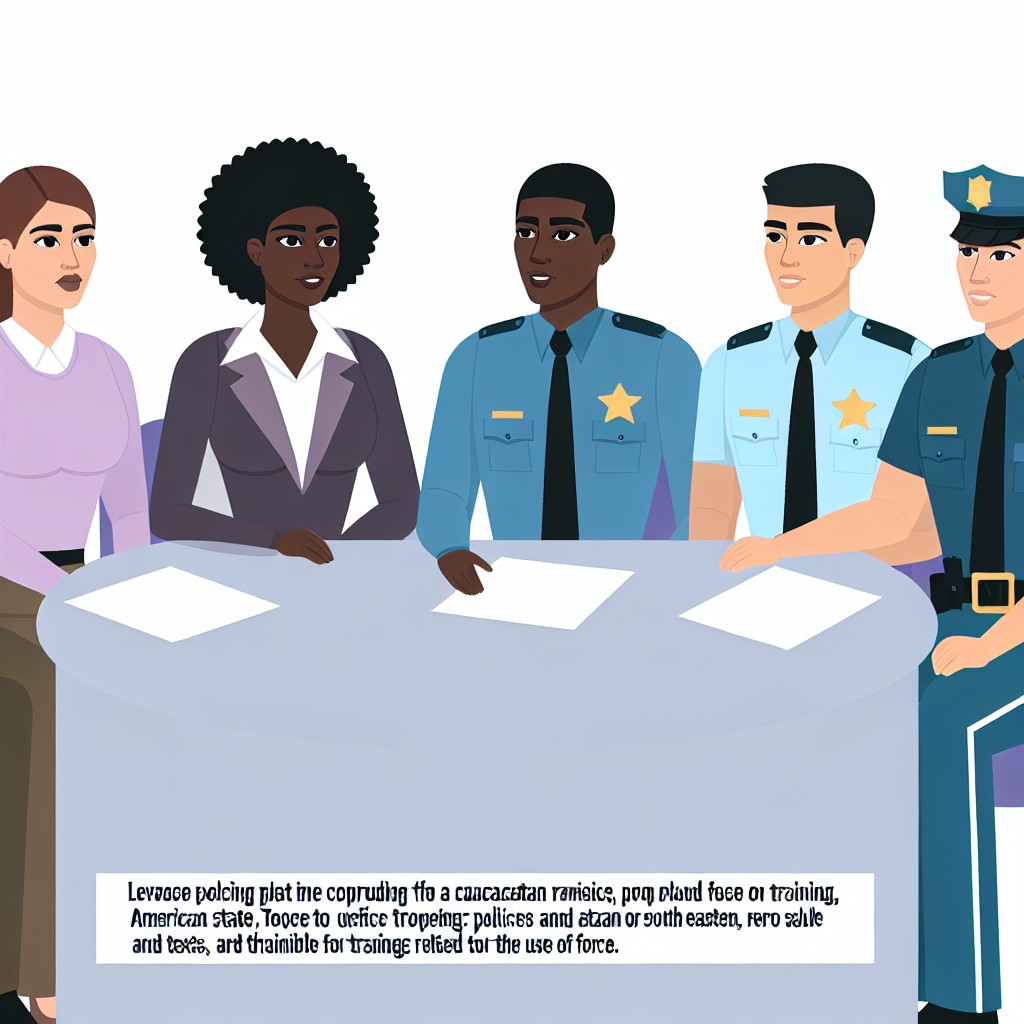
Role of Body Cameras and Technology in State Trooper Training
- Analyze how technology like body cameras has impacted state trooper training and policy.
- Discuss the potential benefits and drawbacks of relying on technology in use of force situations.
Impact of Technology on State Trooper Training and Policy Implementation
Technology, particularly body cameras, has revolutionized how state troopers are trained and policies implemented.
Body cameras provide a first-hand account of interactions between troopers and civilians.
They offer valuable insight into use of force incidents.
These cameras have become a critical tool in training programs.
Instructors can review real-life scenarios and evaluate troopers’ responses using recorded footage.
By analyzing body camera footage, training programs identify areas for improvement.
Transform Your Career Today
Unlock a personalized career strategy that drives real results. Get tailored advice and a roadmap designed just for you.
Start NowThey tailor their curriculum to address specific challenges faced by troopers in the field.
Potential Benefits of Relying on Technology in Use of Force Situations
The use of technology in use of force situations offers several benefits.
Body cameras provide an objective record of events.
This helps protect both troopers and civilians by capturing the entire interaction.
The footage can serve as crucial evidence in court proceedings and investigations.
Additionally, technology enhances accountability and transparency within law enforcement agencies.
Agencies can ensure troopers follow proper protocols and procedures when using force.
This ultimately increases public trust and confidence in law enforcement.
Limitations of Relying Solely on Technology in Use of Force Situations
While technology can be a powerful tool, it also has drawbacks when relied on solely.
Body cameras may not always capture the full context of an interaction.
This limitation can lead to potential misinterpretation of events.
Such issues can result in misunderstandings and disputes over the validity of footage.
There are concerns about the reliability and accuracy of technology.
Privacy and data security issues also arise with technological tools.
Troopers must be trained to use technology appropriately and understand its limitations.
Proper training ensures technology enhances, rather than hinders, decision-making in high-pressure situations.
Balancing technology with traditional training methods equips troopers to handle use of force situations effectively and responsibly.
Explore Further: How to Handle VIP Protection Assignments
Recommendations for Improving State Trooper Use of Force Policies and Training
State trooper use of force policies and training play a critical role in ensuring public safety.
These policies promote trust between law enforcement and the communities they serve.
To enhance the effectiveness of training programs, it is essential to consider key recommendations.
Suggested Reforms to Enhance Training and Policies
- Review and update use of force policies to align with best practices and community expectations.
- Implement de-escalation training to equip troopers with skills to defuse volatile situations.
- Emphasize communication and conflict resolution strategies in training programs.
- Integrate cultural competency and implicit bias training to address racial profiling and discrimination.
- Enhance scenario-based training exercises simulating real-life encounters and decision-making.
Assessment of Feasibility and Impact of the Reforms
- Assess the resources and support needed to implement recommended reforms effectively.
- Engage with community stakeholders to gather input and ensure transparency.
- Evaluate the potential impact of reforms on trooper behavior, public trust, and safety outcomes.
- Monitor and evaluate the effectiveness of training programs through data and feedback.
- Adjust and refine policies and training based on evaluations to improve practices continuously.
By considering these recommendations, agencies can better equip troopers to uphold public safety.
These efforts foster positive relationships between officers and the communities they serve.
State Trooper Use of Force Policies and Training
State trooper use of force policies and training play a critical role in officer and public safety.
These policies define when force is permitted and describe the proper techniques to use.
Ongoing training is imperative to equip troopers to handle different situations effectively.
Training should focus on de-escalation techniques and emphasize force as a last resort.
State troopers face difficult decisions that often require split-second judgment.
They must be held accountable for their actions to maintain public trust.
Clear policies and thorough training help prevent excessive force and improve community relations.
Individuals should continue learning about state trooper use of force policies and training.
Understanding these policies and challenges can help create safer and more just communities.


