




Introduction
Burgeoning concerns over water quality have heightened the importance of soil scientists.
Additionally, they help safeguard clean and safe water for human use.
Their work addresses soil factors that affect water quality.
Analyzing Soil Samples for Potential Contaminants
Soil scientists collect samples from multiple locations to test for contaminants.
They apply chromatography and spectroscopy to detect pollutants efficiently.
Additionally, they study chemical composition to identify potential contaminants.
- Monitoring the levels of heavy metals and pesticides in soil samples is crucial.
- Understanding the presence of nitrates and phosphates helps assess water contamination risks.
Impact of Soil Characteristics on Pollutant Transport
Soil texture determines how pollutants move through the soil.
Porosity and permeability influence infiltration rates and contaminant transport.
Clay particles often retain pollutants and limit their movement to water sources.
- Soil pH levels influence the solubility of contaminants affecting their transport.
- Organic matter content can impact pollutant degradation over time.
Combined analysis and knowledge of soil characteristics helps predict water contamination risks.
Their findings support strategies to mitigate pollution and protect water quality.
Methods used by soil scientists to assess water quality
Soil sampling is a common technique used by soil scientists to assess water quality.
This involves collecting soil samples from different locations to analyze composition and impacts.
Water sampling is another important method employed by soil scientists.
It includes collecting water from rivers, lakes, and groundwater to identify contaminants.
Laboratory analysis is a crucial step in assessing water quality.
Soil scientists analyze samples for nutrients, heavy metals, pesticides, and other pollutants.
Importance of monitoring water quality over time
Monitoring water quality over time is essential to detect environmental changes.
Consequently, soil scientists can identify trends and patterns in water quality.
Regular monitoring also tracks how agriculture and industry affect water quality.
This data supports informed water management and conservation decisions.
Long term monitoring evaluates conservation measures and pollution control effectiveness.
Ultimately, these activities protect ecosystems and help secure safe water supplies.
Find Out More: Internship Opportunities in Plant Science
Impact of Land Use Practices on Water Quality
Soil scientists study how land use practices affect water quality.
Additionally, they examine effects from agriculture, urbanization, and industry.
Their research informs measures to reduce pollution risks.
Effects of Agriculture on Water Quality
Fertilizers and pesticides can contaminate nearby water sources.
Soil scientists analyze how these chemicals leach through soils.
Moreover, excessive irrigation and poor soil management increase erosion risks.
Urbanization and Water Quality
Urban growth often increases stormwater runoff into waterways.
Runoff from roads and rooftops carries pollutants into rivers.
Consequently, land development can fragment habitats and alter hydrology.
Industrial Activities and Water Pollution
Industrial processes can release heavy metals and toxic chemicals.
Consequently, soil contamination allows pollutants to reach groundwater sources.
Experts identify contaminated sites and design remediation strategies.
Soil Management Practices to Reduce Pollutants
Practices in soil management reduce pollutant transport to water.
Conservation methods target erosion, nutrient loss, and chemical runoff.
Below are common practices recommended by soil specialists.
- Conservation tillage reduces erosion and limits sediment runoff.
- Crop rotation maintains soil fertility and lowers chemical use.
- Cover crops prevent erosion and reduce nutrient leaching.
- Riparian buffers filter pollutants from runoff and protect waterways.
- Water harvesting reduces groundwater demand and limits contamination risk.
Roles of Soil Scientists in Protecting Water Quality
Soil scientists evaluate land use impacts and advise on mitigation.
Transform Your Career Today
Unlock a personalized career strategy that drives real results. Get tailored advice and a roadmap designed just for you.
Start NowThey recommend sustainable practices to reduce contamination and erosion.
Their guidance supports healthier aquatic ecosystems and safer water supplies.
Uncover the Details: Challenges in the Nuclear Science Field
Collaboration with other professionals in the field of water quality
Soil scientists collaborate with hydrologists to study water movement through soil layers.
They work alongside environmental engineers to design and implement water quality solutions.
Policymakers use soil scientists research to develop water quality regulations and policies.
- Soil scientists often collaborate with hydrologists to study the movement of water through soil layers.
- Environmental engineers work with soil scientists to design and implement solutions for water quality issues.
- Policymakers rely on soil scientists’ research to develop regulations and policies for water quality protection.
Importance of interdisciplinary collaboration in solving complex water quality problems
Interdisciplinary collaboration brings different expertise together to address complex water quality issues.
Moreover, combining knowledge from multiple fields produces innovative ways to solve water quality problems.
Additionally, collaboration enables a holistic approach that includes environmental, social, and economic factors.
- It brings together different expertise to tackle multifaceted water quality issues effectively.
- Combining knowledge from various fields leads to innovative solutions for water quality problems.
- Collaboration enables a holistic approach that considers environmental, social, and economic factors.
- Pooling resources and expertise across disciplines maximizes the impact of water quality efforts.
- Working together fosters better understanding and promotes sustainable solutions for the future.
Find Out More: What Does a Nanotechnologist Do? Career Overview
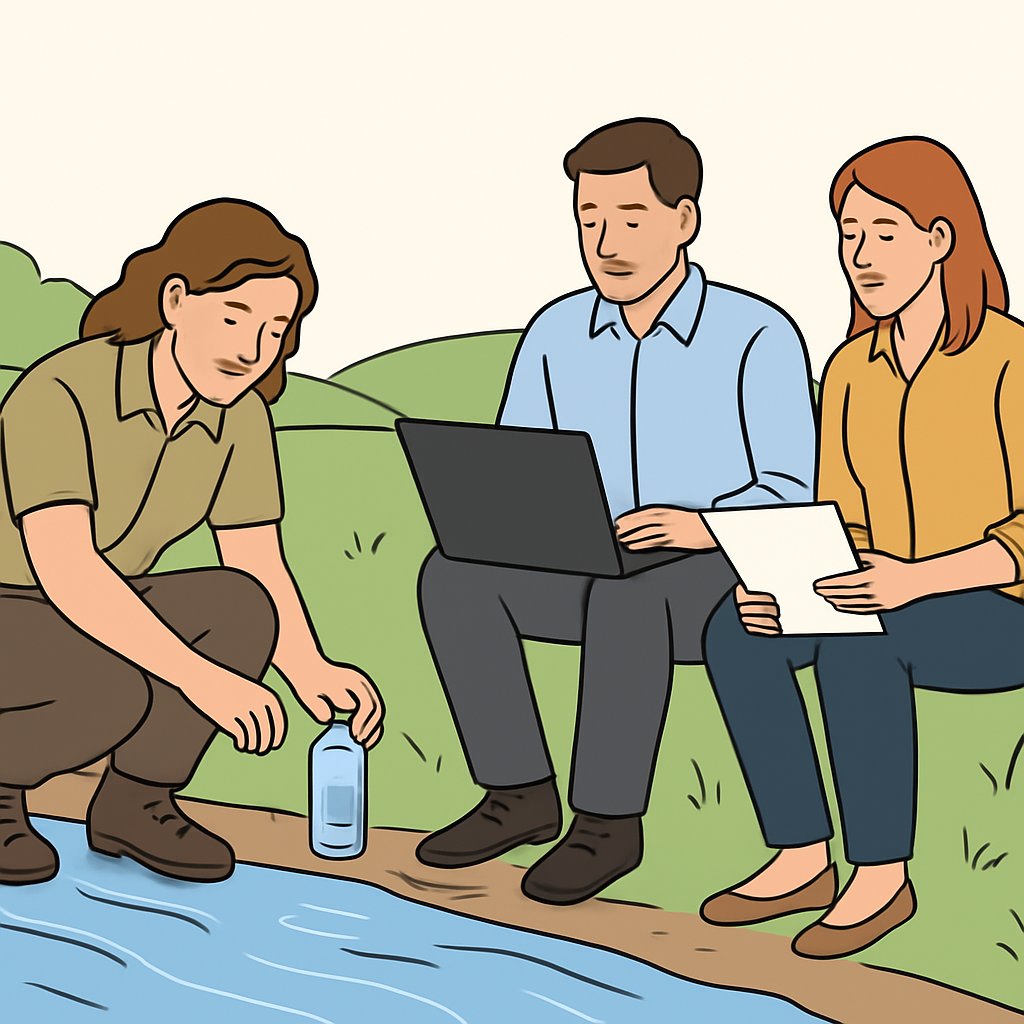
Case Studies Showcasing the Positive Impact of Soil Scientists on Water Quality
Soil scientists play a crucial role in protecting water quality.
They do this through various projects and initiatives.
The following case studies illustrate their work.
Implementing Best Management Practices in Region X
Soil scientists in Region X worked with farmers to implement best management practices.
These practices aimed to reduce nutrient runoff into water bodies.
The project resulted in a significant decrease in nutrient levels in the local water supply.
- Soil scientists in Region X worked with farmers to implement best management practices to reduce nutrient runoff into water bodies.
- The project resulted in a significant decrease in nutrient levels in the local water supply, improving overall water quality.
Remediation of Contaminated Sites in Region Y
Soil scientists in Region Y led a project to remediate a contaminated site.
The site had been leaching pollutants into nearby groundwater sources.
They used innovative soil remediation techniques to remove the contaminants.
- In Region Y, soil scientists led a project to remediate a contaminated site that was leaching pollutants into groundwater sources.
- They removed the contaminants and helped restore water quality in the area.
Monitoring and Assessment of Water Quality in Region Z
A team of soil scientists in Region Z conducted regular monitoring of river water quality.
They also performed assessments to identify pollution issues.
The collected data helped local authorities take targeted action to improve water quality.
- A team of soil scientists in Region Z monitored and assessed river water quality facing pollution issues.
- Collected data helped local authorities take targeted action to improve water quality and protect public health.
Significance of Soil Scientists’ Efforts in Protecting Public Health and the Environment
Their efforts to improve water quality have far-reaching impacts on public health and the environment.
Below are key reasons why their work is crucial.
The following sections detail these primary benefits.
Public Health Protection
Soil scientists reduce pollutants in water sources to prevent waterborne diseases.
This work helps avoid illnesses that can affect human health.
Clean water supports drinking, sanitation, and overall well being.
- By reducing pollutants in water sources, soil scientists help prevent waterborne diseases.
- Clean water supports drinking, sanitation, and overall human well being.
Environmental Conservation
Healthy water ecosystems support many plant and animal species.
This biodiversity conservation arises from improved water quality.
Soil scientists help preserve aquatic habitats and support ecosystem sustainability.
- Healthy water ecosystems support a diverse range of plant and animal species, contributing to biodiversity conservation.
- Soil scientists’ efforts to improve water quality also help preserve aquatic habitats and ensure the sustainability of ecosystems.
Sustainable Development
Access to clean water is crucial for sustainable development.
Clean water supports agriculture, industry, and human livelihoods.
By safeguarding water quality, soil scientists contribute to the long-term sustainability of communities and economies.
- Access to clean water is crucial for sustainable development, as it supports agriculture, industry, and human livelihoods.
- By safeguarding water quality, soil scientists contribute to the long-term sustainability of communities and economies.
See Related Content: Top Companies Hiring Data Scientists in the USA
Challenges Faced by Soil Scientists in Ensuring Water Quality
Soil scientists encounter many challenges that hinder their efforts.
Understanding these obstacles helps guide practical responses.
Improving monitoring and management depends on addressing key barriers.
Common Obstacles
Limited funding restricts research and monitoring capacity.
Furthermore, public unawareness reduces community support for soil initiatives.
Transform Your Career Today
Unlock a personalized career strategy that drives real results. Get tailored advice and a roadmap designed just for you.
Start NowFinally, regulatory barriers can slow or block needed actions.
- Limited Funding
- Lack of Public Awareness
- Regulatory Barriers
Potential Solutions
Increased funding can expand research and monitoring programs.
Additionally, public education campaigns can raise awareness and engagement.
Policy reforms should streamline regulations to enable timely action.
- Increased Funding
- Public Education Campaigns
- Policy Reforms
Addressing challenges and applying suggested solutions advances water quality efforts.
Soil scientists can then support cleaner and safer water for communities.
Consequently, these actions foster a more sustainable future for the planet.
Impacts of Soil Scientists on Water Quality
Soil scientists play a crucial role in monitoring and analyzing soil properties that affect water quality.
Through their research, soil scientists identify potential contaminants that can leach into groundwater sources.
By studying soil structure and composition, they can recommend sustainable land management practices to reduce water pollution.
Soil scientists also develop innovative techniques to remediate contaminated sites and prevent further degradation of water quality.
Their expertise in soil chemistry allows them to assess nutrient levels and their impact on water ecosystems.
Through collaboration with other environmental scientists, soil scientists contribute to comprehensive watershed management plans.
Their fieldwork involves collecting soil and water samples to assess the health of ecosystems and identify potential threats.
By educating the public and policymakers, soil scientists raise awareness about the importance of preserving water quality.
Protecting Water Quality for Future Generations
Their efforts safeguard water resources for current and future generations.
They apply research, recommendations, and remediation to protect water quality.
The work supports sustainable land management and long term environmental health.
Additional Resources
Google search results for Soil Scientist's Impact on Water Quality Science and Research
Bing search results for Soil Scientist's Impact on Water Quality Science and Research


