




Introduction
A Port Operations Manager coordinates and manages cargo handling activities at ports.
Cargo handling ensures the efficient movement of goods into and out of the port.
This section explains the manager’s role in overseeing cargo handling at ports.
Port Operations Manager Responsibilities
A Port Operations Manager coordinates cargo handling activities across port operations.
The manager promotes efficient workflows while protecting personnel and cargo.
Additionally, the manager supervises staff and resolves operational issues effectively.
- Plan and coordinate cargo handling activities to support efficient operations.
- Ensure compliance with safety and security regulations for personnel and cargo.
- Supervise port staff, encourage teamwork, and resolve operational issues.
Core Port Operations Management Duties
The manager improves cargo handling by developing practical operational strategies.
Furthermore, the manager monitors terminal activities and evaluates productivity.
The manager also manages resources, supports staff, and addresses stakeholder concerns.
- Develop and implement strategies that optimize cargo handling processes.
- Monitor terminal operations to improve productivity and efficiency.
- Conduct regular inspections of equipment and port infrastructure.
- Guide port staff during cargo handling operations.
- Collaborate with stakeholders to address challenges and improve operations.
- Analyze performance metrics and implement necessary improvements.
- Manage budgets and resources to achieve operational goals.
Skills and Qualifications for Port Operations Managers
Successful managers lead diverse teams and communicate clearly with operational stakeholders.
They understand cargo handling processes, port regulations, and strategic planning.
Moreover, they solve problems while managing multiple priorities in dynamic environments.
- Demonstrate strong leadership and management abilities.
- Communicate effectively with diverse stakeholders.
- Understand cargo handling processes and port operations regulations.
- Use problem-solving skills to address operational issues promptly.
- Apply project management and strategic planning experience.
- Manage details and multiple tasks in fast-paced environments.
- Show experience managing large-scale operations and performance goals.
Challenges in Port Operations Management
Port Operations Managers respond to regulatory changes while maintaining compliant operations.
They manage fluctuating cargo volumes, technology changes, emergencies, and workforce concerns.
At the same time, they balance service quality, costs, and environmental responsibilities.
- Adapt to changing regulations and industry standards.
- Manage peak periods and cargo volume fluctuations.
- Address automation and technology advances in cargo handling.
- Handle emergencies and unforeseen operational disruptions.
- Balance cost-effectiveness with quality service delivery.
- Support environmental sustainability and minimize ecological impacts.
- Manage labor issues, union negotiations, and workforce challenges.
Effective Port Operations Leadership
Effective leadership helps managers optimize port processes and maintain regulatory compliance.
Strategic planning also supports safe cargo handling and efficient operational performance.
Therefore, experienced managers can guide teams through the demands of port operations.
Efficient cargo handling supports port productivity and customer satisfaction.
Therefore, Port Operations Managers must keep cargo moving smoothly through port facilities.
This focus helps ports strengthen operations and maintain reliable service.
Impact on Port Productivity and Profitability
First, efficient cargo handling shortens ship turnaround times and increases port productivity.
Moreover, reduced cargo dwell times lower costs and support higher port profitability.
Optimized processes minimize delays and maintain a steady flow of goods.
- Faster ship turnaround times help ports process cargo more productively.
- Lower cargo dwell times create cost savings and improve port profitability.
- Efficient workflows reduce delays for goods entering and leaving the port.
- Improved cargo operations can attract additional business and revenue opportunities.
Customer Satisfaction and Retention
Next, timely cargo handling helps ports satisfy customers and build loyalty.
Accurate services also help ports meet customer expectations and encourage repeat business.
Furthermore, prompt issue resolution strengthens the port’s reputation among clients.
- Timely cargo services contribute to customer satisfaction and retention.
- Accurate handling helps ports meet or exceed customer expectations.
- Prompt responses to cargo issues improve the port’s reputation.
- Satisfied customers can provide positive referrals and create new business prospects.
Attracting Shipping Companies and Port Traffic
Finally, reliable cargo handling helps ports attract shipping companies.
Shipping companies often prefer facilities that provide organized and efficient cargo services.
Consequently, dependable operations can support increased port traffic and vessel calls.
- Efficient cargo handling encourages shipping companies to use port facilities.
- Reliable cargo operations make ports attractive choices for shipping companies.
- Organized processes can increase port traffic and vessel calls.
- Quick turnaround times strengthen the value of port cargo services.
Delve into the Subject: How to Excel as a Cargo and Freight Agent
Technologies and Tools Used in Cargo Handling
Technology has significantly changed cargo handling operations at ports.
These tools help port teams improve efficiency, accuracy, and timeliness.
Furthermore, automated systems, terminal software, and GPS tracking support coordinated cargo movement.
- Automated container handling systems
- Terminal operating systems
- GPS tracking for cargo containers
Automated Container Handling Systems
Automated container handling systems use robotics and automation to move containers between ships and yards.
Moreover, cranes and transport vehicles use sensors and software for precise cargo positioning and movement.
This approach reduces human intervention and lowers the risk of handling errors.
Consequently, port operators can improve turnaround times, throughput, yard space use, and safety.
Terminal Operating Systems
Terminal operating systems are software solutions that manage several aspects of port operations.
They manage cargo handling, vessel scheduling, yard management, and documentation.
Transform Your Career Today
Unlock a personalized career strategy that drives real results. Get tailored advice and a roadmap designed just for you.
Start NowAdditionally, these systems plan container movements, track inventory, allocate resources, and optimize workflows.
Real-time visibility supports decisions, reduces delays, and improves coordination among port stakeholders.
As a result, operators can streamline processes and enhance customer satisfaction.
GPS Tracking for Cargo Containers
GPS tracking devices help operators monitor container locations and movements throughout the supply chain.
Real-time shipment visibility supports planning, coordination, and accurate monitoring of transit times.
It also improves inventory management and operational efficiency.
Moreover, instant alerts can identify route deviations, theft, loss, or unauthorized access.
These alerts support cargo security and timely delivery.
Integrated Technology for Port Performance
Port operations managers can use these technologies to address increasing industry demands.
Together, the systems streamline processes and support more efficient cargo handling.
Therefore, integrated technology helps ports optimize performance while maintaining reliable cargo movement.
You Might Also Like: Effective Communication Skills for Supply Chain Managers
Challenges Faced by Port Operations Managers
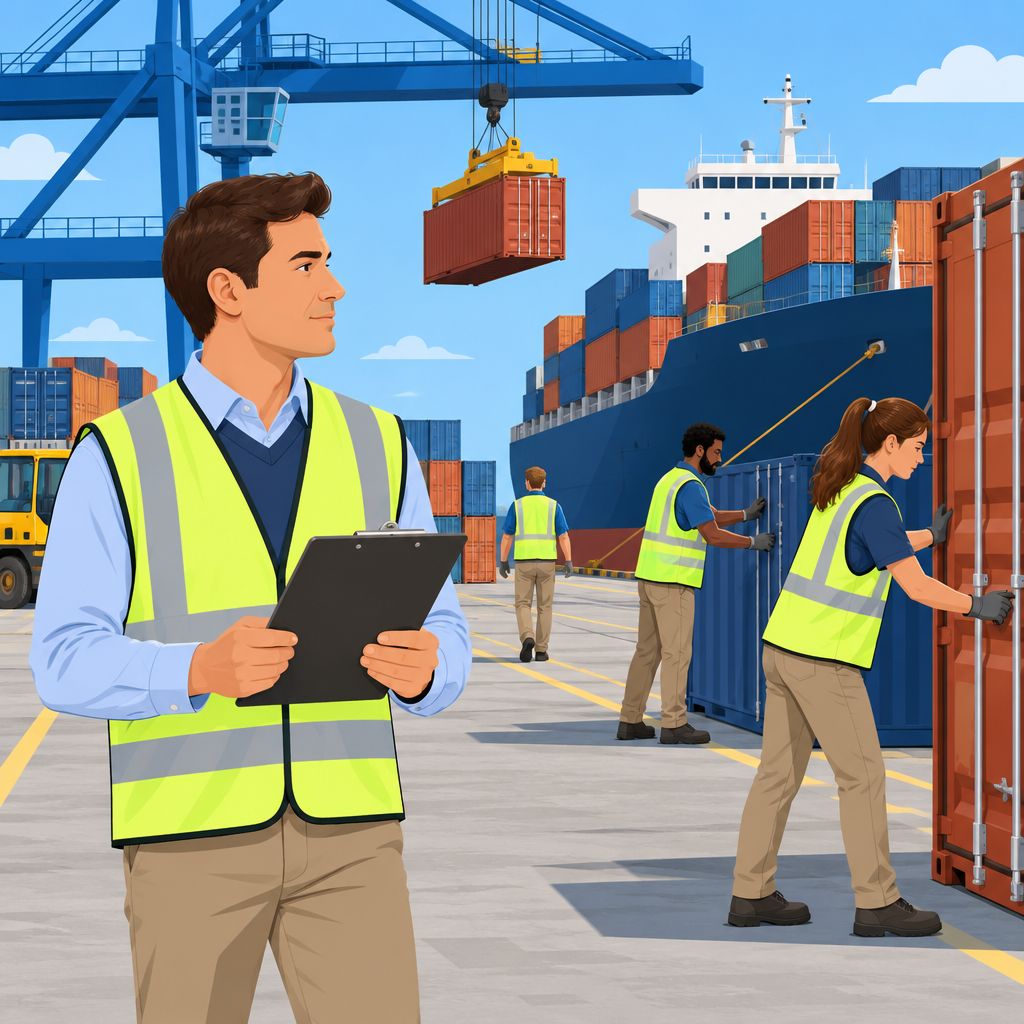
Port operations managers address congestion, environmental compliance, labor disputes, and workforce diversity.
These challenges can affect space use, sustainability, communication, and operational continuity.
Therefore, managers apply careful planning, responsible practices, and constructive workforce strategies.
- Managing congestion and maximizing space utilization
- Adhering to strict environmental regulations
- Dealing with labor disputes and workforce diversity
Managing Congestion and Maximizing Space Utilization
Managers coordinate vessel docking and departure schedules to reduce congestion.
They also organize container stacking and storage to use available space efficiently.
Additionally, automated stacking cranes can streamline cargo handling and improve space utilization.
Adhering to Strict Environmental Regulations
Managers follow strict environmental regulations during port operations.
They can use electric-powered equipment and reduce emissions from cargo handling equipment.
They also develop waste management strategies and monitor changing environmental laws to avoid penalties.
Dealing with Labor Disputes and Workforce Diversity
Managers coordinate workers with varied backgrounds, languages, and cultures.
Labor disputes and workplace conflicts can disrupt operations and reduce productivity.
Therefore, managers encourage communication, conflict resolution, and cultural sensitivity training.
These efforts support teamwork, reduce conflicts, and improve operational efficiency.
You Might Also Like: Interview Tips for Aspiring Transportation Analysts
Strategies for Improving Cargo Handling Efficiency
Efficient cargo handling helps port operations run smoothly.
Port Operations Managers can improve this efficiency through several practical strategies.
These approaches can strengthen cargo handling and benefit overall port operations.
- Implement Lean Management Principles: Lean principles streamline port processes by eliminating waste and maximizing value.
- Invest in Training and Development for Staff: Training programs improve staff skills, motivation, and productivity.
- Use Data Analytics for Predictive Maintenance: Data analytics helps teams predict equipment maintenance needs and prevent costly downtime.
Find Out More: Material Handling: Best Practices in Logistics
Communication and collaboration support effective port operations, particularly during cargo handling.
These practices connect shipping companies, customs officials, workers, and other stakeholders.
Coordination Across Port Stakeholders
Port operations managers coordinate with shipping companies to maintain orderly cargo movement.
They align vessel schedules, berth assignments, and loading or unloading activities.
Meanwhile, customs coordination helps teams satisfy regulatory requirements and reduce avoidable delays.
Managers also communicate with transport providers, warehouse operators, and labor unions.
These relationships clarify responsibilities across connected port activities.
Furthermore, open communication strengthens cooperation among stakeholders.
As a result, teams can provide more consistent service to cargo customers.
Conflict Resolution and Operational Continuity
Scheduling discrepancies, resource constraints, and regulatory issues can create operational conflicts.
Transform Your Career Today
Unlock a personalized career strategy that drives real results. Get tailored advice and a roadmap designed just for you.
Start NowManagers address these problems quickly to limit disruptions and downtime.
Clear discussions help stakeholders identify causes and agree on practical solutions.
They also collaborate on contingency plans that support continuity during unexpected problems.
Moreover, transparent communication builds trust among teams and external partners.
A cooperative workplace can improve morale and encourage coordinated responses.
Consequently, conflict resolution helps streamline daily port operations.
Clear Communication During Cargo Handling
Clear instructions guide dock workers, crane operators, stevedores, and other cargo personnel.
Managers must communicate guidelines and updates without ambiguity.
Otherwise, misunderstandings can cause errors, delays, or safety hazards.
Regular briefings clarify expectations before teams perform assigned tasks.
Feedback sessions allow workers to raise concerns and support timely adjustments.
In addition, communication tools, tracking systems, and digital platforms connect stakeholders.
These practices promote accountability, reliability, and excellence during cargo handling.
Case Studies of Successful Cargo Handling Operations
Examining successful cargo handling operations gives port operations managers practical ideas for improving their own processes.
These examples also show how managers can adapt proven approaches to their operating environments.
Managers can therefore compare results, identify useful practices, and strengthen operational decision-making.
Lessons from Successful Technology Implementation
Technology supports faster and more accurate cargo handling when managers implement it carefully.
Successful implementations combine suitable equipment, reliable tracking, and software that supports coordinated workflows.
Managers should evaluate each technology according to operational needs, security requirements, and expected efficiency gains.
- Automated cranes can increase handling speed, reduce turnaround times, and minimize labor costs.
- RFID tracking systems provide real-time cargo visibility and support stronger security throughout handling processes.
- Cargo management software can streamline operations, improve inventory control, and strengthen stakeholder communication.
Strategies for Operational Excellence
Port operations managers can address congestion, labor shortages, and security threats through focused operational strategies.
These strategies align resources, protect personnel, and maintain reliable cargo movement.
Managers can also review performance regularly and adjust procedures when conditions change.
- Resource optimization helps managers coordinate equipment, labor, and available space efficiently.
- Strict safety protocols and training programs reduce risks and protect all personnel.
- Collaboration with shipping companies, customs authorities, and other stakeholders improves coordination.
- Continuous improvement encourages innovation and helps managers respond to changing market demands.
Port Operations Management and Cargo Flow
Port Operations Managers oversee cargo handling at ports.
They manage the entire process efficiently.
As a result, they help goods move smoothly.
Continuous Improvement in Port Operations
Continuous improvement helps Port Operations Managers remain competitive.
Moreover, they adapt to changing industry trends.
This approach enhances efficiency and helps them meet customer needs effectively.
Career Preparation for Port Operations Management
Professionals pursuing port operations management should develop strong organizational skills.
They should also build effective leadership skills.
Additionally, they can follow industry developments and seek growth opportunities.


