




Material Handling Safety Gear
Material handling workplaces require safety gear to reduce accidents and injuries.
Proper equipment helps workers manage hazards more safely.
Therefore, employers should treat safety gear as an essential workplace measure.
Importance of Material Handling Safety Gear
Safety gear protects workers from falling objects, sharp edges, and heavy lifting hazards.
It creates a protective barrier against potential workplace risks.
Additionally, suitable equipment supports safer material handling practices.
Preventing Accidents and Injuries
Hard hats protect workers from head injuries caused by falling objects.
Steel-toed boots help prevent foot injuries from heavy items.
Safety gloves improve grip and reduce slipping or mishandling risks.
Employers should provide appropriate gear and train workers to use it correctly.
By investing in protection, companies can help prevent costly workplace accidents.
Thus, proper equipment supports a safer work environment for workers.
Types of Material Handling Safety Gear
Material handling safety gear protects workers from common workplace hazards.
Each item supports a different area of personal protection.
Workers should select equipment that matches the task and its hazards.
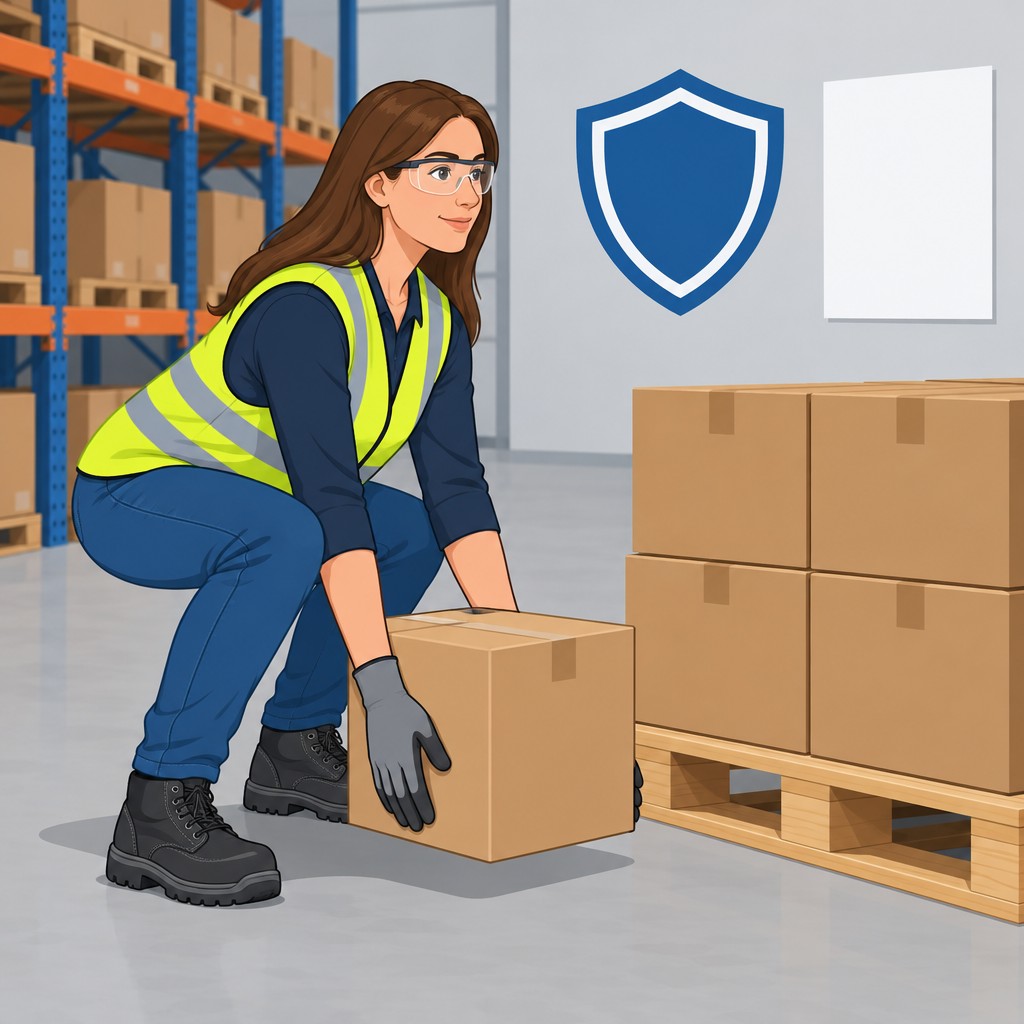
- Gloves protect hands from cuts, burns, and hazardous chemicals.
- Safety glasses shield eyes from debris, chemicals, and other hazards.
- Hard hats protect heads from falling objects and bumps.
- Steel-toed boots help prevent injuries from heavy objects or equipment.
- High-visibility vests help workers remain visible in low-light conditions.
Gloves for Hand Protection
Gloves provide essential protection during material handling tasks.
They shield hands from cuts, burns, and hazardous chemicals.
Different tasks require different glove types.
For example, cut-resistant gloves suit work involving sharp objects.
Chemical-resistant gloves protect workers handling hazardous substances.
Therefore, workers should choose gloves that balance protection and dexterity.
Safety Glasses for Eye Protection
Safety glasses protect eyes from flying debris, chemicals, and particles.
Impact-resistant lenses provide suitable protection during hazardous work.
A secure fit prevents glasses from slipping during tasks.
Workers should clean safety glasses regularly to maintain clear vision.
They should wear eye protection wherever eye injuries remain possible.
Hard Hats for Head Protection
Hard hats protect heads from falling objects, bumps, and impacts.
Workers should select hard hats that meet safety standards.
A proper fit helps provide maximum protection.
Regular inspections can reveal cracks, dents, or other damage.
Workers should replace hard hats showing visible wear or damage.
Steel-Toed Boots for Foot Protection
Steel-toed boots protect feet from heavy objects and equipment.
They also help prevent crush injuries during material handling tasks.
A reinforced toe cap adds protection against impact and compression.
Workers should choose boots that fit well and feel comfortable.
The boots should also meet applicable safety regulations.
Regular inspections help workers maintain boot integrity and safety.
High-Visibility Vests for Worker Visibility
High-visibility vests help workers remain visible in low-light conditions.
They also improve visibility near moving vehicles or equipment.
Bright fluorescent colors help distinguish workers within the environment.
Transform Your Career Today
Unlock a personalized career strategy that drives real results. Get tailored advice and a roadmap designed just for you.
Start NowProper visibility can reduce the risk of accidents or collisions.
Workers should wear vests that fit properly and meet safety standards.
Regular inspections can identify wear and tear.
Importance of Proper Fit
Proper fit helps safety gear provide its intended protection.
Moreover, well-fitted equipment supports movement and comfort during material handling tasks.
Workers should check each item before entering a hazardous environment.
- Reduced Protection: Oversized or undersized gear may not provide its intended level of protection.
- Restricted Movement: Ill-fitting gear can hinder movement and increase the risk of accidents or injuries.
- Discomfort: Uncomfortable gear can distract workers and reduce their focus.
- Compromised Safety: Poorly fitted gear may fail to protect workers during hazardous situations.
Tips for Finding the Right Size
Measure each item carefully before selecting a size.
Next, compare your measurements with the manufacturer’s sizing guidance.
Finally, test the gear for secure fit, comfort, and visibility.
Helmets
- Measure your head circumference to determine the correct helmet size.
- Choose a snug fit that feels neither too tight nor too loose.
- Adjust the straps and padding for a secure, comfortable fit.
Safety Gloves
- Choose gloves that fit snugly without restricting movement or causing discomfort.
- Check the manufacturer’s sizing chart for accurate measurements.
- Consider the task when selecting the appropriate glove material and fit.
Safety Goggles
- Ensure the goggles sit securely without gaps or slippage.
- Use adjustable straps or nosepieces to customize the fit.
- Test the goggles for comfort and visibility before use.
Safety Shoes
- Measure your feet at day’s end when they are slightly swollen.
- Choose shoes with suitable width and arch support for comfort.
- Walk around to test the shoes before wearing them at work.
Following these guidelines helps workers maximize the effectiveness of properly fitted safety gear.
Properly fitted equipment also helps protect workers from workplace hazards.
You Might Also Like: How to Balance Family Life as a Professional Sailor
Benefits of Training on Safety Gear Use
Training teaches employees to use safety gear effectively.
Consequently, correct usage can reduce workplace accidents and injuries.
Employees also gain greater awareness of potential hazards.
- Training helps employees use safety gear effectively.
- Proper usage reduces the risk of workplace accidents and injuries.
- Employees can maximize safety gear benefits through proper training.
- Training increases employee awareness of potential workplace hazards.
Methods for Teaching Proper Safety Gear Use
Employers should demonstrate every piece of safety gear during hands-on sessions.
Visual aids can reinforce demonstrations and clarify proper usage.
Furthermore, regular practice helps employees retain essential safety procedures.
- Provide hands-on training sessions for all employees.
- Use posters and videos to demonstrate proper safety gear usage.
- Encourage employees to ask questions during training sessions.
- Conduct refresher courses to reinforce correct safety gear usage.
- Offer incentives to employees who demonstrate strong safety gear knowledge.
Comprehensive training equips employees with the knowledge and skills to respond safely at work.
As a result, companies can strengthen workplace safety by preparing employees for possible job-related situations.
You Might Also Like: Advancement Opportunities for Freight Agents
Regular Maintenance and Inspection of Safety Gear
Regular maintenance keeps safety gear effective and supports its service life.
Cleaning, lubrication, and inspection help workers identify problems before equipment fails.
These practices also help maintain dependable protection during material handling operations.
Maintenance Practices That Extend Gear Life
Cleaning removes dirt and debris that can weaken safety gear materials over time.
Additionally, lubrication reduces wear on moving parts and supports smooth operation.
Routine care helps workers preserve equipment condition between inspections.
- Clean safety gear regularly to remove dirt and debris.
- Lubricate moving parts to reduce wear and support smooth operation.
- Follow the manufacturer’s maintenance schedule and care instructions.
Inspection Practices for Damage and Wear
Visual checks can reveal tears, cracks, and worn areas before they create safety concerns.
Next, functionality tests confirm that each component works properly and remains secure.
Workers should also replace worn parts and follow the manufacturer’s maintenance guidance.
- Inspect gear visually for tears, cracks, and worn areas.
- Test each component to confirm proper and secure operation.
- Replace worn parts promptly to maintain safety standards.
- Confirm that each item remains secure during use.
- Follow the maintenance guidelines provided by the manufacturer.
As a result, timely maintenance and replacement support safer equipment use.
Workers can therefore maximize gear effectiveness by combining routine care with careful inspection.
See Related Content: The Role of a Warehouse Associate in Inventory Management
Emergency Response Procedures for Material Handling Equipment
Well-established emergency response procedures protect employees using material handling equipment.
When accidents occur, immediate and effective action can limit injuries and prevent serious harm.
Clear protocols ensure that everyone understands the appropriate response during an emergency.
Additionally, emergency procedures can minimize downtime and help prevent further accidents or injuries.
Regular training helps employees respond quickly and appropriately during high-stress situations.
Response When Safety Gear Fails
If safety gear fails or becomes damaged, stop the operation immediately.
Next, notify a supervisor or safety officer about the problem.
Transform Your Career Today
Unlock a personalized career strategy that drives real results. Get tailored advice and a roadmap designed just for you.
Start NowThe supervisor or safety officer can assess the situation and provide guidance.
Do not continue using damaged safety gear because it may increase the risk of injury.
Use backup safety gear when available, or wait until someone provides a replacement.
Finally, report the incident and document the damage or failure for further investigation.
This documentation supports preventive measures and helps address recurring safety gear problems.
Find Out More: Mastering Data Analysis for Transportation Planning
Compliance with Safety Regulations
OSHA regulations support worker protection during material handling tasks.
Employers must provide a safe workplace and suitable safety gear.
Compliance also requires hazard assessments, proper equipment, and employee instruction.
Overview of OSHA Regulations for Material Handling Safety Gear
OSHA requirements address several types of material handling safety gear.
Employers must match equipment to hazards identified during each task.
Proper criteria and upkeep help safety gear remain effective.
- Employers must provide a safe workplace for employees.
- Required gear may include gloves, helmets, goggles, vests, boots, and harnesses.
- Employers must assess hazards and determine suitable gear for each task.
- Employers must explain how employees should use the equipment properly.
- Safety gear must meet applicable criteria and remain properly maintained.
Workplace Practices for Regulatory Compliance
Regular reviews help employers track changes to OSHA requirements.
Safety audits can identify incorrect use or damaged equipment.
Clear communication helps employees report safety concerns to management.
- Review OSHA requirements related to material handling safety gear regularly.
- Conduct safety audits and inspections at regular intervals.
- Confirm that employees use equipment correctly and safely.
- Keep necessary safety gear accessible when employees need it.
- Encourage employees to communicate safety concerns to management.
Safety-First Culture in the Workplace
Organizations that prioritize safety protect employees and support long-term success.
A strong safety culture also encourages employees to consider safe practices during daily tasks.
Furthermore, consistent safety practices can strengthen trust, productivity, and regulatory compliance.
- A safety culture reduces the risk of accidents and injuries.
- It can improve employee morale and productivity.
- It builds trust between employees and management.
- It helps organizations comply with safety regulations.
- It reduces costs associated with workplace injuries.
Strategies for Safer Material Handling
Organizations can use several strategies to encourage safer material handling practices.
These strategies give employees clear expectations and practical support during handling tasks.
They also encourage workers and managers to share responsibility for workplace safety.
- Provide comprehensive training on safe material handling practices.
- Set clear expectations for safe handling procedures.
- Ask managers and supervisors to demonstrate safe behavior.
- Offer rewards or recognition for safe behavior.
- Conduct regular safety audits and inspections.
- Encourage employees to report safety concerns openly.
- Provide suitable safety equipment for material handling tasks.
Managers can reinforce these practices by addressing concerns and recognizing responsible decisions.
Consequently, organizations can create safer and more efficient work environments.
Workplace Safety Gear Investment
Employers should prioritize adequate safety gear because it supports employee well-being and operational efficiency.
Quality equipment can reduce accident and injury risks while supporting productivity and worker morale.
By providing gloves, helmets, goggles, and harnesses, employers show commitment to a secure work environment.
Additionally, regular instruction can reinforce correct gear use and maintenance.
Employees who understand safety gear requirements can support safer workplace practices and regulatory compliance.
Ultimately, businesses can strengthen shared responsibility by making protective equipment available to every employee.
Therefore, consistent access to suitable gear helps workers remain protected and productive.
Additional Resources
Google search results for Material Handling Safety Gear Essentials Transportation and Logistics
Bing search results for Material Handling Safety Gear Essentials Transportation and Logistics


